Tag: future

  • Cultivating sustainability

    Cultivating sustainability

    Cultivating sustainability

    A look into the future of farming

    The work Elijah Goerzen does as a farmer conjures times past. His Deep Roots Farm, set in Maple Ridge, BC, is small by modern Canadian farming standards. The eight-acre parcel near Vancouver is worked by hand rather than machine, resulting in healthy, nutrient-rich soil that’s fertile ground for vegetables to grow and for beneficial organisms, such as earthworms, to thrive.

    Goerzen doesn’t spray his heritage lettuce, microgreens, and vegetable crops with toxic pesticides or infuse them with chemical fertilizers either. Instead, he chooses to nurture biodiversity by planting flowers between his kale to attract hungry ladybugs that keep any aphid infestations in check or to serve as beacons to pepper-propagating pollinators.

    The future of farming?

    Really, though, the regenerative agriculture methods he uses to tease crops from his soil every growing season are considered by some to be the future of farming.

    It works out well for the planet, too. Unlike conventional agriculture, regenerative farming is rooted in harnessing the power of natural processes to produce food rather than dominating them with human-made inputs and interventions.

    The sky’s the limit

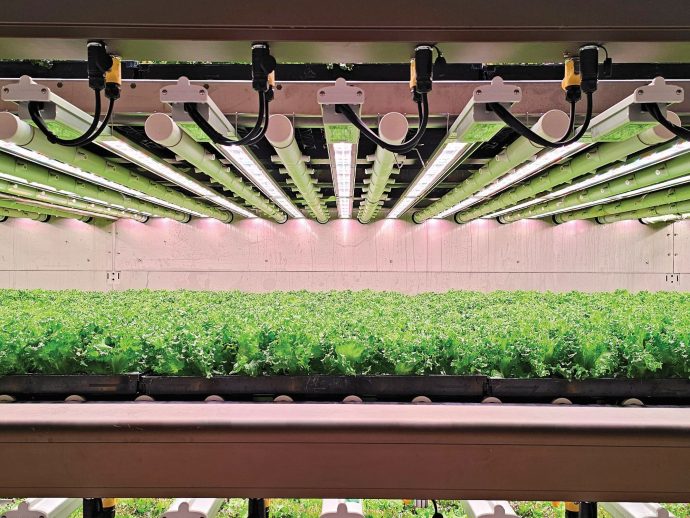
    Vision Greens, a vertical farm in Welland, Ontario, is proving him right. Set in a southern Ontario rust belt city abutting Niagara’s shrinking tender fruit belt, Vision Greens is putting stock in growing up rather than out to help meet a demand for food that the UN projects will increase by 60 percent by 2050.

    It’s disrupting the imported lettuce market with its controlled environment agriculture that marries continuous food production with sustainability.

    Vision Greens’ headquarters in an industrial park is filled with towers of hydroponic trays loaded with organic seeds grown by a computer-controlled system that regulates LED lighting, organic nutrients, reverse osmosis water filtration, air flow, and carbon dioxide levels to meet crop needs. The result: perfect, nutrient-dense lettuce harvested every 26 days, winter, spring, summer, or fall.

    Those crops are perfect because they aren’t exposed to insects, disease, or weather fluctuations, eliminating the need to spray.

    Harvests are delivered to a warehouse, often on the day they’re picked, 76 km away. Meanwhile, most conventional and organic romaine sold here must travel more than 4,300 km from California’s Salinas Valley, where growing and shipping conditions vary and make produce vulnerable to dangerous bacterial contamination.

    The very nature of their production and transport methods means Vision Greens lettuce will never have to be pulled off store shelves in the name of safety. And with plans to build one-acre vertical farms elsewhere in Canada that have 60 times the growing density and 135 times greater crop yield than field lettuce, the company is poised to play as significant a role in building secure local food systems as Deep Roots Farm.

    By Tiffany Mayer

    Article Courtesy of Alive Magazine
  • You can protect biodiversity

    You can protect biodiversity

    You can protect biodiversity

    Saving soil and ocean health now and for the future

    Land and sea may seem like opposites, but the two are intricately connected. What happens on land, especially with our soils, has an impact on the health of our oceans, and it’s imperative to the well-being of all living things that both are treated carefully.

    How soil health affects the health of our planet

    “Poor agricultural practices can cause soil erosion and soil pollution,” says James Campbell, a research associate with the Research Centre for Carbon Solutions at Heriot-Watt University.

    About 33 percent of the Earth’s soil is degraded, largely due to agriculture, and more than 90 percent faces the same fate by 2050, according to the United Nations (UN) Food and Agriculture Organization. But more than just the future of food production is thrown into jeopardy by this fact. So, too, is the planet’s ability to sustain any kind of life at all.

    Soil stores carbon, helping to regulate the planet’s temperature. When it’s degraded, all that stored carbon gets released back into the atmosphere, making it one of the biggest contributors to climate change.

    The connection between soil health and our oceans

    Land and soil degradation also affects our oceans. After all, carbon dioxide (CO2) being released through activities such as tilling or clear-cutting forests to make way for food production has to go somewhere. It goes into the Earth’s other carbon sink: oceans. And when CO2 dissolves in seawater, it becomes carbonic acid, raising the acidity of the ocean.

    Ocean acidification is devastating for underwater ecosystems. Also known as “osteoporosis of the sea,” it decreases carbonate in seawater, which is used by shellfish, coral, and crustaceans to build their shells, reefs, and skeletons.

    Individual actions can affect the future

    A 2020 UN report on biodiversity and ecosystem services estimated that a quarter of all terrestrial, freshwater, and marine vertebrates and invertebrates and plants are threatened with extinction, and many of those have only decades left before they’re gone forever.

    It’s a bleak prognosis, but if we want to change course, we can start by thinking more critically about the impact of our individual actions.

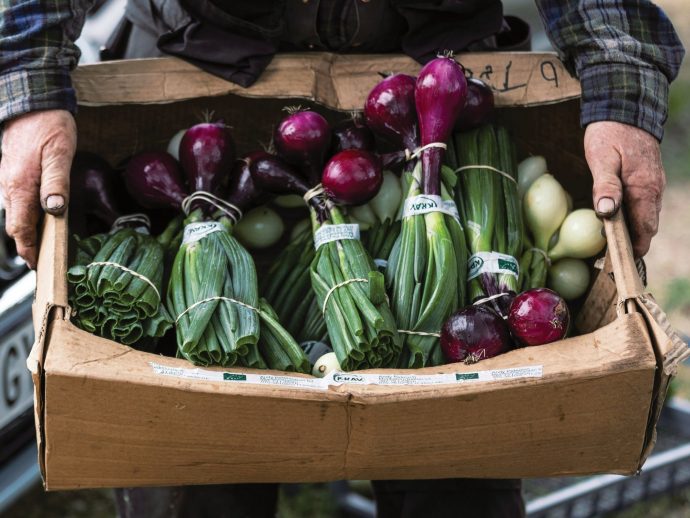
    Buy local

    Shorter transportation distances generally mean less carbon dioxide is emitted into the atmosphere.

    Avoid using chemicals at home

    This includes fertilizers, insecticides, and pesticides on lawns or in gardens, which are harmful to humans, insects, birds, fish, and pets.

    Swap the lawn for native plant species

    To decrease the amount of mowing, watering, and even fertilizing required to keep your lawn lush, start switching out grass for vegetation that grows naturally where you are.

    Keep Fluffy indoors

    Cats are stealthy hunters, posing a threat to birds, small animals, and reptiles that call your yard or neighborhood home. If Fluffy is desperate to get out, dress him up in a collar with a bell to alert prey to his presence.

    By Tiffany Mayer

    Article Courtesy of Alive Magazine