Tag: medicinal

  • Children’s herbal head-start

    Children’s herbal head-start

    Introducing kids to the healing power of plants

    Start at the source

    Sure, effective herbs can be bought at the store, but sensory learning really begins when kids grow or gather the plants themselves. In the yard or a window box, culinary herbs, like oregano and peppermint, give off tell-tale aromas when rubbed between their little thumbs and fingers.

    Children will be proud to create the garden markers or snip the right species for tea or a savoury dish. Reinforce this hands-on experience with sensory descriptors like “spicy” or “aromatic” that suit the herbs and hint at their therapeutic properties.

    Wild foraging is another way to collect medicinal plant material but must be restricted to species we can identify with absolute certainty. If you know your yarrow, its magic ability to stop the bleeding on a youngster’s scraped knee would make quite an impression. Still, we have to remember that many herbs considered beneficial for adults aren’t recommended for children―another reason to stick to the gentle effectiveness of kitchen herbs.

    Tea time

    With herbs on hand, how do we turn them into medicine that kids will actually consume? The potency of a tincture isn’t likely to win over young taste buds, but teas and honeys might.

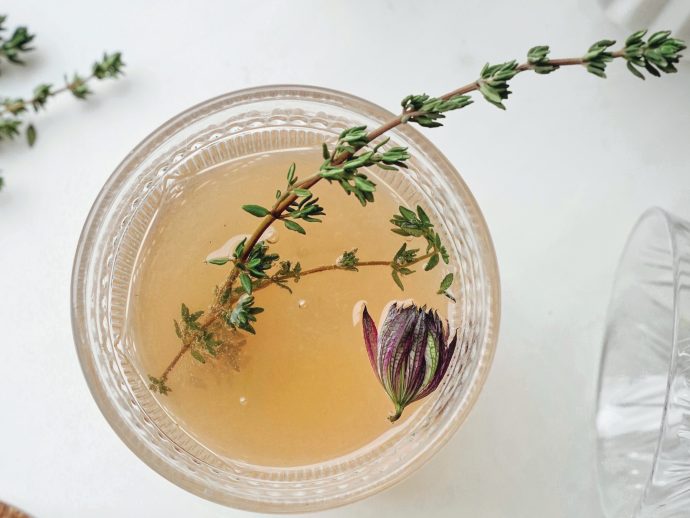
    Children can crush, tear, or chop the plant material, committing the look, feel, and smell to memory. Try turning tea-making into a visual delight by using a glass pot through which they can watch the herbs release their essence and flavour.

    Chamomile is a favourite, both for its relaxing qualities and because it pairs well with milk or cream, creating a bloom of white when added to the transparent vessel.

    So sweet

    Honey also makes an excellent vehicle for medicine. Kids can help fill a jar with antimicrobial and immune-boosting garlic cloves, then cover them with honey and wait for the whole thing to transform into a medicinal syrup with “candied” cloves. Similarly, they can infuse honey with fennel and thyme to have on hand as a cough remedy. (A note here that honey is not recommended for children younger than one year.)

    Four seasons

    Your little ones can access dried or otherwise preserved summer herbs year-round, or they can stretch the season by having an indoor windowsill garden. Plus, many plants can still be identified in their dormant state or by their dead stalks over the winter.

    Just see what your herbal explorations naturally uncover!

    Kid-friendly medicinal herbs

    These familiar culinary herbs can double as safe and gentle kids’ medicine:

    HerbPotential benefitsSuggested use
    lavendercalming, antimicrobialessential oil in a diffuser, part of a tea blend
    peppermintaids with digestion, nausea, and congestiontea, essential oil in a diffuser (not for kids under 30 months)
    fennelmay help soothe gastrointestinal upset and coughtea―seeds or leaves (use caution in infants)
    thymecough suppressiontea, honey, or prepared cough remedy
    chamomilecalming, aids sleeptea, diluted essential oil (topical)
    rosemarymay enhance working memory (schoolwork, etc.)essential oil in a diffuser

    By Jackie Skrypnek

    Article Courtesy of Alive Magazine

  • A quick guide to botanicals

    A quick guide to botanicals

    A quick guide to botanicals

    What they are and what to be aware of

    Botanicals are any part of a plant that can be used medicinally and are attractive due to their tendency to be safe, have minimal side effects, function holistically, and even act preventively.

    Nearly 26,000 plants have been documented globally to have therapeutic uses—a vast store of potential medicine! Our growing desire to treat health more holistically, combined with our ability to assess the evidence critically, bodes well for a future where botanicals are integral to our well-being.

    What’s new?

    Science continues to investigate medicinal plant uses, sometimes confirming anecdotal evidence, sometimes setting the record straight.

    Adaptogens—botanicals that help the body adjust to stress and maintain balance—are of particular interest since our burden of stress has been mounting. Holistic nutritionist and health coach Sheena Huculak has seen the public increasingly seeking this class of remedy: “One that stands out the most for me is ashwagandha and other adaptogens like rhodiola, holy basil, and mushrooms.”

    Proof meets promotion

    But the popularity of plant remedies sometimes has the science scrambling to keep pace with marketing. For example, if consumers perceive acai as having health benefits, a chocolate-coated version of it becomes an easy sell even though the research is lacking and the product may be more sugar than anything else.

    In good measure

    Once you’ve gone beyond the marketing and landed on a botanical that has the weight of science behind it, its efficacy is still going to depend a great deal on the dose and consistency with which you take it.

    Sprinklings of widely tolerated botanicals may be a fine thing, but for medicinal effect you will need a medicinal dose. So go ahead and enjoy the health properties of a turmeric latte, but don’t expect it to cure your arthritis.

    Playing it safe

    How much of a botanical you take and for how long also become questions of safety; just as too little can be ineffectual, too much can be risky.

    Huculak cautions, “It is important to know there can be negative interactions between some natural health products and medications.” Botanicals can pose a risk in scenarios such as pregnancy or surgery, too, so it’s well worth running it past a health care professional and heeding the product label.

    Quality control

    Plant material is extremely complex and chemically diverse, making the task of identifying and standardizing particular botanical constituents very challenging. In the case of a blended supplement, interactions between the ingredients also need to be considered.

    Upping the standard

    Seeing this gap in the potential quality and safety of their offerings, many botanical supplement companies choose to have their products tested and certified by an independent lab and display that certification on their labels. But the natural health industry recognizes this is still an imperfect system, and there are initiatives underway to integrate better quality and safety controls into the market as a whole.

    By Jackie Skrypnek

    Article Courtesy of Alive Magazine