Check out our NEW products this week!


Check out our NEW products this week!
Check out our NEW products this week!

The Honey Pot Company: So many new feminine products to choose from!

Kooshoo: Hair Ties & Headbands

Nush Foods: Carrot Spice Cake, Banana Nut Cake, & Blueberry Cake

Truce: Odor Remover, Wood Cleaner, Scouring Powder, and Room & Pillow Sprays
Thank you to everyone who came in this past Saturday and celebrated Non-GMO Month with us! We had such a great outcome for our Round-Up Donation Day and our Non-GMOnsters event that we are ready to make it even better next year.
We are so excited to announce that through your generosity, our total donation to the Non-GMO Project is $89.38! We appreciate how much you rounded up your totals and we would like to give you a “round” of applause!

We can’t wait to beat our record next year!
Even though October is over, make sure you continue to look for the Non-GMO Project label as you shop!
Check out our NEW products this week!

Ancient Nutrition Multi Collagen Protein: Strawberry Lemonade

Hawthorne Valley: Curtido, Kimchi, & Ruby Sauerkraut

Jack N’ Jill: So many NEW products!

Lightlife Meatless Pasta: Wild Mushroom Ravioli

Matr Boomie Jewelry

Parmela Creamery: Aged NutCheeses & NutCheese Alfredo Sauces

Primal Kitchen: Spicy Brown Mustard, Unsweetened Ketchup, & Garlic Aioli Mayo

SKOY Kitchenware: Kitchen Towels, Scrubs, & more!

Swerve Sweets: Vanilla and Chocolate Cake Mixes, Pancake and Waffle Mixes, & Brown Sugar

Since it’s getting so cold outside very quickly, why not feature our Non-GMO Project verified health & beauty products!
Around our Basil Bandwagon locations, we have quite the assortment of health and beauty products that are Non-GMO Project verified. Whether you’re looking for soaps, lotions, deodorants, toothpastes, lip balms, carrier oils, vitamins or supplements, we’ve got you covered! Below are some of our featured products!


Round-Up Donation Day & Non-GMOnsters Event: October 27, 2018
As a part of our contribution to the Non-GMO Project, we are hosting a Round-Up Donation Day and a Non-GMOnsters event in both of our locations! At checkout, you can “round-up” your total purchase to the next whole dollar as a donation to the Non-GMO Project. Our goal is to donate at least $500 dollars! Make sure you stop by and donate to a great project- every penny counts!
Before you donate at our checkout registers, make sure you try some of our non-GMO candy from UnReal! The parents/guardians who are shopping with their “little monsters” can treat themselves with $2 off of our smoothie of the month, the Hempchata Smoothie! We can’t wait to see you there!

Click here to print our Non-GMOnsters Coloring pages!

With the Keto diet and Non-GMO Month being noticed around the same time, why not feature them together!
So what exactly is the Keto diet?
The Keto diet is a low-carb, high-fat diet that offers numerous health benefits. With the drastic reduction is carbs, you put your body into a metabolic state called ketosis. When your body is in ketosis, your body becomes extremely efficient at using fat for energy. Some health benefits from the keto diet are lower blood sugar and insulin levels, as well as switching the body’s metabolism from carbs to fat. Another health benefit that strikes a lot of consumers’ attention is losing body weight and lowering the risk factors for diseases.
What foods should I avoid on the Keto diet?
Foods that are high in carbs should be very limited or even eliminated. The list of foods that should be avoided are: sugary foods, grains or starches, fruit, beans or legumes, root vegetables and tubers, low-fat or diet products, certain condiments or sauces, unhealthy fats, alcohol, & sugar-free diet foods.
What foods should I eat on the Keto diet?
Your plate should be based with the majority of these foods: meat, fatty fish, eggs, butter and cream, cheese, nuts and seeds, healthy oils, avocados, low-carb veggies, & condiments and spices.
Are there any side effects from being on the Keto diet?
Even though the keto diet is safe, there are some initial side effects that your body goes through as you adapt to your new diet. Each individual body is different and unique- so you should be more aware of how you feel and balance accordingly.
At Basil Bandwagon, we carry numerous Keto diet friendly products that are also Non-GMO Project verified! Some of our products are featured below!


October is Non-GMO Month! This event is North America’s largest non-GMO celebration. Every October, Basil Bandwagon collects donations in order to raise customer awareness and support Non-GMO Project Verified products.
What is the Non-GMO Project you may ask?
Well, the Non-GMO Project is a nonprofit organization dedicated to building and protecting a non-GMO food supply. They reach this mission through consumer education and outreach programs; marketing support provided to Non-GMO Project Verified brands; and training resources and merchandising materials that they provide to retailers. Around our Basil Bandwagon locations, you will find posters and butterflies that were supplied from the Non-GMO Project in order to spread more awareness.
What is a GMO and why are people so cautious about not consuming them?
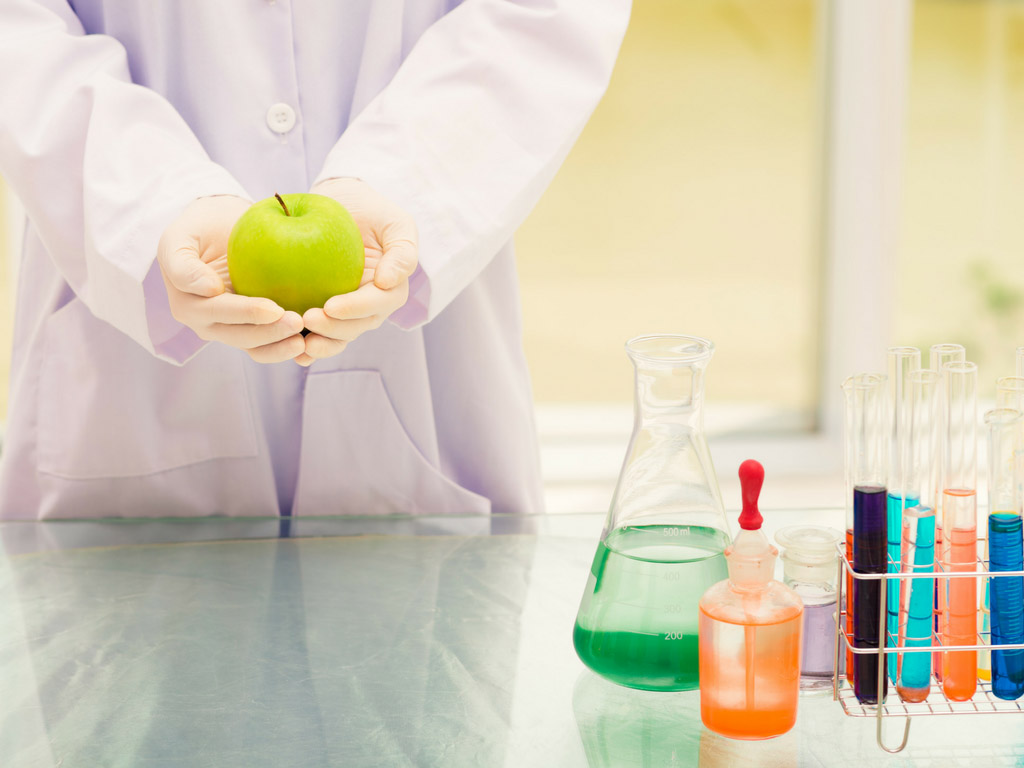
Great question! A GMO is a genetically modified living organism whose DNA has been manipulated in a laboratory to create a crossbreed that does not occur naturally. Most GMOs are engineered to resist herbicides and/or produce an insecticide. Today, some technologies have been used to create new organisms and traits, for example, apples not browning.
Research shows that there is a growing amount of evidence that links consumption of GMOs to health problems, environmental damage, and violation of farmers’ and consumers’ rights. Due to the substantial amount of research, more than 60 countries around the world require GMOs to be labeled. With the ample amount of research against GMOs, companies and consumers are choosing to opt out of swallowing GMOs in a fight to live a longer life.
For more information about the Non-GMO Project and its efforts to decrease the amount of GMOs in the market, click here.
Before agriculture became part of the industrial revolution, plants grown for humans and animals contained a wide range of diversity. Nursery catalogs were filled with numerous varieties of each plant. Today, most crops are grown in large single-variety plots to improve consistency of product, tolerance to drought and shipping. In some instance these single varieties have increased the vulnerability to certain pests and necessitated the increased use of pesticides.
Heirloom gardening has taken over the diversity niche around the world to help preserve the history and variety available to gardeners. Many communities are coming together to help preserve old orchards and other plant varieties before they are lost to time. Heirloom seeds are available through several companies and are growing in popularity.
The term Organic Farming was invented by an English agriculturalist, Lord Northbourne, in 1939. In his book Look to the Land, he introduced his concept of “the farm as an organism”, to describe a holistic, ecological approach to farming in place of the use of chemicals. Today, organic foods are grown using certain specific farming standards. The details vary worldwide but share common principles and include certain restrictions.
Encourage:
Restrict use of:
The National Organic Program (NOP) regulates and oversees organic food products in the United States. Twenty-one additional foreign agencies manage certification including: Canada, Mexico, the European Union, and Japan. While anyone can grow using organic practices, only those farms who obtain governmental certification can market their products with a certified organic label.
The top GMO crops today include corn, canola, cottonseed, soybeans, sugar beets, alfalfa, Hawaiian papaya, zucchini, and yellow squash. Many of these foods are processed to create shelf stable products. It’s important to look for non-GMO labeling when shopping.
Genetically modified organisms (GMOs) are food crops that have their genetic material altered either by changing their existing genes or by substituting genes from organisms. This is not the same as cross-breeding plants that have a natural affinity for one other. We don’t yet know the full extent of the risk involved in eating GMOs or feeding them to livestock. Since the introduction of GMO soy, twice as many people are now allergic to it. Modification often blends proteins from other animal and plant species which can trigger unforeseen reactions. For example, certain crops have genetic material inserted from bacteria.
The GMO seed market is wholly controlled by six companies. Farmers cannot plant GMO crops without paying royalties and fees. This raises issues for nearby non-GMO farmers, whose crops may inadvertently be contaminated by cross pollination. Non-GMO farmers face legal battles to fight the infiltration. This is a daunting undertaking considering the wealth behind the big six. Wild areas are also threatened with no recourse for damages. Insect-resistant GMO corn is threatening the monarch butterfly population in North America.
The loss of diversity pressures the natural relationship between plants and the environment. Each microcosm relies on a delicate balance of microorganisms, plants and animals, along with chemical and physical properties such as the amount of rainfall. Shifting the balance of and ecosystem threatens its very existence. Narrowing the natural genetic diversity of plants also makes them more vulnerable to the forces of nature.
What can we do?