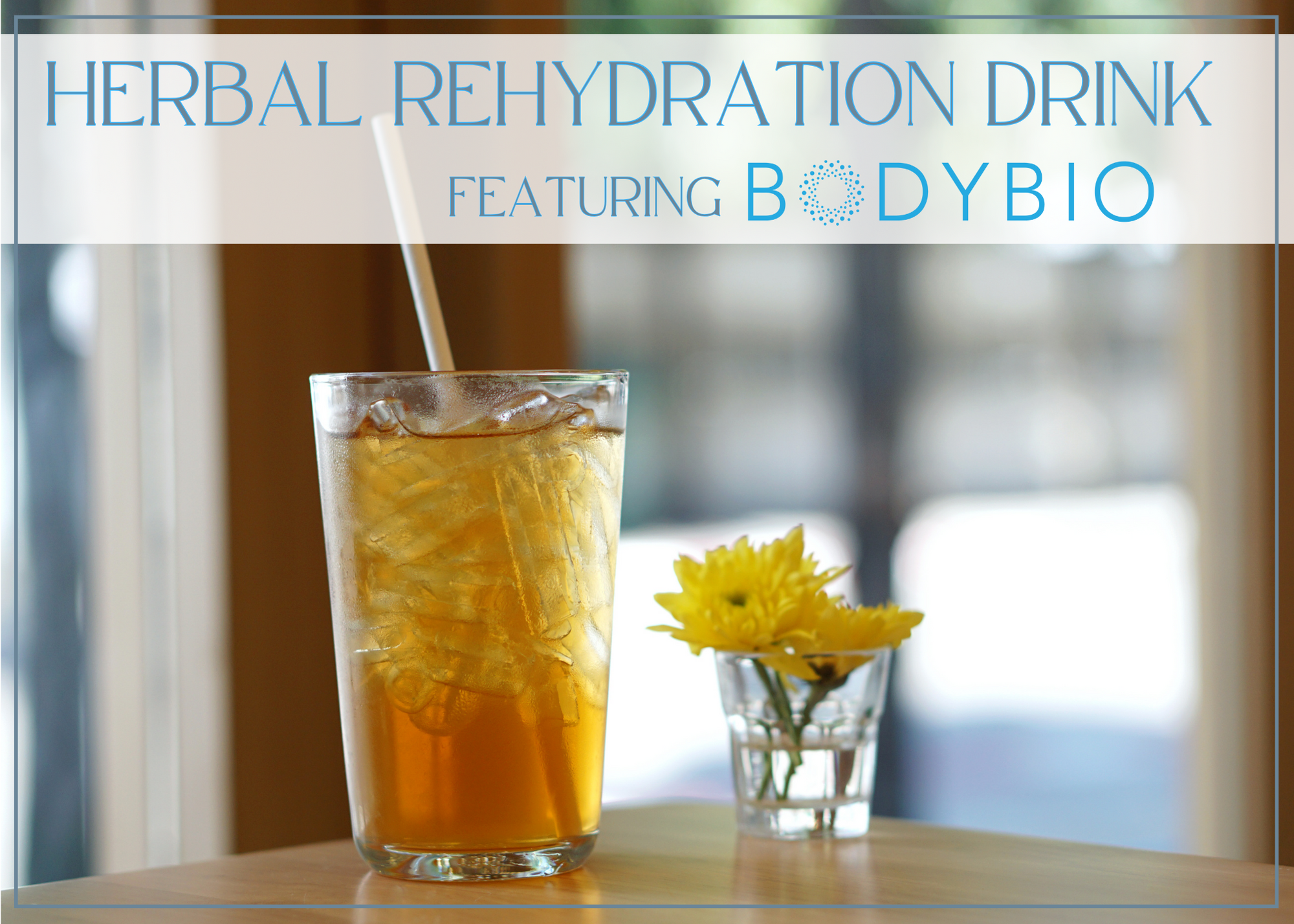
Herbal Rehydration Drink featuring BodyBio
A cold, long infusion of nourishing and healing herbs combine with the rehydration benefits of BodyBio’s E-Lyte. Think iced tea that is healing and hydrating on every level. Drink as a replacement of sugary sports drinks, after or during illness, or daily for optimal full spectrum health.
This drink recipe was formulated for people who need a boost in hydration, vitality, and overall health. An excellent choice for pre and post-workouts and sports activities, nourishing during and after an illness where dehydration is a symptom, and an informed choice for those who seek to support adaptogenic homeostasis of their bodies.
Below is a breakdown of the medicinal properties of each ingredient:
E-Lyte by BodyBio:
Simply put, E-Lyte mimics electrolyte levels in the body for optimal hydration. Think Gatorade, but more powerful, and without all the nasty ingredients.
It is specially formulated to:
- Fight cramps
- Improve stamina and reduce fatigue
- Boost energy
- Maintain body temperature
- Aid neurological function and enhance nerve signaling
No sugars, no artificial sweeteners, just pure electrolytes in the millequivalent of human blood. E-Lyte is the perfect combination of sodium which contracts muscles, potassium, which relaxes them, and magnesium, which plays a role in more than 300 enzymatic processes and is the force that drives potassium to relax a contracted muscle. Ideal for everyday athletes, pregnant women, or anyone looking to reduce painful cramps and stay energized all day—without all the unnecessary ingredients.
Most electrolyte concentrates are formulated specifically for professional athletes and contain levels of sodium and sugar that are way too high for daily use. That’s why we formulated E-Lyte with more potassium, less sodium, and no sugar to mimic human blood and give the body exactly what it needs!
Marshmallow Root:
(Althaea officinalis) has been used for centuries in traditional medicine for its potential healing properties. While scientific research on its benefits is ongoing, marshmallow root is believed to possess several potential health benefits, primarily due to its mucilage content—a thick, gel-like substance that forms when the root is mixed with water. Here are some of the healing properties associated with marshmallow root:
Soothing Sore Throats and Coughs: Marshmallow root is known for its soothing properties and is often used to alleviate sore throats, dry coughs, and irritation. It forms a protective layer on the throat’s mucous membranes, providing relief from discomfort.
Gastrointestinal Relief: The mucilage in marshmallow root may help soothe and protect the digestive tract. It can be used to relieve symptoms of conditions like gastritis, acid reflux, and irritable bowel syndrome (IBS). It may also help alleviate constipation by promoting regular bowel movements.
Anti-Inflammatory Effects: Marshmallow root may have mild anti-inflammatory properties, making it useful for conditions involving inflammation, such as skin irritations, eczema, and joint pain.
Respiratory Health: In addition to soothing sore throats and coughs, marshmallow root may help with respiratory issues like bronchitis and asthma by reducing irritation and inflammation in the airways.
Urinary Health: Marshmallow root is sometimes used to alleviate symptoms of urinary tract infections (UTIs) and bladder issues due to its potential anti-inflammatory and soothing properties.
Tulsi Leaf:
Also known as holy basil (Ocimum sanctum or Ocimum tenuiflorum), is a popular herb in traditional Ayurvedic medicine and is revered in many cultures for its potential healing properties. While more research is needed to fully understand the extent of its therapeutic effects, tulsi is believed to have several healing properties:
Adaptogenic: Tulsi is often classified as an adaptogen, which means it may help the body adapt to stress and promote overall resilience. It can help manage the body’s response to physical and emotional stressors.
Immune Support: Tulsi is believed to boost the immune system. Its anti-inflammatory and antioxidant properties may help the body defend against infections and illnesses.
Antioxidant: Tulsi is rich in antioxidants, which can help protect cells from damage caused by free radicals. This may contribute to its potential anti-aging and disease-fighting properties.
Anti-Inflammatory: Tulsi has anti-inflammatory properties that can help reduce inflammation in the body. It may be beneficial for conditions characterized by chronic inflammation.
Respiratory Health: Tulsi is often used to relieve respiratory issues, such as coughs, colds, and asthma. Its antimicrobial and anti-inflammatory properties may help clear the respiratory tract and provide relief from congestion.
Digestive Health: Tulsi can aid in digestion and help alleviate digestive discomfort. It may be used to relieve symptoms of indigestion, gas, and bloating.
Cardiovascular Health: Some studies suggest that tulsi may help lower cholesterol levels and regulate blood pressure, potentially reducing the risk of heart disease.
Stress Reduction: Tulsi is known for its calming properties and is used to reduce stress and anxiety. It may help improve mental clarity and promote a sense of well-being.
Antimicrobial: Tulsi possesses antimicrobial properties that can help combat various infections, including bacterial, viral, and fungal infections.
Chamomile Flower:
Chamomile is a well-known herb that has been used for centuries for its potential healing properties. Chamomile flowers, particularly those from the German chamomile (Matricaria chamomilla) and Roman chamomile (Chamaemelum nobile) species, are the parts of the plant most commonly used for therapeutic purposes. Here are some of the healing properties associated with chamomile flowers:
Anti-Inflammatory: Chamomile contains compounds like chamazulene and alpha-bisabolol, which have anti-inflammatory properties. These properties make chamomile useful for reducing inflammation in various conditions, including skin irritations and gastrointestinal discomfort.
Digestive Aid: Chamomile tea is often used to soothe digestive issues such as indigestion, bloating, and gas. It can help relax the muscles of the gastrointestinal tract and ease discomfort.
Stress and Anxiety Reduction: Chamomile is known for its calming and mild sedative effects. Drinking chamomile tea or using chamomile essential oil in aromatherapy can help reduce stress and anxiety, promote relaxation, and improve sleep.
Skin Health: Chamomile can be used topically to soothe skin irritations, such as insect bites, rashes, and minor burns. It may also help with conditions like eczema and psoriasis due to its anti-inflammatory and anti-itch properties.
Oral Health: Chamomile’s anti-inflammatory and antimicrobial properties can be beneficial for oral health. It may help reduce gum inflammation, soothe mouth sores, and alleviate toothache discomfort.
Respiratory Health: Inhaling steam from chamomile tea may help relieve congestion and ease respiratory discomfort associated with colds and allergies.
Menstrual Pain Relief: Chamomile tea may help alleviate menstrual cramps and reduce the severity of premenstrual symptoms due to its muscle-relaxant and anti-inflammatory properties.
Wound Healing: Chamomile may promote wound healing when applied topically, as it can help reduce inflammation and provide a soothing effect.
Antioxidant Properties: Chamomile is rich in antioxidants, which can help protect cells from oxidative stress and may contribute to its anti-aging and disease-preventing effects.
Anti-allergic: Chamomile may help reduce allergic reactions and symptoms by inhibiting the release of histamines, which play a role in allergy-related inflammation.
Nettle Leaf:
Nettle leaf, derived from the common stinging nettle plant (Urtica dioica), has been used traditionally for various medicinal purposes. It is rich in nutrients and bioactive compounds, which contribute to its potential healing properties. Here are some of the healing properties associated with nettle leaf:
Anti-Inflammatory: Nettle leaf contains compounds like flavonoids and polyphenols that have anti-inflammatory properties. It may help reduce inflammation in conditions like arthritis, allergies, and inflammatory bowel diseases.
Allergy Relief: Nettle leaf is often used to alleviate symptoms of seasonal allergies, such as hay fever. It may help reduce the release of histamines, which are responsible for allergy symptoms like sneezing and itching.
Joint Health: Nettle leaf may provide relief from joint pain and stiffness in conditions like osteoarthritis and rheumatoid arthritis due to its anti-inflammatory and pain-reducing properties.
Diuretic Effect: Nettle leaf has mild diuretic properties, which can promote the removal of excess fluids from the body. This may be beneficial for individuals with conditions like edema and high blood pressure.
Prostate Health: Some studies suggest that nettle root, rather than the leaves, may have benefits for prostate health by reducing symptoms of benign prostatic hyperplasia (BPH), such as urinary frequency and urgency.
Digestive Health: Nettle leaf can be used to soothe gastrointestinal discomfort, reduce symptoms of indigestion, and alleviate diarrhea. It may also support a healthy digestive tract.
Hair and Skin Health: Topical application of nettle leaf extract or oil is believed to promote hair growth, reduce dandruff, and improve skin conditions like eczema and acne.
Nutrient-Rich: Nettle leaf is a rich source of vitamins (such as A, C, and K), minerals (including iron, calcium, and magnesium), and antioxidants. Consuming nettle leaf as a tea or supplement can help meet nutritional needs.
Blood Sugar Control: Some research suggests that nettle leaf may help regulate blood sugar levels, potentially benefiting individuals with diabetes or those at risk of developing the condition.
Urinary Tract Health: Nettle leaf may be used to support urinary tract health, as it can help soothe irritation and reduce symptoms of urinary tract infections (UTIs).
Give this drink a try, it’s not only nourishing, healing, and rehydrating, it is actually also very delicious and refreshing! Have questions? Come on in to any of our locations to speak with our wellness ambassadors, and don’t forget that we carry herbs in bulk for all of your herbalism and wellness needs!
- 30 ounces Water
- 3 teabags Nettle Leaf
- 3 teabags Chamomile Flower
- 3 teabags Tulsi Leaf
- 2 teabags Marshmallow Root
- 2 capfuls BodyBio E-Lyte
- 1 tblsp Honey, or sweetener of choice optional
Add water to a 32 ounce (quart size) mason jar, or other glass vessel with a lid.
Add all of the tea bags to the water, no need to boil the water, room temperature or cold is fine.
Put the lid on your mason jar. Place it in the fridge and let the herbs infuse into the water for 12-24 hours.
After 12-24 hours, remove from fridge, remove all tea bags, add the 2 capfuls of E-Lyte, honey or sweetener of choice, cover with the lid again, and vigorously shake.
Serve over ice, or as is, and enjoy!
Product Information about E-Lyte is from BodyBio’s website.