Tag: earth day

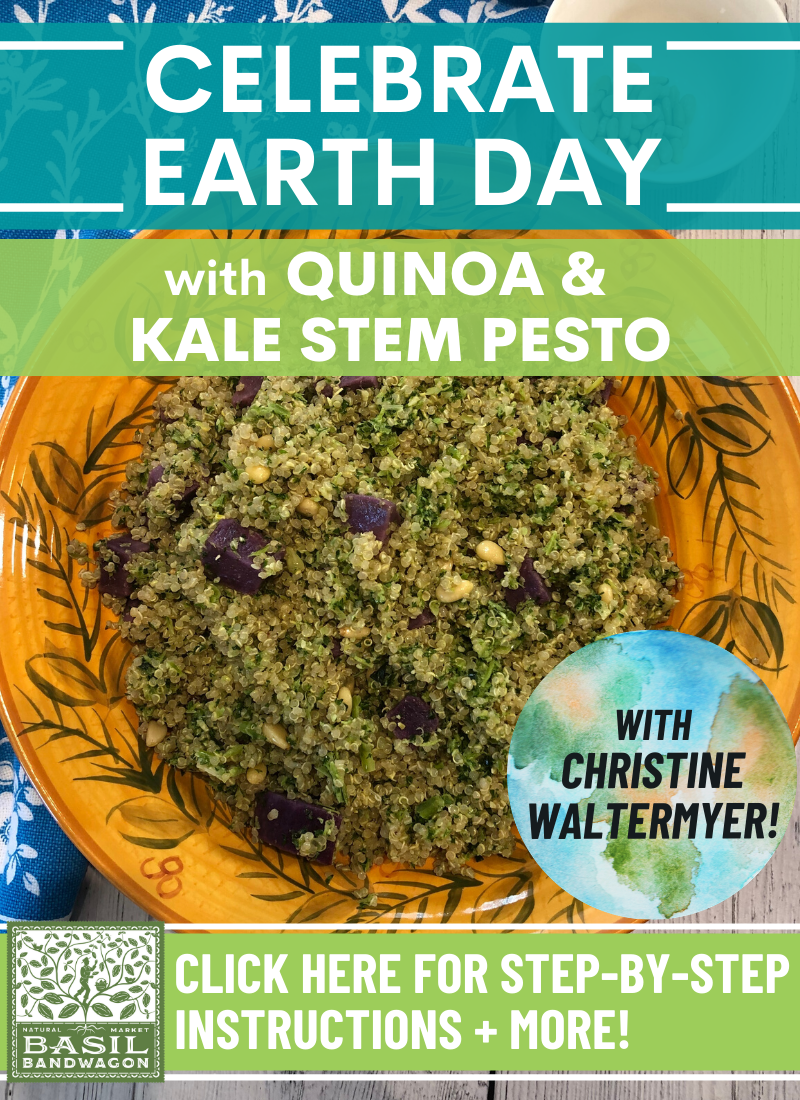
  • Celebrate Earth Day with Quinoa & Kale Stem Pesto with Christine Waltermyer

    Celebrate Earth Day with Quinoa & Kale Stem Pesto with Christine Waltermyer

    Quinoa & Kale Stem Pesto

    with Christine Waltermyer

    Christine Waltermyer is a local Wellness Chef, private chef to celebrities, published cookbook author and founder of the Natural Kitchen Cooking School, which offers an online Plant-Based Cooking Program. She also loves shopping at Basil Bandwagon! Visit naturalkitchenschool.com to get your FREE copy of her cookbook, “7 Days of Deliciousness.”


    Quinoa & Kale Stem Pesto

    Ingredients

    1 cup Ancient Harvest quinoa, cooked according to package directions

    2 cups water or vegetable broth

    Sea salt

    1/2 cup scallions (white part), chopped 

    3 kale stems

    1 sweet potato

    2/3 cup fresh basil leaves, chopped 

    3 tablespoons pine nuts (lightly toasted)

    1/4 cup olive oil

    Method

    1. Place the quinoa in a small pot with the water or broth and pinch of sea salt.  Bring to a boil over medium high heat. Once it boils cover it and let it simmer for 15 to 20 minutes on low heat. The quinoa should be nice and fluffy.

    2. Chop the kale stems and place them in a pot with about an inch of water. Cook on medium high heat for 5 minutes or until nice and tender. When done, drain and set aside.

    3. Peel the sweet potatoes. Dice them. Place the sweet potatoes in a small pot and almost cover them with water. Bring to a boil over high heat. Reduce the heat to simmer on medium for 10 to 15 minutes or until fork tender. When finished cooking, drain and set aside.

    4. Make the pesto: In a food processor add the scallions, basil, 1 tablespoon of the pine nuts, olive oil, cooked kale stems and pinch of sea salt. Blend until you reach your desired consistency, either slightly chunky or totally smooth.

    5. In a large bowl, place the cooked quinoa, remaining 2 tablespoons of the pine nuts, cooked sweet potato, and pesto. Mix together and serve. Enjoy!


    Thank you to Christine Waltermyer and the Natural Kitchen Cooking School for working with us to help promote healthy, nutritious meals and products that are affordable, full of nutrients, and simple to make at home!

  • 10 Quick & Easy Ways to Reduce the Carbon Footprint in your Kitchen

    10 Quick & Easy Ways to Reduce the Carbon Footprint in your Kitchen

    1. Make Your Own Bulk Fermented Food.

    Cultures for Health and Basil Bandwagon

    Yogurt, sourdough bread, kefir, kombucha… these are all delicious, healthy foods that can be beneficial for your gut health. Unfortunately, if you are purchasing them on the regular, you’re disposing of a lot of packaging. While much of it is recyclable, an even better option would be to avoid the packaging all-together by making your own batches in home and storing them in your own glass reusable containers. Check out our Cultures for Health starter cultures, available in our refrigerated section.

    2. Use your favorite hot/cold beverage bottle.

    Hydroflask and Basil Bandwagon

    We <3 Hydroflask. Their bottles can hold hot or cold beverages, making them perfect for year-round enjoyment of iced tea, water, hot tea, or coffee – whatever fits your fancy. Plus they come it your favorite color, whatever that may be.

    3. Stash the kids’ snacks in stainless.

    Kid Basix and Basil Bandwagon

    Safesnacker made by KidBasix is BPA and phthalate free and the perfect size for a portion of fruit, veggies, or homemade granola. They’re easy to open and close, and are a mess-proof way of tossing in lunchboxes or backpacks.

    4. Stop buying plastic wrap.

    Bee's Wrap and Basil Bandwagon

    Reuseable food wraps like BeesWrap is not only functional, but beautiful as well. Pretty patterned cloth made in Vermont with beeswax, organic cloth, tree resin, and jojoba oil is great for wrapping cheese, lemons, greens, or covering plates or bowls of food.

    5. Buy high efficiency laundry detergent.

    A 64 fluid ounce bottle of Biokleen can clean up to 128 loads of laundry. It’s tough on dirt, but gentle on the earth. Less packaging for more uses of product = improved sustainability.  Recycle the container when you’re done, or use it as a watering can for your plants! The built-in spout makes it perfect for this use.

    6. Ditch fabric softener sheets.

    Woolzies and Basil Bandwagon

    Woolzies dryer balls made from 100% pure New Zealand wool are hypoallergenic and provide a 100% natural source of reusable fabric softener. They claim to reduce drying time by 25% and last for up to 1,000 loads!

    7. Start a compost bin.

    Worried about the stink? Purchasing or making an appropriate bin with a Classic Kitchen Basics charcoal filter can eliminate smells that might prevent you from doing this sustainable practice, which reduces your waste and feeds your garden!

    8. Buy bulk herbs, snacks, powders and grains.

    Buying in bulk from our amazing selection of Frontier Coop goods eliminates the need for excessive packaging AND saves you money. Win/win! Did you know? At Basil Bandwagon, you can purchase bulk items with your own reusable containers? Our cashiers will deduct the weight of your container from your purchase.

    9. Use compostable coffee filters and sandwich baggies.

    We realize that some disposable items make life easier. What you can do to reduce your footprint is to purchase from sustainable companies focused on creating compostable, natural products like these from If You Care.

    10. Use your own bags!

    Forget ‘paper or plastic’: use re-useable! We know how easy it can be to forget these bags during your shopping trips – so leave a handful in your car, and keep one handy in your purse.