
Tag: fat

  • The whole (food) picture

    The whole (food) picture

    The whole (food) picture

    Understanding the vital role macros and micros play in our everyday lives

    Fat, protein, and carbs—the big three macronutrients have all had their turn being vilified throughout diet culture (from problematic phrases such as “all fats are unhealthy” and “watch your carbs” to misguided rhetoric about protein being the only way to build muscle). Yet this powerful triad of nutrients, in tandem with essential vitamins and minerals, is what our body relies on to thrive.

    The ABCs of macros and micros

    So, what exactly are these all-important nutrients?

    Macros

    In simple terms, macronutrients refer to the nutrients our body relies on for energy, which we require in large amounts (hence the term macro) to make up our total caloric intake. The big three macros: protein, carbohydrates, and fat.

    Micros

    On the other hand, micronutrients are the nutrients our body requires in trace amounts. These come in the form of vitamins and minerals. And while they don’t affect our diet from a caloric standpoint, they’re still essential for our health and well-being—from B-complex vitamins’ role in energy production and digestion to iron’s impact on cognitive function and immune support.

    The big three players

    While protein, carbohydrates, and fat are widely known nutrients, there’s plenty of mixed messaging around them, such as the “correct” daily protein requirement and the “healthiest” form of carbs. Here, we dig into the fundamentals of each and explain why it’s the balance of all three macros that deserves our true attention.

    Protein

    This powerhouse nutrient is something of a workhorse. Made up of amino acids (the “building blocks” of protein), it helps build and repair our muscles, bones, skin, and other tissues. It also plays a role in hormone and enzyme production.

    Fat

    Despite a once-shaky reputation, fat (especially the heart-healthy unsaturated variety) is integral to a healthy, balanced diet. One of its main superpowers: helping the body absorb fat-soluble vitamins A, D, E, and K. Fat also protects our organs, aids in cell growth, promotes better cognitive function, and provides us with sustained energy.

    Carbohydrates

    Carbs are broken down into simple sugars (called monosaccharides) that enter the bloodstream and are used by all cells in the body for energy. When we’re consuming carbs in their whole food form (think fruits, vegetables, whole grains, and legumes), they also provide us with fibre and prebiotics, which are necessary for efficient digestion.

    A well-rounded diet

    While no nutrient alone holds the key to overall well-being, the secret is to consume a balance of macros and micros in their minimally processed form.

    Ultimately, our diets should be filled with foods that bring us joy—whether it’s a veggie-packed stir-fry or our favourite homemade dessert. That, as it turns out, is the closest thing to a winning recipe.

    By Brittany Devenyi

    Article Courtesy of Alive Magazine
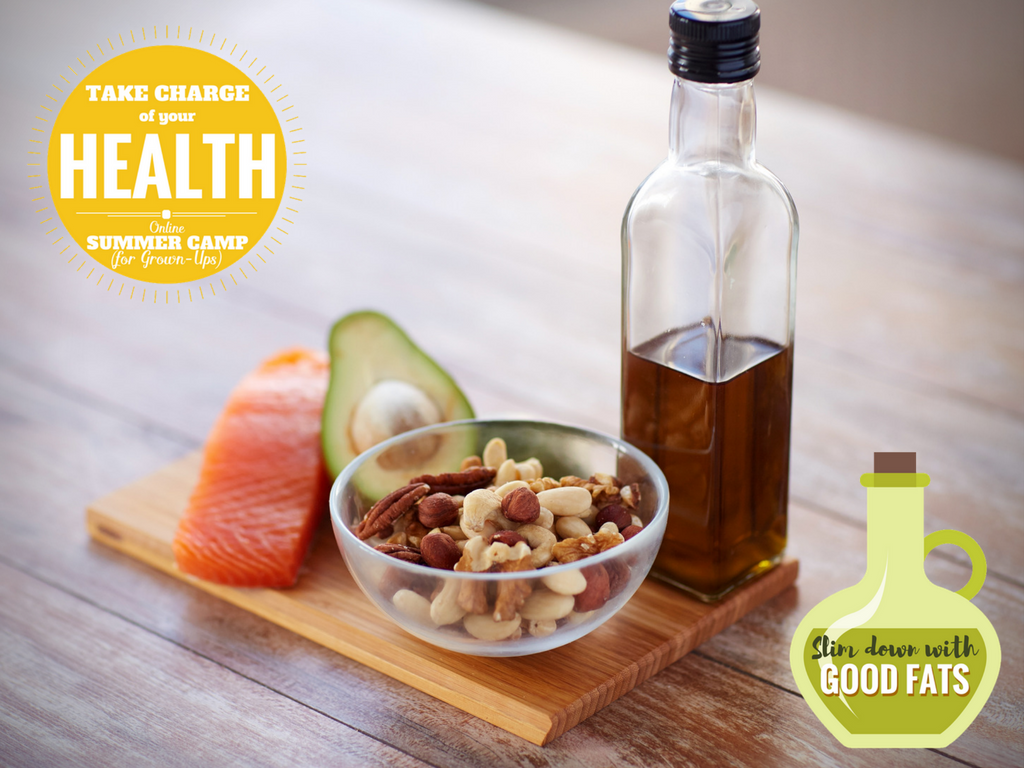
  • Summer Camp Week 7: Slim Down with Good Fats

    Summer Camp Week 7: Slim Down with Good Fats

    In the past, nutritional information has told us that consuming fat in our food was bad and would surely lead to weight gain.  Newer nutritional research has proven that theory to be oh-so-incorrect.  In fact, you need fat to stay healthy in so many ways. The key is to be selective with the sources of fat you are consuming and to consume them in proper amounts.

    Let’s take a look at what fat does for our bodies first before we delve into what kinds of foods are good choices for healthy fat.

    Fat helps burn fat.

    Our bodies need carbs, protein and fat to produce energy. One gram of fat provides more than twice the energy than protein or carbs produce. In order to regulate metabolism, fat is required.

    Fat makes you feel full. 

    Fat takes a long time to digest, so it sits in our digestive systems for a while and keeps you from feeling hungry for a longer period of time. 

    Fat helps make you happy.

    Omega 3 fatty acids have been shown to boost serotonin levels in the brain, which are responsible for your feelings of happiness and wellbeing.

    Fat helps build muscle.

    Fat is absolutely essential for normal growth and development.  And, the more energy (produced in part by fat) we have to work out, the better we are able to burn and tone!

    Fat makes absorption of some key nutrients possible.

    Vitamins A, D, E, K – among other critical nutrients – cannot be absorbed without the consumption of fat.  Deficiencies of these vitamins can cause brittle bones, muscle pain, fatigue, and more. 

    Generally speaking, current research tells us that monounsaturated and polyunsaturated fats are “good fats”, linked with a reduced risk of heart disease and healthy cholesterol levels.  Conversely, saturated fat (which we are suggested to use sparingly) and trans fat (which we are suggested to avoid entirely) are “bad fats”, linked with an increased risk of heart disease and heightened cholesterol levels.

    “Better for You” Fat Food Choices

    Sticking to this suggestion isn’t always easy – but that’s where supplements can help us. To ensure we get an adequate supply of “better for you” fat each day, there are a variety of liquid and pill supplements available to support us.

    Click here to check out an overview of Omega Oil supplements and come and visit one of our friendly team members at Basil Bandwagon to learn more about what supplement might be right for your health needs!

    References

    Livestrong Foundation: http://www.livestrong.com/article/557726-eat-fat-to-burn-fat/

    Academy of Nutrition & Dietetics: http://www.eatright.org/resource/health/weight-loss/tips-for-weight-loss/want-to-get-lean-eat-fat

    TIME Magazine: http://time.com/4411754/fat-mediterranean-diet/?utm_campaign=sniply&utm_medium=sniply&utm_source=sniply

    Harvard Health Publication: http://www.health.harvard.edu/staying-healthy/the-truth-about-fats-bad-and-good

    American Heart Association: http://www.heart.org/HEARTORG/HealthyLiving/HealthyEating/Nutrition/FATS-The-Good-the-Bad-and-the-Ugly-Infographic_UCM_468968_SubHomePage.jsp

    Cleveland Clinic: https://health.clevelandclinic.org/2014/10/heart-healthy-cooking-oils-101/