Tag: gut health

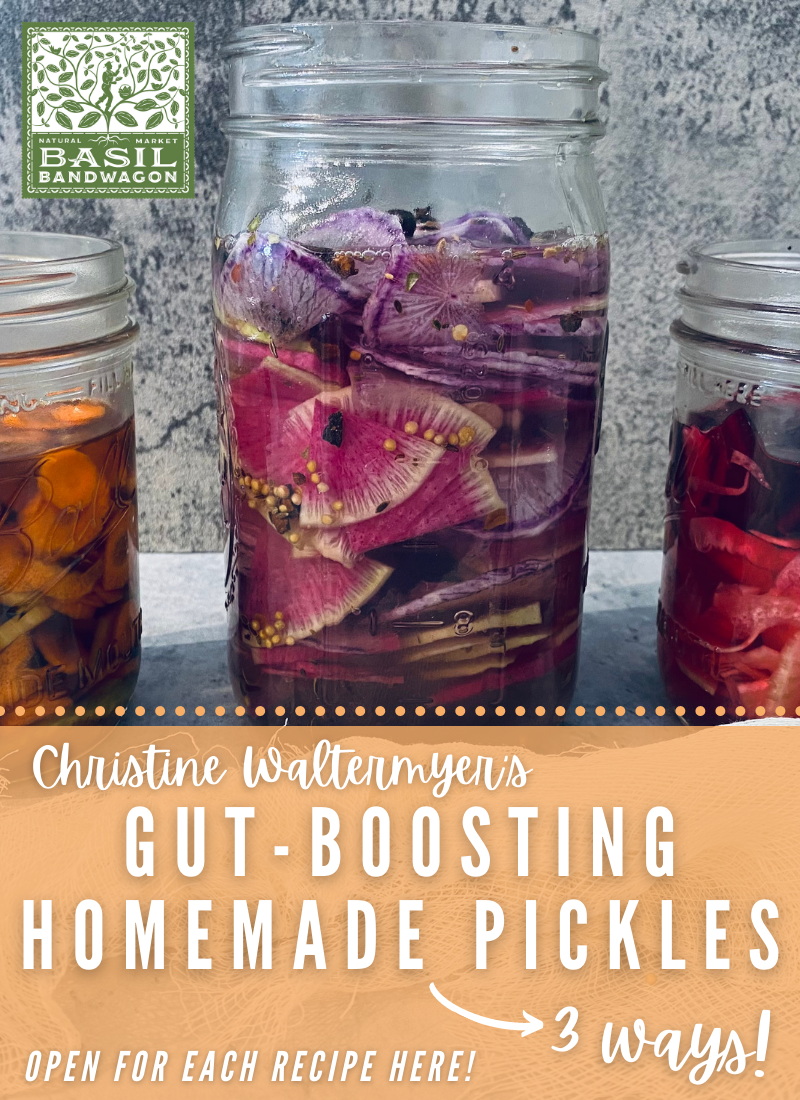
  • Christine Waltermyer’s Gut-Boosting Homemade Pickles – 3 Ways!

    Christine Waltermyer’s Gut-Boosting Homemade Pickles – 3 Ways!

    Gut-Boosting Homemade Pickles

    with Christine Waltermyer

    Christine Waltermyer is a local and renowned Wellness Chef, private chef to celebrities, published cookbook author and founder of the Natural Kitchen Cooking School, which offers an online Plant-Based Cooking Program. She also loves shopping at Basil Bandwagon! Visit naturalkitchenschool.com to subscribe to her email newsletter for new recipes, tips, and FREE access to the Power of Veggies mini-course!


    Did you know that gut health is essential for a strong immune system? Some of the best gut health boosting foods are those that are fermented and pickled! There are many health benefits of pickling, but the most talked about benefit is the fact that they are probiotic – and you can pickle so many different vegetables to change up your flavor profiles. Check out (& print!) these three simple homemade pickle recipes thanks to Christine Waltermyer!

    24-Hour Mixed Vegetable Tamari Pickles

    Course Snack
    Keyword gut health, pickles
    Servings 1 cup of pickles

    Equipment

    • Wide-mouth 16 oz glass canning jar with a lid (Make sure it’s really clean. You can even boil it for a minute to sterilize it.)
    • 8 oz glass canning jar that fits inside the 16-ounce glass jar
    • Cheesecloth
    • Small pot

    Ingredients

    • ½ cup water
    • 2 ½ tablespoons tamari
    • 2 tablespoons brown rice vinegar
    • ½ cup broccoli stems (peeled) sliced into thin rounds
    • ½ cup carrot slices (thin)
    • ½ cup thinly sliced celery
    • 1 tablespoon maple syrup

    Instructions

    • Place the water in a small pot. Bring to a boil briefly, then shut off the heat and remove from the stove. Set aside to cool.
    • Once the water is cool, place it in the glass canning har. To make the pickling brine, add the tamari and brown rice vinegar. Place the lid on the har and shake well. Pour the pickling brine into a bowl.
    • Layer the vegetables in the glass jar. Pour the pickling brine over them. Place the smaller jar on top of the vegetables, inside the jar. The weight of the har will press the vegetables under the surface of the brine.
    • Cover the jar with a square of cheesecloth and secure it in place with a piece of kitchen twine or a rubber band.
    • Let the jar sit at room temperature for 24 hours. The room should be between 65 to 80 degrees F.
    • After 24 hours have passed, add the maple syrup. Place a lid on the jar and gently shake to mix the maple syrup into the brine. Refrigerate the pickles at this point. Enjoy a teaspoon or so at a time with a meal. Pickles will keep up to 5 days in the refrigerator.

    24-Hour Pink Fennel Pickles

    Course Snack
    Keyword gut health, pickles
    Servings 3 /4 cup of pickles

    Equipment

    • 16 oz glass canning jar with a lid (Make sure it’s really clean. You can even boil it for a minute to sterilize it.)
    • 8 oz glass canning jar
    • Cheesecloth
    • Small pot

    Ingredients

    • ¾ cup water
    • ¾ cup fennel thinly sliced
    • ¼ beet thinly sliced
    • ¼ cup ume ("umeboshi") vinegar

    Instructions

    • Place the water in a small pot. Bring to a boil briefly, then shut off the heat and remove from the stove. Set aside to cool.
    • Once the water is cool, place it in the glass canning jar. To make the pickling brine, add the ume vinegar. Place the lid on the jar and shake well. Pour the pickling brine into a bowl.
    • Layer the vegetables in the glass jar. Pour the pickling brine over them. Place the smaller jar on top of the vegetables, inside the har. The weight of the har will press the vegetables under the surface of the brine. If the liquid is too high in the har, you can remove it as long as all of the vegetables are submerged under the brine liquid.
    • Cover the har with a square of cheesecloth and secure it in place with a piece of kitchen twine or a rubber band.
    • Let the jar sit at room temperature for 24 hours. The room should be between 65 to 80 degrees F.
    • After 24 hours have passed, place a lid on the jar. Refrigerate the pickles at this point. Enjoy a teaspoon or so at a time with a meal. If you find the pickles too strong tasting, rinse a small amount before serving them. Pickles will keep up to 10 days in the refrigerator.

    3-Day Radish Pickles

    Course Snack
    Keyword gut health, pickles
    Servings 1 1/2 cups of pickles

    Equipment

    • 32-ounce glass canning jar with a lid (Make sure it’s really clean. You can even boil it for a minute to sterilize it.)
    • Small pot

    Ingredients

    • 2 cups water
    • 2 cups thinly sliced radishes (I used purple daikon radish and watermelon radish but red radish works too)
    • 1 ½ tablespoons sea salt
    • 1 teaspoon pickling spice OPTIONAL – In the video I used 1 tablespoon but it’s a little strong tasting so I recommend using less for most people’s taste.

    Instructions

    • Place the water in a small pot. Bring to a boil briefly, then shut off the heat and remove from the stove. Set aside to cool.
    • Once the water is cool, place it in the glass canning jar. To make the pickling brine, add the sea salt and pickling spice. Place the lid on the jar and shake well. Pour the pickling brine into a bowl.
    • Layer the vegetables in the glass jar. Pour the pickling brine over them. Make sure that all of the vegetables are submerged under the brine liquid.
    • Cover the jar with the lid.
    • Let the jar sit at room temperature for 3 days. The room should be between 65 to 80 degrees F.
      IMPORTANT: Unscrew the lid of the jar once a day to release some of the air that naturally builds up inside. At that time make sure the veggies are all submerged and if not, gently push them down under the liquid.
    • Taste after 3 days and if you want to let it ferment longer it should become more sour in another day or two. These pickles are salty so I recommend rinsing the pickles before serving. If you want to balance the flavor with some sweetness just add a tablespoon or two of your favorite sweetener and it will make them a little more mild tasting. Pickles will keep for 2 weeks in the refrigerator.

    Thank you to Christine Waltermyer and the Natural Kitchen Cooking School for working with us to help promote healthy, nutritious meals and products that are affordable, full of nutrients, and simple to make at home!

  • Top Picks from January’s Supplement Sale

    Top Picks from January’s Supplement Sale

    On Sale this Month:

    25 % Off Renew Life and Jarrow


    Here’s some of our favorites from these brands:


    Renew Life

    Renew Life Cleanse Smart

    Start fresh and rest your gut health with this 30 Day kit!


    Renew Life Extra Care Ultimate Flora 50 Billion

    Need to fix your flora? Restore it with this powerful probiotic.


    Renew Life Everyday Ultimate Flora 15 Billion

    This is a fantastic, shelf-stable probiotic for everyday maintenance.


    Jarrow

    Bone Up

    This is a comprehensive bone health supplement and a customer favorite.

    Jarrow Dophilus EPS 5 Billion

    Another maintenance formula to keep your Immune and Intestinal Health that can go anywhere with you.

    Jarrow Methyl B-12

    These are easy-to-take lozenges with a yummy lemon flavor that pack a good dose of Methylated B-12.

  • Summer Camp, Week One: Get Right with Your Gut

    Summer Camp, Week One: Get Right with Your Gut

    What better topic to kick off our Summer Camp than that of our guts! Central to our body and to our health, our digestive systems sure are important. And when they’re not functioning optimally, we generally know it… pretty quickly. ☹

    Whether your goals this summer are to lose weight, improve digestion, lower stress, or eat better, you’ll want take note of all the little details covered during this first week of Camp.


    Most of us have experienced many – if not all – of these digestive conditions at some point in our lives:

    • Acid Reflux
    • Bloating
    • Diarrhea
    • Constipation
    • Vomiting
    • Dehydration
    • Dermatitis
    • Incontinence
    • Gas
    • Food Sensitivity & Gluten Intolerance
    • Heartburn
    • Indigestion
    • Obesity


    Most of us know at least one person who has lived with one or more of these digestive-related conditions:

    • Appendicitis
    • Diabetes
    • Candidiasis
    • Celiac Disease
    • Colitis
    • Crohn’s Disease
    • Diverticulitis
    • Gallstones
    • Gastritis
    • GERD (Gastroesophageal Reflux Disease)
    • Ulcers
    • Hemorrhoids
    • IBS (Irritable Bowel Syndrome)
    • Iron Overload Disease
    • Pancreatitis
    • Colon, stomach, esophageal, pancreatic or intestinal cancer


    Most of us also know at least one person who has lived with one or more of these neurological, psychological or autoimmune conditions:

    • Depression
    • Anxiety disorders
    • Schizophrenia
    • Autism
    • Post-traumatic stress disorder
    • Addison’s disease
    • Thyroid diseases: Grave’s Disease, Hashimoto’s Disease
    • Multiple Sclerosis
    • Pernicious Anemia
    • Psoriasis
    • Raynaud’s Phenomenon
    • Rheumatoid arthritis
    • Scleroderma
    • Lupus


    Yet, most of us don’t know that ALL of these conditions are potentially directly related to our digestive system.

    And since we know that what we feed ourselves and how we care for ourselves impacts the overall function of our digestive system, this information is even more reason to be good to our guts!

    Digestive System 101

    Let’s take a step back and examine the makings of the intricate system that enables our food to be broken down into nutrients, absorbed for functionality and excreted as waste. Simplified, when we consume food, it enters our body at the mouth, travels down through the esophagus to the stomach, enters the small intestine, then the large intestine and the rectum, and leaves through the anus. The liver, gallbladder and pancreas all play supporting roles in digestion as well.

    In our mouth, our teeth and saliva physically break down our food and begin the digestion process for carbohydrates with an enzyme called salivary amylase. (Hence, the reason why we are told to chew our food thoroughly! The more we chew, the more burden we take off the rest of our digestive system.)

    Our esophagus is muscular and uses strength to push our food down to our stomach.

    In our stomach, acid is produced to mix with food, primarily to break down consumed proteins.

    Our small intestines utilize digestive juices and mechanical force to finish breaking down carbohydrates and proteins and extracting nutrients within.

    The liver contributes bile acids for digesting fats, while the pancreas contributes pancreatic juice for digesting starches, fats and proteins.

    Several hormones and many nerves also influence the digestion process by regulating appetite and the secretion of digestive fluids, acids as well as the mechanical motions of digestion. All of this contributes to our energy level, growth and cell repair.

    It is important to acknowledge that no one system in your body operates on a solo mission – instead, they all work together to create a state of equilibrium that we call living.

    Preventative Care

    Now that you know the basics of digestive operation, what can you do to better care for yourself? Here’s where Summer Camp comes in – shifting your focus to the following five ideals will help you avoid digestive complications:

    • Stay active: Move your body to facilitate digestion – especially shortly after eating, rather than laying down to rest or sleep.
    • Choose beneficial, nutrient-dense foods: These are easier on our digestive systems and generate more necessary nutrients for our bodies.
    • Consume foods rich in healthy bacterial flora: Fermented foods including yogurt, kefir water, sauerkraut, and kombucha are high in beneficial bacteria that help maintain wellness.
    • Supplement with quality products: Supplements can make up for the nutrients and flora you may lack genetically, from age, or from your everyday diet – see the table below for more information
    • Practice healthy stress management: Yes, stress itself can affect what nutrients your intestines absorb as well as how fast food moves through your system. (Slower = Constipation; Faster = Diarrhea)

    These simple but critical lifestyle choices can help optimize your digestive organs and their functions.

    Supplement Care

    Probiotics and enzymes are just two of the supplements available to aid in digestive processes. At Basil Bandwagon, we get a lot of questions about the difference between these supplements. So let’s break it down here:

    Probiotics

    Herbal Answers

    These Herbal Tonics are Powerful allies in terms of strengthening the body’s ability to both break down and absorb nutrients. Well-made bitters are remarkably palatable; the naturally stimulate the production of enzymes in the mouth, stomach, liver and intestines.

    Digestive Bitters:

    These Herbal Tonics are Powerful allies in terms of strengthening the body’s ability to both break down and absorb nutrients. Well-made bitters are remarkably palatable; the naturally stimulate the production of enzymes in the mouth, stomach, liver and intestines.

    Carminative Herbs: (spices)

    Warming, gas-dispelling carminative herbs like Ginger, Cinnamon, Cardamom, Fennel, Allspice and others are effective tonics for indigestions bloating and upset stomach.

    A wealth of other supplements and herbs can help support relief from digestive distress, discomfort and disease. At Basil Bandwagon, we are here to support you in finding those that best suit your individual needs – so always feel free to ask a team member for help. With this information, you can better support yourself with appropriate supplements when needed, rather than letting the discomfort get the best of you or the condition worsen.

    Exclusive Deal for Summer Campers!

    If you aren’t registered for camp, click here to join! While everyone gets to read our 13 Week Blog series, only Summer “Campers” get our exclusive content and coupons!

  • This Summer: Take Charge of Your Health

    This Summer: Take Charge of Your Health

    Summer is here, and I wish I felt better. I never thought I’d be someone who’d have to seek out ways to get back on track. At some point, I stopped taking care of my body, and the repercussions have been painful.

    For one thing, my stomach is a mess. I have always been able to eat ANYTHING without issue. I can no longer eat chocolate, red sauce, red meat, wine, beer…the list is getting longer all the time and frankly, I’m starting to panic. The burning in my stomach is a constant companion.

    Migraines were something I thought were only for “other” people. I figured these people were doing something wrong! I eat healthy, I am active- I don’t get migraines. But I do get these terrible headaches on a weekly basis. They make my eyes puff up and I get nauseous from the pain. My co-worker sat me down and told me it was time to admit that indeed, I have migraines.

    I can’t take anything for my headaches because of my now-sensitive stomach. Pain-Relievers make the burning in my stomach unbearable.

    To make matters worse, I’ve been gaining weight over the last two years. The thought of having to add in strenuous exercise and a diet right now just makes me want to cry. It’s just another thing I have to deal with on my already-full plate. My health feels out of control right now, and I don’t know where to start.

    My doctor blames stress for all these issues, and I know he’s right. Balancing family, work, a social life makes me feel like I’m drowning sometimes. It is time to take control of all this. It is summer, after all, and its a good time to take a long deep breath. Mindfulness is something I am always striving for, anyway. (I’m sure I can schedule it in somewhere.)

    Seriously, though, how do I get control of my stomach? How do I manage my stress levels? What’s the best course of action to get back in shape? How can I take charge of my health again?

    This summer, Basil Bandwagon has decided to bring the answers in the form of a 10 Week Summer Program: Take Charge of Your Health. It’s all online, you don’t have to get dressed or interact with other humans. Just sign up HERE, and let us deliver the goods to you. You can join at any time during the 10 weeks- there’s no stress!

    We will be gathering the best info from our brains and the minds of local practitioners and health coaches to give YOU (and me) the power to feel good again. We’ll have videos, printable shopping lists for your fridge, coupons and even more goodies. We even made a Summer Camp Facebook page! This will be a place to ask questions and interact with others on the same journey.

    I’m excited to learn along with you and get results. So, sign up- and share with your friends. It’s going to be a great journey!