Tag: heart health

  • The heart-gut connection

    The heart-gut connection

    The heart-gut connection

    How a healthy gut improves your heart (and vice versa)

    Most cases of premature cardiovascular disease are preventable. A growing body of research points to an oft-overlooked factor that can help you avoid heart disease and improve your overall wellness: the heart-and-gut connection.

    Your gut microbiome influences your heart health

    Researchers have found that most adults have poor gut health, with the majority of people experiencing regular symptoms, including bloating, cramping, and abdominal discomfort, that indicate an opportunity for gut-health improvement.

    Research shows that a healthy gut may have the following effects:
    ● improved cholesterol numbers
    ● better blood pressure support
    ● better fat metabolization
    ● healthier heart contractions and regular heartbeat maintenance

    This link between a healthy gut and a healthy heart is likely due to the chemical compounds produced by the good bacteria in your digestive system, as well as how a healthy gut is better equipped to help process and break down the foods you eat. And many of the things that affect gut health have also been linked to heart health.

    Take smoking as a prime example. Smoking is one of the biggest risk factors for heart disease, and smokers also have higher numbers of “bad” bacteria in their guts compared to those who don’t smoke (on par with those who have IBD).

    Improve your lifestyle and improve the heart-gut connection

    Your gut health has a direct correlation with heart health, and the things that are good for improving your cardiovascular wellness are also associated with enhanced gut health. Both aspects of your health are influenced by the same lifestyle factors, allowing you to tackle these two major health concerns in a significant and practical way.

    Eat more fibre

    Foods rich in fibre, including fruits, veggies, and whole grains, promote gut health, reducing harmful compounds linked to heart disease.

    Fibre doesn’t just improve gut health, but it’s also directly linked with improved cardiovascular health. A study following participants on a high-fibre diet over six months reported a 15 percent reduction in systolic blood pressure, 28 percent lower blood sugar levels, and 23 percent reduced triglyceride levels.

    • Eat less processed foods, which throw off the gut microbiome, leading to increased inflammation, and are also linked to a significant increase in heart disease.
    • Eat more fermented foods like yogurt and sauerkraut, which help populate your gut with beneficial bacteria while improving cholesterol levels and other heart disease risk factors.
    • Exercise regularly to significantly reduce heart disease risk and improve the diversity and abundance of beneficial bacteria in your gut.
    • Increase your hydration to support healthy digestion and maintain the balance of bacterial and immunological functioning in the gut.
    • Regularly wash your hands, which minimizes the risk of introducing bad bacteria into your gut.

    by Joshua Duvauchelle

    Article Courtesy of Alive Magazine

  • Fall in love with health – together

    Fall in love with health – together

    Fall in love with health – together

    Motivate others to take care of their hearts

    Research shows that couples share similar health habits and routines. The same is true for our wider social circle—we even share similar cardiovascular disease risks to those we spend a lot of time with. This Valentine’s Day, fall in love with your heart health and find ways to motivate your friends and loved ones to do the same.

    Be the heart-healthy change you want to see in the world

    If you want to motivate those around you to be healthy, you need to show instead of tell. That’s according to Kathryn Werner, a psychiatry physician’s assistant with a degree in health promotion.

    Make food a family affair

    When we get our friends or family engaged in their own healthy decisions, researchers say the beneficial results are longer lasting than if we tell them what to do, or if we simply do it for them. Plus, it’s a great way to be a healthy role model and can help you grow closer together in your relationships.

    “Suggest to each other healthier food options or restaurants,” suggests registered dietitian and nutritionist Katie Tomaschko. “Grocery shopping and planning meals together is also a great way to encourage each other to make heart-healthy food decisions.”

    Sweat together

    Exercise is one of the most beneficial things you can do for your general wellness and longevity.  Studies have found that exercise is an incredibly social activity. People who exercise with friends—or even with strangers in a group boot camp or class—push themselves harder and stick with their exercise routine longer.

    Try these tricks to build motivation for yourself and your loved ones.

    Get competitive and be accountable

    “You can motivate each other by participating in friendly movement or step competitions on an app or through your smartwatch,” suggests Tomaschko. Choose a heart-healthy reward for the winner, such as getting a massage or splurging on premium workout gear.

    Make it part of your routine

    Turn movement into a ritual, such as going for a walk together each night after dinner. “Physical activity releases feel-good and stress-releasing neurotransmitters,” says Werner.

    Think outside the gym

    “Take advantage of the upcoming mild spring weather and plan for hikes or walks,” says Tomaschko. “Even taking the dog on a walk counts!”

    Keep the wellness journey lighthearted

    Whatever health goals you have for your friends and family, stay positive. “We often think of eliminating unhealthy behaviors, but one of the best ways to move toward health is to focus on increasing healthy behaviors,” notes Werner.

    Supplements your heart will love

    Always check with your health care practitioner to ensure that a supplement is right for you. Here are some supplements with potential heart and exercise benefits:

    • coenzyme Q10 (CoQ10)
    • omega-3s
    • curcumin
    • whey protein powder

    By Joshua Duvauchelle

    Article Courtesy of Alive Magazine
  • Red foods for heart health

    Red foods for heart health

    Red foods for heart health

    3 antioxidant-rich and delectable recipes

    Red is a color commonly associated with passion and love, but red foods may have a direct effect on our heart health. The same pigments that give red foods their color, called anthocyanins, are also responsible for a host of health benefits, including reduction of inflammation in the body, and have been shown to help with heart health, playing a role in better cholesterol and triglyceride profiles.

    Tuna-Stuffed Piquillo Peppers with Romesco-Style Sauce

    When paired with a salad, this dish easily serves two as a main meal, but it will stretch to a few more as part of a tapas-style meal.

    Ingredients
      

    • 6 ounces can tuna rinsed and drained
    • ¼ cup parsley
    • 1 teaspoon lemon zest
    • 1 tablespoon lemon juice
    • ½ teaspoon black pepper
    • 11-12 piquillo or sweet red peppers (drained contents of 9 1/2 oz jar)
    • 2 tablespoons whole hazelnuts
    • 1 tablespoon olive oil
    • 1 teaspoon sweet Spanish paprika
    • 1 garlic clove peeled
    • ½ teaspoon sherry vinegar
    • 2 teaspoon honey divided

    Method
     

    1. Preheat oven to 350°F.
    2. In small bowl, with fork, mix together tuna, parsley, lemon zest and juice, and black pepper. Set aside.
    3. Remove whole peppers from jar and set aside 6 to be stuffed. In bowl of food processor, place remaining peppers with hazelnuts, olive oil, paprika, garlic, sherry vinegar, and 1 tsp honey, and pulse to blend into a sauce. The texture will not be completely smooth.
    4. Add about 2 Tbsp of sauce to tuna mixture and stir through. Spoon remaining sauce into small baking dish to make a base for stuffed peppers.
    5. Stuff tuna mixture into 6 piquillo peppers and place them on top of the sauce in baking dish. Drizzle with remaining 1 tsp honey and bake for 15 to 20 minutes.
    6. Enjoy!

    Red Berry Salad

    Delicious, sweet berries and sharp red onion combine, with the help of some balsamic vinegar and a hint of basil, to make a classic salad.
    Servings: 2

    Ingredients
      

    • 2 tablespoons pumpkin seeds
    • 1 cup sliced strawberries
    • ½ cup whole raspberries
    • ¼ cup finely sliced basil
    • 1 teaspoon balsamic vinegar
    • ½ teaspoon maple syrup
    • 1 tablespoon olive oil
    • ¼ teaspoon salt
    • ¼ red onion sliced
    • 5 cups baby mustard greens or arugula

    Method
     

    1. In large skillet, toast pumpkin seeds over medium-high heat, stirring frequently, until golden brown. Pour onto plate to cool and set aside.
    2. In bowl, place berries, basil, vinegar, and maple syrup, and stir gently to coat. Set aside and allow to marinate for about 30 minutes. After time has elapsed, into large bowl, strain any liquid and add one or two raspberries, reserving the remainder.
    3. Mash the two raspberries in liquid in large bowl, add olive oil and salt, and whisk together. Add red onion and greens and toss to coat. Arrange on large platter, placing reserved marinated berries on top. Sprinkle with pumpkin seeds and serve.
    4. Enjoy!

    Spicy, Smoky Tomato-Braised Eggs

    This simple yet luxurious dish is based on a dish from the south of Spain, similar to a North African shakshuka. It’s a satisfying meal, equally at home on the dinner table as on the breakfast bar.
    Servings: 1

    Ingredients
      

    • 1 teaspoon + 1 tablespoon olive oil divided
    • 1 red bell pepper
    • 1 onion halved and sliced lengthwise
    • 1 teaspoon peeled crushed garlic
    • ½ teaspoon crushed red pepper flakes
    • 1 teaspoon sweet smoked paprika
    • 28 ounces can whole tomatoes
    • ¼ teaspoon salt
    • 1 tablespoon honey
    • ¼ teaspoon hot smoked paprika (optional)
    • 1 cup chopped red chard
    • 4 eggs
    • 1 tablespoon chopped parsley

    Method
     

    1. Turn oven broiler to high. Rub red pepper with 1 tsp olive oil and place in baking pan. Place pan under broiler. While watching carefully, turn pepper occasionally as each side blackens under the heat, about 10 minutes. When all sides of red pepper have been fully blackened, remove from oven and place in paper bag to cool.
    2. Add 1 Tbsp olive oil to 9 in cast iron skillet and saute onion on medium-low heat for about 5 minutes, until soft. Add garlic and red pepper flakes, and continue to cook for a further 5 minutes, until garlic is translucent. Add sweet smoked paprika and tomatoes to pan, stir thoroughly to incorporate, and allow to simmer on medium heat for 20 to 30 minutes.
    3. Once pepper is cool, peel and discard skin and seeds. Place flesh in food processor or blender and puree. Add pepper puree to tomato sauce with salt, honey, and, if desired, hot smoked paprika. Allow sauce to simmer for 15 minutes more. Add in red chard and mix through.
    4. Crack eggs into individual pinch bowls or glasses and set aside. Press the bowl of a soup ladle into sauce, and pour in an egg. Then tip contents slowly into tomato mixture. Repeat with remaining eggs, arranging them evenly over surface of skillet. For soft eggs, simmer for approximately 10 minutes, covering halfway through. Sprinkle with parsley and serve with a warm tortilla or a piece of crusty bread.
    5. Enjoy!

  • Inflammatory facts about heart health

    Inflammatory facts about heart health

    Inflammatory facts about heart health

    How inflammation affects cardiovascular disease

    When you think of inflammation, you might think of pain. But inflammation is a key contributor to a number of surprising conditions, including cardiovascular disease. Here’s how inflammation works, and what we can do about it.

    How inflammation works

    It is now known that inflammation plays an important role in cardiovascular disease. But how could inflammation be a cause of something that seems as uninflammatory as heart disease?

    According to naturopath and cardiologist Decker Weiss, NMD, FASA, inflammation plays both a general and a specific role. Generally, inflammation contributes to cardiovascular disease because inflammatory conditions such as arthritis, autoimmune diseases, and diabetes increase the risk of developing heart disease.

    Specifically, Weiss says, “… elevated insulin, elevated blood sugar, trans fats, and homocysteine irritate and inflame the endothelium, or the lining of our blood vessels, initiating the process of coronary artery disease.” So, inflammation can both initiate and accelerate heart disease.

    How nutritional heart helpers work

    Think of some of the ways garlic and dark chocolate can help your heart. Inflammation causes endothelial dysfunction, which leads to vascular disease and atherosclerosis.

    Garlic

    may help tamp down inflammation. So, supplementing with garlic could aid in improving endothelial function and vascular elasticity and, thus, play an important role in preventing cardiovascular disease.

    Dark chocolate

    may also help reduce inflammation, and it may also improve endothelial function, improving blood vessel function and dilation enough to seriously reduce the risk of cardiovascular disease.

    Diet, inflammation, and heart disease

    One of the most innovative studies on preventing heart disease started with two things we know—that inflammation causes heart disease and that diet causes inflammation—and asked whether diet could cause heart disease.

    The huge study found that diets that were higher in foods that cause inflammation were associated with a 38 percent higher risk of cardiovascular disease, 46 percent higher risk of coronary heart disease, and 28 percent higher risk of stroke.

    Inflammatory foods included red meat, processed meat, organ meat, refined carbohydrates, and sweetened beverages.

    Anti-inflammatory foods are heart healthy and include leafy green vegetables, dark yellow vegetables, fruit, whole grains, and tea.

    Supplements to consider

    Always check with your health care practitioner before trying out a new supplement. The following supplements have anti-inflammatory properties and may have a positive effect in preventing heart disease:

    • omega-3s
    • hawthorn
    • curcumin
    • ginkgo
    • olive leaf extract
    • pine bark extract
    • grapeseed extract
    • green tea
    • ginger
    • vitamins C and D
    • quercetin

    Foods for heart health

    FoodHeart-health benefitsNutrients
    soymay help significantly lower LDL (bad) cholesterolisoflavones
    nuts and seedsmay contribute to lowering LDL (bad) cholesterol and triglycerides and may help lower the risk of dying from cardiovascular diseasefiber; monounsaturated and polyunsaturated fats
    extra-virgin olive oilcan help reduce the risk of coronary artery disease and improve cholesterolmonounsaturated fats; phenolic compounds
    flaxseedmay help lower blood pressureomega-3 EFAs; lignans

  • Put your heart into it

    Put your heart into it

    Put your heart into it

    How our emotions affect our well-being

    More and more is being understood about the ways our hearts, minds, and contexts are interconnected. How we feel affects our health, and so, too, does our environment.

    Reuniting thoughts, feelings, and health

    “I believe it is important for one to realize that our thoughts and emotions, which are heavily connected, can impact our hearts,” explains Ashlene Crichlow, registered provisional psychologist. Whether directly or indirectly, Crichlow says that our thoughts and feelings affect all areas of our lives.

    The health science of emotion

    But how do emotions affect our heart physically? Naturopathic doctor Caroline Meyer says that “when the heart is in a state of coherence, its rhythm regulates and blood pressure lowers. In states of anxiety, worry, and anger, the heart becomes dysregulated, putting excess strain on this organ.”

    How we feel influences disease prevention, injury recovery, and longevity, and the specifics of this increasingly integrative science are compelling. Our feelings, thoughts, and somatic experiences are woven together in an interlinking, intercommunicating network.

    Research shows that our mind-heart-body system affects our immune system and overall well-being. High positive emotions promote healthy BMI and blood pressure, whereas low positive emotions increase the risk of heart disease.

    Heavy, healthy emotions

    “Of course, we have all experienced grief, heartache, sadness, anger, and fear,” affirms Meyer. “These emotional states, although temporary, can create psychological patterns that persist,” she adds, and, in turn, we might need to shift our behavior. Meyer explains that it’s important to attend to difficult emotions, rather than try to push them away.

    Contexts of emotional well-being

    It’s crucial to remember that environment, upbringing, and culture play a significant role in how one sees and interacts with the world.

    Crichlow says, “When an individual has experienced adversity, disconnect, or trauma, they might have a more pessimistic viewpoint and struggle with cognitive distortions that could negatively impact their overall well-being.”

    A helping hand for the heart

    Meyer encourages each one of us to support our well-being by remaining open and curious in our moment-to-moment awareness.

    “This is the key to balance and to health,” she says. “I recommend to all of my patients to check in with their heart, their emotional center, several times per day. Ask ‘How am I feeling?’ and ‘What do I need in this moment, heart?’”

    Should our emotions overwhelm our hearts and minds, Crichlow emphasizes the importance of both carving out time for joyful habits and pastimes as well as connecting with a “trusted mental health professional who can work on things like boundaries, coping, and acceptance that can contribute to one’s level of life satisfaction.”

    Healthy outlets for emotional release

    • Get physical, and use active well-being to uplift mood.
    • Tap into positive stress, which is called “eustress.”
    • Heal your heart with humor.
    • Immerse in nature to support your mental health.
    • Give voice to your emotions through creative expression.
    • Connect with others who make you feel good.
    • Spend time reflecting upon purpose and meaning.
  • 4 healthy food pairs

    4 healthy food pairs

    4 healthy food pairs

    These food duos are happy couples

    Heart health is important to us all. So, too, is good food. Food and heart health make a natural couple. Here are some more happy couples: food duos that, together, provide heart-healthy dividends.

    There are certain foods that, instead of taking a solo adventure to improve our heart health, instead, seem to perform better when set free to mingle. This is called food synergy: where the benefits of two or more foods eaten together can be greater than the sum of their parts. When working in unison, these foods amplify their nutritional benefits.

    Spinach and avocado

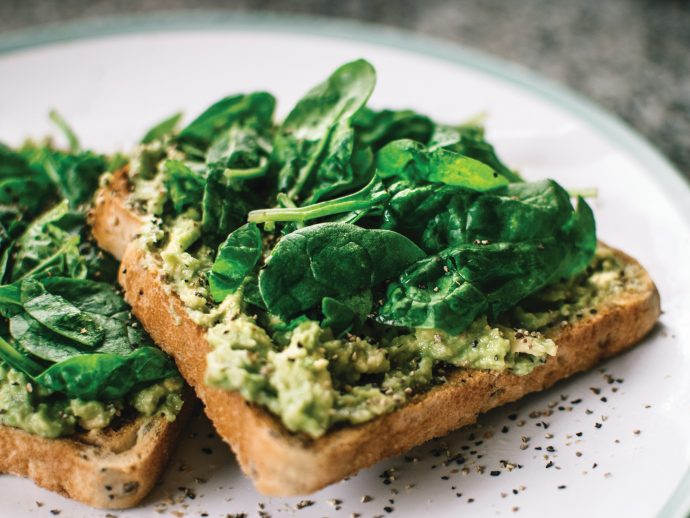
    Dark leafy greens such as spinach and kale are already nutritional heavy hitters, but if you really want to reap their rewards, make sure to fatten them up. Research shows that consuming foods such as kale, tomatoes, and carrots—good sources of carotenoid antioxidants including lycopene and beta carotene—with a dietary source of fat, such as avocado, can increase how much of these heart-friendly plant compounds we absorb.

    Turmeric and black pepper

    While turmeric is increasingly being studied for its heart-benefitting, lipid-lowering, and anti-inflammatory powers and a big reason why golden milk is trending, we don’t absorb its main bioactive compound, curcumin, into the bloodstream very well. The good news is that a chemical found in black pepper called piperine can greatly bolster our ability to take up curcumin. So, whenever you add the golden spice to curries, soups, sauces, and scrambled eggs, don’t forget to also include a few twists of the pepper grinder.

    Oats and berries

    Sure, a hunk of steak is a good source of iron, but you can also get the mineral from plant-based foods such as oats, beans, lentils, tofu, fortified cereals, and spinach. There’s a catch, though: only 2 to 20 percent of the iron found in plant foods, called non-heme iron, makes its way from your digestive tract into your blood. Mother Nature has provided an assist in the form of vitamin C (ascorbic acid)—present in edibles such as berries, bell pepper, tomatoes, broccoli, and citrus—which converts plant-based iron into a form that is more readily absorbed.

    Tea and lemon

    A recent study discovered that adults who consumed more green or black tea were, on average, more likely to have lower total and LDL (bad) cholesterol and higher HDL (good) cholesterol than those who didn’t consume tea. It might be that the potent antioxidants, including catechins, in green tea can improve your cholesterol profile. And it turns out you can make green tea even more of an antioxidant powerhouse by adding a squirt of lemon. Citrus juice can increase the amount of antioxidants in green tea that are available for the body to absorb by up to five-fold.

  • Find fitness joy

    Find fitness joy

    Find fitness joy

    You don’t need to choose function over fun

    By round of applause, who’s excited about their daily (or intended daily) workout? Crickets? But do you get excited about beach volleyball, pickleball, dancing, hiking …? Hobbies can be fun and physical!

    Fitness-life balance

    The buzzwords in today’s workplace include “work-life balance.” The phrase refers to the need for workers to have enough personal time outside of work so they are effective, engaged, and motivated workers while at work.

    The same balance is necessary for your workouts to be effective, when considering fitness and your life. In fact, the stakes are perhaps higher when it comes to your workout and fitness choices, because unfocused and disinterested workouts can result in injury.

    Find strength in sport and health in hobby

    It’s a commonly asked question: “What is the best exercise to keep you heathy?”

    Well, what do you think the answer is? CrossFit? Barre class? Yoga? High-intensity interval training? Low-impact steady-state training? The real answer is simple: the best exercise to keep you healthy is the exercise that you’ll actually do!

    There is a well-established and commonly understood connection between exercise and positive mental health. Less studied and understood is the significant positive correlation between positive mental health and exercise adherence. But, sure enough, it works both ways!

    This means that just as some people can spiral downward into negative mental and physical health, they can also lift themselves upward toward positive mental and physical health! The key is to find an activity that you enjoy doing and that still gives you bang for your buck.

    Healthiest hobbies

    Here’s a taste of some fun activities, caloric expenditure, and physical benefits (which, as we know, also carry mental health benefits).

    Gardening

    Gripping, bending, walking, lifting, stretching: gardening has it all, not to mention the mental benefits of taking care of plants, the mental exercise of planning over space and time, vitamin D, and fresh air. And you can burn a similar number of calories as you would at a fitness facility—“… there is a gym outside many a window,” as Sir Richard Thompson, past president of the Royal College of Physicians in London, UK, once said.

    Golf

    Depending on your sex, whether you walk or ride a golf cart, and how many holes you play (not to mention how many balls you have to go looking for), you can burn between 531 and 2,467 calories, on average, per 18 holes. Include hand-eye coordination, core strengthening, and “one-with-nature” benefits, and you’ve got one heck of a healthy hobby!

    Pickleball

    The average 65-year-old burns about 350 calories per 60-minute doubles match. Not only that, but cardiovascular conditioning, flexibility, and hand-eye coordination are all challenged in this most enjoyable tennis adaptation.

  • Heart-Healthy Curried Pumfu Stir-Fry with Christine Waltermyer

    Heart-Healthy Curried Pumfu Stir-Fry with Christine Waltermyer

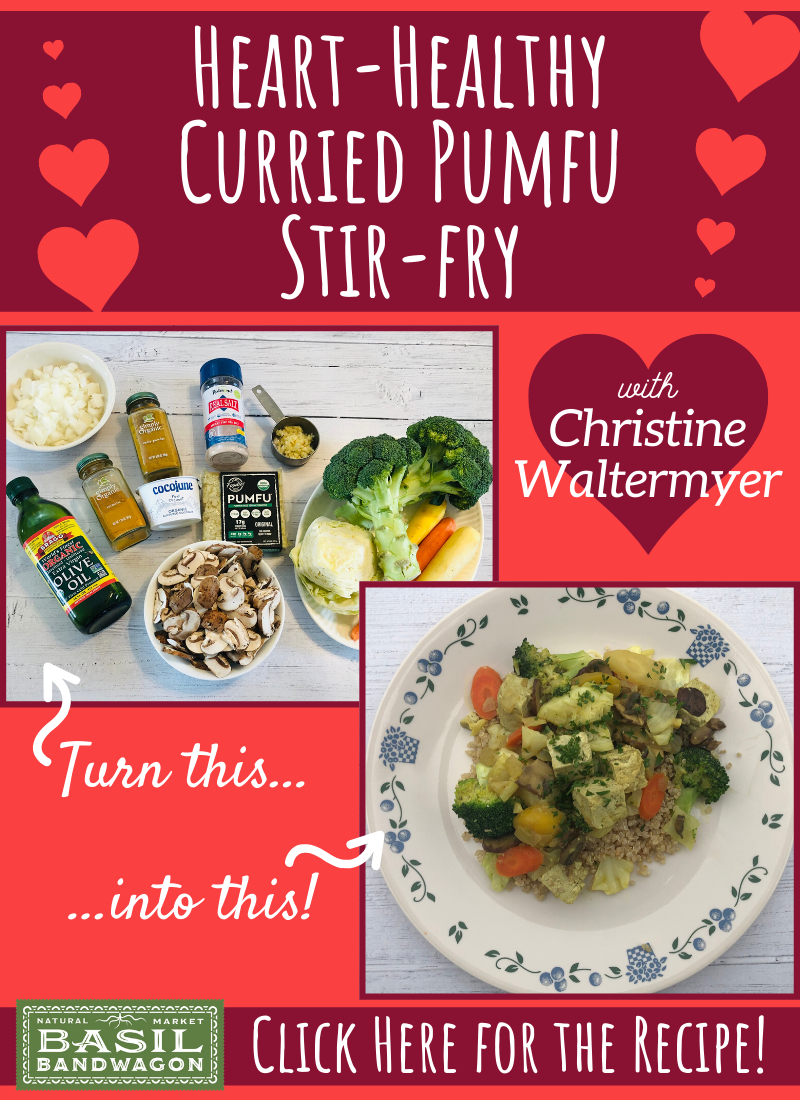
    Heart-Healthy Curried Pumfu Stir-Fry

    with Christine Waltermyer

    Christine Waltermyer is a local Wellness Chef, private chef to celebrities, published cookbook author and founder of the Natural Kitchen Cooking School, which offers an online Plant-Based Cooking Program. She also loves shopping at Basil Bandwagon! Visit naturalkitchenschool.com to get your FREE copy of her cookbook, “7 Days of Deliciousness.”


    Serves 4

    Ingredients

    1 tablespoon olive oil

    1 medium onion, chopped

    3 cloves garlic minced

    ½ teaspoon sea salt, or to taste

    2 cups sliced mushrooms

    1 teaspoon curry powder, or to taste

    ½ teaspoon turmeric

    3 heirloom carrots, peeled and sliced

    1 container CocoJune Organic cultured coconut yogurt

    1 8-oz. pack Pumfu pumpkin seed tofu, cubed

    ¼ small head green cabbage, chopped

    2-3 cups broccoli spears

    Method

    1. Heat the olive oil over medium heat. Add the onions and garlic. A pinch of the salt helps the onions to soften.

    2. Cook and stir for 3 to 5 minutes, or until the onions have softened. Add the sliced mushrooms, curry powder, remaining sea salt and turmeric.

    3. Cook and stir for a few minutes, then cover for a few more minutes.

    4. Uncover and add carrots and the coconut yogurt. Stir and cover, cooking for another minute.

    5. Add the cabbage, Pumfu and broccoli. Cover and cook for another 5 minutes, or until the broccoli is tender but still bright green. Serve hot, over cooked quinoa or rice. Enjoy!


    Thank you to Christine Waltermyer and the Natural Kitchen Cooking School for working with us to help promote healthy, nutritious meals and products that are affordable, full of nutrients, and simple to make at home!

  • Winter Crunch Salad with Christine Waltermyer

    Winter Crunch Salad with Christine Waltermyer

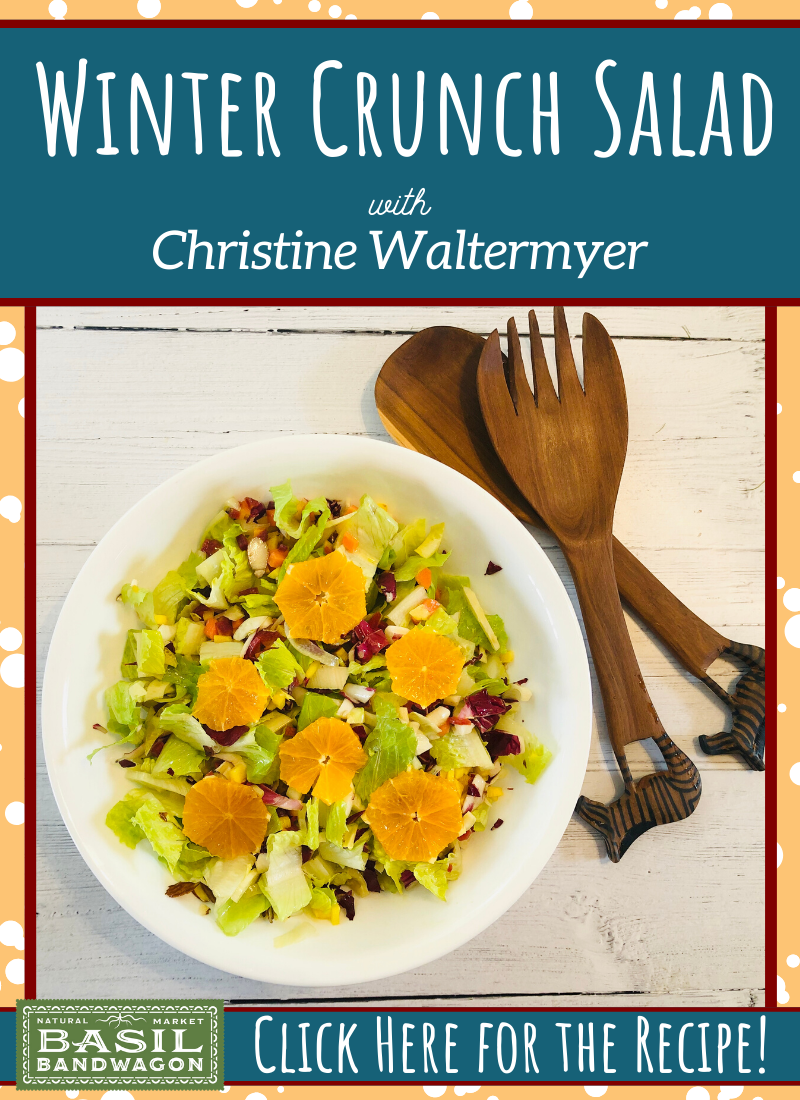
    Winter Crunch Salad

    with Christine Waltermyer

    Christine Waltermyer is a local Wellness Chef, private chef to celebrities, published cookbook author and founder of the Natural Kitchen Cooking School, which offers an online Plant-Based Cooking Program. She also loves shopping at Basil Bandwagon! Visit naturalkitchenschool.com to get your FREE copy of her cookbook, “7 Days of Deliciousness.”


    Serves 4-6

    A colorful, heart-healthy salad that highlights seasonal vegetables.

    Ingredients

    Salad:

    ½ head radicchio, chopped

    ½ cup chopped fennel bulb

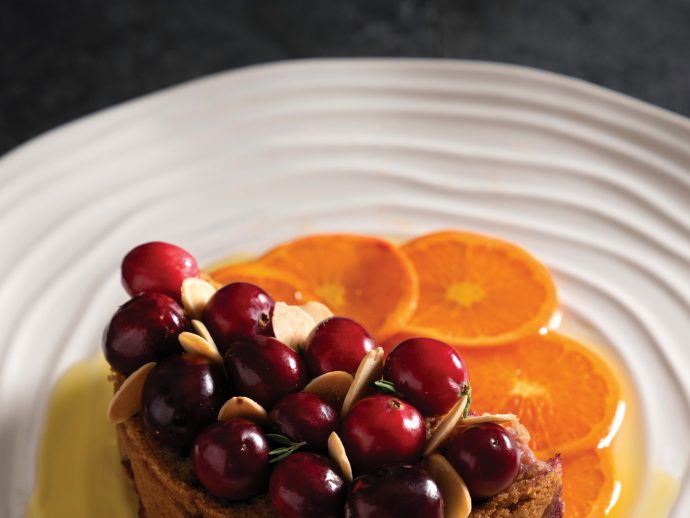
    1 mandarin orange, sliced

    2 tablespoons sliced almonds

    2 heads Belgian endive, cored and sliced

    3 heirloom rainbow carrots, peeled and diced

    5 cups chopped romaine lettuce

    Dressing:

    ½ cup olive oil

    ⅓ champagne vinegar

    1 tablespoon maple sugar

    ½ teaspoon sea salt

    1 teaspoon prepared yellow mustard

    Juice of one small orange 


    Method

    1. Combine all salad ingredients in a large bowl.

    2. In a small bowl, combine all dressing ingredients. Whisk well to blend.

    3. Just before serving the salad, pour desired amount of dressing over the salad and toss to combine. Enjoy!


    Thank you to Christine Waltermyer and the Natural Kitchen Cooking School for working with us to help promote healthy, nutritious meals and products that are affordable, full of nutrients, and simple to make at home!

  • Hawthorn, a Tonic for the Heart

    Hawthorn, a Tonic for the Heart

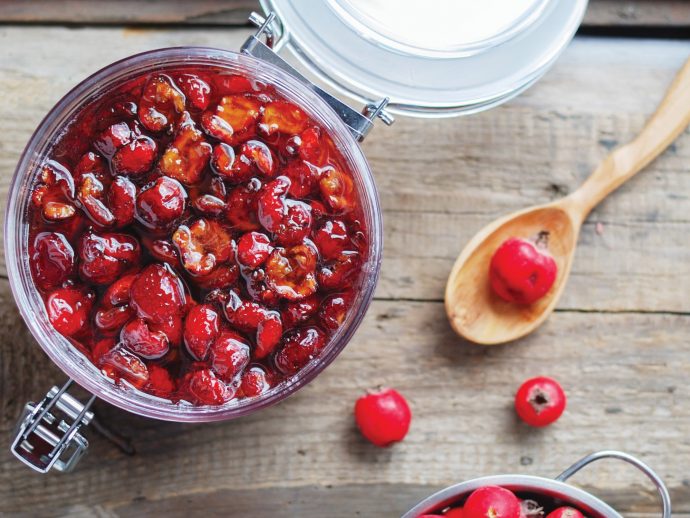
    Hawthorn berries, leaves, and flowers have been used as food and medicine for centuries. Their use as a heart tonic, though, is relatively recent.  That story is interesting and goes like this:

    A Dr. Green of Ennis in County Clare, Ireland practiced medicine in the 19th century and was known to have great success with patients with heart ailments.  This Victorian era doctor was secretive about his methods, never revealing the ingredients of his cures for dropsy(edema), flux of humor(circulation problems), heart weakness in aging, and the like.  When he died, his daughter revealed that his protocol consisted largely of administering tinctures of the ripe berries of the very common Hawthorn tree.

    Hawthorn is a gentle herbal medicine.  It seems to work primarily by enhancing the hearts ability to utilize oxygen.  It can be taken on a regular basis over a long period of time.  In separate double-blind studies, patients with either cardiac insufficiency or weakened cardiac performance showed significant improvement.  In other studies, Hawthorn exhibited the ability to  increase coronary blood flow, decrease arterial blood pressure, decrease heart rate, and improve the contractility of the heart muscle.

    There is no one constituent within the plant that can do all of the above.  The whole plant extract is preferred, including  the leaf, flower and berry.  Hawthorn doesnt work to stimulate the heart, like digitalis (a genus of about 20 species of herbaceous perennials, shrubs, and biennials), but works on the nutrition of heart cells and their ability to store and release energy.  Dr. Rudolf Weiss, MD, of Germany states that Hawthorn has a long-term sustained effect on degenerative, age-related changes in the muscular tissue of the heart.

    Hawthorns are shrubby trees which grow prolifically in our area. They are in the genus Crataegus, and part of the Rose family.  They have noticeable white flowers, but care should be taken to avoid the long sharp thorns on the branches!  Extracts are available in both capsule and liquid form.

    Come in and speak with one of our knowledgeable Wellness Ambassadors about Hawthorn today. We carry many options to choose from and, this month only, are featuring a special smoothie in our café that includes this wellness-promoting ingredient. Shot Through the Heart, appropriately named, is available through the end of February, so stop by and grab one to enjoy!

    Written By Ralph Celebre, Registered Herbalist (AHG)