Tag: holistic

  • Autoimmune management

    Autoimmune management

    Autoimmune management

    Activate your best assets against autoimmune flares

    An autoimmune disorder (AD) occurs when your body’s defense system can’t differentiate between its own cells and external, threatening cells that results in an attack on your own healthy cells. Some of the more common ADs that you may have heard of include rheumatoid arthritis; psoriasis; lupus; thyroid diseases, such as Graves’ and Hashimoto’s; and type 1 diabetes.

    It’s also worth noting that an AD is a highly biased jerk: it discriminates against women to the tune of about 80 percent of all diagnosed cases. Where it gets serious, and painful, is when the individual with AD experiences flares.

    Flares: these aren’t your momma’s dancin’ pants

    Autoimmune flares are like mini storms in your body, and depending on the type of AD that you have, those flares can attack different organs.

    What causes these flares?

    For some people, consuming alcohol; processed/fried foods; foods with lots of sugar; and high-fat foods, like cheese and some dairy, may be dietary triggers, and they certainly exacerbate the symptoms of flares.

    With time, most individuals managing an AD usually come to an understanding of what triggers a flare in their body. But if someone is undiagnosed, it could really be anything:

    • viral infections like influenza and HPV
    • fungal infections like Candidiasis
    • processed meats, refined sugars, dairy products, or gluten for those with celiac disease
    • environmental factors, like air pollutants, cleaning products, or makeup
    • psychological or physical stress

    Flare management through exercise

    In those with an AD, studies show that regular exercise can help improve mobility, reduce pain, and even offer a much-needed energy boost. It also helps regulate immune function, which means fewer and less intense flares.

    Holistic approach to flare management

    If autoimmune management was as simple as exercising, there would be no need for specialists, but like anything in life, the best approach is the one that considers the important factors: diet, stress, and sleep.

    Diet―let’s talk superfoods!

    When it comes to ADs, what you eat can either fan the flames or cool them down. Luckily, there are some pretty tasty ways to help keep inflammation in check:

             omega-3sfound in fish oil; may help heart health and reduce inflammation.
             curcuminfound in turmeric; is known to fight inflammation
             garlichas immune-supportive effects
             ginsengmay help reduce stress and give energy levels a nudge
            gingeris anti-inflammatory for digestion
            pineapplehelps relieve some inflammation symptoms

    Stress―the silent assassin

    Stress is one of the biggest AD flare triggers. Try some mindfulness techniques like meditation or deep breathing exercises. Yoga or tai chi can be a great way to combine stress reduction with gentle movement.

    Sleep―an underrated ally

    The important role of sleep as an autoimmune regulator cannot be overstated. As best as you can, develop a sleep routine that includes creating a calming environment in your bedroom and limiting late-night doomscrolling.

    By Brendan Rolfe

    Article Courtesy of Alive Magazine

  • Holistic happiness

    Holistic happiness

    Holistic happiness

    What makes us feel happy?

    Is there anything more highly desired, yet elusive, than happiness? Some describe it as a fleeting emotion along life’s journey, others as the ultimate destination. Some think about it in terms of genetic inheritance, others as the culmination of practices.

    How do you hold happy?

    Dr. Caroline Meyer, ND, experiences happiness by catching the small moments, pointing out that when we “rely on big moments, we miss the sustenance of daily pleasures.”

    For Josh Gitalis, clinical nutritionist and functional medicine practitioner, happiness is about attuned decision-making and feeling aligned with his purpose.

    For Chantée Dardaine, registered psychotherapist, happiness is an embodied feeling when engaged in doing something “soul-warming.”

    The “how” of happiness

    What is it that we’re experiencing when we say, “I’m happy”? Turns out, it’s physical, emotional, and intentional.

    Physically, Gitalis explains, the emotion we describe as happiness is the intersection of multiple factors: “Neurotransmitters that regulate mood, like dopamine, serotonin, and endorphins, are released in brain regions associated with happiness. Hormones such as oxytocin are influenced by hugging, bonding, and social interactions.”

    “The capacity for happiness relies on the health of our nervous system,” says Meyer.

    To counteract the less-than-happy autopilot many of us find ourselves in, leading to missing out on simple, happy moments, Dardaine brings “an intention of happiness.”

    It’s all about appreciation

    “Gratitude encourages us to look for pleasurable moments in daily life,” Meyer says. “Recalling with gratitude a few happy moments in each day has been a transformative practice,” she adds, “and mindfulness makes this possible.”

    It’s closer than you think

    “Growing up, happiness was related to goals,” says Dardaine. “I would frequently say ‘I’ll be happy when …’ which, looking back, made me feel that happiness was only waiting for me at the outcome. As it turns out, happiness is right in front of us.”

    Measuring happy

    Dardaine actively practises happiness by “scheduling moments of goodness,” such as afternoon tea or evening popcorn, while Graham intentionally cultivates things that evoke contentment or joy, such as time with friends or moving in nature.

    “Beyond purely pleasurable activities,” says Meyer, “I make sure to do a few mildly challenging habits every day.” At the end of each day, she experiences the “positive feeling of small accomplishments.”

    Highlighting happiness

    “Times of unhappiness can lead us to a deeper understanding of our needs, like what smells, sights, items, music, or people can support us coming into a state of happiness,” says Dardaine.

    Finally, Meyer suggests: “Place a hand on your heart during a happy experience and silently repeat, ‘Remember this moment.’ Happiness can become a sacred practice.”

    By Deena Kara Shaffer, PhD

    Article Courtesy of Alive Magazine

  • What is a HydroSoul?

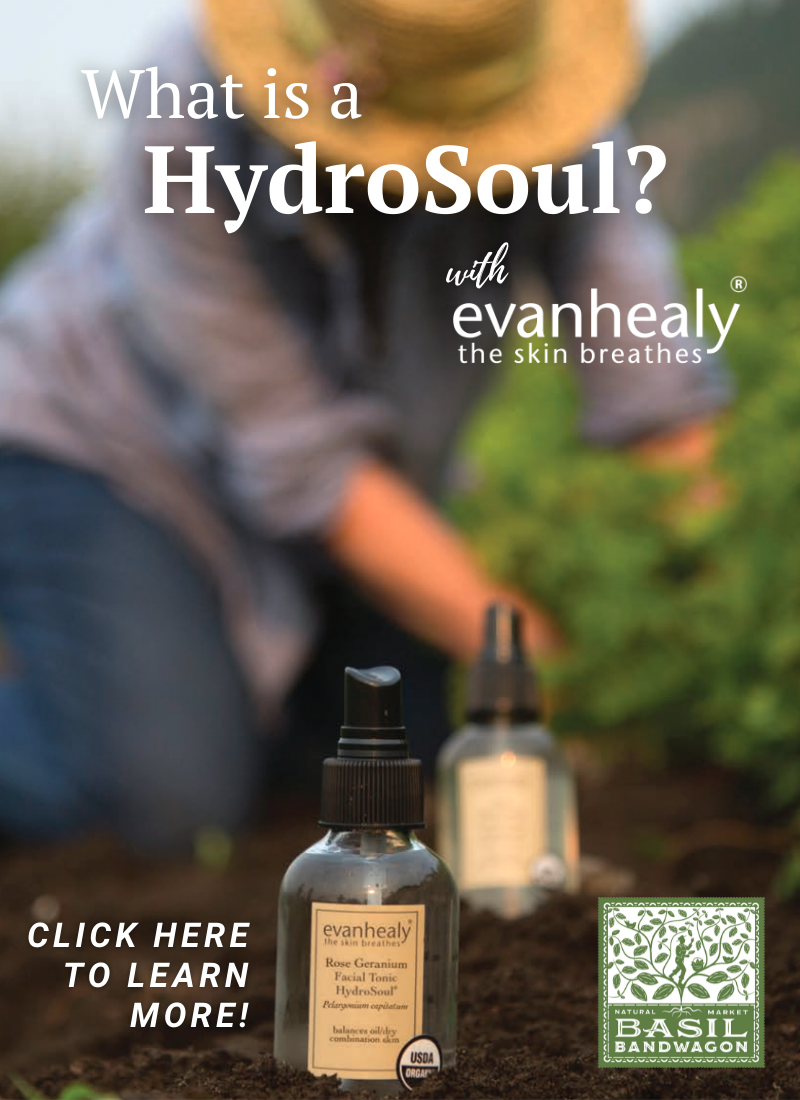
    What is a HydroSoul?

    What is a HydroSoul? with evanhealy

    evanhealy is a certified organic holistic skincare company inspired by the wisdom of nature, formulated to support the rhythms of the body, and created to transform the modern perception of beauty.

    Which HydroSoul Should You Use?

    Rose Geranium Facial Tonic HydroSoul

    • For all skin – especially dry, oily, combination and teen
    • Features a soft and delicate rosy-leaf fragrance
    • Gentle and slightly astringent

    Lavender Facial Tonic HydroSoul

    • For all skin – especially sensitive, irritated and sun damaged
    • Fresh herbal fragrance with honey-sweet notes
    • Calms redness and soothes sensitive skin

    Want to try? Purchase any of their products for 20% OFF before their sale ends May 31st, 2022! Available in-store & online!

    Resources:

    https://www.evanhealy.com/

    https://cdn.shopify.com/s/files/1/0285/8103/6125/files/hydrosoul-literature.pdf?v=1588182062

    https://www.evanhealy.com/products/lavender-facial-tonic-hydrosoul

    https://www.evanhealy.com/products/rose-geranium-facial-tonic-hydrosoul

  • “Spring” into a Better Skincare Routine with evanhealy

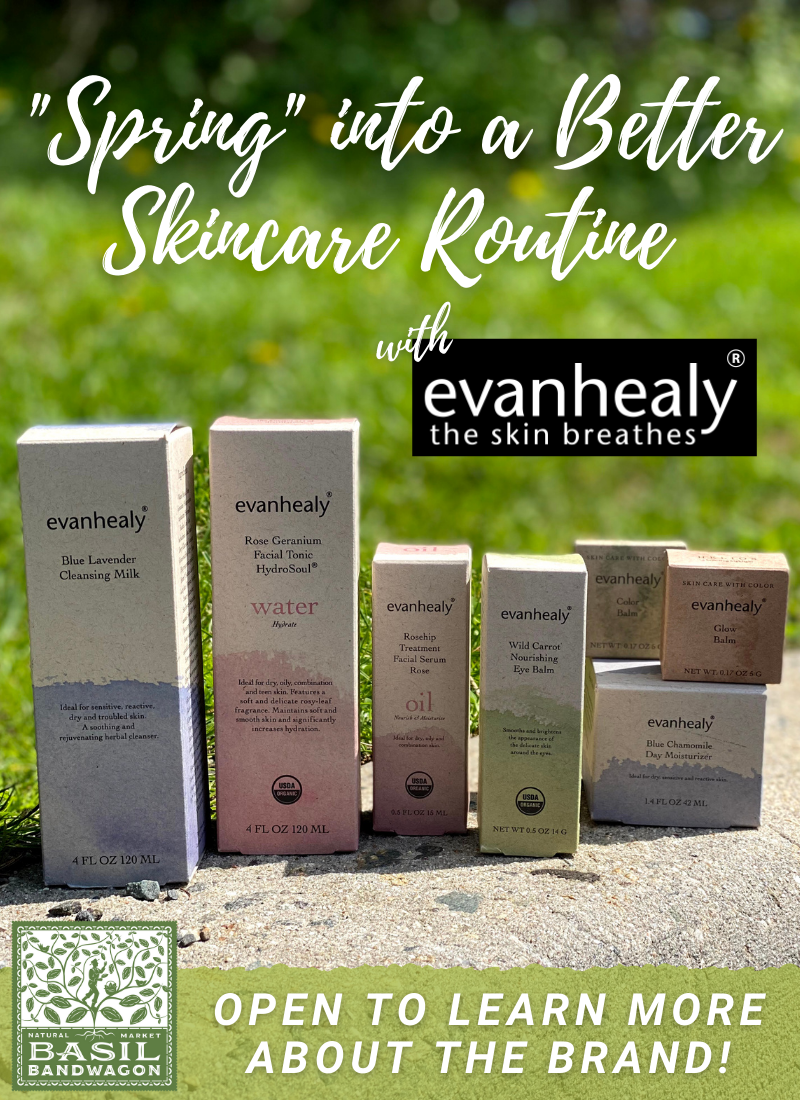
    “Spring” into a Better Skincare Routine with evanhealy

    Meet evanhealy

    evanhealy is a holistic skin care line created and formulated to work with the rhythms and physiology of the body, and to support long-term skin health and radiance.

    Holistic skin + body + cosmetics that go beyond organic

    Whole plant oils, waters and butters, as well as earthen clays, are our tools and allies. They source them directly from small family farms, women’s co-operatives and co-operative villages around the world.

    Inspired by ancient beauty practices, nature and its cycles, ayurveda, homeopathy and traditional western herbalism, their approach is a fusion of modalities centered around the goal of realigning skin with its highest potential and awakening its innate resilient, adaptable nature.

    The act of engaging in truly holistic beauty is an intimate one and through it we are working to transform, evolve, and reshape the modern perception of beauty, as well as our individual relationships with our skin and ourselves.

    Daily Spring Skin Ritual

    Cleanse

    • Begin by moistening your skin with three to four splashes of warm water.
    • Mix one pump of cleanser with a couple dribbles of warm water to dilute. Blend in your palms and then massage all over the skin, working in upward circular motions. 
    • Rinse with cool water and pat dry.

    Hydrate & Nourish

    • After cleansing, saturate your face with Rose Geranium HydroSoul.
    • In the palm of your hand, combine one to three pumps of Neem Immortelle Purifying Infusion with a couple of sprays of the HydroSoul. Blend the two together, then gently and slowly press the warmed emulsion into your skin.
    • Mist face with HydroSol and press in again

    Are you a visual person? Check out their YouTube page for how-to’s, product reviews, and more! https://www.youtube.com/c/evanhealyskin/videos

    Interested? Purchase any of their products for 20% OFF before this sale expires May 31st, 2021! Available in-store or online!

    Resources:

    https://www.evanhealy.com/

    https://www.evanhealy.com/pages/our-mission

    https://www.evanhealy.com/blogs/stories/springtime-skin?fbclid=IwAR1Ofc7Z7RD_PAbcGiJQO6DT0LPp4y7SmQsZUSopaAueQjkTGeHkiG9t3xA

  • Guest Post: Developing Your Personal Health Plan

    Guest Post: Developing Your Personal Health Plan

    A Chiropractor’s Guide to Creating Health & Happiness This Fall & Beyond

    By Dr. Michele Gardner of Gardner Family Chiropractic, Flemington, NJ

    Have you ever attempted to program your GPS and found it searching for satellite? It won’t show your travel route until it first knows where you are… Finding your way in life is incredibly similar! You cannot get to where you want to go without first knowing where you are. In helping you develop your Personal Health Plan, we’ll talk about where you are on your journey to health, different philosophies of health, and actions to ensure your future wellbeing.

    Because we are all at different places on our journey to health, we will each have a different plan. You will tailor your own program to suit your lifestyle. The idea behind a Personal Health Plan is that it is a decision to stay healthy and take steps toward insuring your future success. (Madeira, 2006) My favorite definition of health is one that includes physical, social, emotional, and spiritual wellbeing – not merely the absence of disease. (WHO, 1948) Health is a lifelong journey and requires a bigger picture view of life to be in view at all times. With this in mind, know that you are building awareness here. You are defining your interpretation of yourself and getting specific about what you want.

    Some of us are healthy and want to stay that way. Some of us are facing a health challenge or crisis that is new. Some of us are managing chronic illness. Whether you have survived a health crisis and want to insure it never comes back, or want to take your current health to new heights, a Personal Health Plan will help you succeed. No matter where you are on your journey, I want to encourage you to make your choices from a place of self-love. A frantic push toward a desired end with a rigid list of to-do’s will not serve you and is not sustainable. Plus, you’ll miss out on the gifts you have the potential to receive – even while in crisis.

    If you owned a million-dollar race horse, what would you feed it? Would you exercise it? Would you keep its environment clean? Would you give it plenty of rest, sunshine, and fresh air? Of course you would! The reason you would is because this isn’t just any horse… this is a million dollar race horse! (Madeira, 2006) Have you guessed it already? Yes, you are the million-dollar race horse! Why would you do any less for yourself? For the parents reading this, I know you want the best for your children and you know they learn through observation. Lead by example. Love yourself enough to treat yourself as you would your children so they can learn to do this for themselves. Our ability to love is infinite. I promise you, if you love yourself more you won’t be taking anything away from them. You’ll be giving them more than you can imagine.

    For some of you, the following will be a big ah-ha moment. There are three different philosophies of health.

    1. Mechanistic Philosophy: This is the one our culture is most familiar. The belief inherent in this philosophy is that living things are like complicated machines, composed of many parts lacking any intrinsic relationship to each other. 
    2. Holistic Philosophy: This is the one most familiar to Eastern cultures. This philosophy values the idea that living things should be viewed as wholes- not as collections of parts.  Functioning cannot be fully understood solely in terms of component parts.
    3. Vitalism Philosophy: The basic principle of this philosophy is that living things have an innate intelligence which animates, motivates, heals, coordinates and inspires them. (Glassey, 2010)

    Our culture’s medical model is based in the mechanistic philosophy. It is the most beneficial in emergency scenarios. If your kidney if failing or you’ve broken a bone, this is the approach best utilized. However, when faced with chronic illness, the modalities steeped in holism may fair better. And vitalistic philosophy can help us choose to add actions and traditions to be utilized whether we’re sick or well. There really isn’t necessarily one right answer. It is what is right for you right now. And, that may change too. Life and growth are a dynamic evolution.

    Directions for Creating Your Personal Health Plan:

    Once you’ve chosen your primary philosophy of health, you’ll develop your personal health wheel. Some examples of a health wheel are shown here along with a blank one you can print to create your own.duke-wheel-of-health2 wheel-of-life-assessment
    blank-self-care-wheel

    You’ll notice there is a center circle on this wheel.

    Out of your health philosophy, choose up to three traditions that support your philosophy.

    Some examples are: Acupuncture, Aromatherapy, Ayurveda, Biofeedback, Chinese Medicine, Chiropractic, Energy Medicine, Faith Healing, Feldenkrais Method, Functional Medicine, Gestalt Therapy, Herbalism, Homeopathy, Hydrotherapy, Hypnotherapy, Iridology, Kampo Medicine, Massage Therapy, Meditation, Naturopathic Medicine, Osteopathic Medicine, Polarity Therapy, Pranic Healing, Prayer, Qigong, Rebirthing, Traditional Medicine, or Yoga Therapy.

    Next you’ll choose facets of health that are important to you.

    The most common are physical, spiritual, recreational, professional, social, emotional, mental, financial, romantic, creative, relational, environmental, and family. Within each category you can get specific and detailed.You have the ability to know what area of your life needs your attention to reach health goals. Simply evaluate yourself on the wheel. There is an example wheel that is multi-colored with tick marks to help quantify the level of health achieved in that category. (Baker, 2013) What do you want your life to be?

    After you have chosen which areas to work on, you can decide what or who will help you with your action steps.

    You are not meant to do this alone. Find practitioners within that can walk with you along your journey. They will help hold you accountable while giving you the support you need.

    Get started right now:

    Print one of the sample wheels. When thoughts come to you about what you want for yourself, journal them or use a voice recorder on your phone. You’ll build upon this with time and allow the specifics to unfold.

    If you’d like support from me, don’t hesitate to reach out. Visit my website for more information on how to reach me. I can help you find a practitioner you are looking for or guide you through some choices. Lastly, I’ll leave you with a quote I like:

    “If you don’t design your own life plan, chances are you’ll fall into someone else’s plan. And guess what they have planned for you? Not much.” – Jim Rohn

    No matter where you are on your journey toward health, you can make choices today that will lead you where you want to go. Surround yourself with people who help you passionately move toward self-actualization!


    Works Cited

    Baker, B. (2013, September). Retrieved from http://www.startofhappiness.com/wheel-of-life-a-self-assessment-tool/

    Glassey, D. (2010, September). The Vitalistic Healing Model. Retrieved from Pathways to Family Wellness: http://pathwaystofamilywellness.org/Holistic-Healthcare/the-vitalistic-healing-model.html

    Madeira, J. (2006). Developing Your Personal Wellness Plan. Setting Things Straight (p. 1). Madeira Success Strategies.

    Duke University (2014). Retrieved from Duke Integrative Medicine: http://triadintegrativehealthcoaches.com/

    Unknown. (n.d.). Retrieved from Pinterest: https://www.pinterest.com/pin/11892386492434313/

    WHO. (1948). WHO definition of health. Retrieved from WHO International: http://www.who.int/about/definition/en/print.html

    Wikipedia. (2016, August). Holism Philosophy. Retrieved from https://en.wikipedia.org/wiki/Holism

    Wikipedia. (2016, June). Mechanism Philosophy. Retrieved from https://en.wikipedia.org/wiki/Mechanism_(philosophy)