Reusable cups that help curb the spread of microplastics
The problem with plastic
Microplastics have also been found in soil ecosystems, potentially compromising crop health. Because microplastics can release harmful pollutants, we are seeing worldwide effects of the damage they can do to our oceans, lands, and air—and the materials we consume from those sources.
The human cost
As devastating as microplastics are for Mother Earth, they also pose a significant threat to human health. These particles find their way into our bodies through various channels, including food like seafood and honey, bottled water, and even the air we breathe. Microplastics have been found in human blood, breast milk, livers, and kidneys.
While we are still learning about the effects of microplastics on human health, the initial research has been alarming. A 2023 study found that microplastics “can interfere with important biological processes in the human body and can cause disruption of the endocrine, immune system; can have a negative impact on mobility, reproduction and development; and can cause carcinogenesis.”
A 2025 report from the University of New Mexico Health Sciences found that microplastics in human brains have increased 50 percent over the past 8 years, and dementia patients had 10 times as many microplastics present as the general population.
Better for one, better for all
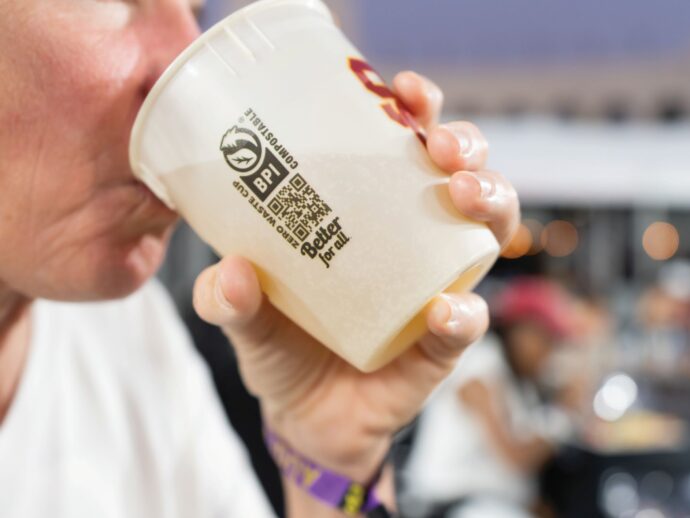
One company that is stepping up to tackle the plastics problem is Better for All. Better for All has developed a reusable and biodegradable cup that is designed to replace single-use plastic cups.
Their solution to the problem of single-use plastics lies in PHA (polyhydroxyalkanoate), a material that is reusable and non-toxic, can sustain heat up to 212 F, and is at-home compostable. This unique material is known as a biopolymer, which is a biomaterial made by living fermentation microorganisms.
The main stage
According to one watchdog publication, an average stadium uses 800,000 plastic cups for a year’s worth of concerts, and 571,659 cups throughout an NFL season. The Oak View Group, which founded a sustainability network that includes sites like the Prudential Center, Dodger Stadium, Fenway Park, Wrigley Field, and Citi Field, says that their members “currently divert an average of 32 percent of their waste through reusing, recycling, and composting.”
With the addition of Better for All’s compostable cups, venues can see a major change in their microplastics contribution, without asking attendees to alter their behavior (or their favorite gametime beverage). The next time you see your favorite artist play a concert, or root for your home team at a game, you may be able to cheers to something pretty impressive—sustainability.
By Laura Bolt