Tag: movement

  • Exercise and mental health

    Exercise and mental health

    Marrying your movement to your mood

    Life does get in the way

    Exercise and poor mental health are at war with each other: exercise can be an effective treatment for a condition that, by its very nature, dampens your will to move.

    Most exercise programs don’t consider psychological hurdles. Motivation is the nucleus of self-improvement. It is the ocean between should and can. Mass market programs are made to be sold; asking “Is this even possible for you?” is a poor retail tactic.

    The most important point when motivation is at play is just emphasizing that any exercise is better than none.

    A systematic review and meta-analysis of 15 prospective studies of nearly 200,000 people noticed “significant mental health benefits from being physically active, even at levels below the public health recommendations.”

    Quality, not quantity. Never mind 150 minutes—let’s start with five.

    There’s such a thing as too much

    In fact, too much physical activity too quickly can manifest as a form of self-harm, masking important emotions.

    Listen to your body

    A structured exercise program can be a catalyst. However, trusting yourself and being in touch with your emotions is paramount. Whatever gets you out the door: do you like to walk, play tennis, hike?

    Antidepressants have the common side effect of weight gain, which can lead to body dysmorphia. While both sexes can feel pressure to conform to a societal norm, men suffer differently.

    Some men are trying to achieve an unrealistic goal, which leaves them in a state of dissatisfaction. While chasing it, they’re still doing things that seem outwardly healthy, like going to the gym. They’re eating food in what seems to be a healthy manner, but perhaps that has led them to use performance-enhancing drugs. It circles back to just being someone who is trying to deal with those demons themselves and not seeking support.

    It’s a beautiful thing to move in your body, be in your body, and just listen.

    Sources of hydration for exercise

    watercarbonated water is just as effective
    sports drinksmake your own by adding 1/2 tsp (2 mL) of salt per litre of water, along with some sweetener or fruit.
    coconut watercontains high levels of potassium
    chocolate milkcontains the necessary fat and protein
    green teaimproves the function of the body during exercise

    How to get started

    • Start simple.

    • Do what you enjoy.

    • Set reasonable goals.

    • Try not to think of exercise as a chore.

    • Plan for, and accept, setbacks.

    Article Courtesy of Alive Magazine
  • Play every day

    Play every day

    Play every day

    How to make physical activity a lifelong habit

    Are you worried that your kid is a couch potato? Is that concern warranted, or is it simply a product of generational differences? We explore healthy activity levels and talk with an expert about how to help turn your mini-me into a mini-mover!

    It’s all fun and games

    Not all physical activity needs to be competitive to be beneficial. Based on years of research, recommendations agree that two- to five-year-olds should be moderately active throughout the day, while six- to 17-year-olds need at least 60 minutes of moderate to vigorous activity to meet their daily physical development needs.

    Building increased movement with imagination

    Jesse Schneider is a kinesiologist and owner of a noncompetitive sports program for kids from 16 months to 12 years of age. “The most practical way [to help your child build increased movement],” says Schneider, “is to engage kids’ natural imaginations and turn daily tasks into fun games. Kids love being a part of games and stories, and if you can get them to buy into your story, the rest is easy.

    “For example,” Schneider suggests, “instead of just putting dirty clothes in the washer, say you’ve just been told that LeBron James and the Looney Tunes Squad need to defeat the Hamper of Destruction by feeding him stinky socks (get them to run up and slam dunk, or practice their basketball shooting form). Once you turn exercise into something fun, they’ll want to do it again and again.”

    Motivating the undecided and disinterested

    Schneider says, “Exposing your child to as many different activities as you can, like gymnastics, skating, swimming, skiing, Sportball, or bike riding, [can] significantly expand their motor skills and physical literacy.” He adds that when your child starts to take more interest in certain ones, you can focus more on those activities.

    Being an active role model

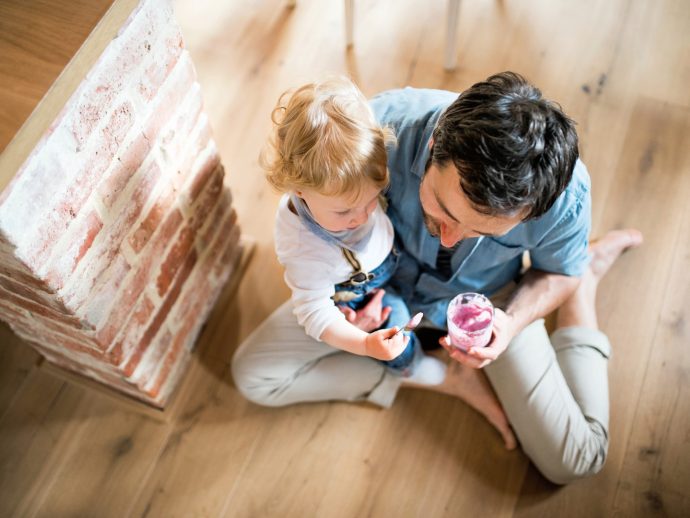
    According to Schneider, research has shown that parents who model a physically active lifestyle significantly influence their child to do the same.

    “If you can model what an active lifestyle is, your child will be more likely to adopt that [example],” Schneider says. “It doesn’t have to be anything crazy: simply try to do some form of activity a few times a week. Make it a priority for yourself and your family.”

    Pro tip to get moving as a family

    “The only secret is to just have fun—on purpose,” says Schneider. “Look for things in your life that can be made more fun. Whether it’s your job, grocery shopping, or driving, don’t be afraid to be silly with your kids; this makes mundane tasks something to look forward to.”

    “You only have young kids for a very small fraction of your life,” says Schneider. “Take any moment you have with them as a chance to bring joy to each other’s day, and I promise they will remember it for the rest of their lives.”

    By Brendan Rolfe, CPHR, BA, DipA

    Article Courtesy of Alive Magazine

  • (Re)discover the joy of movement

    (Re)discover the joy of movement

    (Re)discover the joy of movement

    Let’s make physical activity fun again

    Have you ever watched a two-year-old bop along joyously to a favorite song? Or a preschooler dash around a playground with glee? Young children intrinsically know that moving our bodies is fun! And then, somewhere along the way, we lose that. This New Year, let’s resolve to rediscover the joy of movement in our own lives. Here’s how.

    Fun, not fitness

    Getting regular exercise is easier said than done, isn’t it? Maybe you still cringe at the memory of high school gym class. Maybe you find the thought of working out at a gym boring. Maybe exercise classes feel intimidating. But who says that exercise has to be spin class, jogging, or lifting weights?

    From ballerina to pole artist: One woman’s journey

    Pole artist and instructor Rebecca Karpus discovered the world of pole after growing up as a trained ballerina. Like many children, she started dancing at a very young age and fell in love with it. After dancing professionally in university, she decided to pursue a different career path. Long days in the studio were replaced with long days at the office, which left her feeling incomplete. She deeply missed the artistry of dance but struggled to find the perfect dance alternative. “I tried going to the gym. I tried yoga. I tried Pilates. Nothing really clicked for me,” she explains.

    Eventually, on a whim, Karpus attended a pole class at a nearby studio several years ago. “I thought I would hate it,” she laughs, “but it was so exciting!” She explains that there is a lot of stigma associated with pole dancing. “But pole dancing isn’t always sexy. It can be very athletic or very dance-y. It is a great exercise, an amazing creative outlet, and a wonderful, supportive community. Pole [dancing] filled the void that ballet had left.”

    Find your own joy

    Looking for a unique movement idea? Ask yourself what type of activity might bring you joy. Consider something …

    • outdoorsy (such as mountain biking, hiking, kayaking, or stand-up paddleboarding)
    • artistic (such as pole dancing, belly dancing, or ballroom dancing)
    • you can do with others (such as ultimate Frisbee, curling, roller derby, pickleball, tennis, or square dancing)
    • you can do solo (such as yoga, tai chi, Nordic walking, or running)
    • with little commitment needed (such as drop-in aquafit, public skating, or an adult outdoor jungle gym)
    • you’ve wanted to try since childhood (such as gymnastics, fencing, horseback riding, martial arts, or hockey)
    • for the whole family (such as backyard picnic games, treetop adventure courses and ziplines, or canoeing)

    This year, let’s think outside the box and focus on fun and not fitness. Let’s listen to our inner toddler and move our bodies simply because it feels amazing! We deserve it.

    By Leah Payne

    Article Courtesy of Alive Magazine

  • Exercise Outside

    Exercise Outside

    Exercise Outside

    Sea-to-sky adventures for men’s physical and mental health


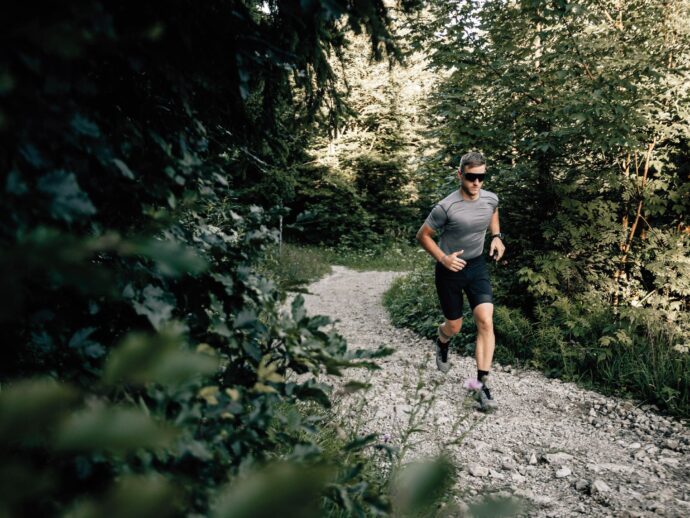
    Do you enjoy exercising outdoors? Compared to indoor exercise, numerous studies have shown that guys who turn the great outdoors into their workout studio are more motivated to exercise, push themselves harder, and feel more grounded and restored. Get started with al fresco adventures.


    Embark on a unique exercise adventure

    “Nothing improves my mood and perspective more quickly than a scramble up a peak on the Great Divide Trail,” says personal trainer Chad Alexander. “When I’m stuck in my head or worrying about something, I remember how alive I felt on that mountaintop cliff.”

    Here are some thrilling activity ideas to inspire your next adventure.

    • Travel from sea to sea to sea on foot by hiking or bikepacking (which is mountain biking fused with backpacking and camping).
    • Go rock climbing.

    Consider scuba diving (or shipwreck diving!).

    • Soar to new heights with kitesurfing (where a strong gust of wind launches you sky-high off a cresting ocean wave or propels you quickly across a smooth lake).
    • Try out hang-gliding or paragliding.

    Forge some friendly competition

    For something a little closer to home, unique team sports can get you moving in the fresh air.

    Ultimate frisbee and disc golf have recently exploded in popularity. The number of local disc golf courses, for example, has jumped by 300 percent in the last few years. Other off-the-beaten-path outdoor sports include archery, handball, and even Harry Potter-inspired quidditch.

    Team sports are some of the best ways for men to build long-term, positive mental health outcomes. “Outdoor activities have changed my life in terms of mental health,” says Robert Puharich, a high school teacher. “Having teammates gives me a sense of community.”

    Rise to the challenge: 3 benefits to pushing your limits

    Testosterone

    Friendly competition in team sports has been shown to raise your testosterone levels. This hormone is key for strength, endurance, and your sex life.

    Motivation

    Once you’ve beaten your competition, or even beaten your own self-doubt, you’ll feel more motivated and driven to tackle life’s challenges.

    Self-confidence

    Pushing yourself on a grueling adventure forces you to tap into your own confidence, self-trust, and skills. Over time, psychologists say, this builds self-efficacy and resilience.

    The best time to exercise outdoors

    With longer daylight hours, your window of opportunity is wide open. The best time to head out and get your sweat on depends on your goals.

    Mornings

    If you’re trying to lose weight, morning exercise on an empty stomach may reduce your food cravings later, and it also leads to burning more fat.

    Midday

    Exercise reduces stress and boosts your energy, making it the perfect escape in the middle of your workday.

    Afternoons

    Your muscles contract more effectively when you’re warmed up. For peak physical strength and endurance, your body’s natural temperature peaks in the afternoon.

    Article courtesy of Alive Magazine by Joshua Duvauchelle