Tag: new year

  • Give yourself a life detox!

    Give yourself a life detox!

    Give yourself a life detox!

    Follow through on your healthy living goals

    A healthy lifestyle is an accumulation of small actions that add up to vitality and longevity. Sometimes we know what changes we need to make in our lives but have a hard time getting around to doing them. And sometimes we know we need changes but aren’t clear about what to do. These tips from a professional psychotherapist will help you clarify goals, stop procrastinating, and start thriving.

    Step 1: Specify your goals

    “You can’t heal what you don’t acknowledge,” says Elenora Molnar, master therapeutic counselor.

    Step 2: Reflect on the goal

    It’s helpful to understand why you developed the unhealthy habit in the first place, so you can replace it with a healthier habit that fulfills the same need, says Molnar. If your mornings are hectic because you look at your phone for an hour before getting out of bed, it may be because you want to delay the start of the day without having to think or problem-solve.

    “Make a plan to start off your day without looking at your phone for one hour,” suggests Molnar. Instead of looking at social media, replace that time with a quick yoga video or walk around the neighbourhood. This gets your body active, while also letting your mind rest and gear up for the day.

    You may want to try a digital detox. Set some firm boundaries around screen time, consider deleting certain apps from your phone, or take a break from social media for a designated amount of time.

    Replace a bad habit with a good one

    “Start overriding your bad habits with new routines,” suggests Molnar. For example, if you want to start jogging, overwrite being sedentary in the evening by taking an easy jog at the same time you would usually be sitting down.

    If you’re trying to stop eating junk food at night, instead of turning on the TV, work on a puzzle, read a book, or do any activity that you don’t associate with snacking. Start with small steps that slowly become your new habits.

    Be flexible

    It’s great to have ambitious goals, but if you’re unrealistic at the beginning, you’ll have trouble meeting them. This can cause you to give up completely. “It’s great to have goals, but give yourself permission to say that goals can change. Always have a plan, but know you can change your plan,” says Molnar.

    Step 3: Find a support group

    Experts say that one of the surest ways to keep with your physical or mental health goals is to find a support group of likeminded people looking to accomplish similar goals.

    Explains Molnar, “When you’re in a group where everyone is focused on the same thing, it’s really powerful because you can be compassionately witnessed by those people. I’m thinking of therapy, but it doesn’t necessarily have to be therapy. It could be a running group or a gardening group.”

    By Stephanie MacDonald

    Article Courtesy of Alive Magazine
  • Supporting your body’s detox processes

    Supporting your body’s detox processes

    Supporting your body’s detox processes

    The basics and beyond

    Daily living exposes us and our environment to an increasing number of foreign chemicals and byproducts, often called xenobiotics. But our body is equipped with a complex system of detoxification processes that work to expel these foreign substances. Supporting this amazing system is key to good health.

    What are xenobiotics?

    The term xenobiotics includes a number of substances that are foreign to animal biological systems, such as drugs and pollutants.

    Many xenobiotics have been linked to negative health effects, including hormone-disrupting effects (xenoestrogens), neurological and immunological effects (heavy metals), and carcinogenic effects (alcohol, tobacco, nitrates, pesticides, and heterocyclic aromatic amines from charred food).

    Detoxification phases

    In addition to reducing potential exposures, detoxification involves enhancing the safe elimination of these products through the body’s internal systems of biotransformation. The detoxification pathway is divided into two main steps, phase I detoxification and phase II detoxification.

    Factors influencing detox

    When our detox and biotransformation processes don’t function optimally, it may be due to genetic factors, environmental overload, and/or nutrient deficiencies.

    A healthy diet, of course, influences beneficial effects on our body’s detoxification functions. A whole foods diet that includes a rich variety of fruits and vegetables, whole grains, and healthy proteins contains many phytonutrients and amino acids that enhance phase II enzyme activity. Research continues to uncover the complexities of specific food-derived components to the complex processes of biotransformation.

    Detox programs

    Fad detox programs beyond count have been popularized over the years. Unfortunately, many of these are unlikely to achieve long-term benefits. Given the pervasive ongoing nature of xenobiotic exposure in our world, a more consistent, comprehensive, and sustainable approach to detoxification is best.

    There’s a long tradition of spring cleanses or fasting periods in many cultures. This speaks to the wisdom of enforcing periods of time dedicated to cleaning up one’s diet and lifestyle. Additionally, it may be necessary at times to adopt ongoing changes to sustain long-term health improvement, particularly when it comes to nutritional strategies.

    According to Dr. Philip Rouchotas, ND, in general, components of a successful detox program should include the following elements.

    Clean diet

    Eliminate highly processed foods, sugars, alcohol, and excess caffeine; emphasize green vegetables and sufficient water intake. Check for food intolerances.

    Regular bowel function

    Diet and supplements such as probiotics, bitter herbs, or magnesium can help with this.

    Exercise

    Regular physical activity promotes mobilization of stored toxins from fat and the lymphatic system (a circulatory system made up of lymph vessels that includes the tonsils, spleen, lymph nodes, and lymph vessels).

    Natural detox support

    Always check with your primary care practitioner before trying a new supplement. Some commonly utilized natural health products include:

    • Sulphoraphane
    • Green tea
    • Indole-3-carbinol (I3C)
    • Curcumin
    • N-acetylcysteine (NAC)

    By Dr. Heidi Fritz, MA, ND

    Article Courtesy of Alive Magazine

  • Set yourself up for success

    Set yourself up for success

    Set yourself up for success

    How to make better New Year’s resolutions

    Is resolution-setting a thing of the past? No way. Don’t give up on setting New Year’s resolutions. But this year, do it the right way!

    Push goals

    “Push goals are the ones you have to push yourself to do; for example, going to the gym after work,” says Kira Lynne, a life coach and registered professional counselor. You do it one day, or a few, but consistency may drop. That is true especially when you start from being entirely sedentary.

    Pull goals

    “Pull goals, on the other hand, pertain to activities you enjoy doing (dance class, yoga in the park, walks with a friend), which makes it easier to stick to your plan, because you love the activity and look forward to it,” says Lynne.

    But before you get started

    Do you drink enough water? Do you get enough quality sleep? Is your food intake adequate for your needs, no matter what life stage you’re in?

    Certain nutritional deficiencies or lifestyle habits can affect our energy levels, which undermine our progress and get in the way of the most carefully set resolutions.

    If it feels like a lot, there’s good news: good habits “stick” to one another. Better sleep enables healthier eating habits, improved energy levels, and a happier mood too.

    Failure comes with nuances

    Inspirational stories can fire us up. We get a routine going, but then life happens, and we don’t show up for a whole week, or two months. Cue shame and feelings of inadequacy.

    But there’s another way to look at it. “It is okay to fall off the wagon, and it’s not a sign of not putting enough effort or not being good enough,” says Lynne. “It’s important to know that when we want to make a change, it’s not [always] smooth sailing.” The opportunity to restart is always there!

    Small steps for long-term goals

    Break up a goal into doable steps. You were hoping for a half-hour jog, but you only have 10 minutes. Do it anyway, mark it as a win, and keep your big running dream alive. A challenging resolution can have a better chance of succeeding than settling for an easy one, because it pushes us to find ways to accomplish it.

    Keeping track of things

    Having an accountability partner is a great way to keep ourselves going, but, says Lynne, “rather than having that someone berate you for not keeping up, think of them as someone to have fun with.”

    If you’re better on your own, go right ahead, but have a reward system in place. “Whenever you fit activity into your day, make a checkmark on the calendar using different colors for different activities, or different colored beads that would go in jars,” suggests Lynne.

    When you reach a certain number of checkmarks or beads, reward yourself with something you like. It makes things fun while also creating positive brain conditioning.

    By Daniela Ginta, MSc, NNCP

    Article Courtesy of Alive Magazine

  • Frosted in white

    Frosted in white

    Frosted in white

    Delicious (and nutritious!) white foods

    There’s no need to shy away from white foods. Not only are many white foods nutritional powerhouses but they are also widely available.

    These five recipes are full of vital nutrients, versatile in their presentation, delicious, and easily accessible in wintertime. They will help you rediscover white foods in ways that are familiar and, hopefully, in ways you may not have considered before.

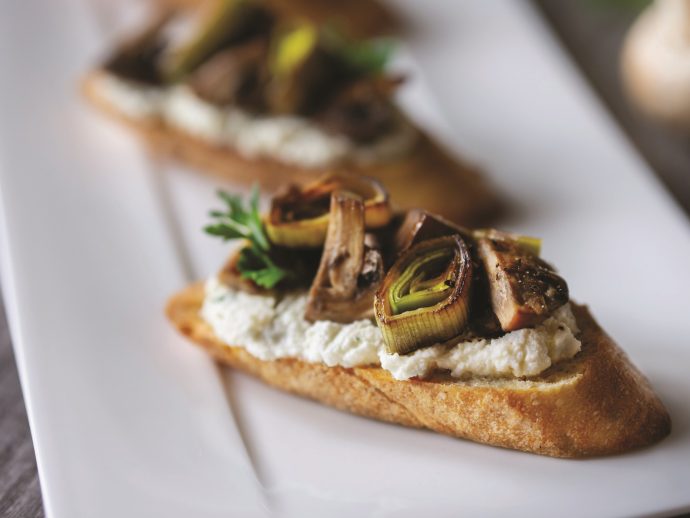
    Whipped Ricotta Tartines with Mushrooms and Leeks

    These scrumptious and versatile tartines make an excellent snack, lunch, or breakfast. Protein- and calcium-rich, creamy ricotta is whipped up with honey and flavored with parsley and red pepper flakes.
    Servings: 6

    Ingredients
      

    • 1 cup ricotta
    • 1 tablespoon + 1 tsp honey divided
    • 1 tablespoon chopped parsley
    • Zest of 1 lemon
    • 1 tablespoon fresh lemon juice
    • ¼ teaspoon dried red pepper flakes optional
    • 2 tablespoons olive oil divided
    • 4 ounces white button mushrooms cleaned and quartered
    • 1 teaspoon low-sodium soy sauce
    • 1 small leek (about 4 oz) cut into ¼ inch round slices
    • 6 slices of sourdough baguette

    Method
     

    1. In small bowl, combine ricotta, 1 Tbsp honey, parsley, lemon zest and juice, and red pepper flakes (if using). Whip ricotta by hand using whisk or with electric mixer for about 2 minutes, until ricotta is light and creamy. Set aside.
    2. In skillet, heat 1 Tbsp olive oil on medium-high heat. Add mushrooms and cook until brown on all sides, stirring only very occasionally. Add soy sauce to deglaze pan; tip mushrooms onto plate and set aside.
    3. In the same skillet, heat remaining 1 Tbsp olive oil on medium heat. Add leek slices and cook carefully for 1 to 2 minutes each side, turning with palette knife or cake spatula, until tender and browned. Remove from heat.
    4. Spread ricotta onto baguette slices and top with mushrooms and 2 or 3 leek slices. Drizzle tartines with remaining 1 tsp honey and serve.

    Notes

    Each serving contains: 218 calories; 9 g protein; 9 g total fat (3 g sat. fat); 27 g total carbohydrates (6 g sugars, 1 g fiber); 294 mg sodium

    White Bean and Sweet Potato Tostadas

    The versatility of white beans shines through in this dish, which employs them in two different ways: simmered and then roasted until crispy. The beans crown luscious sweet potato, flavored with sage and thyme, heaped high on crispy tortillas.
    Servings: 4

    Ingredients
      

    • 2 large sweet potatoes about 2 lbs total
    • 1 tablespoon + 8 teaspoons olive oil divided
    • ¾ teaspoon salt divided
    • ½ teaspoon pepper divided
    • 1 tablespoon fresh thyme leaves + 1 thyme sprig
    • 2 teaspoons chopped fresh sage + 2 whole leaves
    • 1 14-oz can no-added-salt cannellini beans
    • 1 bay leaf
    • ½ teaspoon smoked spicy Spanish paprika
    • ¼ teaspoon garlic powder
    • 8 corn tortillas

    Method
     

    1. Preheat oven to 400°F.
    2. Wash and trim sweet potatoes, leaving peel on. Cut each down the middle lengthwise and rub all over with 1 Tbsp olive oil. Place on baking sheet, cut side up, and sprinkle with 1/4 tsp salt, 1/4 tsp pepper, thyme leaves, and chopped sage. Bake in preheated oven for 50 minutes, turning them to face down halfway through cooking time.
    3. Meanwhile, drain and rinse beans and set 1/2 cup aside to dry in single layer on kitchen towel-lined plate. In small saucepan, place remaining beans with bay leaf, thyme sprig, and sage leaves and add enough cold water to just cover. Heat on medium-low for about 10 to 15 minutes, until warmed through. Time the start so they are ready just as sweet potatoes are finishing in the oven, and keep warm in the hot water, adding 1/4 tsp salt. Pat reserved beans with kitchen towel and season with spicy paprika and garlic powder.
    4. Remove sweet potatoes from oven, remove their skins, and place flesh in large bowl. Toss reserved beans on the same baking sheet, coating them in the remaining oil and herbs. Return baking sheet to oven and bake beans for 15 minutes, until crispy, stirring occasionally.
    5. Brush each tortilla on both sides with 1 tsp olive oil and bake on baking sheets for 5 minutes, or until brown, turning halfway through.
    6. While tortillas are warming, with fork, mash sweet potatoes and cover to keep warm. Drain simmering beans.
    7. To assemble tostadas, divide mashed sweet potato among tortillas, add a few simmered beans, and top with spicy crispy beans. Season with 1/4 tsp salt and 1/4 tsp pepper.

    Notes

    Each serving contains: 373 calories; 12 g protein; 8 g total fat (1 g sat. fat); 66 g total carbohydrates (2 g sugars, 16 g fiber); 248 mg sodium

    Coconut Panna Cotta with Lemon Grass, Ginger, and Lime

    Fragrant lemon grass, ginger, and lime are time-honored companions for coconut. For best results, select coconut cream (not coconut milk) and look for one that is guar free and has a fat content of around 21 percent.
    Servings: 4

    Ingredients
      

    • 2 teaspoons gelatin
    • 1 lemon grass stalk
    • 2 inch piece of gingerroot cut into slices
    • 1 13.5 oz can coconut cream
    • ¼ cup honey or maple syrup
    • Zest of 1 lime
    • 1 teaspoon lime juice
    • 1 tablespoon vanilla extract
    • Pinch of salt
    • ¼ cup finely shredded unsweetened coconut

    Method
     

    1. Set aside 4 – 1/2 cup ramekins.
    2. Into glass liquid measuring jug, measure 1/4 cup water. Add gelatin to water and set aside to allow it to bloom.
    3. With rolling pin, bash lemon grass stalk to help release flavors, then add it to medium-sized saucepan with gingerroot, coconut cream, honey or syrup, lime zest, lime juice, vanilla, and salt. Heat on medium-high and bring cream to a boil. To fortify flavors, steep for 15 minutes before straining. Reduce heat and allow to simmer for 1 minute and then remove from the heat.
    4. Strain hot coconut cream liquid into bowl and discard aromatics. Now add small amount of liquid to the measuring jug containing the blooming gelatin and whisk rapidly until smooth. Pour in remaining coconut cream liquid and continue to whisk. Pour mixture from jug into 4 ramekins and refrigerate for 6 hours or overnight until firm.
    5. To serve, release panna cotta from molds by placing ramekins in baking dish with hot water for 30 seconds and then inverting on each of 4 plates. Sprinkle shredded coconut over panna cotta, and zest with additional lime before serving.

    Notes

    Each serving contains: 335 calories; 3 g protein; 27 g total fat (25 g sat. fat); 24 g total carbohydrates (20 g sugars, 2 g fiber); 55 mg sodium

    By Helena McMurdo

    Article Courtesy of Alive Magazine
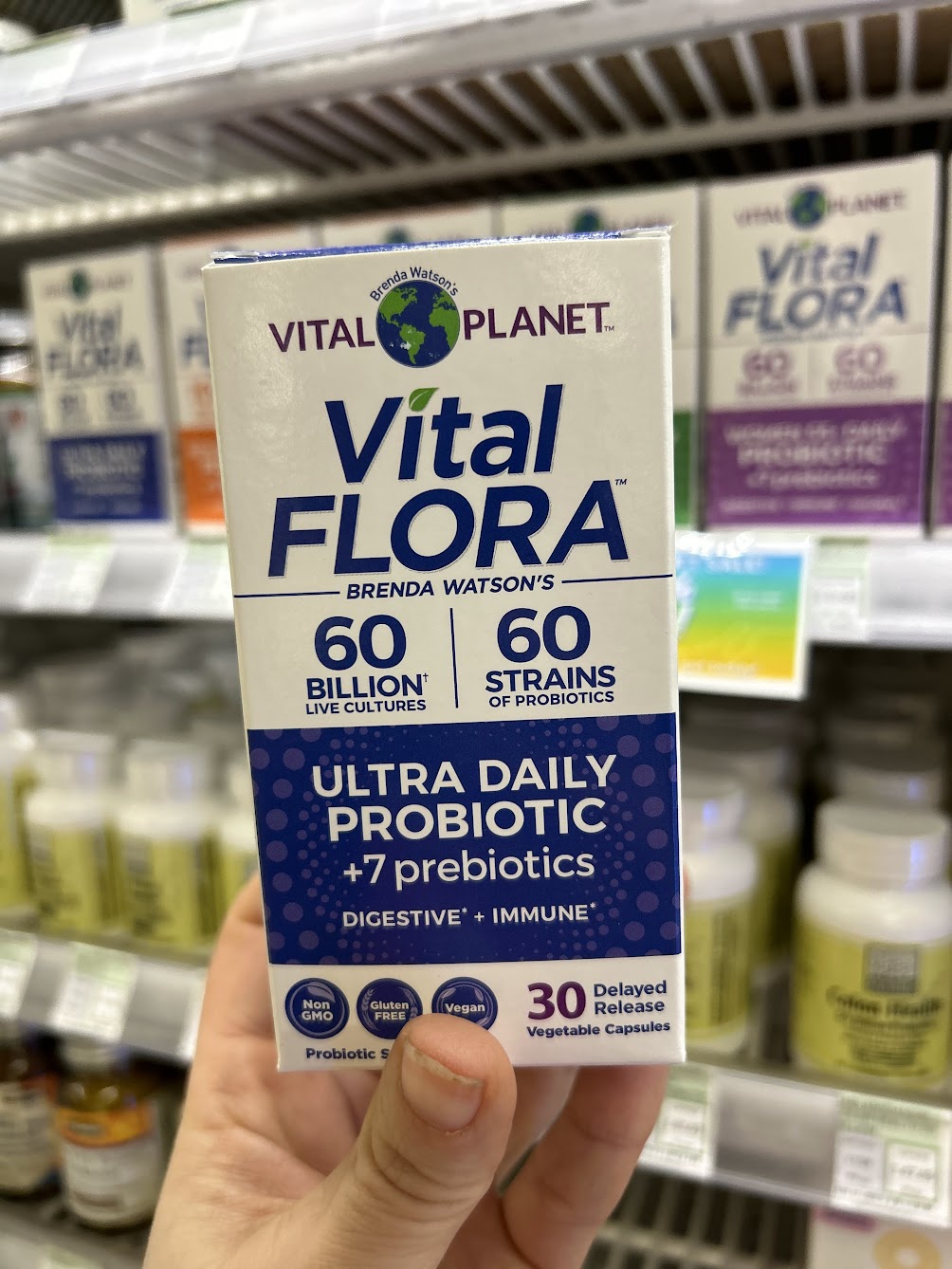
  • New Year, New Gut: Why Your Microbiome Matters and How Vital Planet Can Help

    New Year, New Gut: Why Your Microbiome Matters and How Vital Planet Can Help

    • Ease digestive discomfort: Say goodbye to bloating, constipation, and diarrhea. Probiotics can help regulate bowel movements and soothe irritated bowels.
    • Fortify your defenses: A healthy gut is a strong defense against pathogens. Probiotics can help fight off harmful bacteria and viruses, keeping you feeling your best.
    • Nurture your mood: The gut-brain connection is real! Probiotics may help alleviate symptoms of anxiety and depression by influencing brain chemistry and reducing inflammation.
    • Optimize nutrient absorption: Get the most out of your food. Probiotics can help your body absorb essential vitamins and minerals from your diet.

    • Potent: With up to 60 billion live cultures per serving, Vital Planet probiotics are some of the most potent on the market.
    • Diverse: They contain a variety of beneficial bacterial strains, which is important for creating a healthy and balanced gut microbiome.
    • Prebiotic-infused: Vital Planet probiotics include prebiotics, which are fibers that help nourish and support the growth of beneficial gut bacteria.
    • Delayed-release: This ensures that the live cultures reach the intestines alive, so they can be most effective.
    • Family-owned and operated: Vital Planet is a family-owned and operated company that is committed to quality and sustainability.

  • Clean and convenient

    Clean and convenient

    Clean and convenient

    Refreshed dinners for a new year

    Ring in the New Year with healthier swaps for convenient, healthy main courses that are big on flavor and nutrition. You may just find a few new recipes that will end up in your weeknight rotation this year and beyond.

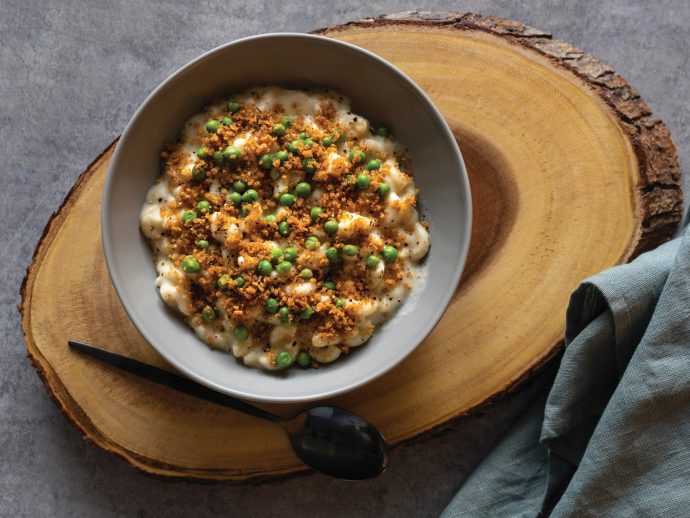
    One-Pot Cauliflower Mac and Cheese

    Cauliflower stands in for milk in this nostalgic comfort food recipe that’s ready in as little as 20 minutes. The easiest method for this is using a multi-cooker, but stovetop instructions are included if you don’t have one.
    Servings 4

    Ingredients

    Toppings

    • 1 tbsp unsalted butter or olive oil
    • ¾ cup whole grain or gluten-free panko bread crumbs
    • ¼ tsp dried thyme
    • 1 cup frozen peas warmed
    • ¼ tsp ground black pepper

    Cauliflower Mac and Cheese

    • 3 cups water
    • 2 ½ cups pasta (like macaroni)
    • ¾ lb frozen cauliflower florets
    • 1 tbsp unsalted butter or vegan butter
    • 1 tsp dried onion flakes
    • ¼ tsp grated nutmeg
    • 2 cups grated old cheddar cheese or meltable vegan cheddar cheese
    • Salt as needed

    Instructions

    Cauliflower Mac and Cheese

    • For bread crumbs, in your multi-cooker, press saute on the normal setting. Add butter or olive oil, waiting until butter is melted or olive oil is shimmering before adding bread crumbs and thyme. Stir until bread crumbs have toasted, 2 to 4 minutes. Transfer to bowl until ready to serve. Wipe out or wash pot to remove any crumbs.
    • For mac and cheese, in your multi-cooker, add water, pasta, cauliflower, butter, onion flakes, and nutmeg. Close lid and ensure it is sealed (not venting). Select pressure cooker function on high and cook for 9 minutes. Quick release using the venting lever (best to do this under a running kitchen exhaust fan). Once pressure has released, open lid and vigorously stir and mash with wooden spoon to break up cauliflower, creating a creamy sauce. Stir in cheddar cheese until melted, close lid, and rest for 5 minutes. Stir again before serving topped with bread crumbs, warmed peas, and black pepper.

    Stovetop Mac and Cheese

    • Make the bread crumbs using the same directions but in a large pot over medium heat, then wipe out or wash pot. Add water, pasta, cauliflower, butter, onion flakes, nutmeg, and salt to large pot. Bring everything to a boil, reduce to medium, and cook for 10 to 15 minutes, stirring often, until noodles are cooked. Add additional water if it looks dry before noodles are tender. Mash cauliflower to form sauce, and stir in cheese until melted. Taste and season with salt, if needed. Cover and rest for 5 minutes before serving. Stir pasta and serve topped with bread crumbs, peas, and black pepper.

    Curried Coconut Lentil and Rice Porridge

    Brown rice and two varieties of lentils cook in one pot with broth, coconut milk, and simple spices. It’s true sunshine in a bowl for those cold winter nights.
    Servings 6

    Ingredients

    • 2 tbsp coconut oil or vegan butter
    • 1 onion finely chopped
    • 1 tbsp grated fresh ginger
    • 1 tsp ground turmeric
    • 1 tsp ground cumin
    • 1 tsp ground coriander
    • ½ tsp salt
    • 1 cup brown basmati rice
    • ½ cup red lentils
    • ½ cup split yellow lentils or split yellow peas
    • 2 14 oz cans light coconut milk
    • 3 ½ cups water
    • 1 tbsp lemon juice more to serve
    • 4 cups packed baby spinach
    • ½ cup frozen peas
    • ½ cup coconut yogurt or plain yogurt
    • 1 tbsp crunchy chili condiment
    • 6 wraps of your choice

    Instructions

    • In large pot, heat oil or vegan butter over medium. Add onion and ginger and saute for 5 minutes, lowering heat, if necessary, until onions are softened. Stir in turmeric, cumin, coriander, and salt, and toast until spices are fragrant, about 1 minute. Stir in rice, red lentils, yellow lentils, coconut milk, water, and lemon juice. Bring to a boil, reduce to a simmer, and cook partially covered, stirring often, until lentils and rice are broken down, about 45 minutes. Add more water, if needed, to thin until desired consistency. (The porridge thickens dramatically as it cools; enjoy it thick or more souplike.) Stir in spinach and peas, cooking until wilted and warmed through. To serve, spoon porridge into bowls and top with yogurt and chili, with wraps on the side for dunking.

    Supersalad with Sprouted Quinoa, Beans, and Roasted Veggies

    A satisfying plant-based dinner or packed lunch, quinoa and beans add filling protein, while greens, cucumbers, roasted veggies, and a probiotic-rich dressing bring texture and flavor.
    Servings 1

    Ingredients

    • 1 large or 2 small sweet potatoes peeled and cut into 1 inch pieces
    • 1 tbsp olive oil
    • 2 tsp chili powder or cumin
    • ½ tsp salt
    • 1 cup uncooked sprouted quinoa or sprouted grain mixture
    • 2 cups water
    • 1 19 oz can black beans, chickpeas, or white beans drained and rinsed
    • 4 cups salad greens such as arugula
    • 1 English cucumber or 5 baby cucumbers peeled if desired, diced or sliced

    Dressing

    • ½ cup olive oil
    • 2 tbsp raw apple cider vinegar
    • 1 tbsp maple syrup
    • 1 tsp Dijon mustard
    • 1 tsp low-sodium, gluten free tamari
    • ¼ tsp dried garlic powder

    Instructions

    • Preheat oven to 400 F (200 C). Add sweet potato to large rimmed baking sheet and toss with olive oil, chili powder or cumin, and salt. Spread in an even layer and roast for 20 to 30 minutes, until tender and beginning to brown. Add to large mixing bowl.
    • For dressing, whisk all dressing ingredients until fully combined.
    • To cook sprouted quinoa, bring quinoa and water to a boil, reduce to a simmer, cover, and cook for 15 minutes. Turn off heat and let stand for 5 minutes. If using sprouted grain mixture, cook according to package directions. Fluff with fork and transfer to same bowl as sweet potatoes. Mix in beans or chickpeas and half of dressing.
    • If serving immediately, add greens and cucumbers, tossing to combine, adding remaining dressing or to taste. If making ahead for lunch, keep quinoa mixture separate from greens and cucumber, and combine right before serving.

    By Allison Day

    Article Courtesy of Alive Magazine
  • Finishing 2023

    Finishing 2023


    Finishing 2023

    Reflecting on the You that was

    Whether this was a banner year or one you’ll be happy to see in the rear-view mirror, December often feels like a turning point. Before rounding the bend into the new year, take the time to check in on your well-being, and whether you need to change tack going forward. That’s going to involve a little reflection.

    What is reflection?

    Reflection doesn’t simply involve thinking about “what happened.” Instead, it’s a process of understanding your role in an experience and involves considering your thoughts and emotions during and about the experience, as well as the memories it evokes.

    Forget about everyone else

    Self-evaluation can lead you to compare yourself to others and bump up against other people’s expectations. Often, these comparisons aren’t in your favor and can be harmful to your emotional well-being.

    Instead, check in with yourself to be sure that goals you establish are aligned with what you truly want and aren’t simply what’s expected. Let go of any goals that aren’t really yours and any negative feelings you may have about not achieving them. After all, they weren’t your goals anyway.

    Reflect on well-being

    Well-being involves much more than simply your physical and mental health. In fact, there are multiple other facets to consider, including emotional, social, spiritual, professional, and financial well-being. As you reflect on your progress in the past year and make adjustments for 2023, be sure to consider each of these areas.

    Celebrate your victories

    If you’ve been keeping a journal, it’s a good time to read through your year’s musings. If you don’t journal, flip through your calendar for memory prompts. List everything you’d like to celebrate from the past year.

    Include big gains, such as bringing home a baby or making your final mortgage payment. But small things count, too, such as applying for a job, finding your old (but still perfectly wearable) cowboy boots in the back of the closet, or asking that cutie out on a date. Record at least 30 little victories. (Yes, you did have 30 victories!)

    Acknowledge your losses

    Crappy stuff happened this year, too. Maybe you were restructured out of a job. Maybe your relationship ended. To learn from these experiences, consider your personal responsibility in each of them.

    What would you do differently?

    Reflect on what you learned from your victories and losses. What new things did you or could you try? Where do you repeat patterns? Are you stepping out of your comfort zone enough so that you can experience new things and personal growth? Are you being authentic? Do you need to put your fitness goals front and center? Is it time to change your relationship with money?

    When you have clarity about who you are and what you want, creating goals is enjoyable, because they mean something to you. And when something is fun, you’re more likely to do it.

    By Lisa Petty, PhD

    Content Courtesy of Alive Magazine

  • 5 steps to setting the best resolutions ever

    5 steps to setting the best resolutions ever

    5 steps to setting the best resolutions ever

    Find your way in 2023

    Many of us are wary about making New Year’s resolutions for fear that we may experience failure. But here’s an approach to change that involves designing your own path forward—one that puts your own dreams first.

    What do you want?

    From a young age, many of us got into the habit of doing what’s expected of us rather than following our own dreams. Getting an education, getting a marriage partner—even making resolutions—are things that we’re told we should do.

    No wonder we may occasionally feel like we don’t fit in or that we’re failing miserably at things that everyone else seems to do easily. You may be surprised how much easier your path becomes when it’s one you design yourself.

    1. Take time for self-reflection

    On a day when you’re feeling reasonably relaxed, find a time and place where you won’t be disturbed—even if that means hiding in the car or the bathroom.

    Take some deep breaths to release tension and clear your mind. Ask yourself what you want and simply notice what comes to you. You might get words, or a picture in your mind, or a feeling. Write down (or type) what comes to you with as much detail as possible.

    Build a home gym? Fabulous. Move across the country? Write it down. Start a business? Of course. Don’t let the critical voice in your head start debating you and telling you why you can’t do it.

    2. Set clear goals

    Vague goals, like taking better care of your health, provide very hazy guideposts, whereas the commitment to exercising twice a week or eating five servings of vegetables a day are clear, specific, and measurable.

    3. Set short-term and long-term goals

    If goalposts are too far away, people are more likely to procrastinate or avoid sticking to the plan, because they knew they had lots of future time to get things done.

    If there are too many strict short-term deadlines, however, a resolution-maker could feel like a failure for missing a mini-goal and throw in the towel. Creating stepping-stones toward the big goal makes room for set-backs while still moving forward.

    4. Set approach-oriented goals

    It seems that people who create approach-oriented goals are more successful than those who have avoidance-oriented goals.

    Approach-oriented goals energize emotions and behavior toward something you want (achieving good grades so that you can enjoy feeling competent).

    Avoidance-oriented goals , on the other hand, are those in which you move away from something you don’t want or you perceive as a punishment, threat, or risk to health (you make the decision to reduce your sugar intake, so you don’t have a heart attack).

    5. Find reliable support systems

    Rather than focusing blame on people who don’t give you what you need (and shifting energy from your goal), find a person or group who can be your cheer squad.

    Article Provided by Alive Magazine

  • The power of plants

    The power of plants

    The power of plants

    Ring in the New Year with a plant-forward diet

    If you’re looking to take your health and the well-being of your family to the next level this year, there are few better places to start than to wiggle more plant foods into your daily menu. Your health future will look brighter.

    Tabbouleh with Kale and Navy Beans

    This tabbouleh salad ages well, so it serves as a make-ahead meal that can keep for up to 3 days. A perfect plant-based option for weekday lunches!
    Servings: 4

    Ingredients
      

    • 1 cup sorghum grain
    • 19 ounce can navy beans drained and rinsed
    • 3 plum tomatoes seeded and diced
    • 3 cups finely chopped kale
    • 1 cup finely chopped fresh parsley
    • cup golden raisins
    • cup unsalted shelled pistachios
    • Juice of 1 lemon
    • 3 tablespoon olive oil
    • ½ teaspoon salt

    Method
     

    1. In saucepan, place sorghum and enough water to cover it by 2 inches. Bring to a boil, reduce heat to maintain a simmer, and cook, covered, until grains are tender, about 40 minutes. Drain well and spread out on a baking sheet to cool to room temperature.
    2. In large bowl, toss together cooked and cooled sorghum, navy beans, tomatoes, kale, parsley, raisins, and pistachios.
    3. In small bowl, whisk together lemon juice, olive oil, and salt. Toss lemon dressing with sorghum mixture.
    4. Enjoy!

    Sheet Pan Golden Tofu Medley

    This easy, yet impressive, vegan dinner is packed with oven-roasted flavor and proves that creating satisfying weeknight plant-based meals is entirely possible.
    Servings: 4

    Ingredients
      

    • cup raw cashews
    • 2 350 gram packages extra-firm tofu
    • 2 ½ teaspoons grapeseed oil or avocado oil
    • ¾ teaspoon salt
    • 1 head broccoli cut into 1 inch florets
    • 2 red bell peppers sliced into 4 pieces and seeds removed
    • 2 shallots chopped
    • 2 garlic cloves
    • 1 tablespoon chopped ginger
    • 1 teaspoon turmeric
    • ¼ teaspoon cayenne
    • ¼ teaspoon black pepper
    • Juice of ½ lime

    Method
     

    1. In bowl, place cashews, cover with water, and let soak at least 2 hours.
    2. Preheat oven to 425 F. Line two rimmed baking sheets with parchment paper or silicone baking mats.
    3. Line a cutting board with a couple sheets of paper towel. Top with tofu and a couple more sheets of towel. Press gently for about 30 seconds to extract excess liquid. Slice each tofu block lengthwise into 2 slabs and then slice each slab into 2 triangles. Place tofu on 1 baking sheet and brush tops with 1/2 tsp oil and sprinkle on 1/4 tsp salt.
    4. In large bowl, place broccoli florets and red pepper and toss with 1 tsp oil and 1/4 tsp salt. Spread vegetables out on second baking sheet. Place sheets in oven and bake for 25 minutes, until tofu is golden brown and vegetables are darkened in a few spots, stirring vegetables once halfway through the cooking time.
    5. Meanwhile, in small skillet, heat 1 tsp oil over medium heat. Add shallots and garlic; heat 1 minute. Add ginger and heat 30 seconds. Stir in turmeric, cayenne, 1/4 tsp salt, and black pepper; heat 30 seconds.
    6. Drain cashews and place in a blender with 1/2 cup) water, lime juice, and contents of skillet. Blend until very smooth.
    7. Divide tofu and vegetables among serving plates and drizzle with cashew sauce.
    8. Enjoy!

    Chickpea Salad with Nigella Roasted Sweet Potato

    Nigella seeds, also known as kalonji, lend a sweet, nutty flavor with an ever-so-slightly bitter edge that pairs perfectly with sweet potato’s sweetness.
    Servings: 4

    Ingredients
      

    • 2 medium peeled sweet potatoes quartered and chopped into 1 inch pieces
    • 2 tablespoons olive oil divided
    • 1 teaspoon nigella (kalonji) seeds
    • ¼ teaspoon salt
    • 2 tablespoons lemon juice
    • 1 teaspoon lemon zest
    • 1 teaspoon garlic minced
    • ¼ teaspoon tahini
    • ½ teaspoon black pepper
    • 1 ½ cups cooked chickpeas rinsed and drained
    • 1 cup grated peeled carrot
    • 2 tablespoons finely chopped fresh cilantro
    • 2 tablespoons finely chopped fresh parsley
    • 2 cups loosely packed baby spinach rinsed and spun dry

    Method
     

    1. Place baking tray in oven and set temperature to 425 F.
    2. Into large bowl, place sweet potato pieces. When oven reaches desired temperature, dress with 1 Tbsp olive oil, nigella seeds, and salt. Toss to coat evenly and pour immediately onto hot baking tray. Roast at 425 F for 20 minutes, stirring once at the 10 minute mark, until tender and slightly browned, but firm.
    3. Meanwhile, in large bowl, whisk together remaining 1 Tbsp olive oil, lemon juice, lemon zest, garlic, tahini, and black pepper. Add chickpeas and carrot and stir to coat evenly. Add cilantro and parsley, stir once more to incorporate, and allow mixture to marinate while sweet potato roasts.
    4. When finished roasting, remove sweet potatoes from oven and allow to cool slightly. Add spinach to chickpea carrot mixture along with 1/2 the sweet potato cubes, and toss gently to avoid breaking them. To serve, arrange salad on large platter and place remaining sweet potato cubes on top. Be sure to scrape all toasted nigella seeds from baking pan.
    5. Enjoy!

    Article Provided by Alive Magazine

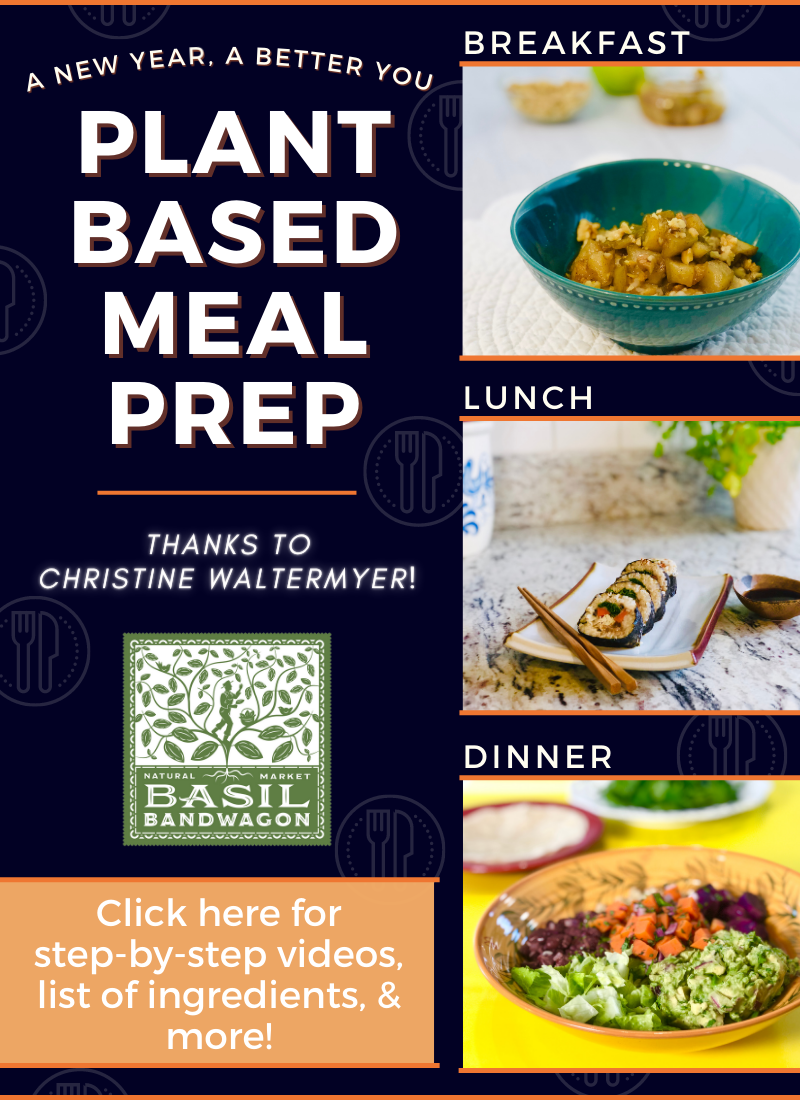
  • Plant-Based Meal Prep with Christine Waltermyer

    Plant-Based Meal Prep with Christine Waltermyer

    Plant-Based Meal Prep – What to Eat in A Day

    with Christine Waltermyer

    Christine Waltermyer is a local Wellness Chef, private chef to celebrities, published cookbook author and founder of the Natural Kitchen Cooking School, which offers an online Plant-Based Cooking Program. She also loves shopping at Basil Bandwagon! Visit naturalkitchenschool.com to get your FREE copy of her cookbook, “7 Days of Deliciousness.”

    BREAKFAST

    Creamy Brown Rice Cereal with Apple Pear Compote

    Serves 1

    Ingredients

    1 cup cooked brown rice

    1 cup water

    1 pear, cored and chopped

    1 apple, cored and chopped

    Small handful of walnuts

    Cinnamon

    1-2 tablespoons maple syrup, plus extra for drizzling


    Method

    1. Chop up the fruit and place in a small pot with a pinch of sea salt. Add 1 to 2 tablespoons of the maple syrup, and ½ teaspoon of cinnamon. Bring to a gentle boil, then lower to simmer for 20 to 25 minutes. 

    2. Place the brown rice and water in a small pot. Bring to a boil over medium high heat. Reduce the heat to simmer on low for 20 minutes or so, tilting the lid to avoid cookovers.

    3. Chop the walnuts. Using a potato masher, you can partly mash the rice at this point.

    4. Place the cooked brown rice cereal in a bowl. Top with desired amount of apple pear compote and walnuts, adding extra maple syrup if you wish.


    LUNCH

    Vegetarian Sushi

    Serves 1-2

    Ingredients

    1 cup cooked brown rice

    1 sheet sushi nori

    1 package Pumfu or firm tofu, cut into long strips

    1-2 tablespoons almond butter (or peanut butter) – I used the sprouted kind

    2 tablespoons raw sauerkraut, drained and pressed to remove liquid

    3-4 long thin carrot strips

    2 cups kale leaves, chopped up

    Coconut aminos or soy sauce 

    Equipment: bamboo sushi mat


    Method

    1. Steam the carrot strips and kale in a steamer basket over boiling water, covered, for 5 minutes or until the carrots and kale are tender but still brightly colored. 

    2. Place the pumfu or tofu strips in a frypan with a ¼ cup water and 1 tablespoon of coconut aminos or soy sauce. Bring to a boil over medium high heat, then reduce heat to simmer on medium low for about 15 minutes, or until the water has cooked off. Transfer the pumpfu or tofu to a plate to cool.

    3. Place the nori on a sushi mat. Cover most of the lower portion of the nori sheet with rice, leaving about an inch on top that is uncovered. Add a horizontal line of the almond butter, then add the carrots, pumfu and kale. Using your thumbs, lift the sushi mat up and over the fillings. Tuck the nori and rice over them and roll forward, pulling out the mat. Tightly tuck the roll, then roll all the way forward and tuck again. Using a sawing motion, carefully slice the sushi roll in half, and then into about 8 pieces. Serve with coconut aminos or soy sauce.


    DINNER

    Mexican Buddha Bowl

    Serves 1-2

    Ingredients

    2 – 4 tortillas of your choice (I love the Siete brand almond flour tortillas)

    1 13-oz.  jar or can kidney beans, black beans or pinto beans (Jovial brand is great)

    1 medium red onion, diced

    3 cloves garlic, minced

    cumin

    Cilantro

    ½ teaspoon apple cider vinegar

    2 carrots, peeled and diced

    Olive oil

    Japanese yams

    Avocados

    1 to 2 limes

    Shredded lettuce

    1 cup cooked quinoa

    Dressing:

    3 tablespoons olive oil

    1 – 2 tablespoons lime juice

    ¼ teaspoon sea salt

    1-2 teaspoons chopped cilantro

    Optional: 1 – 2 teaspoons maple syrup


    Method

    1. In a small pot, cover the carrots with water. Bring to a boil over medium high heat, then reduce heat to simmer on medium until soft. Drain and set aside. 

    2. Place the sweet potatoes in a small pot and cover with water. Boil for about 20 minutes, or until soft. When finished 

    3. Place about ⅓ cup of the diced onion in a bowl to save for later to cook with the beans. Place the remaining diced onion in a bowl and add ¼ teaspoon of the sea salt and ½ teaspoon of apple cider vinegar. Let it sit for 15 minutes.

    4. To cook the beans: Heat a small pan over medium heat. Add 1 or 2 teaspoons of the olive oil. Add the ⅓ cup diced onion, 2 cloves minced garlic and a pinch of salt. Cook and stir for 8 to 10 minutes, or until the onion has softened. 

    5. Meanwhile, make the carrot salsa: Add 1 tablespoon of apple cider vinegar or lime juice to the cooked carrots. Add 2-3 tablespoons chopped cilantro and 1-2 teaspoons of the marinated red onion. Stir to combine.

    6. To the cooking onion and garlic add the beans, cumin and sea salt to taste. Feel free to add cayenne, chopped jalapeno etc. if you like it hot. Cook for 5 to 10 minutes.

    7. Make the guacamole: Chop up a few more tablespoons of cilantro and place in a bowl. Remove the pits from 2 avocados. Score the avocado flesh into little squares and scoop out the contents into the bowl. Add 1 clove minced garlic, juice of one lime and ½ teaspoon of sea salt, or to taste. Stir together, partly mashing the avocado to make it a little creamy.

    8. Check on the sweet potatoes and beans. Cook longer if needed.

    9. Briefly warm the tortillas on a warm cast iron skillet, a few minutes on each side over medium heat. Keep the tortillas warm under a towel.

    10. When the sweet potatoes have finished cooking, peel them and slice them.

    11. In a large shallow bowl, arrange equal portions of the beans, quinoa, sweet potatoes, guacamole, lettuce, and carrot salsa. Drizzle evenly with the dressing and serve.


    Thank you to Christine Waltermyer and the Natural Kitchen Cooking School for working with us to help promote healthy, nutritious meals and products that are affordable, full of nutrients, and simple to make at home!