Tag: sustainability

  • Food waste and packaging sustainability

    Food waste and packaging sustainability

    Food waste and packaging sustainability

    Global waste reduction targets

    With the United Nations’ Sustainable Development Goals including a 50 percent per capita reduction in global food waste by 2030, the pressure is on to find ways to extend shelf life and make better use of our food.

    Enter packaging. Shrink wrap on an English cucumber protects these thin-skinned staples from bruising, drying out, or being exposed to too much moisture and rotting. Polylactic acid (PLA), used to make compostable plastic clamshells, improves blueberry shelf life.

    But are we trading one problem for another when we opt for produce packaged in plastic to keep it fresher longer?

    When biodegradable or compostable doesn’t help

    Many of the existing biodegradable or compostable plastics used for packaging end up in landfills because they only break down in specific conditions and often not fast enough for most commercial compost facilities, where turnaround time is one to three months.

    Packaging with a label on them are automatically diverted to landfill because the labels are made of different material that would contaminate recycled plastic.

    Calling all YIMBYs (yes, in my backyard-types)

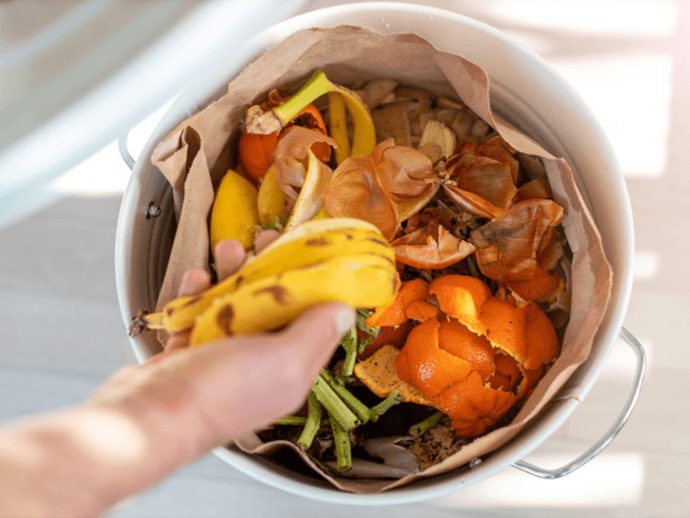
    The backyard compost heap is where yard waste, food scraps, and some compostable packaging breaks down into humus, a dark, granular substance that can be added to soil to condition it—and grow more food right outside your door.

    One of backyard composting’s greatest benefits is that it’s done at the source, making it more cost-effective than municipal options. Unlike municipal green bins, however, backyard composters are no place for meat, bones, or animal fats. Putting those items in the backyard composter can attract pests. It can also harbour pathogens, such as E. coli, if the pile is not hot enough to kill them off.

    Local versus organic versus natural

    It’s enough to make one’s brow furrow. Should you choose food produced locally or go organic? Does it have to be one or the other? And what the heck does “natural” mean?

    CSAs = local, organic, and natural

    Community-supported agriculture (CSA) models consist of consumers who buy a share of a growing season upfront and are paid in dividends of fresh produce as it’s harvested.

    Local = environmentally friendlier

    Local conventional produce also has its benefits, aside from travelling a shorter distance to get to your table. It often comes with less plastic packaging. Think berries sold in paperboard pints that can be torn up and thrown in the backyard composter or tossed in municipal green bins.

    And “natural” = …

    As for natural food, the US Food and Drug Administration defines it as free of added colour, artificial flavours, or synthetic ingredients. Unlike organic, however, it’s not an entirely regulated term, which can naturally lead to consumer confusion.

    by Tiffany Mayer

    Article Courtesy of Alive Magazine
  • Cultivating sustainability

    Cultivating sustainability

    Cultivating sustainability

    A look into the future of farming

    The work Elijah Goerzen does as a farmer conjures times past. His Deep Roots Farm, set in Maple Ridge, BC, is small by modern Canadian farming standards. The eight-acre parcel near Vancouver is worked by hand rather than machine, resulting in healthy, nutrient-rich soil that’s fertile ground for vegetables to grow and for beneficial organisms, such as earthworms, to thrive.

    Goerzen doesn’t spray his heritage lettuce, microgreens, and vegetable crops with toxic pesticides or infuse them with chemical fertilizers either. Instead, he chooses to nurture biodiversity by planting flowers between his kale to attract hungry ladybugs that keep any aphid infestations in check or to serve as beacons to pepper-propagating pollinators.

    The future of farming?

    Really, though, the regenerative agriculture methods he uses to tease crops from his soil every growing season are considered by some to be the future of farming.

    It works out well for the planet, too. Unlike conventional agriculture, regenerative farming is rooted in harnessing the power of natural processes to produce food rather than dominating them with human-made inputs and interventions.

    The sky’s the limit

    Vision Greens, a vertical farm in Welland, Ontario, is proving him right. Set in a southern Ontario rust belt city abutting Niagara’s shrinking tender fruit belt, Vision Greens is putting stock in growing up rather than out to help meet a demand for food that the UN projects will increase by 60 percent by 2050.

    It’s disrupting the imported lettuce market with its controlled environment agriculture that marries continuous food production with sustainability.

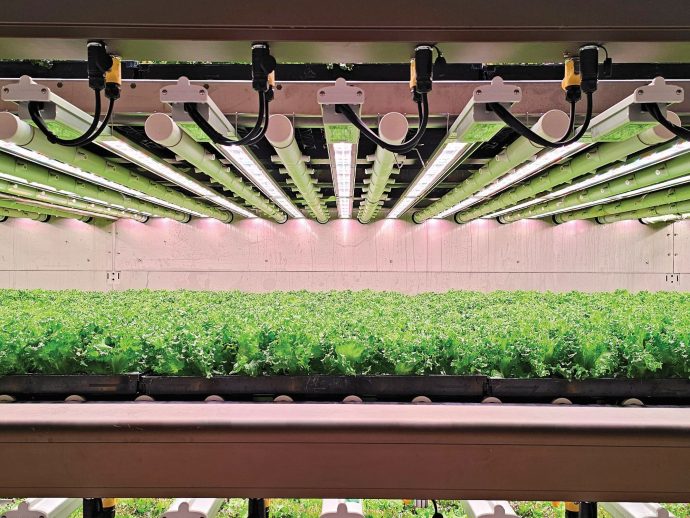
    Vision Greens’ headquarters in an industrial park is filled with towers of hydroponic trays loaded with organic seeds grown by a computer-controlled system that regulates LED lighting, organic nutrients, reverse osmosis water filtration, air flow, and carbon dioxide levels to meet crop needs. The result: perfect, nutrient-dense lettuce harvested every 26 days, winter, spring, summer, or fall.

    Those crops are perfect because they aren’t exposed to insects, disease, or weather fluctuations, eliminating the need to spray.

    Harvests are delivered to a warehouse, often on the day they’re picked, 76 km away. Meanwhile, most conventional and organic romaine sold here must travel more than 4,300 km from California’s Salinas Valley, where growing and shipping conditions vary and make produce vulnerable to dangerous bacterial contamination.

    The very nature of their production and transport methods means Vision Greens lettuce will never have to be pulled off store shelves in the name of safety. And with plans to build one-acre vertical farms elsewhere in Canada that have 60 times the growing density and 135 times greater crop yield than field lettuce, the company is poised to play as significant a role in building secure local food systems as Deep Roots Farm.

    By Tiffany Mayer

    Article Courtesy of Alive Magazine

  • Greenifying healthcare

    Greenifying healthcare

    Greenifying healthcare

    Bioplastics are making an impact on both medicine and our planet

    The Green Revolution

    Derived from renewable sources, bioplastics are transforming plastics, especially in healthcare. They impact medical instruments, packaging, and are helping redefine the industry while addressing environmental concerns. While challenges remain before bioplastics can fully replace conventional plastics, their potential as eco-friendly solutions is promising.

    The Shift Toward Sustainability

    Global focus on sustainability is evident through decarbonization commitments, consumer demand, and stricter legislation on traditional plastics. This shift has spotlighted bioplastics, made from renewable resources like corn starch, sugarcane, and algae, contrasting sharply with petroleum-based plastics.

    Biomedical Applications

    The healthcare industry, heavily reliant on plastics, is adopting bioplastics for medical instruments, tissue engineering, wound dressings, and packaging. These materials offer eco-friendly alternatives across various medical fields.

    Physicochemical Properties

    Many bioplastics share properties with traditional plastics—lightweight, durable, moldable—meeting the strict requirements of medical equipment.

    Biological Compatibility

    Bioplastics are biocompatible, reducing adverse reactions when in contact with tissues. This makes them suitable for implants, wound dressings, and other biomedical uses.

    Degradation Properties

    A major advantage is biodegradability. Unlike petroleum plastics, some bioplastics break down more efficiently, reducing environmental impact from discarded medical materials.

    Challenges and Limitations

    Despite their promise, bioplastics face hurdles:

    • Cost: They are often more expensive to produce, limiting adoption in cost-sensitive healthcare settings.
    • Limited application: Some medical uses require properties like heat resistance, which certain bioplastics may lack.
    • Perception and acceptance: Consumer attitudes are evolving, but trust in bioplastics’ safety and reliability still needs time and education.

    The Growing Acceptance

    Despite obstacles, acceptance of bioplastics in healthcare is increasing. Surveys indicate that consumers are becoming more receptive, especially as awareness of their environmental benefits grows. Hospitals are adopting bioplastics to deliver quality care while reducing ecological footprints.

    Embracing an Eco-Conscious Future

    The trend toward bioplastics signals a sustainable future for healthcare and the planet. As both providers and consumers embrace this shift, bioplastics are positioned to ensure healthcare remains effective and environmentally responsible.

    By Adam Meyer

    Article Courtesy of Alive Magazine
  • Understanding sustainability

    Understanding sustainability

    Understanding sustainability

    Going beyond the buzzword

    The planet is heating up, putting life and ecosystems at increasing risk. Social and economic inequalities, between and within countries, remain stubbornly high. We’ve all heard the buzzword “sustainability” given as a solution to these problems: if we can shift our systems to become more sustainable, we can cut down on carbon emissions and resource use while making societies fairer for all.

    However, what does sustainability actually <mean>, and what progress are we making towards it?

    Unpacking sustainability

    In 1987, the United Nations Brundtland Commission defined sustainability as “meeting the needs of the present without compromising the ability of future generations to meet their own needs.” This definition is still relevant today. Indigenous communities have long held the belief that we should care for our world in a way that ensures the well-being of future generations.

    Core components of sustainability

    The concept of sustainability has three core components:

    • environmental sustainability
    • economic sustainability
    • social sustainability

    Environmental sustainability

    Environmental sustainability focuses on protecting and preserving natural resources (like clean air, water, forests, and biodiversity) for future generations. Shifting toward renewable energy and reducing waste are key aspects.

    The environment and the economy

    Economic sustainability means supporting growth while ensuring resources are used efficiently and responsibly. Our largely linear economies follow a “take-make-use-dispose” formula. While we’ve shifted toward recycling, efforts are often insufficient: a 2019 study found only 9 percent of plastic waste in Canada is recycled. To be truly sustainable, we need a circular economy, where products and resources remain in circulation. Just 7.2 percent of the global economy is currently circular.

    Social sustainability

    The social dimension of sustainability is critical, relating to creating a world where everyone can meet their needs and access a good quality of life. This includes ensuring equity in transitions to more sustainable practices.

    Environmental justice

    Environmental justice highlights how vulnerable communities often bear the brunt of climate change and pollution. The Government of Canada is working on a strategy to promote environmental justice.

    Working toward a more sustainable world

    While individual action is important, governments and corporations also have a lot of power.

    Government commitments and action

    In 2015, Canada committed to the UN’s 17 Sustainable Development Goals (SDGs) to be achieved by 2030, covering environmental, economic, and social sustainability. While progress is being made, much work remains, particularly regarding persistent inequalities and increasing emissions from oil and gas projects.

    Corporate influence and power

    According to a recent study, 80 percent of global carbon dioxide emissions from 2016-2022 came from just 57 corporate and state producing companies. Corporations hold significant influence and often lobby against environmentally and socially beneficial practices.

    Individual agency

    Systemic change is needed, but individuals also have power. Be critical of corporate sustainability claims, as “greenwashing” is common.

    We should all try to make our lives sustainable, but don’t lose sight of the changes needed from governments and corporations. Using your voice to protest and vote are crucial ways to hold power to account.

    By Isabela Bonnevera

    Article Courtesy of Alive Magazine

  • RECAP: New Product Thursday 1/16/2020

    RECAP: New Product Thursday 1/16/2020

    Check out our NEW products this week!

    ACURE: all new products!
    Badger: Damascus Rose Face Care Starter Set
    Clif Bar Coffee Collection: Vanilla Almond Latte & Caramel Macchiato
    BluBags
    Charlotte’s Web: Put Yourself First Aid Kit (Calm Gummies & 17mg Mint Chocolate Tincture)
    Good To Go Keto Bar: Cocoa Coconut
    Lake Champlain Valentine’s Day Chocolates
    Luna Mash-Ups: Peanut Butter Fudge & Lemonzest Blueberry
    RUNA Iced Teas: Peach, Lemon (Zero Calories & Zero Sugar), & Mint (Zero Calories & Zero Sugar)
    Bono Olive Oils: Sicilian, Tunisia, & Spain
  • RECAP: New Product Thursday 12/5/19

    RECAP: New Product Thursday 12/5/19

    Check out our NEW products this week!

    Dragonfly Effect Naturals: Lyme Tonic
    Dry Sparkling Soda: Cranberry
    Endangered Species Holiday Chocolates: Caramel Spiced Apple, Peppermint Crunch, and more!
    Hyggelight Holiday Candles: Chai, Christmas & Thyme, and Cinnamon Apple
    Intelligent Elixirs: Brightening Serum, Botanical A Night Serum, Pure Squalane, Refining Gel Cleanser, Rose Foaming Cream Cleanser, Citrus Facial Scrub, Vitamin B5 Hydrating Serum, Anti-Aging Serum, Total Eye Repair, Antioxidant Moisturizer, and Ultra Restorative Moisturizer
    Lake Champlain Holiday Chocolates
    Little Secrets: Holiday Peppermint Chocolate Pieces
    Maggie’s Organics: Wool Snuggle & Sweater Socks!
    Theo Holiday Chocolates: Gingerbread Spice, Cranberry Orange, and more!
  • RECAP: New Product Wednesday 11/20/19

    RECAP: New Product Wednesday 11/20/19

    Check out our NEW products this week!

    From The Ground Up: Cauliflower Tortilla Chips (Lime & Sea Salt)
    Basil Bandwagon Natural Market: Holiday Gift Sets!
    Rad Soap Co: Ralphy Bar, Ugly Sweater, Wine Bar, & Roasted Chestnut
    Kinderlyte: Grape & Fruit Punch
    Humble Deodorants: Ylang Ylang, Vegan Mountain Lavender, and Geranium & Vetiver
    Organic Chix: Laundry Soap & Surface Cleaner
    Rebel Green: Hand Soap (Peppermint & Lemon and Lavender & Grapefruit)
    Stella & Chewy’s: Freeze-Dried Raw Coated Kibble for Cats (Wild-Caught Salmon Recipe)
    Thayer’s: Deodorant (Cucumber, Rose Petal, & Unscented)
    Vital Farms: Hard Boiled Egg Packs
  • RECAP: New Product Wednesday 11/13/19

    RECAP: New Product Wednesday 11/13/19

    Check out our NEW products this week!

    ALPS+MD: Bamboo-Charcoal Floss Picks, Charcoal Powder, Activated Charcoal Toothpaste, & Charcoal Infused Bamboo Toothbrush
    Lake Champlain Chocolates: Peppermint Cream Jubilees & Mixed Jubilee Sleeve
    Ocho: Peppermint, Caramel Trees, & Peanut Butter
    Cocojune: Strawberry Rhubarb & Lemon Elderflower
    Purequosa: Pits + Privates (Lemon Tea Tree/Sage & Grapefruit/Orange) & Pits + Package (Cedarwood/Vetiver)
    Third Child Wellness Boutique: 2oz Espress Yo-Self Coffee Oil (Lavender and Grapefruit)
    Terry Naturally: Red Ginseng Male Sexual Enhancement & Red Ginseng Energy
    Thayers: Aftershave Balm, Aftershave Lotion, & Shave Cream
    Thunderbird: Texas Maple Pecan
    Vitamin Sea Dulce: Whole Leaf & Flakes
    Hydro Flask: NEW WINTER COLORS!
    YumEarth: Organic Candy Canes (including minis!)
  • RECAP: New Product Wednesday 10/30/19

    RECAP: New Product Wednesday 10/30/19

    Check out our NEW products this week!

    Best in Bloom: Amaryllis and Paperwhite bulbs
    Comvita Kids: Night-time & Day-time Manuka Honey Supplements
    Desert Essence: Prebiotic Plant-Based Toothpaste & Mouthwash
    Hyalogic: HA Lip Balm
    Mrs. Meyer’s Clean Day Holiday Soaps: Peppermint, Iowa Pine, & Orange Clove
    Natural Hope Herbals: Throat & Tonsil Spray, Herbal Throat, and Elderberry Honey Syrup
    No Tox Life: Vegan Dish Washing Block, Dish Brush, Bamboo Soap Shelf, & Dish Block Flakes Bag
    Foodies Vegan: Pumfu
    Shoyeido Incense: New Incense Kits
  • RECAP: New Product Thursday 9/19/19

    RECAP: New Product Thursday 9/19/19

    Check out our NEW products this week!

    Clean Cause Yerba Mate: Lemon Lime & Raspberry
    Charlotte’s Web: Calming Dog Chews
    casArrigoni: Italian Imported Gorgonzola Cheese
    Grosche: Pour-Over Coffee Maker & Glass Water Bottle
    Lake Champlain: Organic Dark & Milk Chocolates – Perfect for Halloween!
    Natural Factors: Whole Body Curcumizer
    PlantFusion Collagen Beauty: Watermelon, Peach Mango, & Strawberry Lemonade