Tag: wellbeing

  • What makes people healthy?

    What makes people healthy?

    What makes people healthy?

    Exploring the social determinants of health


    Why are some people healthier than others? Yes, your genes play a big role. But there are other determinants of health that have nothing to do with your genetic makeup. Where you live, how you’re educated, and other societal influences are all important factors in our health. Find out more.


    Two hypothetical kids

    There are significant implications for advantage and disadvantage related to social determinants of health. Look at socioeconomic position, for example: a child born into a higher tax bracket is much more likely to be in a higher tax bracket when they’re older.

    Let’s take a look at the life course trajectories of two hypothetical kids. Joe is born into an affluent neighborhood, while John lives in subsidized housing with his six siblings in a single parent home.

    Joe’s parents are able to afford organic produce, put Joe into private school, and drive him to and from his various sporting activities throughout his childhood. As a result, Joe gets an excellent education that allows him to attend university, secure a job in a top tax bracket, and enjoy an active social life.

    John’s father works double shifts to make ends meet, but the only apartment he can afford has a black mold problem that has given John respiratory issues for years. John’s school is oversubscribed, and he’s falling behind because of sick days. To support the family, John takes a construction job and eventually drops out of high school. Years of manual labor and poor self-care have taken their toll on John, and he lives with chronic pain.

    You can imagine that two very different states of health and well-being are being experienced by Joe and John in later life. These differences may not necessarily be due to differences in the individuals, but in the broader social and economic circumstances in which they find themselves.

    What next?

    To address systemic issues such as the negative impact of social determinants of health, we must look to addressing modifiable aspects of lifestyle at the individual level and systemic inequities at the population level.

    Your DNA is not your destiny

    Although there are many social determinants of health that you can’t control, focus on the ones that you can control, such as diet, exercise, and social connections.

    • Pack yourself a healthy lunch.
    • Go for an evening walk with your partner.
    • Plan a family gathering.

    When you need nutritional help, chat with your health care practitioner. They may recommend certain supplements, such as the following:

    Nutritional helperBenefits
    vitamin Cimmune health, wound healing, bone health, antioxidant protection
    vitamin Dbone health maintenance, decreased risk of cancer mortality, mood stabilization
    vitamin B6red blood cell formation, brain processes and development, immune function, and steroid hormone activity
    vitamin B12brain support, red blood cell genesis support, energy booster
    magnesiummuscle repair, neuromuscular facilitation, blood sugar control
    zincsleep support, digestive support, reproductive organ support

    Article courtesy of Alive Magazine

  • Exercise Outside

    Exercise Outside

    Exercise Outside

    Sea-to-sky adventures for men’s physical and mental health


    Do you enjoy exercising outdoors? Compared to indoor exercise, numerous studies have shown that guys who turn the great outdoors into their workout studio are more motivated to exercise, push themselves harder, and feel more grounded and restored. Get started with al fresco adventures.


    Embark on a unique exercise adventure

    “Nothing improves my mood and perspective more quickly than a scramble up a peak on the Great Divide Trail,” says personal trainer Chad Alexander. “When I’m stuck in my head or worrying about something, I remember how alive I felt on that mountaintop cliff.”

    Here are some thrilling activity ideas to inspire your next adventure.

    • Travel from sea to sea to sea on foot by hiking or bikepacking (which is mountain biking fused with backpacking and camping).
    • Go rock climbing.

    Consider scuba diving (or shipwreck diving!).

    • Soar to new heights with kitesurfing (where a strong gust of wind launches you sky-high off a cresting ocean wave or propels you quickly across a smooth lake).
    • Try out hang-gliding or paragliding.

    Forge some friendly competition

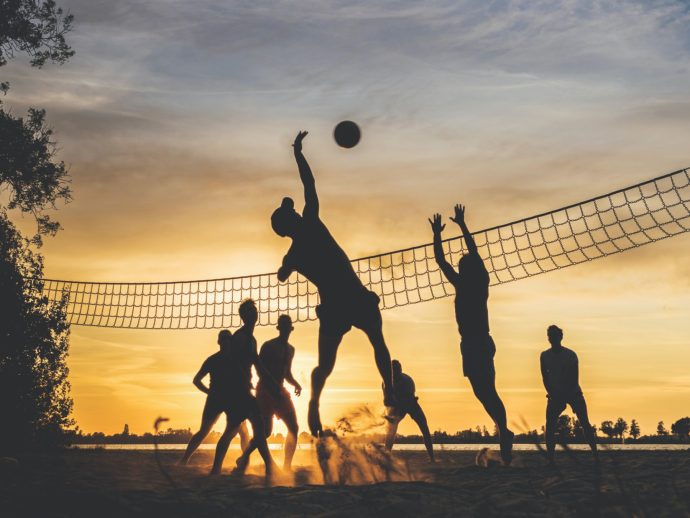
    For something a little closer to home, unique team sports can get you moving in the fresh air.

    Ultimate frisbee and disc golf have recently exploded in popularity. The number of local disc golf courses, for example, has jumped by 300 percent in the last few years. Other off-the-beaten-path outdoor sports include archery, handball, and even Harry Potter-inspired quidditch.

    Team sports are some of the best ways for men to build long-term, positive mental health outcomes. “Outdoor activities have changed my life in terms of mental health,” says Robert Puharich, a high school teacher. “Having teammates gives me a sense of community.”

    Rise to the challenge: 3 benefits to pushing your limits

    Testosterone

    Friendly competition in team sports has been shown to raise your testosterone levels. This hormone is key for strength, endurance, and your sex life.

    Motivation

    Once you’ve beaten your competition, or even beaten your own self-doubt, you’ll feel more motivated and driven to tackle life’s challenges.

    Self-confidence

    Pushing yourself on a grueling adventure forces you to tap into your own confidence, self-trust, and skills. Over time, psychologists say, this builds self-efficacy and resilience.

    The best time to exercise outdoors

    With longer daylight hours, your window of opportunity is wide open. The best time to head out and get your sweat on depends on your goals.

    Mornings

    If you’re trying to lose weight, morning exercise on an empty stomach may reduce your food cravings later, and it also leads to burning more fat.

    Midday

    Exercise reduces stress and boosts your energy, making it the perfect escape in the middle of your workday.

    Afternoons

    Your muscles contract more effectively when you’re warmed up. For peak physical strength and endurance, your body’s natural temperature peaks in the afternoon.

    Article courtesy of Alive Magazine by Joshua Duvauchelle

  • 6 ways to take back your mornings

    6 ways to take back your mornings

    6 ways to take back your mornings

    Your new routine for better mental health

    It’s 7 am, and your eyes open to the musical chimes of your phone alarm going off.  Have you thought about how much your brain might be processing during this rushed awakening from slumber to content onslaught? And the kind of mental gymnastics your brain is already performing?

    Creating a morning routine can help you break the unhealthy cycle of distraction and distress that can assault your brain when you start your day with your smartphone. It also allows you to find purpose each morning and start your day with your best interests in mind.

    Sample morning routine

    Here are six ideas to include in your morning routine. When putting your routine together, try to aim for at least 30 minutes, including waking up, making your bed, and showering, which will likely use up about half of this time.

    While these morning chores are part of a valuable routine, the really positive brain work comes from meditation, journaling, and affirmation. Most importantly, you must work with what’s happening around you and with those you share a life with. Remember that a shorter routine is better than no routine.

    Wake up at the same time every day

    Creating a successful morning routine starts with finding a time at which you can comfortably wake up each day.

    Make your bed

    The action of checking off something on your to-do list within mere minutes of waking up will set the tone for your day. It not only looks good but also creates a sense of pride and self-confidence.

    Drink some lemon water

    Drinking water with fresh lemon juice can infuse your body with health-giving phytonutrients, vitamins, and minerals, while also helping to instill the habit of drinking more water during your day.

    Write in a journal

    The idea of writing down your thoughts is much easier than you might think. Try starting with making bullet points and setting a timer for how long you’ll focus on this area. Remember, the journal is only for your eyes, so be straight to the point, don’t edit yourself, and don’t worry about being judged.

    Meditate

    Meditation comes in many forms, so don’t be discouraged if you don’t feel like a Yogi Master. To start your new meditation routine, find a quiet, comfortable area where you can sit upright. Then close your eyes, focus your attention on your breathing, and take in the quiet surrounding you. Start small and work up from there.

    Practice daily affirmations

    Here are a few suggested affirmations that might get you started.

    • I’ve been through hard things before and have survived them. I will survive.
    • I wake up every morning ready for a new day of exciting possibilities.
    • I’ll surround myself with positive people who will help bring out the best in me.
    • I’m grateful to be alive. It’s my joy and pleasure to live another wonderful day.

    Article Provided by Alive Magazine