Category: Guest Post

  • Winter Holiday Heroes with Christine Waltermyer

    Winter Holiday Heroes with Christine Waltermyer

    WINTER HOLIDAY HEROES

    with Christine Waltermyer

    Christine Waltermyer is a local Wellness Chef, private chef to celebrities, published cookbook author and founder of the Natural Kitchen Cooking School, which offers an online Plant-Based Cooking Program. She also loves shopping at Basil Bandwagon! Visit naturalkitchenschool.com to get your FREE copy of her cookbook, “7 Days of Deliciousness.”


    MENU

    Immunity Soup

    Keto Refrigerator Fudge

    Pomegranate Sweet Potato Bruschetta

    Loaded Sweet Potatoes


    Immunity Soup

    Serves 2-3

    Ingredients

    2 tablespoons olive oil

    1 onion, diced (1 1/2 cups)

    Sea salt

    1 teaspoon fresh ginger root, peeled and minced

    2-3 cloves garlic, minced

    3/4 cup fresh maitake mushrooms, chopped

    2 stalks celery, chopped

    2 small carrots, chopped

    1-inch piece kombu, soaked in cold water to cover for 10 minutes

    4 sprigs fresh thyme (or 1/2 teaspoon dried thyme)

    2 bay leaves

    4 cups vegetable broth* (recipe below: astragalus, kombu, veg scraps)

    A pinch ground turmeric

    2 cups chopped kale

    1 13-oz. jar Jovial brand chickpeas, drained

    2-3 tablespoons light colored miso (such as South River Chickpea miso)

    Lotus Foods brown rice ramen noodles (2 cakes), cooked

    Method

    *If making vegetable broth from scratch, use the recipe below.

    1. Heat a soup pot over medium heat. Add the olive oil. Add the onion and a pinch of sea salt. Cook and stir for 5 minutes.

    2. Add the ginger and garlic. Cook and stir for another minute or two. Add the maitake mushrooms. Cook a few more minutes. Add the celery and carrot, and cook and stir for a few minutes.

    3. Add the kombu (whole or chopped), thyme, bay leaves, and the vegetable broth. Bring to a boil then lower heat to simmer on low, covered, for about 20 minutes. Add the turmeric, chopped kale, and chickpeas. Cook a few more minutes.

    4. Remove the bay leaves, thyme sprigs and kombu (if a whole piece). Place the miso in a small bowl and add a few tablespoons of water. Stir until diluted. Add this to the soup and stir. Add the cooked ramen noodles just before serving. Enjoy!

    *Immune-Boosting Vegetable Broth Recipe*

    1. In a large soup pot, place 4 cups leftover vegetable scraps (ends of carrots, ends of celery, cabbage hearts, kale stems, parsley stems, etc.) OR 2 whole carrots, 2 celery stalks, 1 handful parsley and 1 onion.

    2. Add 1-2 teaspoons dried astragalus root, 2 bay leaves and a 2-inch piece of kombu sea vegetable.

    3. Add 4 cups of water.

    4. Bring to a boil, then lower heat to cook on low for 1 hour. Strain and use.


    Keto Refrigerator Fudge

    Serves 8

    Ingredients

    1/2 cup carob powder OR cocoa powder OR cacao powder

    1/2 teaspoon Sweetleaf Sweet Drops liquid stevia – Vanilla Creme Flavor

    1/2 cup virgin coconut oil, softened

    1/2 cup sprouted almond butter

    1/8 teaspoon sea salt

    Topping:

    2 tablespoons coconut oil, softened

    2 tablespoons almond butter

    Flaked sea salt (optional)

    Method

    1. Using a whisk, fork or electric hand mixer, combine the carob powder, liquid stevia, 1/2 cup coconut oil, 1/2 cup almond butter, and 1/8 teaspoon sea salt. Mix until smooth.

    2. Spread the mixture evenly into a parchment paper-lined 8×4-inch loaf pan. In a small bowl, mix together the 2 tablespoons coconut oil with 2 tablespoons almond butter. You can add a drop or two of stevia sweetener if you life. Mix well, then drizzle onto the top of your fudge. Use a toothpick to swirl it around and make a marbled surface.

    3. Chill for 1 to 2 hours. Top with some flaked sea salt. Slice, serve and enjoy!


    Pomegranate Sweet Potato Bruschetta

    Serves 8

    Ingredients

    1 16oz bag Caulipower Frozen Sweet PotaTOASTS (frozen Sweet Potato slices)

    Sunflower seed “cheese” spread:

    1/2 cup sunflower seeds

    1/4 cup water

    1/4 cup chopped scallions

    1/2 teaspoon garlic powder

    1/2 teaspoon onion powder

    1/4 – 1/2 teaspoon sea salt

    1 tablespoon lemon juice

    1 tablespoon miso

    Garnish:

    D’Vash sweet potato nectar

    The seeds of 1 pomegranate

    1/2 cup chopped walnuts

    Fresh sprigs of thyme or rosemary

    Method

    1. Preheat oven to 350 degrees F. Spread the sweet potaTOASTS in an even layer on a parchment paper-lined baking sheet. Bake for 15 minutes. For more well done slices, brush with a little olive oil and bake 5 minutes longer.

    2. Meanwhile, make the sunflower seed “cheese” spread. Place the sunflower seeds, water, scallions, garlic powder, onion powder, sea salt, lemon juice and miso in a food processor. Process until a spreadable consistency, stopping to scrape down the sides a few times. The consistency does not need to be perfectly smooth.

    3. Remove the baked sweet potaTOASTS from the oven and let them cool to room temperature. Spread each one with a rounded tablespoon of the sunflower seed “cheese” spread. Top with some walnuts, pomegranate seeds, thyme sprigs and a drizzle of sweet potato nectar. Enjoy!


    Loaded Sweet Potatoes

    Serves 4

    Ingredients

    2 sweet potatoes or yams

    Olive oil

    One onion, diced

    8 ounces mushrooms, sliced

    2 cloves garlic, minced

    Sea salt and pepper

    White wine

    1/2 teaspoon dried thyme

    4 cups chopped kale

    2 teaspoons maple syrup

    1 teaspoon prepared mustard

    1 teaspoon Worcestershire sauce

    Squeeze of lemon juice or balsamic vinegar

    Sauce:

    1/4 cup sesame tahini

    2 tablespoons apple cider vinegar

    1 tablespoon maple syrup

    A few pinches sea salt

    3-5 tablespoons water

    Garnish:

    Fresh chives, chopped

    Method

    1. Preheat oven to 400 degrees F. Poke the sweet potatoes with a fork a few times. Place whole sweet potatoes or yams in a covered casserole or you can wrap the sweet potatoes individually with foil and place them on a baking sheet instead of a covered casserole. Place them in the oven and bake for 60 minutes, or until easily pierced with a fork. When finished remove from oven, keep covered and set aside.

    2. Meanwhile, prepare sautéed vegetable topping. In a skillet, warm 1 tablespoon of the olive oil over medium heat. Add the diced onion and a pinch of salt, cook and stir for five minutes.

    3. Add the mushrooms, garlic and thyme. If the onions are sticking to the pan, add a small splash of white wine. Cover and cook for five more minutes or until the mushrooms have softened. Add the kale and another splash of white wine. Cover and cook for five more minutes. Add remaining seasonings: maple syrup, mustard, lemon juice or balsamic vinegar, Worcestershire sauce and cook and stir for a few more minutes. Cook until the liquid has mostly evaporated.

    4. To make the sauce, combine all ingredients in a small bowl and whisk well together. The consistency should be something like ketchup.

    5. Slice the cooked sweet potatoes or yams in half lengthwise and evenly distribute the sautéed vegetables on top of each one. Drizzle with a couple tablespoons of the sauce and serve topped with chives. Enjoy!


    Thank you to Christine Waltermyer and the Natural Kitchen Cooking School for working with us to help promote healthy, nutritious meals that are affordable, full of nutrients, and simple to make at home!
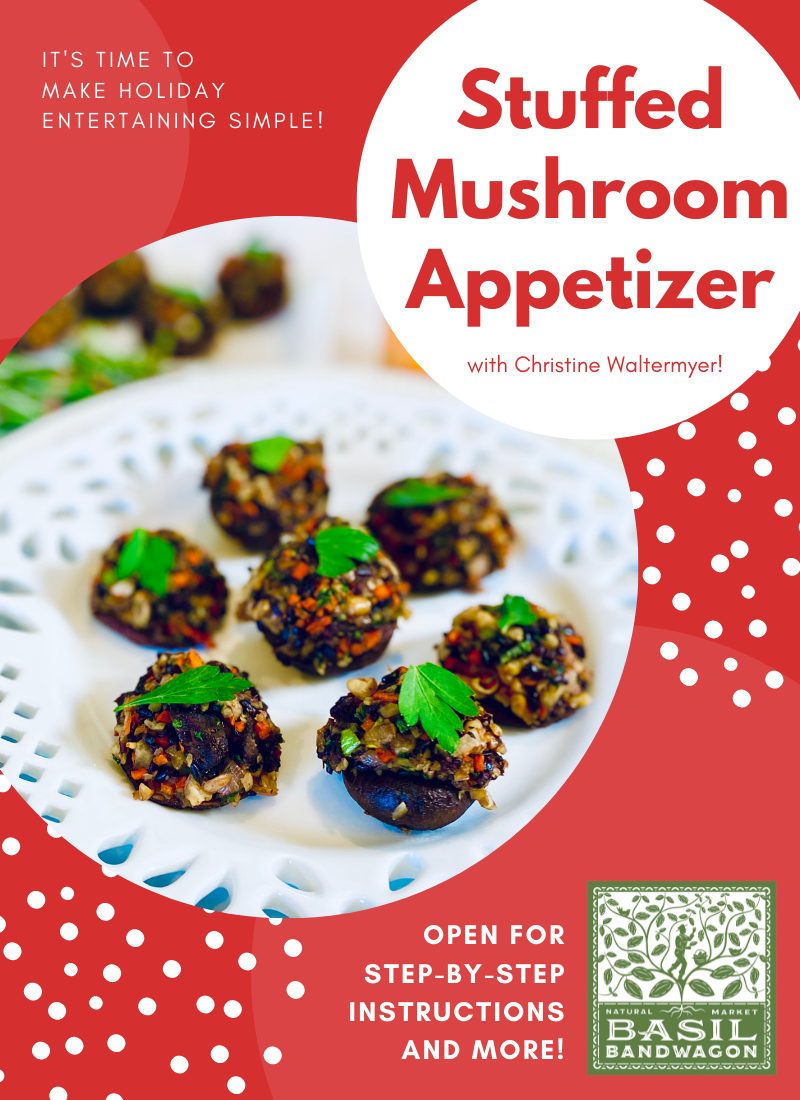
  • Fall Favorites with Christine Waltermyer

    Fall Favorites with Christine Waltermyer

    FALL FAVORITES

    with Christine Waltermyer

    Christine Waltermyer is a local Wellness Chef, private chef to celebrities, published cookbook author and founder of the Natural Kitchen Cooking School, which offers an online Plant-Based Cooking Program. She also loves shopping at Basil Bandwagon! Visit naturalkitchenschool.com to get your FREE copy of her cookbook, “7 Days of Deliciousness.”


    MENU

    Creamy Squash Apple Soup

    Healthy Organic Pumpkin Pie with Einkorn Crust

    Butternut Squash Ravioli

    Paleo Pumpkin Pie


    Creamy Squash Apple Soup

    Serves 4

    Ingredients

    2 cups vegetable broth

    1 onion, diced

    1/2 teaspoon sea salt, or to taste

    1 large butternut squash, peeled and cut into 1/2 inch chunks

    13.5 oz can full fat coconut milk

    2 apples, cored, peeled and chopped

    1/4 teaspoon nutmeg

    A few grinds of cracked black pepper

    Apple cider

    Toasted pumpkin seeds, to garnish

    Method

    1. Heat a soup pot over medium heat. Add a splash of vegetable broth.

    2. Add the onion and add a pinch of sea salt. Cook and stir for 5 minutes.

    3. Add the squash and apple and stir. Pour in the coconut milk.

    4. Pour in the remaining vegetable broth, the black pepper, remaining sea salt, and nutmeg. Add enough apple cider to almost cover the squash and apples.

    5. Increase the heat to high and bring to a boil. Reduce the heat to low, cover and cook for 20 minutes, or until the squash is fork-tender. Stir occasionally while cooking.

    6. Shut off the heat. Using an immersion blender, carefully puree the soup.

    7. Serve hot, garnished with toasted pumpkin seeds. Enjoy!


    Healthy Organic Pumpkin Pie with Einkorn Crust

    Serves 8

    Ingredients

    FILLING:

    2 teaspoons pumpkin pie spice

    2 tablespoons Einkorn flour or unbleached white flour

    1/2 cup organic sugar

    1/2 cup organic brown sugar

    15 oz organic pumpkin puree

    1 1/4 cup almond milk

    1 whole egg, at room temperature

    3 egg yolks, at room temperature

    PIE CRUST:

    1 1/2 cups Einkorn flour

    8 tablespoons cold butter

    1/2 teaspoon sea salt

    1 tablespoon sugar

    4 tablespoons ice cold water

    Method

    1. To make the filling, in a large bowl, whisk together the sugar and the pumpkin puree. Add the eggs and egg yolks, beating them into the pumpkin mixture. Then add almond milk, pumpkin pie spice and add the 2 tablespoons of flour. Mix well until smooth, blending in a blender or with an immersion blender if needed, to remove the little flour lumps.

    2. Prepare the pie crust by putting the 1 1/2 cups flour in the food processor. Add the butter and sugar and blend it all together. Gradually add the ice water one teaspoon at a time as you blend. Once it forms a ball, prepare a cutting board by dusting it with flour. Transfer the dough to the board and form it into a flattened disk. Wrap the dough in plastic wrap and refrigerate for at least 30 minutes. (Chilled dough will give you a nice flaky pie crust.)

    3. After 30 minutes of refrigeration, you can roll out your pie dough. You can either roll out the dough on a floured surface or between two sheets of parchment paper. If using the floured board method-first dust your board with flour and then unwrap the chilled dough and place it on the board. Using a rolling pin, roll out the dough large enough to cover your pie plate. Grease/oil a 9-inch pie plate. Place the rolled out circle of dough into the pie plate and add some crimping on the edges of the pie.

    4. Pre-bake your pie crust for 10 minutes at 350 degrees F. After pre-baking, add the filling. Use a crust protector and bake for 60 minutes. Cool completely, then refrigerate for at least an hour (up to a couple of days) before serving. Enjoy!


    Butternut Squash Ravioli

    Serves 4

    Ingredients

    2 packs Rising Moon Butternut Squash Ravioli

    Olive oil

    1 pack of your favorite sausage (lots of great plant-based options out there!)

    1 onion, diced

    2 small bunches baby broccoli (or broccolini or broccoli rabe), steamed until tender

    1/4 cup your favorite pesto

    1 teaspoon minced garlic

    Mirin rice wine or white wine

    1 tablespoon currants

    1/2 teaspoon sea salt

    Black pepper to taste

    1/4 cup toasted pine nuts

    Method

    1. Precook the ravioli according to package directions. Rinse and drain, then toss with a little olive oil and set aside. Slice the sausage on a diagonal and pan fry over medium heat in a little olive oil until lightly browned and crispy on the edges.

    2. Add 1 Tablespoon olive oil to a pan over medium heat. Add the onion and pinch of sea salt. Cook for a few minutes then add the garlic. Add the baby broccoli. Add remaining sea salt and pepper. Add the sausage and cook for a few minutes. Add the ravioli and currants and cook a few more minutes. Add the pesto and stir gently to combine.

    3. Serve topped with lightly toasted pine nuts. Enjoy!


    Paleo Vegan Pumpkin Pie with a Keto Option

    Makes one 8 or 9-inch pie

    Ingredients

    CRUST:

    1 cup almond flour

    2 tablespoons coconut flour

    2/3 cup tapioca flour/starch (or arrowroot flour)

    1 tablespoon coconut sugar or maple sugar

    1/2 teaspoon baking powder

    1/2 cup palm oil shortening

    1/4 cup ice water

    FILLING:

    15 oz can pumpkin puree

    2/3 cup full fat coconut milk (I love Native Forest Simple/No Guar)

    1/2 cup maple syrup (KETO option: Instead of maple syrup, substitute 1/2 cup coconut milk + 1/2 teaspoon pure monk fruit sweetener or 1/2 teaspoon stevia leaf powder)

    4 teaspoons olive oil (or a neutral oil such as avocado oil)

    1 teaspoon vanilla extract

    1-2 teaspoons pumpkin pie spice

    1/2 teaspoon sea salt

    1 1/2 teaspoons agar powder

    3 tablespoons cornstarch

    OPTIONAL WHIPPED TOPPING:

    1 can Let’s Do Organic Heavy Coconut Cream, chilled overnight

    1 tablespoon powdered sugar (KETO option: Substitute a pinch pure monk fruit powder or stevia leaf powder for the powdered sugar

    TO SERVE:

    ground nutmeg

    Method

    1. To make the pie crust, in a large bowl, whisk together the dry ingredients: almond flour, coconut flour, tapioca flour/starch, maple sugar, and baking powder. Cut in the shortening until incorporated. Gradually add the ice water, mix well without overmixing, then form into a flat disk. Wrap in parchment paper and chill in the refrigerator for 20 minutes.

    2. To make the filling, in a large bowl or saucepan, combine all filling ingredients. Pre-cook the filling on the stovetop: warm over medium heat for 5-10 minutes, whisking often, until thick, smooth and creamy. (*SEE KETO OPTION ABOVE)

    3. Preheat oven to 375 degrees F. Once the pie dough has chilled for 20 minutes, wipe your work surface with a damp sponge. Place a sheet of parchment paper on top. Unwrap your chilled pie dough and flip it onto the other piece of parchment paper. Roll it out to a thin circle of dough. Flip the dough onto an oiled pie plate. Chill again if necessary to easily remove the sheet of parchment from the pie dough, being careful as you work with it.

    4. Moisten your fingers and crimp the edge of your pie crust. Bake the crust by itself for 10 minutes. Add the filling. Add a silicone pie crust protector and bake at 350 degrees f. for an additional 10-20 minutes. Cool separately and chill before serving with optional whipped topping below and a sprinkle of ground nutmeg.

    5. To make the optional coconut whipped topping, scoop out the solidified solid fat from the top of the chilled coconut cream. Reserve the liquid part and place the coconut fat in a food processor. Add the powdered sugar. Blend until creamy and smooth, adding a small amount of the liquid from the can if needed to achieve the right consistency.

    6. Enjoy!


    Thank you to Christine Waltermyer and the Natural Kitchen Cooking School for working with us to help promote healthy, nutritious meals that are affordable, full of nutrients, and simple to make at home!

  • Spring Fever Cooking with Christine Waltermyer

    Spring Fever Cooking with Christine Waltermyer

    Spring Fever Cooking

    with Christine Waltermyer

    Christine Waltermyer is a local Wellness Chef, private chef to celebrities, published cookbook author and founder of the Natural Kitchen Cooking School, which offers an online Plant-Based Cooking Program. She also loves shopping at Basil Bandwagon! Visit naturalkitchenschool.com to get your FREE copy of her cookbook, “7 Days of Deliciousness.”


    MENU:

    Arugula Beet Salad with Fennel

    Spring Quinoa with Chickpeas

    Spring Roasted Vegetables

    Gluten Free Vegan Carrot Cake Cupcakes


    https://vimeo.com/331080882

    Arugula Beet Salad with Fennel

    If you love salads this one is a winner! The combination of sweet beets with crunchy fennel and refreshing radicchio, combined with a lovely olive oil vinaigrette make it the perfect spring salad.

    Ingredients

    Salad:

    3 Red Beets, boiled and peeled

    1 Pink Lady Apple, cored and diced

    1 Endive, core removed and sliced

    1 Fennel Bulb, core removed and sliced

    1 Head Radicchio, cored and sliced

    1 Pack Baby Arugula (I love Olivia Organic pre-washed)

    Dressing:

    Juice of 1 Orange

    1/4 Cup Olive Oil

    1/4 Teaspoon Sea Salt

    3 Tablespoons Apple Cider Vinegar

    1 Tablespoon Maple Syrup

    Optional: 1 teaspoon prepared mustard

    Method

    1. Peel beets and dice. Place all salad ingredients in a large salad bowl.

    2. Separately, combine all salad dressing ingredients and whisk together.

    3. When ready to serve, pour the dressing over the salad and toss.


    https://vimeo.com/330827631

    Spring Quinoa with Chickpeas

    This is a light and lovely side dish to serve at your favorite gatherings!

    Ingredients

    5 Cups Cooked Quinoa (I love Ancient Harvest Traditional Quinoa)

    4 Tablespoons Olive Oil

    1 Leek, sliced thinly (just the white bottom part)

    8 Ounces Shiitake Mushrooms, destemmed and sliced

    1 Bunch Dandelion Greens, chopped (just the leafy part)

    Water

    13 Ounces Cooked Chickpeas (Jovial brand is great)

    1 Generous Handful of Fresh Parsley, destemmed and chopped

    2-3 Tablespoons Fresh Lemon Juice

    1/2 Teaspoon Sea Salt

    Optional: Black pepper and crushed red pepper flakes

    Method

    1. Place the quinoa in a large bowl and set aside.

    2. In a large skillet, warm 1 tablespoon of the olive oil over medium heat. Add the leeks and cook for 5 minutes with a pinch of sea salt. If it starts to stick to the pan, add a small splash of water.

    3. Add the shiitake mushrooms and cook for another 5 minutes. Add the dandelion greens and another pinch of sea salt and small amount of water if needed.

    4. Cover and cook until the greens are tender but still bright green, or about 4 minutes. Remove the cover and take the pan off the heat.

    5. To the cooked quinoa, add the chickpeas and parsley. Add the sautéed vegetables. Add remaining olive oil, lemon juice and sea salt. Serve warm.


    https://vimeo.com/330175843

    Spring Roasted Vegetables

    What a nice combination of vegetables, just in time for Spring celebrations!

    Ingredients

    1/2 Medium Size Celery Root

    8 Carrots

    8 Ounces Baby Bella Mushrooms

    1 Cup Brussels Spouts, sliced in half

    10 Ounces Trimmed Green Beans

    1-2 Tablespoons Avocado Oil

    1 Teaspoon Sea Salt

    1 Teaspoon Onion Powder

    1 Teaspoon Minced Fresh Rosemary

    Juice of 1 Lemon (1 teaspoon added before roasting, reserve the other teaspoon to add later)

    Balsamic Glaze

    Method

    1. Preheat oven to 350 degrees F.

    2. Thinly slice the carrots diagonally. Arrange on parchment paper-lined baking sheet. Remove the stems from the mushrooms. Cut into quarters and add to the baking sheet, along with the trimmed green beans and brussels sprouts. Peel and cut the celery root into cubes

    3. Roast prepared vegetables in preheated oven for 25 to 30 minutes.

    4. Add the remaining lemon juice to the roasted vegetables and drizzle with the balsamic glaze. Serve hot or leftovers go great on a salad.


    https://vimeo.com/330162124

    Gluten Free Vegan Carrot Cake Cupcakes

    Ingredients

    Dry:

    2 Cups Gluten Free Flour (such as Bob’s Red Mill 1 to 1 Baking Mix)

    2 Teaspoons Cinnamon

    1/4 Teaspoon Nutmeg

    1/4 Cup Brown Sugar

    1/2 Teaspoon Sea Salt

    1 1/2 Teaspoons Baking Powder

    1 1/2 Teaspoons Baking Soda

    Wet:

    1/3 Cup Plant-Based Milk (i.e. coconut milk)

    1/2 Cup Maple Syrup

    1/2 Cup Avocado Oil

    1 Tablespoon Apple Cider Vinegar

    2 Tablespoons Applesauce

    2 Teaspoons Vanilla Extract

    2 Flax Eggs (Mix 2 tablespoons flax meal + 6 tablespoons water; let sit for 10 minutes)

    Add:

    1 Cup Coarsely Shredded Carrots

    1/4 Cup Currants

    Vegan Cream Cheese Frosting:

    1 8-oz. Container Vegan Cream Cheese

    1 Container Simple Mills Organic Vanilla Frosting

    1/4 Cup Maple Syrup

    1 Teaspoon Vanilla Extract

    Method

    1. Preheat oven to 350 degrees F.

    2. In a large mixing bowl, whisk together flours, spices, brown sugar, sea salt, baking powder, and baking soda. Separately, combine the plant-based milk, maple syrup, avocado oil, apple cider vinegar, applesauce, vanilla extract and flax eggs. Whisk to blend.

    3. Pour wet into dry ingredients and stir or whisk together to form a smooth batter. Add the carrots and currants. Mix well but do not overmix.

    4. Line a muffin pan with unbleached muffin liners. Using and ice cream scoop, evenly distribute the cupcake batter among the 12 cups.

    5. Bake at 350 degrees F. for 25 minutes. While the cupcakes are baking, prepare the frosting.

    6. Place all frosting ingredients together in a food processor and process until smooth. Refrigerate for 30 minutes before frosting the cupcakes. Decorate top with optional nuts (walnuts or pecans).


    Thank you to Christine Waltermyer and the Natural Kitchen Cooking School for working with us to help promote healthy, nutritious meals that are affordable, full of nutrients, and simple to make at home!
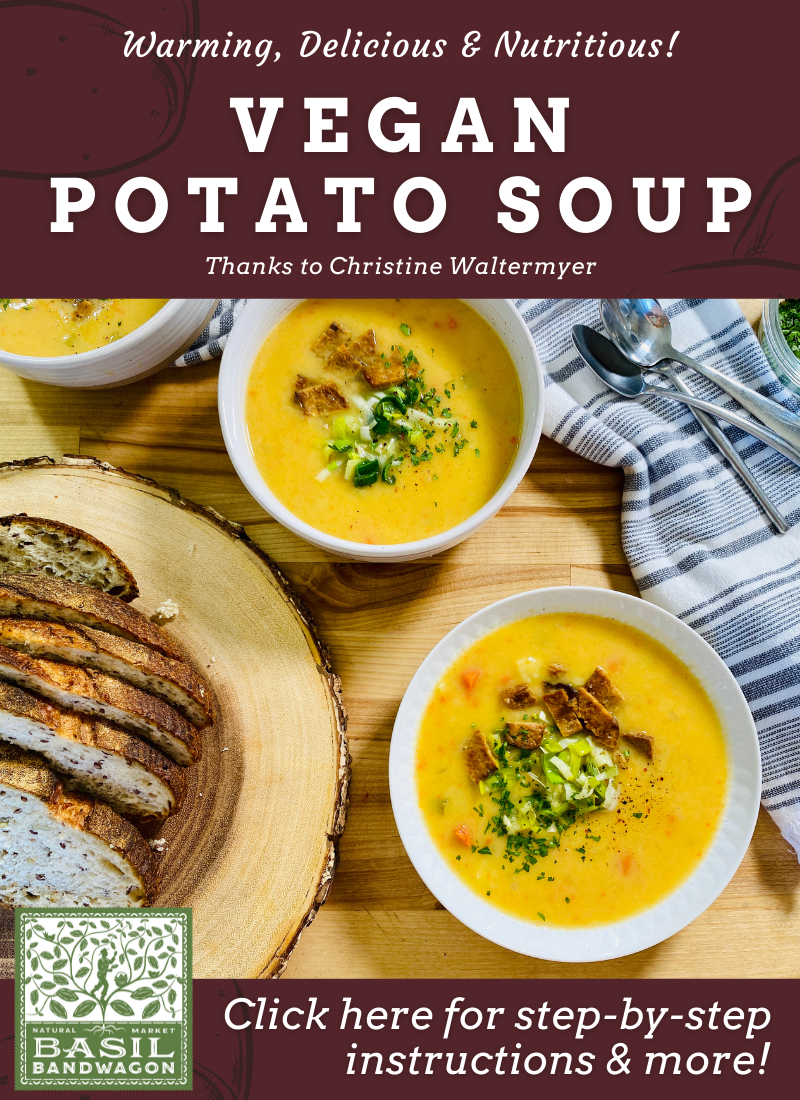
  • Whole Grains from Around the World with Christine Waltermyer

    Whole Grains from Around the World with Christine Waltermyer

    https://vimeo.com/316936703/05e2b283a9

    Whole Grains from Around the World

    with Christine Waltermyer


    MENU:

    Indian Vegetable Biryani Rice

    Persian Steamed White Rice

    Russian Buckwheat with Onions

    Mexican Chocolate Quinoa Pudding


    Thank you to Christine Waltermyer and the Natural Kitchen Cooking School for working with us to help promote healthy, nutritious meals that are affordable, full of nutrients, and simple to make at home!

  • Whole 30: The Reset You Might Need

    Whole 30: The Reset You Might Need

    This blog post chronicles the experience of one of our brave produce team members, Cheryl, who recently experimented with the Whole30 diet.

    * * *

    Make sure your food is truly nourishing you.

    Being constantly inside during the winter can encourage poor habits, such as sedentary behavior and unhealthy food choices. Sometimes even when we think we are making good choices, our bodies still don’t feel well due to food sensitivities.  Foods that are labeled as nutritious, such as “whole grain,” “calcium-rich” or “vegan” may be causes for bloating, headaches, brain fog, low mood, aches, pains and a plethora of other symptoms.

    This is where eliminating these culprits is a great way to start off the spring. With this in mind, a guide to help you do this is essential. One method available that I recently used is the Whole30 plan, named for its thirty day span and menu of unprocessed whole foods. 

    This plan really needs preparation, but in spite of that, I did it spur of the moment. I woke up one morning, tired of feeling bad after years of feeling tired, foggy, bloated, having periodic headaches and trouble sleeping. I stopped eating questionable foods that day and had the good fortune to work in place that sells healthy food and the Whole30 book. The plan’s goal is to create a healthy relationship with food, boost sluggish metabolism, improve the digestive system, boost immunity and eliminate chronic inflammation, thereby eliminating numerous conditions. 

    My diet generally consists of organic foods, not a lot of refined sugar and all of the food groups–It’s no accident that I work in a health food store. The Whole30 requires that for thirty days you eliminate sugar, alcohol, grains, dairy and legumes. This includes peanuts. Which means peanut butter. Which would have been the deal breaker, if I wasn’t feeling so bad.

    The book has all of the information necessary and also gives you a day-by-day idea of symptoms may occur as you go through the month. I suffered many of these things and the knowledge made it a little more bearable. Even after three days I was fatigued and headachy from withdrawal–but not bloated. After that, there was no turning back.

    I don’t miss many of the things and the simple fact that I don’t want to feel that way again has made me resist the foods that make me unwell. I’ve been off the Whole30 for a few weeks now and feel much better overall. I was sure the moment I was done I would jump into a vat of peanut butter, but nope–I wanted rice. Just rice. With pepper. It was marvelous.

    So, give it a go. Start off Spring by eliminating food sensitivities and allowing the food you eat to do its job and nourish you! If you have any questions about the Whole30 or my experience, you can find me in the Flemington store produce aisle 🙂

    Cheryl shared this amazing chicken recipe to help you find success like she did!

    Cheryl & John’s  Whole30 Approved Chicken

    9 chicken thighs

    1 lb Niman All Natural Italian sausage links

    2 red peppers

    2 green peppers

    4 potatoes, quartered

    8 oz. mushrooms (baby ‘bella or button)

    1 large onion

    1/2 head Garlic

    1 large can Muir Glen fire roasted tomatoes

    2 Tbsp apple cider vinegar

    Parsley

    Oregano

    Basil

    Black pepper

    Frontier Poultry Seasoning

    1/2 cup white wine (optional)

    Preheat the oven to 350.

    Chop the peppers, onions, mushrooms and Garlic and add to a large roasting pan. Add the quartered potatoes, tomatoes, vinegar and wine (if using). Season to taste with the herbs and stir to combine. Nestle the sausage in the mixture. Season the chicken with poultry seasoning and arrange on top of the pan. Bake uncovered for 45 minutes to an hour. Serve.

  • Guest Post: Journaling to Nourish the Spirit by Matt Maszczak

    Guest Post: Journaling to Nourish the Spirit by Matt Maszczak

    ”The storm has subsided. The snow, now ankle deep, crunches beneath my feet. I’m trying to remember to, ‘…arrive with every step…’ like Thich Nhat Hanh teaches. Orion stands between the clouds above the corn field behind our house. I feel like I understand him. He was so many people, so many stories. Many of them disjointed and incongruent, but Zeus saw fit to place him among the stars. I too have been many people, incongruent and disjointed. It is time to write my own story among the stars.” -Journal entry from January 4, 2018

    Beginnings

    A new year brings new ideas. Or does it? It seems natural to take account of our lives with the changing of the calendar. We look at what was missing from our lives the previous year and make a commitment to change it in the new year. Resolutions rarely make it past the middle of the first month. Why is that? Are we just replaying the same loops in our heads? Are we forever stuck on the treadmill of life, running, but going nowhere?

    What if there was a way to turn the treadmill off and begin walking through the world, aware and engaged? What if we could see the truth and beauty of reality and live our lives awake and on purpose, rather than trudging through the day hoping the future will be better without any reassurance that is possible?

    The loops that play in our minds are difficult to see in the dailiness of life. They are our own personal operating system. All other thoughts and manifestations emanate from these loops. Journaling has the power to help us identify, understand, and change them. Journaling has the power to nourish our spirit and give us a better understanding of reality, our place in the world, and that awareness and understanding can offer us a more present and fulfilling life.

    Change the Loop

    ”…we, as human beings, think that we’re thinking. Not true. Most of the time, we’re remembering. We’re reliving memories. We’re running familiar patens and loops in our head.” -Kamal Ravikant from Love Yourself Like Your Life Depends On It

    When you begin to record the patterns in your head, you can identify them. That is the first step in creating a better life and nourishing your spirit. Journaling has the power to help you rewrite those loops of thought that run through your head, often subconsciously.

    We are all familiar with scenes of children being punished by repeating written lines on a blackboard. I have good news: it works. Pick a thought that you want to play in your subconscious. Perhaps, “I Love myself.” Repeat it enough in writing and your mind will start to play that loop in your head. You may not believe it at first, but eventually, that loop will become so ingrained that it becomes a default thought. Our thoughts become our reality.

    Arrive With Every Step

    ”Life is not about getting to a certain place. Life is a path.” -Thich Nhat Hanh

    The practice of journaling is dangerous. It is playing with fire. It has the power to give warmth and beauty, but it also has the power to destroy. We need to approach a journaling practice with the same respect and responsibility we give fire.

    I have journaled most of my life, but as I look back over them I notice that very few of the entries were about the present. There are hundreds of lines bemoaning the past or wishing for the future. Many of the later ones are bemoaning the fact that the future I had envisioned had not come to pass in the present and those led to speculation about the future. This kind of journaling is perpetuating the loop.

    The best way to get out of the loop is to stop reliving our perception of the past and to stop speculating about the future. Instead, we should focus on the present and understand what is happening, now, in this moment. Who are we here and now? That is arriving with every step.

    The beauty of this type of journaling is that it will eventually show us how we have changed. Days, weeks, or years from now, we can look back at who we were at a particular moment and understand how we have changed into who we are now. That gives us the ability to rewrite the present and affect our future without wild speculation.

    Building a Journaling Practice

    “We have all the light we need, we just need to put it into practice.” -Albert Pike

    A journaling practice is like any other practice. There are tools and exercises to get started. There are others to grow from beginner to something else. On Wednesday, January 24, 2018, I will be presenting at Basil Bandwagon Natural Market on Journaling to Nourish Your Spirit.

    I will be telling my story and how I have built a journaling practice that has added peace and growth to my life in ways I had never imagined. I will be offering you some free tools and exercises to begin building your journaling practice into a life-changing and soul-nourishing experience. We will laugh and learn together and leave prepared to arrive with every step. I hope to see you there.

    Matt Maszczak is a writing wanderer. His blog, Wander Doctrine, explores the spiritual side of travel and wandering as a means to presence. He can be found on Instagram, Facebook, Pinterest, Twitter, and Medium

    CLICK HERE TO SIGN UP FOR THIS TALK

  • Local Spotlight: Her Fitness New Jersey

    Local Spotlight: Her Fitness New Jersey

    Starting fresh with fitness and a healthy diet is a huge challenge. We ALL want to get there, of course, but how do you stay motivated? How do you avoid injury? Most important: How do you really get results?

    Carolyn found herself looking at 40 with a few extra pounds that crept up on her. Stress led to fatigue which led to the bad habits that so many of us get into, and she was struggling to feel like she could get it under control.

    Working with Marie Ande and her group fitness sessions allowed her to see results for the first time in almost a decade.

    Her Fitness is Personal training in a group setting for women who are committed to becoming or staying healthy, fit and strong.

    In addition to Her Fitness, Carolyn stuck to clean eating. Cutting back on sugar, starch, and dairy- she had to find ways to make sure her meals were thought out ahead of time.

    One thing Marie suggested was a good protein shake in the morning. We LOVE Plant Fusion Lean Protein- its super filling, and mixes easily with almond milk in a shaker bottle (and it tastes awesome!):

    Carolyn’s go-to lunch was the Mushroom Turkey Burger over greens from the cafe:

    Taking good care of your gut is important when you’re trying to drop weight. Getting the most out of your food ensures your body won’t push you into cravings. Probiotics are instrumental:

  • Guest Post: Developing Your Personal Health Plan

    Guest Post: Developing Your Personal Health Plan

    A Chiropractor’s Guide to Creating Health & Happiness This Fall & Beyond

    By Dr. Michele Gardner of Gardner Family Chiropractic, Flemington, NJ

    Have you ever attempted to program your GPS and found it searching for satellite? It won’t show your travel route until it first knows where you are… Finding your way in life is incredibly similar! You cannot get to where you want to go without first knowing where you are. In helping you develop your Personal Health Plan, we’ll talk about where you are on your journey to health, different philosophies of health, and actions to ensure your future wellbeing.

    Because we are all at different places on our journey to health, we will each have a different plan. You will tailor your own program to suit your lifestyle. The idea behind a Personal Health Plan is that it is a decision to stay healthy and take steps toward insuring your future success. (Madeira, 2006) My favorite definition of health is one that includes physical, social, emotional, and spiritual wellbeing – not merely the absence of disease. (WHO, 1948) Health is a lifelong journey and requires a bigger picture view of life to be in view at all times. With this in mind, know that you are building awareness here. You are defining your interpretation of yourself and getting specific about what you want.

    Some of us are healthy and want to stay that way. Some of us are facing a health challenge or crisis that is new. Some of us are managing chronic illness. Whether you have survived a health crisis and want to insure it never comes back, or want to take your current health to new heights, a Personal Health Plan will help you succeed. No matter where you are on your journey, I want to encourage you to make your choices from a place of self-love. A frantic push toward a desired end with a rigid list of to-do’s will not serve you and is not sustainable. Plus, you’ll miss out on the gifts you have the potential to receive – even while in crisis.

    If you owned a million-dollar race horse, what would you feed it? Would you exercise it? Would you keep its environment clean? Would you give it plenty of rest, sunshine, and fresh air? Of course you would! The reason you would is because this isn’t just any horse… this is a million dollar race horse! (Madeira, 2006) Have you guessed it already? Yes, you are the million-dollar race horse! Why would you do any less for yourself? For the parents reading this, I know you want the best for your children and you know they learn through observation. Lead by example. Love yourself enough to treat yourself as you would your children so they can learn to do this for themselves. Our ability to love is infinite. I promise you, if you love yourself more you won’t be taking anything away from them. You’ll be giving them more than you can imagine.

    For some of you, the following will be a big ah-ha moment. There are three different philosophies of health.

    1. Mechanistic Philosophy: This is the one our culture is most familiar. The belief inherent in this philosophy is that living things are like complicated machines, composed of many parts lacking any intrinsic relationship to each other. 
    2. Holistic Philosophy: This is the one most familiar to Eastern cultures. This philosophy values the idea that living things should be viewed as wholes- not as collections of parts.  Functioning cannot be fully understood solely in terms of component parts.
    3. Vitalism Philosophy: The basic principle of this philosophy is that living things have an innate intelligence which animates, motivates, heals, coordinates and inspires them. (Glassey, 2010)

    Our culture’s medical model is based in the mechanistic philosophy. It is the most beneficial in emergency scenarios. If your kidney if failing or you’ve broken a bone, this is the approach best utilized. However, when faced with chronic illness, the modalities steeped in holism may fair better. And vitalistic philosophy can help us choose to add actions and traditions to be utilized whether we’re sick or well. There really isn’t necessarily one right answer. It is what is right for you right now. And, that may change too. Life and growth are a dynamic evolution.

    Directions for Creating Your Personal Health Plan:

    Once you’ve chosen your primary philosophy of health, you’ll develop your personal health wheel. Some examples of a health wheel are shown here along with a blank one you can print to create your own.duke-wheel-of-health2 wheel-of-life-assessment
    blank-self-care-wheel

    You’ll notice there is a center circle on this wheel.

    Out of your health philosophy, choose up to three traditions that support your philosophy.

    Some examples are: Acupuncture, Aromatherapy, Ayurveda, Biofeedback, Chinese Medicine, Chiropractic, Energy Medicine, Faith Healing, Feldenkrais Method, Functional Medicine, Gestalt Therapy, Herbalism, Homeopathy, Hydrotherapy, Hypnotherapy, Iridology, Kampo Medicine, Massage Therapy, Meditation, Naturopathic Medicine, Osteopathic Medicine, Polarity Therapy, Pranic Healing, Prayer, Qigong, Rebirthing, Traditional Medicine, or Yoga Therapy.

    Next you’ll choose facets of health that are important to you.

    The most common are physical, spiritual, recreational, professional, social, emotional, mental, financial, romantic, creative, relational, environmental, and family. Within each category you can get specific and detailed.You have the ability to know what area of your life needs your attention to reach health goals. Simply evaluate yourself on the wheel. There is an example wheel that is multi-colored with tick marks to help quantify the level of health achieved in that category. (Baker, 2013) What do you want your life to be?

    After you have chosen which areas to work on, you can decide what or who will help you with your action steps.

    You are not meant to do this alone. Find practitioners within that can walk with you along your journey. They will help hold you accountable while giving you the support you need.

    Get started right now:

    Print one of the sample wheels. When thoughts come to you about what you want for yourself, journal them or use a voice recorder on your phone. You’ll build upon this with time and allow the specifics to unfold.

    If you’d like support from me, don’t hesitate to reach out. Visit my website for more information on how to reach me. I can help you find a practitioner you are looking for or guide you through some choices. Lastly, I’ll leave you with a quote I like:

    “If you don’t design your own life plan, chances are you’ll fall into someone else’s plan. And guess what they have planned for you? Not much.” – Jim Rohn

    No matter where you are on your journey toward health, you can make choices today that will lead you where you want to go. Surround yourself with people who help you passionately move toward self-actualization!


    Works Cited

    Baker, B. (2013, September). Retrieved from http://www.startofhappiness.com/wheel-of-life-a-self-assessment-tool/

    Glassey, D. (2010, September). The Vitalistic Healing Model. Retrieved from Pathways to Family Wellness: http://pathwaystofamilywellness.org/Holistic-Healthcare/the-vitalistic-healing-model.html

    Madeira, J. (2006). Developing Your Personal Wellness Plan. Setting Things Straight (p. 1). Madeira Success Strategies.

    Duke University (2014). Retrieved from Duke Integrative Medicine: http://triadintegrativehealthcoaches.com/

    Unknown. (n.d.). Retrieved from Pinterest: https://www.pinterest.com/pin/11892386492434313/

    WHO. (1948). WHO definition of health. Retrieved from WHO International: http://www.who.int/about/definition/en/print.html

    Wikipedia. (2016, August). Holism Philosophy. Retrieved from https://en.wikipedia.org/wiki/Holism

    Wikipedia. (2016, June). Mechanism Philosophy. Retrieved from https://en.wikipedia.org/wiki/Mechanism_(philosophy)

  • Summer Camp Week 9: Boost Your Immunity!

    Summer Camp Week 9: Boost Your Immunity!

    This week at Summer Camp, we have an exciting guest post from one of our favorite local Chiropractors, Dr. Michele Gardner! Check out what Dr. Gardner has to share about optimizing immune health below.

    Summer is almost over which means school will be starting soon! There’s a funny thing that happens when children get together in large groups and have the added social stress of starting a new year. It seems to do with both stress-coping strategies and gut health. We now understand that stress affects our nervous system, which in turn alters immune function- especially when it is chronic. (Segerstrom, 2004) We also Dr. Gardner Quoteknow that a large percentage of our immune function resides in our gut. (Vighi, 2008) Each family essentially has its own ecosystem that gets challenged when encountering another that our immune system is unfamiliar with. (University of Utah, 2014) Fortunately, there are daily choices you can make to support general immune health, actions you can take for prevention during exposure to an illness or during a high stress time-period, and treatments you can use to ease your symptoms and possibly shorten their duration.

    For starters, I have never seen more stressed-out kids than those in school today. The level of academic and social demand placed on our children requires we teach them stress-coping strategies. Do you know what works for your child and your family? As parents, the pressure is just as great- in different ways. And if you’re a “big kid” – this applies to you too.

    Here’s my list of Top 10 Daily Choices to Support General Immune Health:


    1. Get adjusted by your family chiropractor. Adjustments not only boost immune function for hours afterward (Brennan, 1991), they increase relaxation and digestive health through the nervous system! (Yates, 1988) (Takeda)
    2. Consume high-quality, nutrient-dense food for a healthy gut. We have many knowledgeable people here in Flemington who can help you learn to make the best choices for you and your family. Just ask! We’ll help you get started by finding the right person for you. It can be simple too – no need to get overwhelmed. It can be all about adding in good stuff that crowds out what you don’t want. And, it can taste great so you don’t have to feel deprived. If you regularly eat at Basil Bandwagon’s Farm to Market Café, then you know I’m right!
    3. Find appropriate exercise. Did you know exercise immunology is a thing? Regular moderate exercise is shown to decrease risk of illness while over-training can have the opposite effect. (Gleeson, 2007)
    4. Get quality rest. Our bodies restore and regenerate while we sleep. The amount of sleep we require changes with age too. For most adults, seven to eight hours will suffice; teens and infants require more like ten to twelve! (Olson, 2015)
    5. Take quality, whole-foods supplements including vitamins and trace minerals tailored to your needs. Whether you need to establish/restore your gut health or counter the depleting effects of stress, supplementation can be instrumental in your health. The key is to first find out what your specific needs are, and that can often begin with bloods tests. There are certain supplements that are safe to use even if you don’t have a deficiency (essentially you’ll just eliminate the excess). But, there are others you want to take ONLY if you are deficient – especially fat-soluble vitamins (that means they get stored in your body). (Medicine Net, 1999) There are medical doctors with post-doctorate training in Functional Medicine or Integrative Medicine who have a more comprehensive understanding and testing capabilities. Again, we have many here in our community and neighboring counties.
    6. Learn to reduce stress. We’ve already established that our community has a high level of stress, and chronic stress affects our immune function. Help yourself and your family by cultivating stress-coping strategies. We aren’t going to eliminate the stress in our lives so we’d better adapt! And, for the love of Pete, don’t add this to your already overloaded to-do list and become the health “Nazi” in your family! These are strategies that develop over time, organically, and from self-love! Surround yourself with practitioners from traditions that make sense to you, who can guide you along this journey. Ask and we’ll help you find your:
      • Family Chiropractor
      • Community Acupuncturist
      • Aromatherapist
      • Massage Therapist
      • Yoga Instructor
      • Family Gestalt Therapist
      • Tai Chi or Qigong Instructor
      • Ayurvedic Practitioner
      • Minister
      • Energy Medicine Practitioner
      • Herbalist
      • Homeopath
      • Personal Trainer
      • Meditation Guru
      • Art Therapist
      • Hypnotherapist


    7. Make sure the humidity in your home stays close to 50%. In cold air our mucous membranes (lining of your respiratory tract) get dried out, which can lower our body’s defense to illness. Their job is to trap those pesky bacteria or viruses we don’t want so we can sneeze or cough them out. (Mercola, 2014)
    8. Play outdoors. Good ol’sunshine and fresh air! If you’ve had a recent physical, then your medical doctor has probably checked your vitamin D level. Direct sun exposure for 15 minutes without sunblock is still the best way to allow your body to absorb vitamin D. (Vitamin D Council)
    9. Hydrate on a cellular level. Those are fancy words for drinking water. Not just any old water, though. pH balance and mineral balance have an effect on cell uptake of water and hydration appears to be linked with immune function that starts in our saliva. (Adams) If you’ve got good well water- fantastic! If not, research options for quality filtration and consider electrolyte supplementation when appropriate. I like to avoid bottled water when possible, but there are bottled waters that provide trace minerals and a healthy pH.
    10. Laugh! Why does Snoop Dogg use an umbrella? For Drizzle! But, seriously, laughter is the best medicine. Laughter will reduce the stress response in your body, boost your immune system, relieve pain, and improve your mood. (Mayo Clinic, 2016) I hear we have some new comedy acts coming up here in Flemington…


    What actions can you take for prevention during exposure to an illness or during a time-period of high stress?


    Take all the above and add a few immune boosting tweaks:


          • Ask your family chiropractor if it is appropriate to increase your care during this time. If you’ve been under a Wellness Care Plan it might be time to return to a Condition Based or Corrective Care schedule. If you haven’t been under care, now is as good a time as any to start.
          • Vitamin C, Zinc (supplements/throat sprays/lozenges), Monolaurin (an anti-viral supplement from coconut), and Olive Leaf Extract are among the supplements I’ll use. There are many, many more: Echinacea, goldenseal, elderberry, and so on. The best people to ask are the staff at Basil Bandwagon!
          • Hydrogen peroxide rinse for your ears; especially if you notice your ears are itchy.
          • Keep your sinuses hydrated with a natural saline spray.
          • Focus on Gut health! Certain foods will suppress digestive health while others will support it: Check out this article. (Palevsky, 2006)
          • Essential Oils – almost all are anti-viral and anti-bacterial. Ask me for resources to practitioners who can teach you all about their many benefits. You can even diffuse them in your home or work place. (Pattnaik, 1996)
          • Rest! Remember you are a human Being, Not a human Doing.


    Last but not least, what to do to reduce your symptoms and shorten their duration:


      • Safely increase your supplements at the onset of your symptoms.
      • Ask for herbal remedies and treatments from your community acupuncturist, herbalist, ayurvedic practitioner, or naturopath.
      • Utilize homeopathy – while available at Basil Bandwagon, working with a practitioner to prescribe a remedy specific to you can be more potent than using blends or trying to guess yourself.
      • Rest!!!  Really!!!  Stay Home!!! Not only will you help yourself recover quicker, you’ll be taking care of your community by not sharing whatever it is with everyone else.

    There you have it, my friends! With a clear nervous system, quality nutrition, rest, recreation, exercise and hydration, you can achieve greater heights in your health. If you do start expressing symptoms, support your body to do what it knows how to do via your immune system and you’ll be well in no time. Snuggle on the couch and watch your favorite comedy shows while someone pampers you. And, if you don’t have someone to pamper you, call me – I’ll grab a healthy soup from Basil Bandwagon and bring you a care package fit for an Olympic Champion!

    chiropractor, flemington, flemington nj, hunterdon county


    Dr. Michele Gardner is a Holistic Chiropractor whose focus is on wellness and preventative care for families and individuals facing physical, mental and emotional issues.  She specializes in prenatal care and pediatrics.  Her passion is to educate and inspire everyone to achieve the best possible health without drugs or surgery.  Gardner Family Chiropractic is located in the Old Egg Auction complex at 84 Park Avenue, Suite G105 in Flemington,www.drmichelegardner.com, 908-782-7470, gfctasks@gmail.com.


    References:

    Adams, W. e. (n.d.). Immune Function: Basic Considerations of Exercise and Hydration. Retrieved August 15, 2016, from Korey Stringer Institute: University of Connecticut: http://ksi.uconn.edu/wp-content/uploads/sites/1222/2015/04/Immune-Function-and-Hydration.pdf

    Brennan, e. a. (1991). Enhanced phagocytic cell respiratory bursts induced by spinal manipulation: Potential Role of Substance P. Journal of Manipulative & Physiological Therapeutics , 399-400.

    Gleeson, M. (2007). Immune function in sport and exercise. Journal of Applied Physiology , 693-699.

    Mayo Clinic. (2016, April 21). Healthy Lifestyle: Stress Management. Retrieved August 15, 2016, from Mayo Clinic: http://www.mayoclinic.org/healthy-lifestyle/stress-management/in-depth/stress-relief/art-20044456?pg=1

    Medicine Net. (1999, October 14). water soluble vitamins vs fat soluble vitamins article. Retrieved August 14, 2016, from Medicine Net: http://www.medicinenet.com/script/main/art.asp?articlekey=10736

    Mercola. (2014, January 13). Effects of Low Humidity on Health. Retrieved August 15, 2016, from Mercola.com: http://articles.mercola.com/sites/articles/archive/2014/01/13/low-humidity-health-effects.aspx

    Olson, E. (2015, June 9). Expert Answers on Insomnia. Retrieved August 14, 2016, from Mayo Clinic: http://www.mayoclinic.org/diseases-conditions/insomnia/expert-answers/lack-of-sleep/faq-20057757

    Palevsky, L. (2006, December 1). A Holistic Perspective on the Digestive System of Infants and Children. Retrieved August 15, 2016, from ICPA: http://icpa4kids.org/Wellness-Articles/a-holistic-perspective-on-the-digestive-system-of-infants-and-children.html

    Pattnaik, S. e. (1996). Antibacterial and antifungal activity of ten essential oils in vitro. Microbios , 237-46.

    Segerstrom, S. C. (2004). Psychological Stress and the Human Immune System: A Meta-Analytic Study of 30 Years of Inquiry. Psychological Bulletin , abstract conclusion.

    Takeda, Y. e. Long Term Remission and Alleviation of Symptoms in Allergy and Crohn’s Disease Patients Following Spinal Adjustment for Reduction of Vertebral Subluxations. Journal of Vertebral Subluxation Research , 4 (4), 1.

    University of Utah. (2014, August 15). Your Changing Microbiome. Retrieved August 14, 2016, from Learn.Genetics. Genetic Science Learning Center.: http://learn.genetics.utah.edu/content/microbiome/changing/

    Vighi, G. e. (2008). Allergy and the gastrointestinal system. Clinical and Experimental Immunology , abstract.

    Vitamin D Council. (n.d.). How do I get the vitamin D my body needs? Retrieved August 15, 2016, from Vitamin D Council: http://www.vitamindcouncil.org/about-vitamin-d/how-do-i-get-the-vitamin-d-my-body-needs/

    Yates, e. a. (1988). Effects of chiropractic treatment on blood pressure and anxiety: a randomized, controlled trial. Journal of Manipulative & Physiological Therapeutics , 484-488.

  • Guest Post: Acupuncture, Pain and Opiate Addictions

    Guest Post: Acupuncture, Pain and Opiate Addictions

    Opiate addiction has been in the news lately and is again begging our attention as a nation. Opiates are used in attempts to relieve moderate to severe pain. Opiates have been used for many years, usually prescribed for people with long-term, severe pain and a terminal illness, such as cancer. More recently, they have been used for non-malignant chronic pain. Some medical practitioners and lay people have concerns about the increased usage of opiates due to their highly addictive nature.

    Many major pain clinics now use acupuncture as a treatment for chronic and severe pain. As I hear of the struggles of opiate addiction, including suicide, I get very sad knowing that acupuncture could have helped so many people reduce pain before they were prescribed opiates as an option. Of course acupuncture will not work for all people, but as a practitioner, I have been amazed at the wide breadth of people that it does help. Patients that find no relief with pain killers and have had intense pain to the point of debilitation have regained their lives through the use of acupuncture. It deeply saddens me that more people are not given the opportunity or access to try acupuncture.

    Currently, our medical system offers acupuncture for people in health crisis. We see acupuncture offered in cancer units, pain clinics and detox clinics. I am so happy to see that the medical community appreciates how acupuncture can help these patients in medical emergencies. My question is why wait for a medical emergency to share a gentle medicine that offers great benefit with no side effect? Why not prescribe acupuncture for people with mild conditions? Acupuncture does not interfere with any medical treatments or prescription drugs. Most people enjoy acupuncture treatments, feeling a great deal of stress relief and peace of mind.

    Acupuncture should also be used as a preventative medicine. While acupuncture may have been looked at as financially out of reach for many people, Community Acupuncture now offers affordable acupuncture with treatments costing $20 to $40. Because acupuncture can be affordably offered and has no side effects, our medical community should see acupuncture as a first line of care. Most pain conditions begin to show relief after five treatments if not before. If acupuncture is not helpful within this treatment period, it may be time to try something else that has side effects, costs more money, and has ramifications for the long term health of individuals and our planet.

    Let’s start with the gentlest solutions first. If they don’t work, let’s move on to more aggressive treatments. By offering the gentlest treatments first, we have the opportunity to reduce the chances of opiate addiction, avoid negative impacts on people’s health and the health of planet and most likely save our healthcare system a lot of money.

    To learn more about community acupuncture or find a clinic near you, visit pocacoop.com.