Tag: lifestyle

  • Food waste and packaging sustainability

    Food waste and packaging sustainability

    Food waste and packaging sustainability

    Global waste reduction targets

    With the United Nations’ Sustainable Development Goals including a 50 percent per capita reduction in global food waste by 2030, the pressure is on to find ways to extend shelf life and make better use of our food.

    Enter packaging. Shrink wrap on an English cucumber protects these thin-skinned staples from bruising, drying out, or being exposed to too much moisture and rotting. Polylactic acid (PLA), used to make compostable plastic clamshells, improves blueberry shelf life.

    But are we trading one problem for another when we opt for produce packaged in plastic to keep it fresher longer?

    When biodegradable or compostable doesn’t help

    Many of the existing biodegradable or compostable plastics used for packaging end up in landfills because they only break down in specific conditions and often not fast enough for most commercial compost facilities, where turnaround time is one to three months.

    Packaging with a label on them are automatically diverted to landfill because the labels are made of different material that would contaminate recycled plastic.

    Calling all YIMBYs (yes, in my backyard-types)

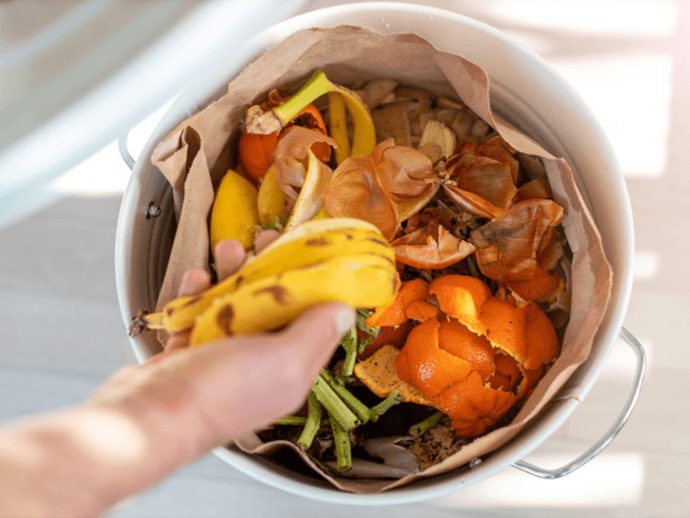
    The backyard compost heap is where yard waste, food scraps, and some compostable packaging breaks down into humus, a dark, granular substance that can be added to soil to condition it—and grow more food right outside your door.

    One of backyard composting’s greatest benefits is that it’s done at the source, making it more cost-effective than municipal options. Unlike municipal green bins, however, backyard composters are no place for meat, bones, or animal fats. Putting those items in the backyard composter can attract pests. It can also harbour pathogens, such as E. coli, if the pile is not hot enough to kill them off.

    Local versus organic versus natural

    It’s enough to make one’s brow furrow. Should you choose food produced locally or go organic? Does it have to be one or the other? And what the heck does “natural” mean?

    CSAs = local, organic, and natural

    Community-supported agriculture (CSA) models consist of consumers who buy a share of a growing season upfront and are paid in dividends of fresh produce as it’s harvested.

    Local = environmentally friendlier

    Local conventional produce also has its benefits, aside from travelling a shorter distance to get to your table. It often comes with less plastic packaging. Think berries sold in paperboard pints that can be torn up and thrown in the backyard composter or tossed in municipal green bins.

    And “natural” = …

    As for natural food, the US Food and Drug Administration defines it as free of added colour, artificial flavours, or synthetic ingredients. Unlike organic, however, it’s not an entirely regulated term, which can naturally lead to consumer confusion.

    by Tiffany Mayer

    Article Courtesy of Alive Magazine

  • Beating winter blues

    Beating winter blues

    Beating winter blues

    Strategies for getting out of our heads and thriving all winter long

    The beginning of a new year brings rejuvenation, goal creation, soul searching, and hope. New year, new you … right? Unfortunately, it’s not always that simple—the bleak winter months can make it hard to realize everything we set our minds to.

    About 15 percent of Canadians report having seasonal depression. Does winter get you down? It doesn’t have to; there are plenty of simple strategies to help mitigate the effects of the season’s gloom.

    What causes winter depression?

    Seasonal affective disorder (aptly referred to by the acronym SAD) is a yearly recurring form of depression that usually coincides with the onset of fall and ends around spring. The loss of natural light impacts our circadian rhythms; our bodies produce more melatonin and less serotonin, reducing our energy levels and overall feelings of happiness.

    What are the symptoms of SAD?

    Some symptoms of winter-onset SAD include the following:

    • oversleeping
    • craving more carbs; overeating
    • weight gain
    • irritability
    • trouble concentrating
    • feelings of hopelessness and guilt
    • loss of interest in social activities
    • negative thoughts

    Who is most vulnerable?

    Women and girls are disproportionately more affected by SAD than men and boys, likely due to hormonal differences and different social expectations. Onset of SAD often occurs in early adulthood.

    How do we get out of our heads?

    Exercise

    Physical activity releases mood-boosting chemicals and, although it may be harder to feel motivated to get active, it’s perhaps even more crucial this time of year when the body is deprived of happiness chemicals dopamine and serotonin.

    Socialize

    Socializing is another key factor. Connecting with others can greatly reduce feelings of isolation and stress and help us feel supported and loved.

    Meditate

    Meditation has been shown to diminish symptoms of depression and anxiety by shifting the brain away from negative thoughts, calming the mind, and changing how the brain responds to triggering situations.

    Get more light

    Light therapy uses a flatscreen device called a light box that emits a strong fluorescent light to mimic the effects of sunlight and, over time, restore natural circadian rhythms. Usually administered for 30 to 60 minutes every morning, most notice results within three to five days.

    How do we affect SAD through diet?

    Eat healthy whole foods

    It’s important to maintain a balanced diet of high-quality foods, like fruits, vegetables, and whole grains, that nourish us with vitamins, minerals, and antioxidants,

    Supplement

    Because there’s less sunlight in the winter, we get less vitamin D, a nutrient that plays a key role in the development of the happiness chemicals in our brains.

    Probiotic supplements encourage the production of healthy bacteria in our gut, which produce serotonin that is then transmitted from the gastrointestinal tract to the central nervous system.

    By Emilie Richardson-Dupuis

    Article Courtesy of Alive Magazine

  • Kin from another kingdom

    Kin from another kingdom

    Kin from another kingdom

    A fresh relationship with houseplants

    Choosing houseplants tends to be more akin to shopping for a couch than adopting a pet―we see ferns and philodendrons as ornaments more than as companions. Yet a potted plant has much more in common with a dog than a lamp. Not only is it alive and in need of tending, but, as is becoming increasingly clear, the entire plant kingdom is more profoundly interactive than we’ve previously realized.

    They’ve got smarts

    A growing body of science is ascribing intelligence to plants. Some go so far as to call it consciousness. What appears to us to be motionless air and soil is actually boisterously alive with impulses, chemical signals, and vibrations being sent and received as plants communicate with fungi, insects, and one another.

    They might be busy discerning which insect is nibbling their leaves so they can chemically summon the precise predator needed, giving their kin photosynthesizing space by adjusting their own leaf arrangement, or counting daylight hours so they know when to germinate. Suffice it to say, plants are not just sitting mutely, looking pretty, and passively serving as animal food.

    Breathing partners

    The members of the plant kingdom we’ve brought home to live with us have a lot more to offer than mere décor. Certainly, houseplants improve our indoor air by exchanging carbon dioxide for oxygen. But they’re also capable of filtering pollutants like volatile organic compounds (VOCs) emitted by common building materials and furnishings. It takes more than a plant or two to reap these benefits, though, so be generous with that greenery!

    Keep ’em within view

    Studies show the simple sight of plants in our vicinity is sufficient to boost our mood, productivity, and even hospital recovery. Given that we spend roughly 90 percent of our time indoors, our foliar friends in pots become critical health allies.

    And within reach

    When we pluck plants out of their natural context―their native ecological web―they can no longer sustain themselves without our help (trimming dead leaves, watering regularly, adding soil nutrients, finding them the right spot in the window, etc.).

    Not only do these little interactions uphold our end of the domestic bargain, but small routine chores actually boost our own well-being. And plant care, specifically, has its benefits. For example, taking 15 minutes to repot an indoor plant is enough to measurably reduce stress and blood pressure.

    Housemates

    The field of plant science has only scratched the surface of how complex and animated the lives of plants are behind their slow and quiet facade. Even the idea that individuals within a species might have distinct personalities is being seriously explored. It’s not such a stretch, then, to see our ivy and aloe vera as true housemates.

    By Jackie Skrypnek

    Article Courtesy of Alive Magazine

  • The upside of food upcycling

    The upside of food upcycling

    The upside of food upcycling

    Saving food waste while saving the planet and boosting your health

    WA whopping 58 percent of all food produced in Canada is lost or wasted every year. A third of those 35.5 million metric tonnes of wasted food could be rescued. Innovative Canadians are making a difference, working to eliminate food waste, protect the environment, and feed our communities—all through the power of upcycling.

    What’s up with upcycling?

    Unnecessary food wastage happens every step of the way between the farm and your fridge.

    At the farm, surplus fruits and vegetables, as well as those that may be misshapen or “ugly,” are discarded or left to rot. Then, during manufacturing and processing, 20 percent of food is lost or wasted. A lot of that is due to discarded byproducts or parts of the raw ingredient that are not needed in the final manufactured product.

    Upcycling aims to change that, transforming unwanted food or food manufacturing byproducts into something useful.

    “The concept of upcycling is really about extracting every last bit of value that you can from a natural resource,” explains Shelley King, CEO of Natural Products Canada, an organization that works to identify and invest in innovative solutions in the natural products industry.

    “When we upcycle any material, we’re reducing the number of resources needed to create a new item,” King adds. “In the case of upcycling food, we’re addressing the huge challenge of feeding the world without putting more strain on the planet.”

    How upcycling works

    From coast to coast to coast, Canadian farmers and food manufacturers are finding creative ways to transform previously unwanted food ingredients into nourishing, high-quality foods and supplements.

    It’s all about looking at where food wastage is happening and then applying out-of-the-box creativity.

    Take potatoes, for instance. Spuds are the most widely grown vegetable crop in Canada, making up nearly a third of all farm sales last year.

    “When you’re processing potatoes to make French fries or other potato products, you use water, and the water becomes super concentrated in starch,” says Cara Kennedy at Solnul, a supplement company based out of Carberry, Manitoba. If you’ve ever cut a potato and noticed the white powder on your cutting board after the potato water evaporates, that’s what she’s referring to.

    Solnul’s shareholders were originally potato farmers who now own a starch plant. “They had the foresight to do microbiome research on the starch,” says King, and multiple clinical studies showed how this potato starch was an effective prebiotic (helping to feed the healthy bacteria in your gut).

    They’ve turned that starch—which would otherwise have been discarded—into a research-backed prebiotic ingredient that you can now find in protein powders, protein bars, and other health foods.

    “Canada is the bread basket of the world, and there are a lot of opportunities for upcycled ingredients,” adds Kennedy, who is quick to point out that we shouldn’t be worried that upcycled foods are somehow inferior. “It’s all about how to use every part of an ingredient to its highest and best value.”

    By Joshua Duvauchelle

    Article Courtesy of Alive Magazine

  • Holistic happiness

    Holistic happiness

    Holistic happiness

    What makes us feel happy?

    Is there anything more highly desired, yet elusive, than happiness? Some describe it as a fleeting emotion along life’s journey, others as the ultimate destination. Some think about it in terms of genetic inheritance, others as the culmination of practices.

    How do you hold happy?

    Dr. Caroline Meyer, ND, experiences happiness by catching the small moments, pointing out that when we “rely on big moments, we miss the sustenance of daily pleasures.”

    For Josh Gitalis, clinical nutritionist and functional medicine practitioner, happiness is about attuned decision-making and feeling aligned with his purpose.

    For Chantée Dardaine, registered psychotherapist, happiness is an embodied feeling when engaged in doing something “soul-warming.”

    The “how” of happiness

    What is it that we’re experiencing when we say, “I’m happy”? Turns out, it’s physical, emotional, and intentional.

    Physically, Gitalis explains, the emotion we describe as happiness is the intersection of multiple factors: “Neurotransmitters that regulate mood, like dopamine, serotonin, and endorphins, are released in brain regions associated with happiness. Hormones such as oxytocin are influenced by hugging, bonding, and social interactions.”

    “The capacity for happiness relies on the health of our nervous system,” says Meyer.

    To counteract the less-than-happy autopilot many of us find ourselves in, leading to missing out on simple, happy moments, Dardaine brings “an intention of happiness.”

    It’s all about appreciation

    “Gratitude encourages us to look for pleasurable moments in daily life,” Meyer says. “Recalling with gratitude a few happy moments in each day has been a transformative practice,” she adds, “and mindfulness makes this possible.”

    It’s closer than you think

    “Growing up, happiness was related to goals,” says Dardaine. “I would frequently say ‘I’ll be happy when …’ which, looking back, made me feel that happiness was only waiting for me at the outcome. As it turns out, happiness is right in front of us.”

    Measuring happy

    Dardaine actively practises happiness by “scheduling moments of goodness,” such as afternoon tea or evening popcorn, while Graham intentionally cultivates things that evoke contentment or joy, such as time with friends or moving in nature.

    “Beyond purely pleasurable activities,” says Meyer, “I make sure to do a few mildly challenging habits every day.” At the end of each day, she experiences the “positive feeling of small accomplishments.”

    Highlighting happiness

    “Times of unhappiness can lead us to a deeper understanding of our needs, like what smells, sights, items, music, or people can support us coming into a state of happiness,” says Dardaine.

    Finally, Meyer suggests: “Place a hand on your heart during a happy experience and silently repeat, ‘Remember this moment.’ Happiness can become a sacred practice.”

    By Deena Kara Shaffer, PhD

    Article Courtesy of Alive Magazine

  • Sustainable you

    Sustainable you

    Sustainable you

    A gift to yourself

    The holiday season can elicit lots of notions about what you should be doing, and giving. There are even cautionary tales of how not to be—think Ebenezer Scrooge or the Grinch! In the face of these external pressures, it can be helpful to focus on your own preferences and expectations. Reflect on what you bring to the party yourself. Perhaps your presence, clarity, and joy can be a gift to others, and yourself!

    A unique gift

    Physical gifts are a familiar part of the holiday season. Another approach is the gift of an experience or service. You can take this a step further by considering what you need or want. Is there a way to fill up your own cup, to show yourself the same care you show others? This can support your sustainability. Friends, family, and colleagues will probably notice and benefit from your deeper presence.

    Reflections

    Begin by taking some focused breaths and observing your current experience, such as:

    • degree of present-focus (versus past or future focused)
    • mood
    • thought patterns
    • degree of embodiment (the sense of being in your physical body)
    • physical health
    • attitude toward the holiday season

    Now ’s the time to ask: “How am I right now? Is this how I want to be? And is it sustainable?”

    Inventory

    Now that you’ve checked in with yourself, it’s time to focus on what you might adjust to optimize your sense of well-being. Here are some areas to explore:

    • Brainstorm your idea of a perfect holiday season and see how much of this might be possible.
    • Evaluate your priorities―are some things getting too much attention? Are other things getting missed?
    • Explore back-up plans for situations that may be difficult, like handling awkward family members or struggling to carve out time to recharge.

    Boundaries

    Identifying your preferences is a great start. Frequently, it’s related to boundary quandaries. Effective boundaries include the following:

    • Identify, to yourself and to others, what you want and don’t want.
    • Explore implications, alternatives, and possible alignment if another person is involved.
    • Aim to support your own boundary while respecting others.

    Impact

    Think about the people and organizations you come into contact with during the holiday season and consider how you want to show up. The more present and balanced you are, the more positive the experience likely is for others.

    But, have some space for yourself and others to show up in less than your best―we all succumb to stress, physical illness, and distractions at times. Then our inner Grinch pops out! Just notice and then recalibrate. It’s possible to start over, beginning by taking a few conscious breaths.

    Now that you’re aiming for a sustainable you, focus on some simple doable steps, and repeat. Celebrate your unique presence in the world, just as you celebrate those around you. Remember that both Scrooge and the Grinch turned out to be very lovable. They just needed to dig deeper and focus on what matters!

    By Carole Ames

    Article Courtesy of Alive Magazine
  • Do You Really Need to Walk 10,000 Steps Per Day?

    Do You Really Need to Walk 10,000 Steps Per Day?

    Do You Really Need to Walk 10,000 Steps Per Day?

    New research shows that every step counts

    The health benefits of walking are well known—as is the adage that you must walk 10,000 steps every day to achieve them. We wanted to find out how many steps you actually have to take in order to reap the rewards of walking. The answer? Far fewer than you might think.

    Where did the 10,000-steps goal come from?

    In 1965, a Japanese company called Yamasa Clock released the Manpo-kei, a pedometer with a name that translates to “10,000 steps meter” in English. Although the name was merely intended to be used as a marketing tool, the concept of 10,000 steps is still synonymous with good health more than 50 years later.

    What are the primary benefits of walking?

    Walking is a form of cardiovascular exercise, which means it strengthens your heart, improves blood circulation, and increases your heart rate. Regular walking has been linked to a reduced risk of many health issues, including diabetes, hypertension, heart disease, and obesity.

    Research has also shown that a regular walking routine can improve mental health. Walking can even reduce joint pain, help maintain healthy immune function, and improve bone density (in conjunction with resistance and flexibility exercises).

    Does a smaller step count still offer benefits?

    You might be surprised to learn that the number of steps needed to glean the rewards of walking is significantly smaller than 10,000 steps. In fact, researchers behind a 2023 study conclude that the number of steps needed to reduce the mortality risk of any disease is only 3,867 steps. Only 2,337 steps per day are needed to reduce the risk of dying from cardiovascular disease.

    How to make your walks count

    Feeling inspired to step up your daily step count? Whether you want to hit 4,000 or 10,000 steps (or somewhere in between), there are endless ways to elevate your walking routine.

    Use a pedometer to make your steps count

    Step counters or pedometers are simple yet effective tools that can be used to help reach your fitness goals. If you’re in the beginning stages of your walking journey, take the first week to establish your baseline step count. From there, you can gradually begin to increase the amount.

    Add more steps as you adjust

    The key to building a stronger walking practice by adding more steps? Consistency. Try adding 300 to 500 steps per day, eventually moving up to 2,000 extra steps per day. With each passing week, aim to add more steps until you eventually reach 10,000 (or whatever number you want to achieve).

    Keep up the pace (any pace!)

    Whether you prefer a leisurely stroll or a power walk around the neighborhood, the health benefits of walking can be felt at any pace. For optimal protection against hypertension, high cholesterol, and diabetes, work on increasing your walking pace to a moderate-intensity level.

    By Ashley Linkletter

    Article Courtesy of Alive Magazine

  • The whole (food) picture

    The whole (food) picture

    The whole (food) picture

    Understanding the vital role macros and micros play in our everyday lives

    Fat, protein, and carbs—the big three macronutrients have all had their turn being vilified throughout diet culture (from problematic phrases such as “all fats are unhealthy” and “watch your carbs” to misguided rhetoric about protein being the only way to build muscle). Yet this powerful triad of nutrients, in tandem with essential vitamins and minerals, is what our body relies on to thrive.

    The ABCs of macros and micros

    So, what exactly are these all-important nutrients?

    Macros

    In simple terms, macronutrients refer to the nutrients our body relies on for energy, which we require in large amounts (hence the term macro) to make up our total caloric intake. The big three macros: protein, carbohydrates, and fat.

    Micros

    On the other hand, micronutrients are the nutrients our body requires in trace amounts. These come in the form of vitamins and minerals. And while they don’t affect our diet from a caloric standpoint, they’re still essential for our health and well-being—from B-complex vitamins’ role in energy production and digestion to iron’s impact on cognitive function and immune support.

    The big three players

    While protein, carbohydrates, and fat are widely known nutrients, there’s plenty of mixed messaging around them, such as the “correct” daily protein requirement and the “healthiest” form of carbs. Here, we dig into the fundamentals of each and explain why it’s the balance of all three macros that deserves our true attention.

    Protein

    This powerhouse nutrient is something of a workhorse. Made up of amino acids (the “building blocks” of protein), it helps build and repair our muscles, bones, skin, and other tissues. It also plays a role in hormone and enzyme production.

    Fat

    Despite a once-shaky reputation, fat (especially the heart-healthy unsaturated variety) is integral to a healthy, balanced diet. One of its main superpowers: helping the body absorb fat-soluble vitamins A, D, E, and K. Fat also protects our organs, aids in cell growth, promotes better cognitive function, and provides us with sustained energy.

    Carbohydrates

    Carbs are broken down into simple sugars (called monosaccharides) that enter the bloodstream and are used by all cells in the body for energy. When we’re consuming carbs in their whole food form (think fruits, vegetables, whole grains, and legumes), they also provide us with fibre and prebiotics, which are necessary for efficient digestion.

    A well-rounded diet

    While no nutrient alone holds the key to overall well-being, the secret is to consume a balance of macros and micros in their minimally processed form.

    Ultimately, our diets should be filled with foods that bring us joy—whether it’s a veggie-packed stir-fry or our favourite homemade dessert. That, as it turns out, is the closest thing to a winning recipe.

    By Brittany Devenyi

    Article Courtesy of Alive Magazine
  • Bring the outdoors in!

    Bring the outdoors in!

    Bring the outdoors in!

    How introducing indoor plants can awaken your senses

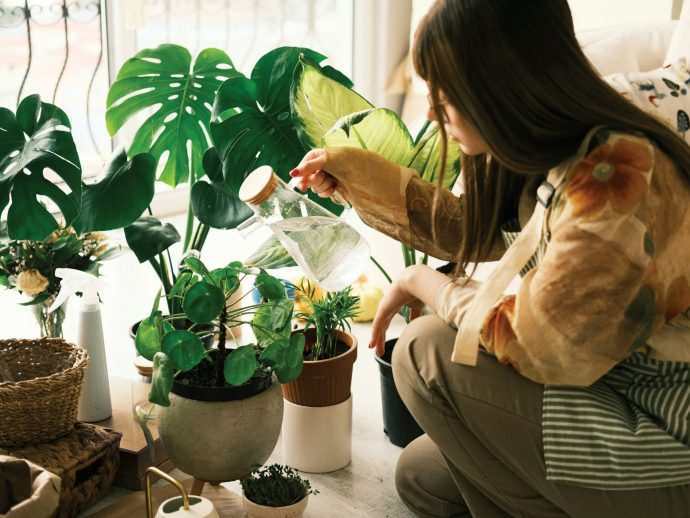
    As summer fades into cooler temperatures and shorter days, many people spend more time indoors. But you don’t have to lose your connection to nature. Bringing houseplants into your home can help you preserve a bit of summer and boost your well-being.

    The power of plants in person

    Plants can help improve your mood during seasonal transitions. Exposure to greenery, even indoors, has been shown to reduce blood pressure, heart rate, and stress hormones. Several studies confirm that having houseplants can elevate happiness and reduce symptoms of depression, especially during periods of limited outdoor activity.

    Simply grouping a few plants with a nearby reading nook can create a cozy, nurturing environment. Plants provide a sense of being embraced by nature, fostering comfort and happiness inside the home.

    Caring for plants and yourself

    Taking care of houseplants offers mental health benefits like increased life satisfaction and cognitive clarity. Nurturing plants requires responsibility—watering, feeding, and tending to them. Watching plants grow, produce buds, or sprout new leaves can bring feelings of achievement and joy.

    Research shows that repotting and caring for plants can reduce stress and lower blood pressure, providing physical health benefits alongside mental well-being.

    Ready to create your indoor garden?

    Start with easy, low-maintenance plants and expand your collection as you become more comfortable. Choose placement based on space and light: vines can hang from shelves, plants can cluster in sunny windows, and orchids thrive on bright kitchen windowsills.

    Select containers that match your interior style. Modern homes may benefit from sleek pots with clean lines, while varied levels of plant stands or podiums can add visual interest and depth to your indoor garden.

    Indoor plants serve as a reminder that spring and summer will return. The best plants are often the ones that excite you most—bringing a bit of nature’s beauty and health benefits into your everyday life.

    By Rebecca Heaton

    Article Courtesy of Alive Magazine

  • Let’s play!

    Let’s play!

    Let’s play!

    It’s essential for children’s growth and development

    Play matters, and here’s why

    Children learn about the world through play. Unstructured play is essential for developing imagination and creativity. Boredom also plays a role, as struggling with boredom can spark creativity.

    Unstructured play helps children develop communication, life skills, emotional self-regulation, and emotional well-being. Playing with sensory materials and engaging in physical activities foster fine motor skills, hand-eye coordination, and self-confidence.

    Toys―catalysts to creativity

    Walking through a thrift store or toy store reveals many options, from simple to elaborate. All toys have a role in development, but balance and moderation are key. Toys act as catalysts for creativity and imagination rather than the cause of it.

    Is less more?

    Having fewer toys can prevent feelings of being overwhelmed and encourage creativity. Versatile, age-fluid toys are a good choice, as they can be used in complex games at older ages. When celebrating birthdays, consider non-toy gifts like activities or experiences, or pooling contributions to buy meaningful toys or books.

    Learning to let go

    Toddlers enjoy basic puzzles and building blocks, but older children may prefer more complex toys. Passing on no-longer-used toys teaches kindness and charity.

    Play together in their world and yours

    Spending even 10-15 minutes playing with children fosters closeness and creativity. Incorporate play into daily routines like cooking or chores by giving children small tools and tasks. It promotes skill development and shared bonding.

    Where do screens come in?

    There’s hardly a parent out there who hasn’t, at one time or another, relied on screens to help occupy their children. Screens can provide a break for overwhelmed parents; however, balance is essential.

    Balance matters

    Limited, quality screen time can support learning, imagination, and language skills. Excessive use can hinder communication, social, emotional, and physical development.

    Boundaries where they matter

    Set screen time limits with timers and plan engaging activities afterward, like a snack, book, or outdoor play. Choosing physical activities over screens encourages bonding and healthier habits.

    Ultimately, play helps children grow in complex ways and allows them to see the world through an enchanted lens—a beautiful thing to witness.

    By Daniela Ginta, MSc

    Article Courtesy of Alive Magazine