Blog

  • Let’s play!

    Let’s play!

    Let’s play!

    It’s essential for children’s growth and development

    Play matters, and here’s why

    Children learn about the world through play. Unstructured play is essential for developing imagination and creativity. Boredom also plays a role, as struggling with boredom can spark creativity.

    Unstructured play helps children develop communication, life skills, emotional self-regulation, and emotional well-being. Playing with sensory materials and engaging in physical activities foster fine motor skills, hand-eye coordination, and self-confidence.

    Toys―catalysts to creativity

    Walking through a thrift store or toy store reveals many options, from simple to elaborate. All toys have a role in development, but balance and moderation are key. Toys act as catalysts for creativity and imagination rather than the cause of it.

    Is less more?

    Having fewer toys can prevent feelings of being overwhelmed and encourage creativity. Versatile, age-fluid toys are a good choice, as they can be used in complex games at older ages. When celebrating birthdays, consider non-toy gifts like activities or experiences, or pooling contributions to buy meaningful toys or books.

    Learning to let go

    Toddlers enjoy basic puzzles and building blocks, but older children may prefer more complex toys. Passing on no-longer-used toys teaches kindness and charity.

    Play together in their world and yours

    Spending even 10-15 minutes playing with children fosters closeness and creativity. Incorporate play into daily routines like cooking or chores by giving children small tools and tasks. It promotes skill development and shared bonding.

    Where do screens come in?

    There’s hardly a parent out there who hasn’t, at one time or another, relied on screens to help occupy their children. Screens can provide a break for overwhelmed parents; however, balance is essential.

    Balance matters

    Limited, quality screen time can support learning, imagination, and language skills. Excessive use can hinder communication, social, emotional, and physical development.

    Boundaries where they matter

    Set screen time limits with timers and plan engaging activities afterward, like a snack, book, or outdoor play. Choosing physical activities over screens encourages bonding and healthier habits.

    Ultimately, play helps children grow in complex ways and allows them to see the world through an enchanted lens—a beautiful thing to witness.

    By Daniela Ginta, MSc

    Article Courtesy of Alive Magazine

  • Greenifying healthcare

    Greenifying healthcare

    Greenifying healthcare

    Bioplastics are making an impact on both medicine and our planet

    The Green Revolution

    Derived from renewable sources, bioplastics are transforming plastics, especially in healthcare. They impact medical instruments, packaging, and are helping redefine the industry while addressing environmental concerns. While challenges remain before bioplastics can fully replace conventional plastics, their potential as eco-friendly solutions is promising.

    The Shift Toward Sustainability

    Global focus on sustainability is evident through decarbonization commitments, consumer demand, and stricter legislation on traditional plastics. This shift has spotlighted bioplastics, made from renewable resources like corn starch, sugarcane, and algae, contrasting sharply with petroleum-based plastics.

    Biomedical Applications

    The healthcare industry, heavily reliant on plastics, is adopting bioplastics for medical instruments, tissue engineering, wound dressings, and packaging. These materials offer eco-friendly alternatives across various medical fields.

    Physicochemical Properties

    Many bioplastics share properties with traditional plastics—lightweight, durable, moldable—meeting the strict requirements of medical equipment.

    Biological Compatibility

    Bioplastics are biocompatible, reducing adverse reactions when in contact with tissues. This makes them suitable for implants, wound dressings, and other biomedical uses.

    Degradation Properties

    A major advantage is biodegradability. Unlike petroleum plastics, some bioplastics break down more efficiently, reducing environmental impact from discarded medical materials.

    Challenges and Limitations

    Despite their promise, bioplastics face hurdles:

    • Cost: They are often more expensive to produce, limiting adoption in cost-sensitive healthcare settings.
    • Limited application: Some medical uses require properties like heat resistance, which certain bioplastics may lack.
    • Perception and acceptance: Consumer attitudes are evolving, but trust in bioplastics’ safety and reliability still needs time and education.

    The Growing Acceptance

    Despite obstacles, acceptance of bioplastics in healthcare is increasing. Surveys indicate that consumers are becoming more receptive, especially as awareness of their environmental benefits grows. Hospitals are adopting bioplastics to deliver quality care while reducing ecological footprints.

    Embracing an Eco-Conscious Future

    The trend toward bioplastics signals a sustainable future for healthcare and the planet. As both providers and consumers embrace this shift, bioplastics are positioned to ensure healthcare remains effective and environmentally responsible.

    By Adam Meyer

    Article Courtesy of Alive Magazine

  • Your back-to-school guide

    Your back-to-school guide

    Your back-to-school guide

    10 tips for a smooth seasonal transition

    Although we’re enjoying summer, September is just around the corner with its stricter bedtimes, busy mornings, and lunch-packing routines. To help ease this transition, here are some mindful, enjoyable, and sustainable tips for the new school year.

    Familiarize yourself with your school

    Visit the school multiple times during summer to make it familiar and fun. Play on the playground, walk the route you’ll take daily, and teach safety boundaries. Attending orientation sessions is also helpful.

    Set up your home

    Designate specific areas for school gear like backpacks and lunchboxes. Creating a dedicated homework space with supplies but minimal distractions can support older students.

    Practice for independence

    Practice handling lunch items, such as lunchboxes and water bottles, using timers to simulate school lunchtime. Also, work on dressing skills, like putting on coats and using the bathroom independently, to build confidence.

    Help with worries

    Validate children’s anxieties rather than dismissing them. Common concerns include missing home or worries about friendships. Acknowledging emotions teaches children how to express their feelings and feel supported.

    Create a routine

    Establish a consistent morning routine. Prepare outfits, pack bags, and make lunches the night before. Practice the routine with children beforehand to reduce stress on the first day.

    Be strategic

    Avoid overbuying by reviewing what you already have. Have children try on clothes and assess needed supplies early. Shopping from what’s already available teaches resourcefulness and saves money.

    Choose secondhand first

    Opt for secondhand stores for supplies, clothes, and gear. Resale apps and online groups are also good options. Involving children in shopping helps them feel invested and prepares them emotionally for school.

    Get a good night’s sleep

    Establish a fixed bedtime routine weeks before school starts. Ensure children get the recommended hours of sleep for their age. Bedtime can also be a calming family time, like reading or meditation.

    Embrace downtime

    Children need time to relax after school. A snack and quiet activity help transition from school to home. Overscheduling extracurriculars can be overwhelming, so find a balance that suits your family.

    Give your kids grace

    Transitions are tough—kids face new teachers, classmates, and environments each year. After a busy day, children may have strong emotions or meltdowns at home. Recognize that behaviour is communication, and be gentle. Transitions are challenging, and patience is key.

    By Leah Payne

    Article Courtesy of Alive Magazine

  • Children and the flu

    Children and the flu

    Children and the flu

    Arm yourself and your kids for flu season

    The coming fall season brings back-to-school time as well as back-to-cold-and-flu time for many families. What better time to arm ourselves with the information we need to keep our kids—and ourselves—safe against the viral onslaught.

    What is the flu?

    Caused by influenza viruses A, B, or C, the flu is a respiratory infection lasting about a week to 10 days. Seasonal outbreaks involving influenza A or B occur between November and April. While it can be severe in a small percentage of children under five, only about 1 percent require hospitalization.

    How is the flu different from a cold?

    The flu has a rapid onset of more severe symptoms compared to a cold. Flu symptoms include headache, chills, cough, fever, loss of appetite, muscle aches, and tiredness, sometimes with nausea, vomiting, and diarrhea. Fever lasts 3-4 days, with illness resolving in 7-10 days, and can be infectious for up to a week.

    A cold typically involves a runny nose, watery eyes, and sore throat, with milder symptoms developing gradually.

    How can influenza be prevented?

    Influenza spreads through droplets in the air and via contact with contaminated surfaces like toys or doorknobs. Since the virus can survive up to 48 hours on surfaces, frequent handwashing is essential. Other strategies include staying home when sick, teaching children to cover coughs and sneezes, and disinfecting surfaces.

    Can natural health products help in prevention?

    Natural health products can support immunity and reduce complications from secondary infections.

    • Probiotics have been shown to reduce respiratory infections, including the flu, by strengthening immune response.
    • Echinacea may stimulate immune activity and has been linked to fewer respiratory infections and flu cases when used preventively.
    • Vitamin D deficiency is associated with increased risk of respiratory infections; supplementation may help prevent influenza, especially in deficient children.
    • Medicinal mushrooms like turkey tail, shiitake, reishi, and chaga contain compounds that modulate the immune system and have shown antiviral activity in vitro.

    How do you treat the flu?

    Mild flu symptoms in children are best managed with supportive care: hydration, light clothing, and a comfortable environment. Tepid baths and cool-mist humidifiers can help reduce discomfort. Honey lozenges (for children over 3) and saltwater gargles can soothe symptoms.

    Over-the-counter cold medicines are not recommended for children under 6 without a doctor’s approval. Aspirin should never be given due to Reye syndrome risk.

    Treating with natural health products

    To reduce symptoms and disease duration, consider echinacea, elderberry, or vitamin D, tailored to your child’s age.

    • Elderberry has antiviral and anti-inflammatory effects and has been associated with reduced upper respiratory symptoms.
    • Echinacea at the start of symptoms may shorten illness duration and promote viral clearance.

    A naturopathic doctor can develop a customized protocol for your child at the first signs of cold or flu.

    By Heidi Fritz, MA, ND

    Article Courtesy of Alive Magazine

  • When kids want to quit

    When kids want to quit

    When kids want to quit

    Life lessons for parents and kids

    Our society has many embedded values and rules, one being how we view quitting. It’s often seen as a loss, failure, or misstep. Sometimes it’s viewed as a necessary response to difficult circumstances. Rarely, it’s recognized as a positive choice, a rite of passage, or an inevitable part of emotional and psychological growth.

    Handling moments when children want to disengage or call it quits can be challenging. To navigate this, it helps to understand:

    • the influence of our upbringing
    • our parenting style
    • our children’s evolving nature
    • our own tendencies to persevere or quit

    I spoke with three young moms to broaden my perspective, and their insights reflect several key ideas.

    Be clear in your intention

    Determine what kind of parent you want to be and what your goals are for your children. Knowing your “why” grounds your parenting decisions and actions daily.

    Understand your parenting style

    Reflect on whether your role is about maintaining order, encouraging discovery, ensuring safety, developing skills, or avoiding conflict. Recognizing your style clarifies your priorities and helps you stay aligned with your values, even in tricky situations.

    Be curious and dig deep

    When your child says, “I don’t want to do this anymore,” try to understand their experience. Notice your reaction—do you tend to avoid, fix, minimize, or catastrophize? Pause, breathe, and focus on what’s triggering your child’s resistance.

    One parent shared how understanding her child’s fears helped find a way forward, highlighting the importance of addressing underlying issues rather than just the behavior.

    Be creative

    Use creative problem-solving rather than feeling stumped. Explore alternative options, such as different activities, additional support, or taking breaks. Sometimes, a simple pause can reveal that a bad day isn’t about the activity itself.

    Don’t sweat the small stuff

    Evaluate whether the struggle is worth it. Sometimes a child’s autonomy is more important than the activity. Other times, perseverance offers valuable lessons. Reflect on the situation and the bigger picture before reacting.

    Carry your learning forward

    When things don’t go as planned, accept the difficulty and view it as a learning opportunity. Consider how you might approach similar situations differently next time, using these lessons to grow.

    Celebrate small victories

    Acknowledge when things go well—when you and your child communicate effectively and find a good path. Celebrating these wins reinforces positive behavior and fosters connection.

    You are a role model

    Remember that your handling of challenges influences your children. Demonstrating persistence, taking breaks, or recognizing when to stop teaches them healthy coping strategies. Your conscious efforts to understand and collaborate serve as lasting examples of positive behaviour.

    By Carole Ames

    Article Courtesy of Alive Magazine

  • Egg Bites

    Egg Bites

    Total Time 45 minutes

    Ingredients
      

    • 8 large eggs
    • 1 ½ cup shredded cheese such as cheddar or pepper jack
    • 2 cups cottage cheese
    • ½ teaspoon sea salt
    • ¼ teaspoon ground black pepper
    • 2 cups ready to eat ingredients such as cooked proteins, vegetables, and herbs

    Method
     

    1. Preheat oven to 350°F. In a mixing bowl, combine eggs, shredded cheese, cottage cheese, salt and pepper.
    2. Customize egg bites by stirring in approximately 2 cups of pre-cooked and cooled add-ins to the egg mixture.
    3. Grease 12 cupcake wells with nonstick cooking spray or softened butter or use cupcake liners.
    4. Divide egg mixture evenly into 12 pan wells and place in oven.
    5. Bake for 35 minutes or until centers are set. Cool for a few minutes then carefully turn them out onto a cooling rack. Enjoy!

    Notes

    Makes 12 bites
  • Apple Butter

    Apple Butter

    Apple Butter

    Total Time 1 hour 45 minutes

    Ingredients
      

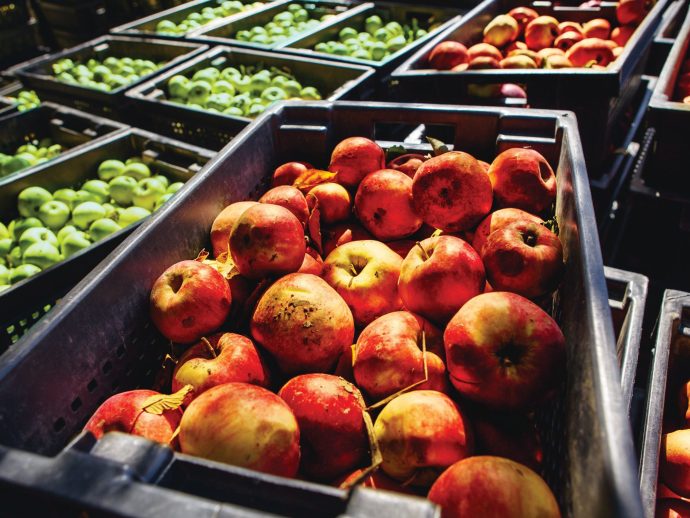
    • 4 pounds assorted apples
    • 3 ½ cups water
    • 1 ½ cups cane sugar
    • 1 teaspoon apple or pumpkin pie spice

    Method
     

    1. Peel, core, and cut apples into quarters then place in a saucepan and add water. Bring to a boil, then reduce heat to low and cover. Gently simmer for approximately 30 minutes or until apples are soft. Stir occasionally with a wooden spoon to help the apple break down.
    2. Carefully place cooked apples in a blender and blend until very smooth, about 1 minute. Return apples to a clean saucepan and add sugar and pumpkin pie spice.
    3. Bring blended apples to a simmer and cook for 40-50 minutes, stirring frequently to prevent sticking.
    4. Cool and test the consistency. It should be spreadable and stay on the end of a knife. If it doesn't, heat again and cook for 10 more minutes. Store in a clean jar in the refrigerator. Enjoy!

    Notes

    Makes approximately 3 1/2 cups
  • Miso Corn Chowder

    Miso Corn Chowder

    Miso Corn Chowder

    Total Time 40 minutes
    Servings: 4

    Ingredients
      

    • 2 tablespoons olive oil
    • ½ small yellow onion or 1 large shallot minced
    • 12 ounces red potatoes ½" cubes
    • 3-4 ears corn on the cob or 10 ounces frozen corn
    • 3 cups miso brown*
    • ½ cup canned coconut milk*
    • ½ teaspoon sea salt
    • ¼ teaspoon coarse ground black pepper
    • Salt and pepper to taste
    • Sliced chives or green onions optional
    • Toasted sesame oil optional

    Method
     

    1. Remove corn kernels from cobs and set aside.
    2. In a stock pot, heat oil over medium heat. Add onion and sauté for 3-5 minutes or until translucent.
    3. Add potatoes, corn kernels, cobs, and miso broth. Cover and bring to a gentle simmer. Cook until potatoes are tender. Remove cobs and discard.
    4. Stir in cream, salt and black pepper. Carefully blend the soup to the desired texture in the pot with an immersion blender.
    5. Serve garnished with chives and a light drizzle of toasted sesame oil. Enjoy!

    Notes

    *If you cannot find miso broth, use vegetable broth or water with 2-3 tablespoons of miso. You can also use heavy cream in equal amounts for a vegetarian version.
  • Fighting forever chemicals

    Fighting forever chemicals

    Fighting forever chemicals

    The pervasive substances that may affect bone health

    There are chemicals and then there are “forever chemicals,” the name given to per- and polyfluoroalkyl substances, or PFAS. They don’t easily break down in the environment or in our bodies.

    What are PFAS?

    PFAS is a broad group of synthetic chemicals used since the 1950s. They make products greaseproof, waterproof, stain-resistant, and stick-proof. PFAS are found in items like pizza boxes, makeup, carpets, and waterproof clothing. They also contaminate drinking water and food, accumulating in humans and animals over time. Exposure has been linked to health issues, including potential impacts on bone health.

    How prevalent are PFAS?

    There are about 4,700 known PFAS chemicals. The CDC’s National Exposure Report found PFAS in nearly every American’s blood. In Canada, exposure is almost universal but slightly lower, with levels decreasing over time due to regulation changes.

    How are we exposed to PFAS?

    People mainly encounter PFAS through contaminated water or food, products made with PFAS, or breathing air near manufacturing sites. PFAS can contaminate drinking water sources, and accumulate in fish, shellfish, livestock, and game animals. Once in the body, PFAS persist even after exposure stops, though blood levels may decrease over time.

    What about children?

    Children are more vulnerable because they breathe more, eat more, and crawl on floors, increasing exposure risks from dust, toys, and household products. Infants can be exposed via breast milk, contaminated formula, or in utero during pregnancy.

    What are the dangers of exposure?

    PFAS exposure is linked to health issues such as:

    – Reproductive effects like decreased fertility and high blood pressure in pregnant women

    – Developmental delays, low birth weight, behavioral changes

    – Increased risk of cancers (prostate, kidney, testicular)

    – Weakened immune response

    – Hormonal interference

    – Elevated cholesterol

    – Obesity risk

    How do PFAS affect bones?

    Emerging evidence links PFAS to lower bone mineral density, which can lead to osteoporosis. Bone density peaks between 20-30 years and declines with age. Studies show PFAS exposure may reduce bone density in adolescents. To mitigate risk, avoiding nonstick pans and PFAS-containing personal care products, along with staying active and maintaining a healthy weight, may help protect bone health.

    By Joanne Peters

    Article Courtesy of Alive Magazine

  • The big problem with microplastics

    The big problem with microplastics

    The big problem with microplastics

    Innovators work to solve a pollution problem in your food, drink, and air

    You can’t see them, but microplastics are ever-present in our environment. North Americans eat between 39,000 to 52,000 microplastics particles a year and breathe 35,000 to 69,000 particles annually. Microplastics may be tiny, but they pose significant risks—prompting innovative solutions.

    Plastic, plastic everywhere—even in your water

    Globally, billions of tons of plastic are discarded each year, with the majority not recycled. As plastics break down into microplastics (smaller than 5 millimetres, often invisible), they pollute soil, air, and water. These microplastics come from various sources, including household paints, adhesives, skincare exfoliating beads, and synthetic fibers in clothing.

    This pollution is now omnipresent: in the air we breathe (especially indoors), in human bloodstreams, and even in maternal wombs and breastmilk. In the Great Lakes, every sampled fish was contaminated with microplastics. Remote areas aren’t spared—microplastics have been found in polar ice, soil, and water.

    How do microplastics get inside of us?

    Microplastics enter our bodies mainly through what we eat and drink. Most meats, fruits, and vegetables have tested positive for microplastics. Fish absorb plastics in the ocean, which we then consume. Plants absorb plastics from the soil, accumulating in leaves and fruits.

    Tiny particles, big health questions

    Microplastic pollution is a rapidly growing issue, with scientists racing to understand its health impacts. Recent advancements include detecting microplastics in human blood, revealing widespread exposure. Studies suggest microplastics may cause inflammation, oxidative stress, cancer, and neurotoxicity. As we age, our ability to filter toxins diminishes, increasing the risk of serious health issues linked to plastic accumulation.

    Innovation to the rescue

    While research continues to uncover the effects of microplastics, entrepreneurs are actively seeking solutions. Take the new plastic-eating microorganisms developed by scientists last year—they “eat” and transform plastic compounds into useful products like vanilla flavoring and ingredients for medication and fragrances.

    But what if we changed the plastic itself? Traditional plastics last forever—they just break down into smaller pieces. Even microplastics fragment into nanoplastics. Some companies are exploring alternatives like polyhydroxyalkanoate (PHA).

    PHAs are produced by bacteria from sugars or lipids and are gaining attention as a biodegradable plastic. PHA naturally degrades in many environments, reducing pollution and harm to wildlife. It’s also more biocompatible, meaning it can be safely metabolized by our bodies.

    The future of plastics is here, with the aim of ensuring microplastics stay in the past.

    By Joshua Duvauchelle

    Article Courtesy of Alive Magazine