Blog

  • Summer Camp Week 2: Stand Up to Summer Sun

    Summer Camp Week 2: Stand Up to Summer Sun

    Today, June 20, marks the first official day of summer, but the sun and heat have already graced us with their presence here in New Jersey.  With the temperature turned up and the Earth tilted closer to the sun, we are more susceptible to dehydration and sun damage.  Given this, it’s important to recognize your risk and how you can protect yourself and your health. So… let’s talk summer sun wellness!

    Understanding UV Radiation

    To understand the potential damaging effects sun exposure can have on our bodies, we must first understand the science behind it.

    What is UV radiation? Part of the electromagnetic (light) spectrum emitted from the sun

    If UV radiation is “light”, then why can’t I see it? The wavelengths are actually shorter than visible light, making it invisible to our eyes

    What are the types of UV radiation? UVA (longest), UVB, and UVC (shortest – mostly absorbed by our ozone layer, without actually reaching the Earth)

    How does UV radiation cause damage? Excessive exposure alters our bodies’ lipids, proteins and cellular DNA, producing unhealthy genetic mutations. UVA & UVB radiations can generate reactive chemical species called “free radicals” in our bodies’ cells.

    What damage can UV radiation cause? Skin cancers (i.e. basal cell carcinoma, squamous cell carcinoma, melanoma), eye damage (including cataracts), premature skin aging, immune system suppression

    Doesn’t my body have any natural protection to sun? In short – yes, it does. Melanin – a dark brown pigment in our hair, skin and eyes – is what gives our skin its tone/color.  Some people have more melanin, some have less – the darker the skin, the more melanin. Our bodies produce this to help protect deeper layers of our skin from sun damage, but don’t make us immune to damage.

    Understanding Sun Protection

    Seek Out Shade Spending time outside is great, but taking refuge in the shade can be your first line of defense. 

    Choose the Right Clothing Lightweight fabrics and pieces that cover more of your skin are a good idea when your body is going to be exposed to the sun for a long period of time. Baseball caps and floppy hats are not only fashionable, but functional for protecting your scalp and face.

    Wear Sunglasses Again, not only fashionable, but critical for protecting one of your most valuable assets – your eyeballs! Polycarbonate lenses offer full UVA/UVB protection. Check the label that comes with your glasses to be sure you’re getting proper protection. If not, some optometrists offer UV coat application services.

    Check the UV Index Refer to your favorite weather channel or website to check your local daily UV index. While a low index doesn’t mean you shouldn’t take measures to protect yourself, a high index might help you choose when to take extra caution and when to limit exposure.

    Apply CLEAN Sunscreen How do I know what’s a clean product from what’s a potentially-harmful product? Here is a short list of general rules to follow, per the Environmental Working Group, which claims that nearly 75% of sunscreen products on the market are inferior or are made with worrisome ingredients:

    1. Mineral sunscreens containing titanium dioxide or zinc oxide offer stable protection and usually don’t contain harmful additives.
    2. Higher SPF numbers aren’t always better. In 2011, the FDA determined products claiming SPFs higher than 50 were “inherently misleading” – perhaps no more effective than those up to SPF 50.
    3. Look for “broad spectrum support”, which covers both UVB (which is the primary culprit for sunburn) and UVA rays.
    4. Spray sunscreens can be convenient for application; however, you should be careful not to inhale any of the product and also to hold it close enough to the skin to insure thickness of application.
    5. Avoid an additive called retinyl palmitate, a form of Vitamin A that testing has linked to tumors and lesions of the skin.
    6. Avoid an additive called oxybenzone, which has been found to be a hormone disruptor and common allergen. 

    All this said, there is little evidence to suggest sunscreen alone reduces cancer risk, particularly for melanoma, the deadliest type of which has tripled its rate among Americans over the past 30 years. So, be sure not to use this as your only method of protection.

    Summer Skin & Body Care

    products 1

    At Basil Bandwagon, we carry a wide array of sunscreens rated highly by the Environmental Working Group. Find them in our body care section and ask one of our friendly, knowledgeable team members for support in choosing a product that’s best for you. Sprays work great for your scalp, sticks offer superior protection for your face and traditional lotion is great for full-body coverage.

    Even with sunscreen protection, the heat and rays can take a lot of moisture out of our skin. It is critical to replenish this to help your skin stay young-looking and healthy! A few of our favorite products that help do this exceptionally well:

    • CocoKind’s Rosewater Facial Toner: Spray your face after exercising, sun exposure, before bed, upon rising – basically whenever you want! Several of our team members carry a bottle in their purse! The antioxidants from the roses used to make the water provide great anti-aging support. Smells gorgeous and is very refreshing!
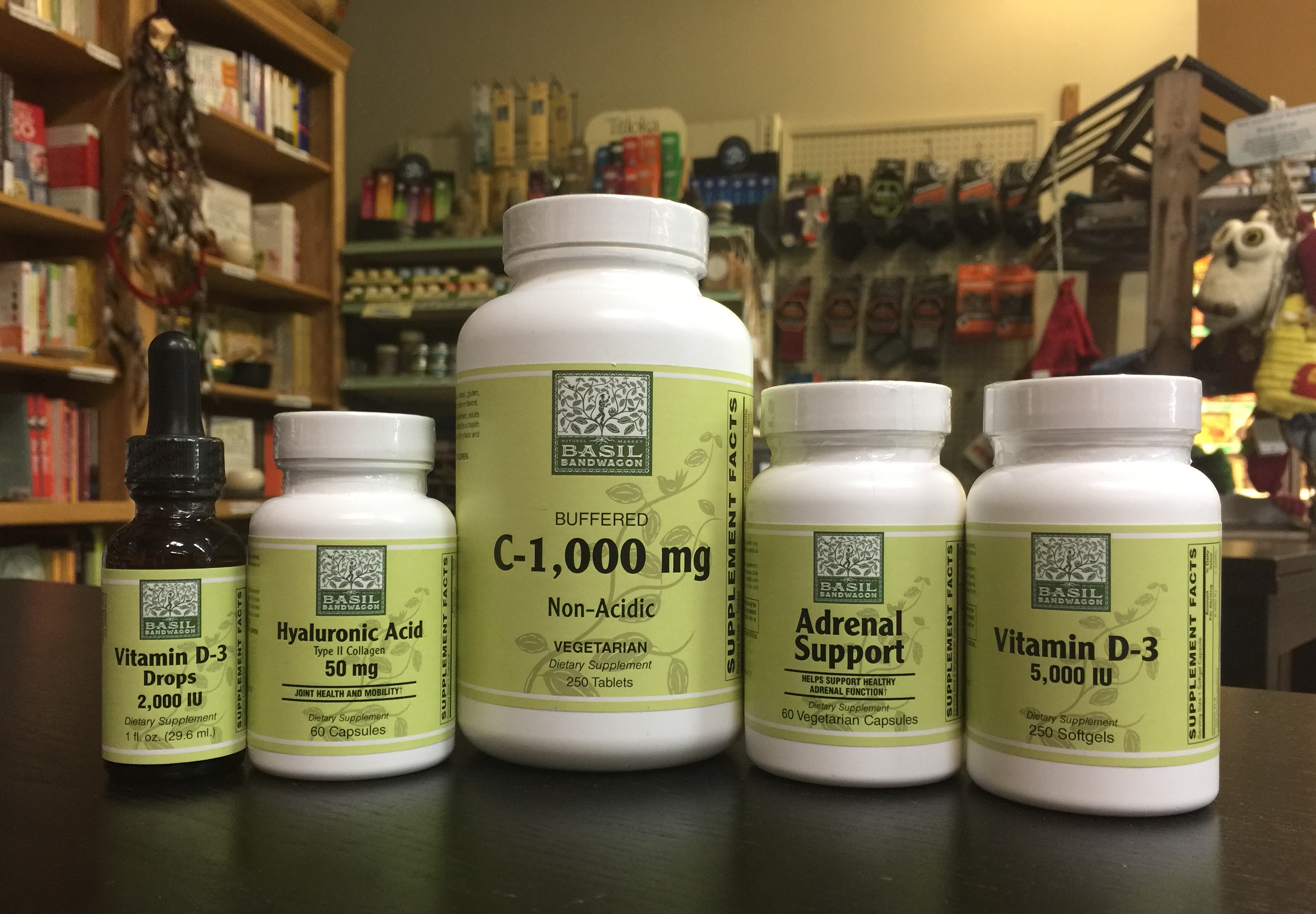
    • Episilk’s Hyalauronic Acid Serum:  Hyaluronic acid is a fluid component of our connective tissue, synovial fluid and humors of the eye. In serum form, it penetrates deep into the dermis, boosting the elasticity and hydration of the skin, locking in moisture. A great way to replenish what you’ve lost from sun and heat!
    • John Master’s Vitamin C Serum: This product contains extracts of sea algae and rosebuds to provide intense moisture and antioxidants to help fight procollagen production. Superoxide dismutase and acerola help fight the aging effects caused by UV rays. Use between cleansing and moisturizing your face at bedtime!
    • ICU Eyewear: We carry a fashionable line of eyewear for men, women, and children, including reader sunglasses. We love ICU because they are a carbon neutral company AND they use recycled, renewable and recyclable content!


    Summer Sun Nutrition

    pro 2

    Per the US National Institutes of Health, “A balance between free radicals and antioxidants is necessary for proper physiological function. If free radicals overwhelm the body’s ability to regulate them, a condition known as oxidative stress ensues.”

    The good news? “Antioxidants can assist in coping with this oxidative stress.”

    Where can you get antioxidants? Well…

    • Eat berries! Fresh, organic are best, but frozen are great too!
    • Stay hydrated! Drink lots of water. If you like it, coconut water and maple water are full of natural electrolytes, helping to keep you hydrated. Natural electrolyte powders available at Basil Bandwagon are also a great replacement for highly or artificially-sugarized sports drinks, which also contain synthetic food dyes. Another good rule of thumb is to limit caffeinated beverages and alcohol when spending time in the heat and sun, as they make it harder for your body to maintain proper hydration. 
    • Consider a Vitamin C supplement with bioflavonoids, which come mainly from citrus fruits and black currants. The antioxidants provided in these supplements can be powerful additions to your supplement regimen in summertime, even though they are most often associated with Winter cold season. 
    • Consider an Astaxanthin supplement, which comes from microalgae, yeast, salmon, trout, krill and some crustaceans.  Astaxanthin is 6,000 times more antioxidant-potent than many Vitamin Cs.
    • Consider a Spirulina supplement, which is a versatile algae superfood – available in powder form – that can be added to many sweet and savory dishes and snacks for easy consumption. Like Astaxanthin, it is a very powerful source of antioxidants (as well as Vitamin B12, Vitamin K1/K2, Iron and Manganese).


    References


    www.ncbi.nlm/nih/gov – The National Center for Biotechnology Information

    www.aad.org – American Academy of Dermatology

    www.skincancer.org – The Skin Cancer Foundation

    http://www.hhs.gov/ – US Department of Health and Human Services

    http://www.who.int/en/ – World Health Organization

    https://www.nih.gov/ – US National Institutes of Health

    http://www.ewg.org/ – Environmental Working Group

    http://www.nutrex-hawaii.com/ – Nutrex Hawaii

  • New Product Wednesday. 6.15!

    New Product Wednesday. 6.15!

    This week we found lots of supplements, and a few snack alternatives we think are pretty cool. I mean- Macadamia Nut MILK? Mmmm!!!

  • Steak and Salad Dinner Deal

    Steak and Salad Dinner Deal

    Grass-Fed Steak, Local Salad Greens, and Sweet Roma Tomatoes for $17.99? AWESOME!

  • Summer Camp, Week One: Get Right with Your Gut

    Summer Camp, Week One: Get Right with Your Gut

    What better topic to kick off our Summer Camp than that of our guts! Central to our body and to our health, our digestive systems sure are important. And when they’re not functioning optimally, we generally know it… pretty quickly.

    Whether your goals this summer are to lose weight, improve digestion, lower stress, or eat better, you’ll want take note of all the little details covered during this first week of Camp.


    Most of us have experienced many – if not all – of these digestive conditions at some point in our lives:

    • Acid Reflux
    • Bloating
    • Diarrhea
    • Constipation
    • Vomiting
    • Dehydration
    • Dermatitis
    • Incontinence
    • Gas
    • Food Sensitivity & Gluten Intolerance
    • Heartburn
    • Indigestion
    • Obesity


    Most of us know at least one person who has lived with one or more of these digestive-related conditions:

    • Appendicitis
    • Diabetes
    • Candidiasis
    • Celiac Disease
    • Colitis
    • Crohn’s Disease
    • Diverticulitis
    • Gallstones
    • Gastritis
    • GERD (Gastroesophageal Reflux Disease)
    • Ulcers
    • Hemorrhoids
    • IBS (Irritable Bowel Syndrome)
    • Iron Overload Disease
    • Pancreatitis
    • Colon, stomach, esophageal, pancreatic or intestinal cancer


    Most of us also know at least one person who has lived with one or more of these neurological, psychological or autoimmune conditions:

    • Depression
    • Anxiety disorders
    • Schizophrenia
    • Autism
    • Post-traumatic stress disorder
    • Addison’s disease
    • Thyroid diseases: Grave’s Disease, Hashimoto’s Disease
    • Multiple Sclerosis
    • Pernicious Anemia
    • Psoriasis
    • Raynaud’s Phenomenon
    • Rheumatoid arthritis
    • Scleroderma
    • Lupus


    Yet, most of us don’t know that ALL of these conditions are potentially directly related to our digestive system.

    And since we know that what we feed ourselves and how we care for ourselves impacts the overall function of our digestive system, this information is even more reason to be good to our guts!

    Digestive System 101

    Let’s take a step back and examine the makings of the intricate system that enables our food to be broken down into nutrients, absorbed for functionality and excreted as waste. Simplified, when we consume food, it enters our body at the mouth, travels down through the esophagus to the stomach, enters the small intestine, then the large intestine and the rectum, and leaves through the anus. The liver, gallbladder and pancreas all play supporting roles in digestion as well.

    In our mouth, our teeth and saliva physically break down our food and begin the digestion process for carbohydrates with an enzyme called salivary amylase. (Hence, the reason why we are told to chew our food thoroughly! The more we chew, the more burden we take off the rest of our digestive system.)

    Our esophagus is muscular and uses strength to push our food down to our stomach.

    In our stomach, acid is produced to mix with food, primarily to break down consumed proteins.

    Our small intestines utilize digestive juices and mechanical force to finish breaking down carbohydrates and proteins and extracting nutrients within.

    The liver contributes bile acids for digesting fats, while the pancreas contributes pancreatic juice for digesting starches, fats and proteins.

    Several hormones and many nerves also influence the digestion process by regulating appetite and the secretion of digestive fluids, acids as well as the mechanical motions of digestion. All of this contributes to our energy level, growth and cell repair.

    It is important to acknowledge that no one system in your body operates on a solo mission – instead, they all work together to create a state of equilibrium that we call living.

    Preventative Care

    Now that you know the basics of digestive operation, what can you do to better care for yourself? Here’s where Summer Camp comes in – shifting your focus to the following five ideals will help you avoid digestive complications:

    • Stay active: Move your body to facilitate digestion – especially shortly after eating, rather than laying down to rest or sleep.
    • Choose beneficial, nutrient-dense foods: These are easier on our digestive systems and generate more necessary nutrients for our bodies.
    • Consume foods rich in healthy bacterial flora: Fermented foods including yogurt, kefir water, sauerkraut, and kombucha are high in beneficial bacteria that help maintain wellness.
    • Supplement with quality products: Supplements can make up for the nutrients and flora you may lack genetically, from age, or from your everyday diet – see the table below for more information
    • Practice healthy stress management: Yes, stress itself can affect what nutrients your intestines absorb as well as how fast food moves through your system. (Slower = Constipation; Faster = Diarrhea)

    These simple but critical lifestyle choices can help optimize your digestive organs and their functions.

    Supplement Care

    Probiotics and enzymes are just two of the supplements available to aid in digestive processes. At Basil Bandwagon, we get a lot of questions about the difference between these supplements. So let’s break it down here:

    Probiotics

    Herbal Answers

    These Herbal Tonics are Powerful allies in terms of strengthening the body’s ability to both break down and absorb nutrients. Well-made bitters are remarkably palatable; the naturally stimulate the production of enzymes in the mouth, stomach, liver and intestines.

    Digestive Bitters:

    These Herbal Tonics are Powerful allies in terms of strengthening the body’s ability to both break down and absorb nutrients. Well-made bitters are remarkably palatable; the naturally stimulate the production of enzymes in the mouth, stomach, liver and intestines.

    Carminative Herbs: (spices)

    Warming, gas-dispelling carminative herbs like Ginger, Cinnamon, Cardamom, Fennel, Allspice and others are effective tonics for indigestions bloating and upset stomach.

    A wealth of other supplements and herbs can help support relief from digestive distress, discomfort and disease. At Basil Bandwagon, we are here to support you in finding those that best suit your individual needs – so always feel free to ask a team member for help. With this information, you can better support yourself with appropriate supplements when needed, rather than letting the discomfort get the best of you or the condition worsen.

    Exclusive Deal for Summer Campers!

    If you aren’t registered for camp, click here to join! While everyone gets to read our 13 Week Blog series, only Summer “Campers” get our exclusive content and coupons!

  • New Product Wednesday, 6/8

    Here’s our favorite newbies this week!

  • This Summer: Take Charge of Your Health

    This Summer: Take Charge of Your Health

    Summer is here, and I wish I felt better. I never thought I’d be someone who’d have to seek out ways to get back on track. At some point, I stopped taking care of my body, and the repercussions have been painful.

    For one thing, my stomach is a mess. I have always been able to eat ANYTHING without issue. I can no longer eat chocolate, red sauce, red meat, wine, beer…the list is getting longer all the time and frankly, I’m starting to panic. The burning in my stomach is a constant companion.

    Migraines were something I thought were only for “other” people. I figured these people were doing something wrong! I eat healthy, I am active- I don’t get migraines. But I do get these terrible headaches on a weekly basis. They make my eyes puff up and I get nauseous from the pain. My co-worker sat me down and told me it was time to admit that indeed, I have migraines.

    I can’t take anything for my headaches because of my now-sensitive stomach. Pain-Relievers make the burning in my stomach unbearable.

    To make matters worse, I’ve been gaining weight over the last two years. The thought of having to add in strenuous exercise and a diet right now just makes me want to cry. It’s just another thing I have to deal with on my already-full plate. My health feels out of control right now, and I don’t know where to start.

    My doctor blames stress for all these issues, and I know he’s right. Balancing family, work, a social life makes me feel like I’m drowning sometimes. It is time to take control of all this. It is summer, after all, and its a good time to take a long deep breath. Mindfulness is something I am always striving for, anyway. (I’m sure I can schedule it in somewhere.)

    Seriously, though, how do I get control of my stomach? How do I manage my stress levels? What’s the best course of action to get back in shape? How can I take charge of my health again?

    This summer, Basil Bandwagon has decided to bring the answers in the form of a 10 Week Summer Program: Take Charge of Your Health. It’s all online, you don’t have to get dressed or interact with other humans. Just sign up HERE, and let us deliver the goods to you. You can join at any time during the 10 weeks- there’s no stress!

    We will be gathering the best info from our brains and the minds of local practitioners and health coaches to give YOU (and me) the power to feel good again. We’ll have videos, printable shopping lists for your fridge, coupons and even more goodies. We even made a Summer Camp Facebook page! This will be a place to ask questions and interact with others on the same journey.

    I’m excited to learn along with you and get results. So, sign up- and share with your friends. It’s going to be a great journey!

  • New Product Wednesday June 1st!

    New Product Wednesday June 1st!

    IMG_5350

    It’s the first week of June- and we are unpacking lots of goodness!

  • How to Clean a Watermelon (Demo!)

    How to Clean a Watermelon (Demo!)

    Want to get every bite out of that gorgeous organic watermelon? Here’s how a pro does it!

    Watermelons

  • New Product Wednesday: May 25th Edition

    New Product Wednesday: May 25th Edition

    New Product Wed.This week, it was hard to choose what to show in our video! We are excited about new supplements for the whole family from Megafood, a new Bone Broth product, and more. Check us out!

  • Watermelon Arugula Salad

    Watermelon Arugula Salad

    Here’s a no-miss recipe to bring to that family barbecue this weekend. Bright cubes of sweet watermelon sits atop curly green arugula- it looks gorgeous on the table and it’s even better on the tastebuds.

    Ingredients:

    1/4 Medium Red Onion, Thinly Sliced
    3 Tablespoons Balsamic Vinaigrette
    2 Tablespoons Olive Oil
    Kosher Salt
    Pepper, Freshly Ground
    12 Ounces of Organic Arugula
    1 1/2 lb. of Chilled Organic Watermelon
    8 Ounces Organic Valley Feta Cheese

    1. Soak sliced onion in cold water for 10 Minutes (this mellows the onion)
    2. Toss the arugula and onion in Balsamic Vinaigrette
    3. Cube Watermelon
    4. Top with Watermelon and Feta and enjoy!!