Tag: homemade

  • Homemade Fire Cider

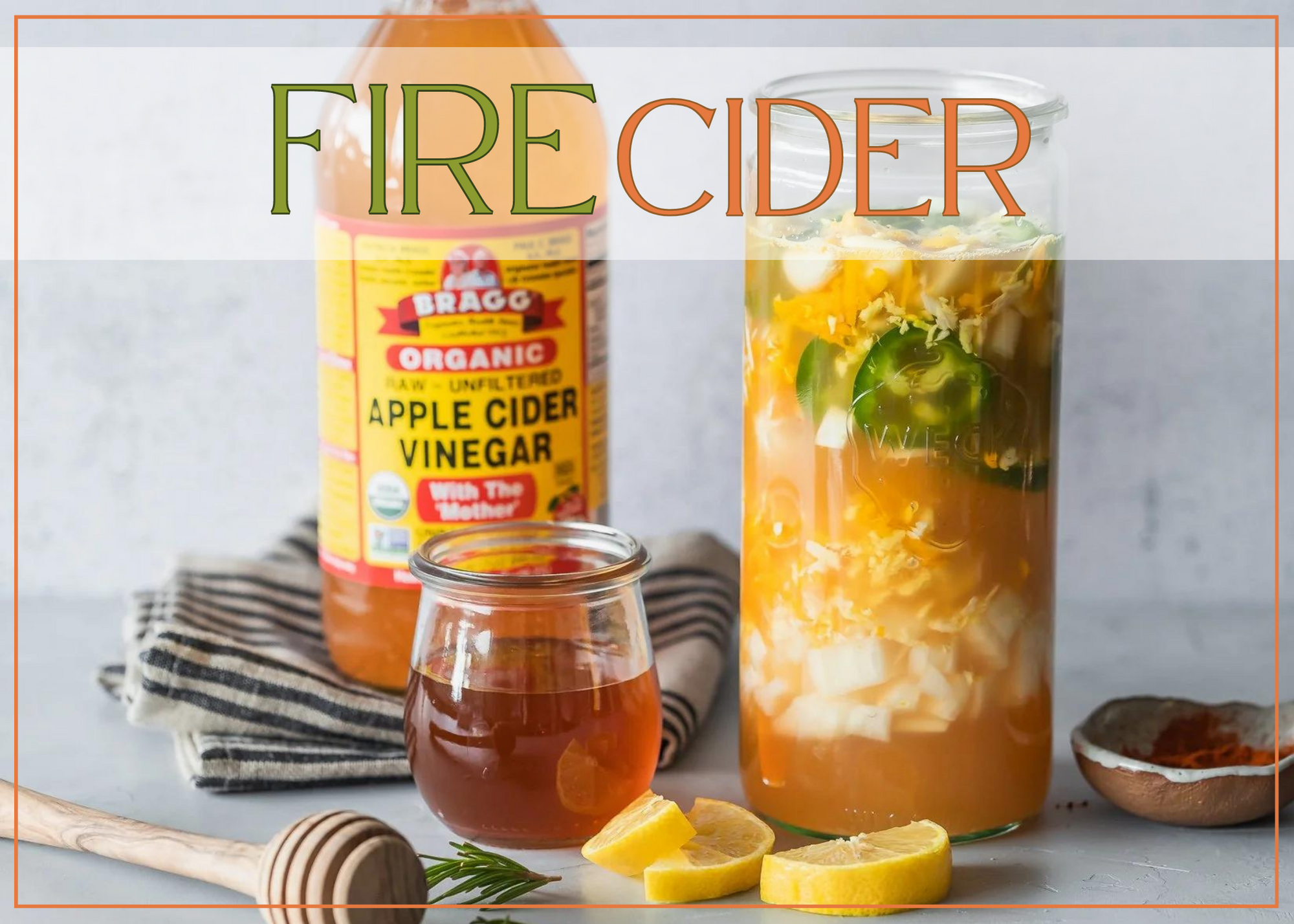
    Homemade Fire Cider


    Homemade Fire Cider

    Fire cider is a traditional herbal remedy known for its immune-boosting and warming properties. It is a potent infusion of herbs, spices, and vegetables steeped in apple cider vinegar.


    Fire cider is known for its potent and spicy flavor, as well as its potential health benefits. Feel free to adjust the ingredients to suit your taste and heat tolerance.

    Here are some common uses for fire cider:

    Immune Support

    Fire cider is often consumed as a daily tonic or during cold and flu season to help support the immune system. Its ingredients, such as garlic, ginger, and horseradish, are believed to have immune-boosting properties.

    Cold and Flu Relief

    Many people use fire cider at the onset of a cold or flu to help alleviate symptoms and speed up recovery. The warming and spicy nature of fire cider can help clear congestion and soothe a sore throat.

    Digestive Aid

    Fire cider can aid digestion and help relieve symptoms like indigestion, gas, and bloating. The combination of apple cider vinegar and herbs like ginger and rosemary may promote digestive health.

    Anti-Inflammatory

    Some of the ingredients in fire cider, such as turmeric and cayenne pepper, are known for their anti-inflammatory properties. It may be used by some individuals to help reduce inflammation in the body.

    Energy Booster

    The spicy and tangy nature of fire cider can provide an energy boost. It’s often taken in the morning as a natural pick-me-up.

    Circulation Support

    Ingredients like cayenne pepper in fire cider may help improve blood circulation. Some people use it to promote cardiovascular health.

    Sinus Congestion Relief

    The spicy components in fire cider, particularly horseradish and chili peppers, can help clear sinuses and provide relief from nasal congestion.

    General Wellness

    Many people incorporate fire cider into their wellness routines as a preventive measure to maintain overall health and vitality.

    Before using fire cider or any herbal remedy, it’s advisable to consult with a healthcare professional, especially if you have underlying health conditions, are pregnant or nursing, or are taking medications.


    Homemade Fire Cider

    Fire cider is a traditional immune-supporting remedy with deep roots in folk medicine.

    Ingredients
      

    • 1 medium onion chopped
    • 1/2 cup fresh horseradish root grated
    • 1/2 cup fresh ginger root grated
    • 1/2 cup fresh turmeric root grated
    • 10 cloves garlic crushed or minced
    • 2 jalapeño peppers chopped, adjust for spice preference
    • Zest and juice of 1 lemon
    • Zest and juice of 1 orange
    • 2 tbsp dried rosemary
    • 2 tbsp dried thyme
    • 1/4 tsp cayenne pepper adjust for spice preference
    • raw, unfiltered apple cider vinegar enough to cover all ingredients
    • raw honey to taste, optional

    Method
     

    1. Wash and chop the onion, horseradish, ginger, turmeric, garlic, and jalapeño peppers. You can leave the seeds in the jalapeños for extra heat, or remove them for milder fire cider.
    2. Zest the lemon and orange, and then juice them.
    3. In a clean, quart-sized glass jar, layer the chopped onion, grated horseradish, grated ginger, minced garlic, chopped jalapeño peppers, lemon zest, orange zest, dried rosemary, dried thyme, and cayenne pepper.
    4. Pour raw, unfiltered apple cider vinegar over the ingredients in the jar until they are completely covered. Make sure to leave a little space at the top for expansion.
    5. Seal the jar with a tight-fitting lid. If using a metal lid, place a piece of parchment paper or plastic wrap between the jar and the lid to prevent corrosion.
    6. Place the jar in a dark, cool place (like a pantry) for about 3 to 4 weeks. Shake the jar daily to help mix the ingredients.
    7. After 3 to 4 weeks, strain the mixture through a fine-mesh sieve or cheesecloth into a clean glass container.
    8. If you find the fire cider too strong, you can add raw honey to taste. This will also sweeten it a bit and make it more palatable.
    9. Store your fire cider in the refrigerator, where it can last for several months.
    10. To use, take 1-2 tablespoons daily as a tonic or when you feel like you need an immune boost. You can also use it in cooking or as a salad dressing ingredient.
  • Homemade Squash Gnocchi

    Homemade Squash Gnocchi

    Homemade Squash Gnocchi


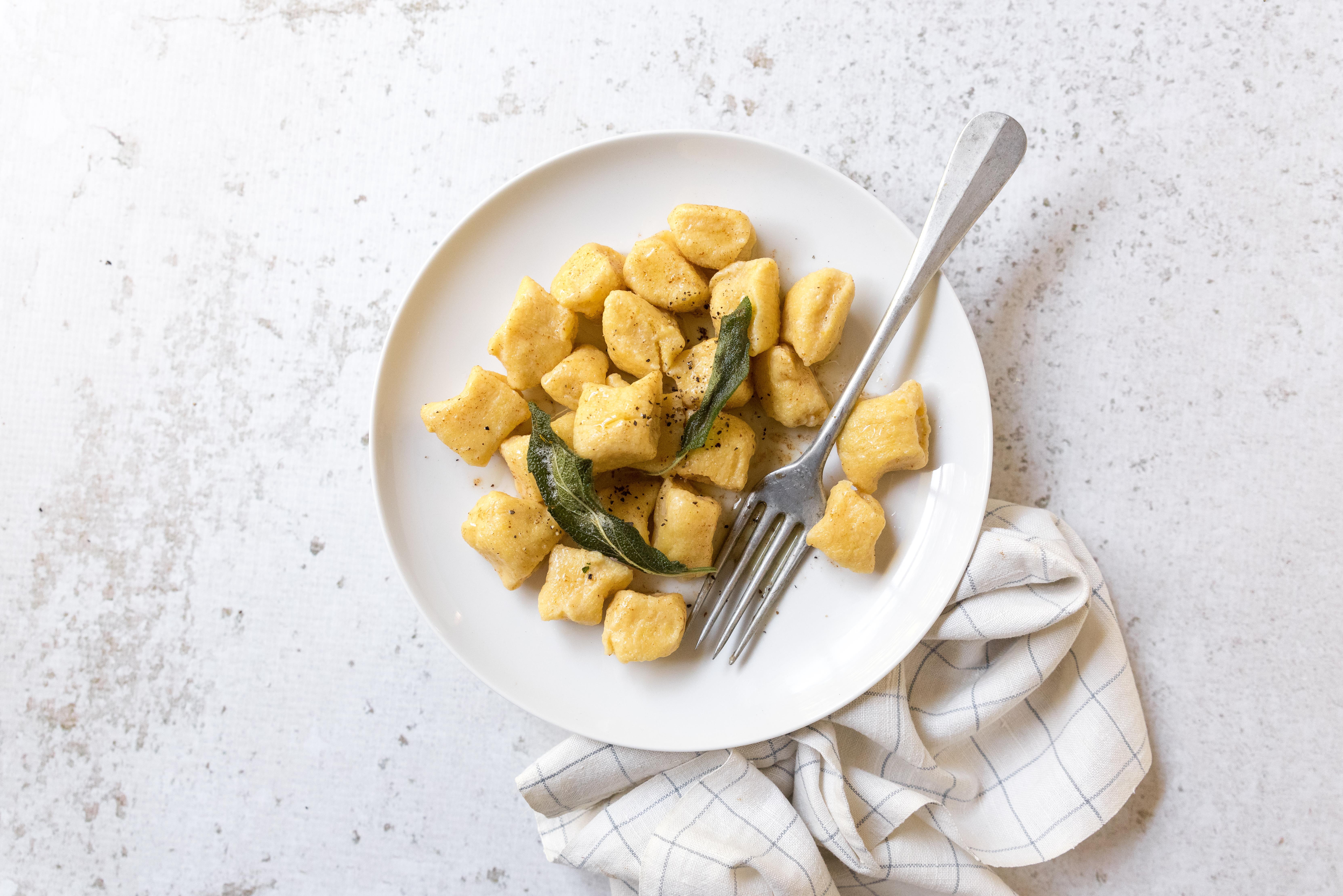
    Gnocchi is a great entry point for homemade pasta! This recipe for homemade squash gnocchi don’t require a pasta maker, a food processor, or any fancy unitaskers. If you’ve played with modeling clay as a child, you can make gnocchi. Rolling out the dough into long strands may give you flashbacks to your younger years. Just make sure you only add flour if the dough is sticking. Add too much and you’ll lose the light fluffy texture of truly great gnocchi. The addition of squash puree ups the seasonal wow factor and nutrition. You can use canned pumpkin, roasted butternut, or any combination of winter squash you have on hand. 

    Homemade Squash Gnocchi

    Gnocchi is a great entry point for homemade pasta! If you played with modeling clay as a child, you can make Homemade Squash Gnocchi. The addition of squash puree ups the seasonal wow factor and nutrition. 
    Servings: 6

    Ingredients
      

    • ¾ cup ricotta
    • ¾ cup squash puree
    • 1 large egg
    • 1 ¾ cups all-purpose flour
    • ¼ teaspoon ground nutmeg
    • 1 teaspoon sea salt
    • 1 – 2 tablespoons unsalted butter
    • Fresh sage leaves

    Method
     

    1. Whisk together ricotta, squash puree, egg, salt, and nutmeg.
    2. Add flour and stir until mixture forms a soft ball; rest for 10 minutes covered.
    3. Meanwhile, heat a large pot of lightly salted water to a boil. Melt butter in a large skillet over medium-low heat, add sage leaves and swirl pan around to crisp sage and allowing butter to brown evenly. Turn off heat and set aside.
    4. Cut dough into six even portions and roll into a ½-inch log shape, using flour as necessary to keep from sticking. Cut logs into 1-inch pieces and set aside on a floured surface.
    5. Drop gnocchi into boiling water in batches and cook until they float, about 3 minutes. Carefully strain cooked gnocchi. 
    6. Put the brown butter and sage pan back over medium-low heat and add cooked gnocchi. Heat through and serve promptly.
    7. Enjoy!

    Recipe Provided by INFRA

  • Easy Homemade Cherry Ice Cream

    Easy Homemade Cherry Ice Cream

    Easy Homemade Cherry Ice Cream

    Thanks to Christine Waltermyer & The Natural Kitchen Cooking School!

    Christine Waltermyer is a local and renowned Wellness Chef, private chef to celebrities, published cookbook author and founder of the Natural Kitchen Cooking School, which offers an online Plant-Based Cooking Program. She also loves shopping at Basil Bandwagon! Visit naturalkitchenschool.com to subscribe to her email newsletter for new recipes, tips, and FREE access to the Power of Veggies mini-course!


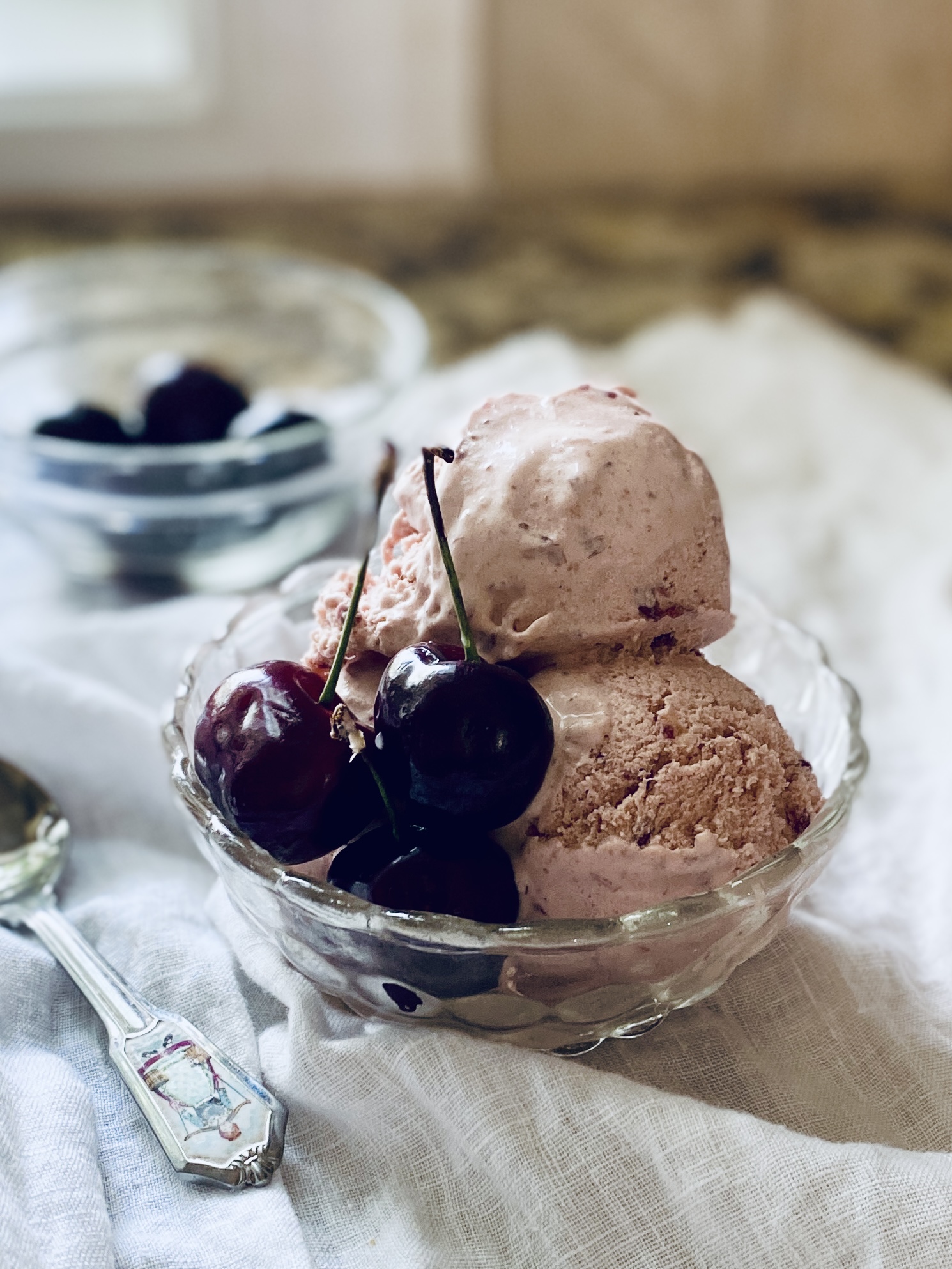
    Summer is time for ice cream – but let’s make it homemade! It’s easier than you think and thanks to Christine Waltermyer and the Natural Kitchen Cooking School, we have an easy cherry vanilla ice cream recipe that you can try at home today 🍒🍦

    Easy Homemade Cherry Ice Cream

    Homemade ice cream couldn't be easier!
    Course Dessert
    Keyword cherry, dessert, easy, homemade, ice cream
    Servings 1

    Ingredients

    • 1 cup heavy cream (I used dairy but you could use coconut-based cream for non-dairy)
    • 2 cups frozen sweet cherries
    • ¼ cup powdered sugar
    • Pinch sea salt
    • 1 teaspoon vanilla powder (or vanilla extract)
    • 1 teaspoon lemon juice optional
    • 1 pasteurized egg yolk optional

    Instructions

    • Pour the heavy cream into the bowl of a food processor. Whip it until fluffy. Add the frozen cherries, heavy cream, sugar, sea salt, vanilla powder, and optional lemon juice and egg yolk. Puree until completely smooth.
    • Freeze the ice cream using one of these two methods:
      1. Pour the ice cream into small single serving containers and freeze them. This makes it easy to take out and bring to room temperature for a few minutes to help it soften before serving.
      2. Or, pour the whole batch into a shallow pan and freeze for 1 hour. Swirl with a fork and freeze again. Stir every hour until firm, then transfer into a storage container.
    • Enjoy!

    Notes

    This is a firmer ice cream once it’s frozen, so just allow for letting it sit at room temperature for a few minutes before serving and you’ll be all set to enjoy delicious creamy ice cream!

    Thank you to Christine Waltermyer and the Natural Kitchen Cooking School for working with us to help promote healthy, nutritious meals and products that are affordable, full of nutrients, and simple to make at home!

  • Plant-Based Summer BBQ Sides

    Plant-Based Summer BBQ Sides

    Plant-Based Summer BBQ Sides

    With Christine Waltermyer & The Natural Kitchen Cooking School!

    Christine Waltermyer is a local and renowned Wellness Chef, private chef to celebrities, published cookbook author and founder of the Natural Kitchen Cooking School, which offers an online Plant-Based Cooking Program. She also loves shopping at Basil Bandwagon! Visit naturalkitchenschool.com to subscribe to her email newsletter for new recipes, tips, and FREE access to the Power of Veggies mini-course!


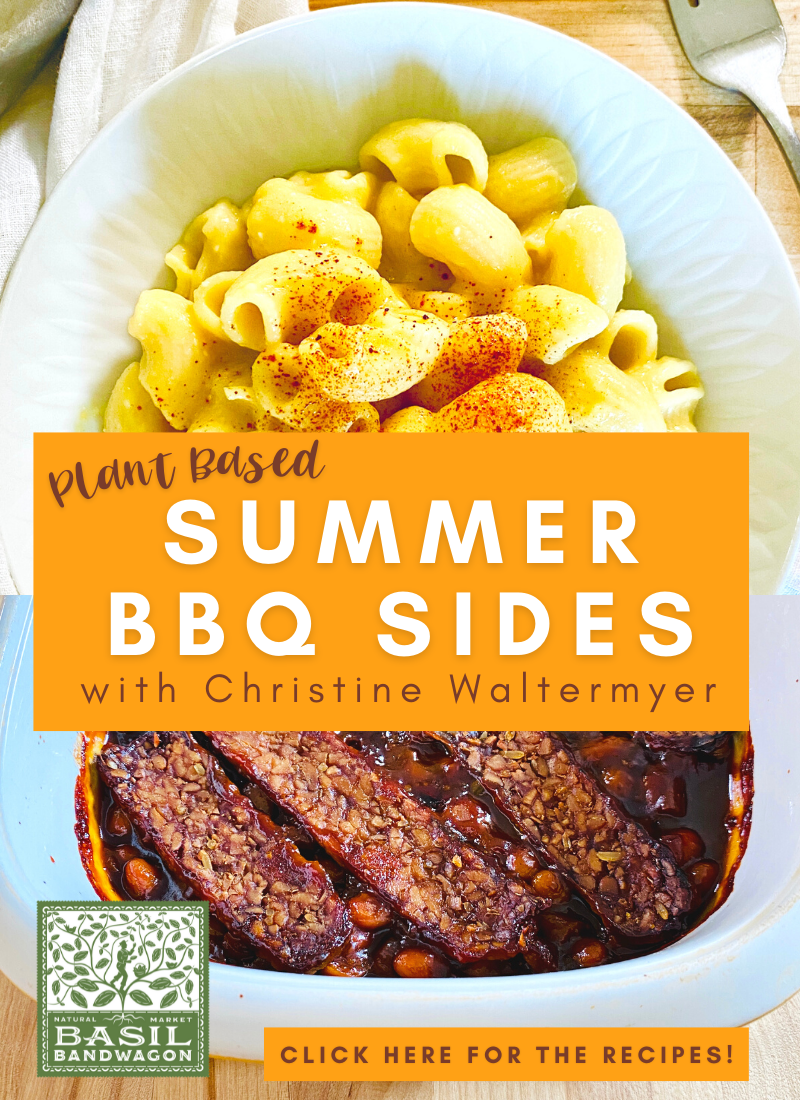
    Summer is the time for graduation parties, Father’s Day cookouts, backyard BBQs and so much more! Thanks to Christine Waltermyer and The Natural Kitchen Cooking School, you can WOW your guests with plant-based spins on traditional BBQ favorites.

    Homemade Baked Beans

    Course Side Dish
    Keyword bbq, side

    Ingredients

    • 2 tablespoons olive oil
    • ½ cup diced onion
    • Sea salt
    • cup unsweetened apple butter
    • 2 tablespoons maple syrup
    • 1 tablespoon apple cider vinegar
    • 2 teaspoons Worcestershire sauce
    • ¼ cup molasses
    • 2 tablespoons brown sugar
    • 1 tablespoon grainy mustard
    • 2 cups cooked white beans (Great Northern or Navy beans)
    • 4 strips Lightlife tempeh smoky bacon

    Instructions

    • Preheat the oven to 350 degrees F.
    • In a medium saucepan, warm 1 tablespoon of the olive oil over medium heat. Add the onion and a pinch of the sea salt. Cook and stir for five minutes.
    • To the saucepan, add the apple butter, maple syrup, apple cider vinegar, Worcestershire sauce, molasses, brown sugar, mustard and cooked beans. Stir until all of the ingredients are well combined.
    • In a large skillet, heat the remaining 1 tablespoon of olive oil over medium heat. Add the Lightlife tempeh smoky bacon strips and fry for a few minutes on one side, until golden. Turn the strips to fry the other side for a few minutes.
    • Pour the baked bean mixture into a lightly greased medium size casserole dish. I used an 8 x 8-inch dish. Top with the strips of tempeh bacon. I baked my beans uncovered, but feel free to cover them with a lid or aluminum foil if you like your beans more moist and less dry. Bake for 1 hour. Serve warm.
    • Enjoy!

    Notes

    If you prefer to use less variety of sweeteners, you can substitute an equal amount of one for another. For example, instead of using the 2 Tbsp. of brown sugar, you could increase the maple syrup by 2 Tbsp.

    Dairy-Free Mac ‘N Cheese

    Course entree, Side Dish
    Keyword bbq, entree, side

    Ingredients

    • 2 cups cauliflower florets
    • 2 cups water or vegetable broth
    • 1 teaspoon onion powder
    • A couple of pinches of turmeric
    • ½ teaspoon dry mustard
    • 2 cups dry pasta (elbows, spirals, lumache, etc.)
    • 1 ½ tablespoons sweet white miso
    • Pinch or two of sea salt
    • 2 teaspoons fresh lemon juice
    • 2 teaspoons arrowroot flour, mixed with 1 tablespoon cold water
    • Smoked paprika

    Instructions

    • In a medium size pot place the cauliflower florets, the water, onion powder, turmeric and dry mustard. Bring to a boil over medium high heat. Cover and reduce the heat to simmer on low for 10 minutes, or until fork-tender.
    • Meanwhile, heat a large pot of water to boil the pasta. Once it comes to a boil, add the pasta and cook according to package directions. Drain the pasta.
    • Carefully pour the cooked cauliflower mixture into a high speed blender. Puree until smooth. Pour the sauce back into the pot. Add the miso, sea salt, lemon juice, arrowroot flour and a shake of the smoked paprika. Cook for another few minutes on medium low heat. Whisk continuously until nicely thickened.
    • Pour the cauliflower sauce over the pasta and enjoy warm, sprinkled with a little extra smoked paprika.
    • Enjoy!

    Thank you to Christine Waltermyer and the Natural Kitchen Cooking School for working with us to help promote healthy, nutritious meals and products that are affordable, full of nutrients, and simple to make at home!

  • 6 Easy Breakfast & Lunch Ideas thanks to Christine Waltermyer!

    6 Easy Breakfast & Lunch Ideas thanks to Christine Waltermyer!

    6 Easy Breakfast & Lunch Ideas

    thanks to Christine Waltermyer

    Christine Waltermyer is a local and renowned Wellness Chef, private chef to celebrities, published cookbook author and founder of the Natural Kitchen Cooking School, which offers an online Plant-Based Cooking Program. She also loves shopping at Basil Bandwagon! Visit naturalkitchenschool.com to subscribe to her email newsletter for new recipes, tips, and FREE access to the Power of Veggies mini-course!


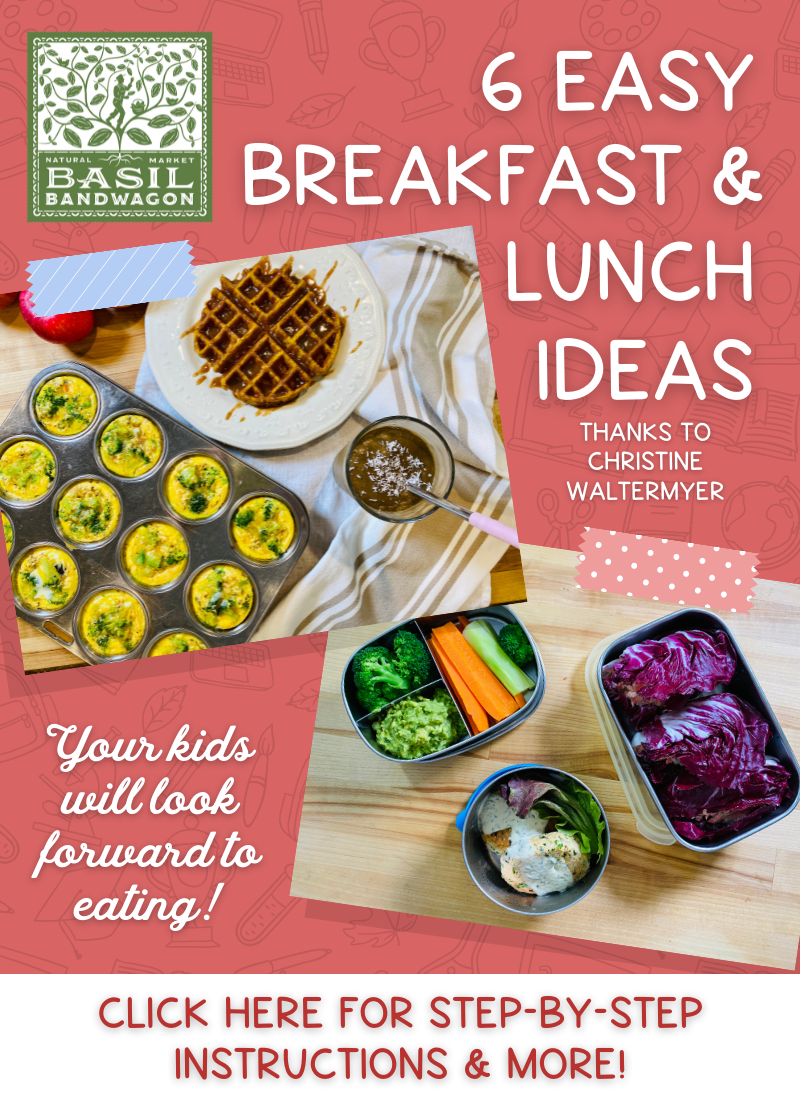
    We’re more than halfway through the first half of this school year! 🤓 What better time to switch up your breakfast and lunch routines. Christine Waltermyer and the Natural Kitchen Cooking School have whipped up 6 easy recipes for us – 3 before-school breakfasts to keep them full until lunch 🧇 & 3 school lunch ideas that your kids will look forward to eating! 🥗

    Easy Before-School Breakfast Ideas

    Carob Smoothie

    Course Breakfast
    Keyword breakfast, easy, smoothie
    Servings 1

    Ingredients

    • ¼ cup shredded coconut
    • 1 cup water
    • 1 ripe avocado pitted and peeled
    • ¼ cup cooked pumpkin puree
    • dash sea salt
    • 1 heaping tablespoon carob or cacao powder
    • teaspoon vanilla powder
    • stevia or honey to taste

    Instructions

    • Place the shredded coconut and water into a blender. Blend on high for a few minutes, scraping down the sides as needed. Strain through a nut milk bag if desired.
    • In the blender, place the milk and all remaining ingredients. Puree until smooth.
    • Optional: Add a scoop of your favorite protein powder or some walnuts to add protein to this smoothie.
    • Enjoy!

    Carrot Spice Waffles with Maple Almond Butter

    Course Breakfast
    Keyword breakfast, easy, waffles
    Servings 2

    Ingredients

    • ¾ cup almond flour
    • 2 tablespoons coconut flour
    • ½ teaspoon sea salt
    • 1 teaspoon baking powder
    • ½ teaspoon vanilla powder
    • ½ teaspoon pumpkin pie spice or ground cinnamon
    • 2 tablespoons Lakanto monk fruit sweetener with erythritol
    • ½ cup unsweetened almond milk
    • ¼ cup avocado oil or melted coconut oil optional
    • 2 eggs
    • ½ cup shredded carrot

    Maple Almond Butter Topping:

    • ¼ cup almond butter
    • ¼ cup maple syrup

    Instructions

    • In a large bowl, combine the almond flour, coconut flour, sea salt, baking powder, vanilla powder, pumpkin pie spice, and monk fruit sweetener. Whisk to blend together.
    • Add the almond milk and optional avocado oil if using. In a small bowl, beat the eggs, then add them to the almond flour mixture. Stir well. Add the shredded carrot and fold in gently.
    • Preheat the waffle iron. Just before adding the batter, lightly brush with a silicone brush or spray the waffle iron with a little avocado oil or coconut oil. Using a spoon or measuring cup, quickly add half of the batter (about 1 cup). Spread it evenly over the waffle iron, then close it.
    • If you have the kind of waffle iron you can flip, cook for about 2 to 3 minutes on one side, then flip it. Cook for an additional 2 ½ minutes on the other side. If you have a regular waffle iron that does not flip, just cook for 4 to 5 minutes.
    • Carefully open the waffle iron. Let the cooked waffle cool slightly before removing. Repeat with remaining batter.
    • To make the maple almond butter topping: In a small bowl, mix together the almond butter and maple syrup. Serve the waffles warm, spread with the maple almond butter.
    • Enjoy!

    Egg Muffin Cups

    Course Breakfast
    Keyword breakfast, eggs, muffins
    Servings 12 cups

    Ingredients

    • cup diced red onion
    • water or cooking oil of your choice
    • sea salt
    • cup carrot finely diced
    • 10 large eggs
    • 1 teaspoon prepared dijon mustard
    • ½ teaspoon salt
    • a few pinches freshly ground black pepper
    • coconut oil or avocado oil for the muffin tin
    • 1 cup cooked broccoli florets

    Instructions

    • Heat a medium size cast iron skillet or other skillet of your choice over medium heat. Add the red onion, a small splash of water and a pinch of the sea salt. Cook for a few minutes, until they start to soften. Add the carrots, and another pinch of sea salt and splash of water. Cook for another few minutes, or until all vegetables are tender.
    • Crack all of the eggs into a large bowl. Beat the eggs. Add the Dijon mustard, sea salt and black pepper. Stir again.
    • Preheat the oven to 350 degrees F.
    • Prepare your muffin tin by generously greasing each muffin cup with some coconut oil or avocado oil. Add a spoonful of the cooked red onion-carrot mixture to each cup, evenly distributing the veggies among the 12 muffin cups.
    • Pour some of the egg mixture into each muffin cup, dividing equally. Bake for 25 minutes or until the tops are set and no longer wet. Cool for 15 minutes. Use a knife around the edges to release the egg muffin cups from the muffin tin.
    • Enjoy!

    Notes

    Store in the refrigerator for up to 5 days.

    School Lunch Ideas

    Salmon Patties with Dill Sauce

    Course Lunch, Main Course
    Keyword Kids, lunch, patties, salmon

    Ingredients

    • 15 ounces canned wild-caught salmon (or cooked fresh salmon)
    • 2 eggs
    • cup almond flour
    • 2 scallions thinly sliced
    • ¼ cup minced parsley
    • ½ teaspoon sea salt (+ more for sprinkling on the finished patties)
    • a few grinds of freshly cracked black pepper
    • 2 tablespoons avocado oil or coconut oil for frying

    For the Dill Sauce:

    • ½ cup avocado mayonnaise
    • 1 teaspoon dijon mustard
    • 1 tablespoon fresh dill finely chopped
    • 2 teaspoons lemon juice

    Instructions

    • Drain the canned salmon and place in a large bowl.
    • Add the eggs, almond flour, scallions, parsley, sea salt and pepper. Mix well, cover and refrigerate for 15 minutes.
    • Form the salmon mixture into 7 or so patties.
    • Heat a large skillet over medium heat. Add the avocado or coconut oil, and quickly add the salmon patties. Depending on the size of your skillet, you can add all of them or just 4 patties at a time.
    • Cook for about 4 or 5 minutes on one side. Using a spatula, carefully turn each patty. Fry for another few minutes on the other side.
    • To make the dill sauce: In a small bowl, combine all of the dill sauce ingredients. Stir well. Serve the salmon patties warm, drizzled with the dill sauce.
    • Enjoy!

    Salmon Salad with Lettuce Cups

    Course Lunch, Main Course
    Keyword Kids, lunch, salad, salmon

    Ingredients

    • 8 ounces frozen wild salmon thawed
    • sea salt & pepper
    • 1 tablespoon avocado oil or coconut oil
    • 2 tablespoons celery minced
    • 1 tablespoon onion minced
    • 2 teaspoons lemon juice
    • 2 teaspoons fresh dill finely chopped
    • cup avocado mayonnaise
    • To Serve: butter lettuce, radicchio

    Instructions

    • Pat the salmon dry using a paper towel. Sprinkle with sea salt and pepper.
    • Heat a skillet over medium heat. Add the avocado oil, then quickly add the salmon, flesh side-down. Cook uncovered for 4 to 5 minutes. Use a spatula to turn the salmon. Cook for three more minutes on the other side.
    • Once the salmon has cooled to the touch, remove any bones. You can also remove the skin and gray-colored fat if desired. Using a fork, flake the salmon apart. Place the prepared salmon in a large bowl.
    • Add the celery, onion, lemon juice, sea salt and pepper to taste, fresh dill and mayonnaise. Stir to combine and adjust seasoning to taste.
    • Fill radicchio or butter lettuce leaves with a generous spoonful of the salmon salad per leaf.
    • Enjoy!

    Broccoli & Carrots with Homemade Guacamole

    Course Lunch, Snack
    Keyword guacamole, Kids, lunch, snack, vegetables
    Servings 2

    Ingredients

    • 1 cup carrot sticks or flat planks
    • 1 cup broccoli – a combination of broccoli florets & peeled stems sliced
    • sea salt
    • 1 avocado pitted
    • 2 teaspoons fresh cilantro chopped
    • ½ teaspoon sea salt or to taste
    • black pepper to taste
    • 1 tablespoon chopped onion
    • 1 teaspoon fresh lime juice or more to taste

    Instructions

    • In a medium saucepan, bring a few inches of lightly salted water to a boil over medium high heat. Keep a strainer or colander nearby, with a plate underneath. Drop the broccoli florets and peeled stems into the water. Cook for a few minutes.
    • Remove the broccoli with a slotted spoon. Place them in the strainer to cool.
    • Bring the water back to a boil, then drop in the carrot planks. Cook for a few minutes. Remove the carrot planks with a slotted spoon. Place them in the strainer to cool.
    • Make the guacamole: In a large bowl, mash the avocados. Add the sea salt and black pepper to taste. Add the lime juice, cilantro, chopped onion and lime juice. Stir well.
    • Serve the cooled vegetables and guacamole, or pack them into a portioned lunch container as a snack on the go.
    • Enjoy!

    Thank you to Christine Waltermyer and the Natural Kitchen Cooking School for working with us to help promote healthy, nutritious meals and products that are affordable, full of nutrients, and simple to make at home!

  • Christine Waltermyer’s Gut-Boosting Homemade Pickles – 3 Ways!

    Christine Waltermyer’s Gut-Boosting Homemade Pickles – 3 Ways!

    Gut-Boosting Homemade Pickles

    with Christine Waltermyer

    Christine Waltermyer is a local and renowned Wellness Chef, private chef to celebrities, published cookbook author and founder of the Natural Kitchen Cooking School, which offers an online Plant-Based Cooking Program. She also loves shopping at Basil Bandwagon! Visit naturalkitchenschool.com to subscribe to her email newsletter for new recipes, tips, and FREE access to the Power of Veggies mini-course!


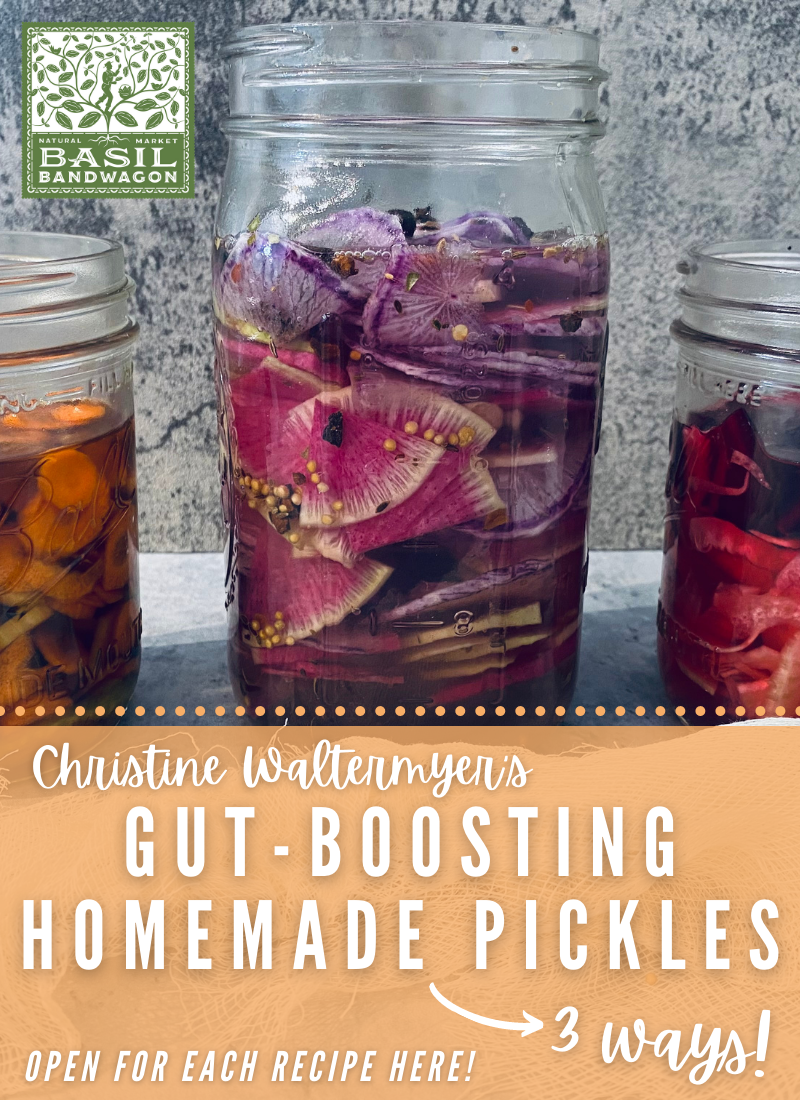
    Did you know that gut health is essential for a strong immune system? Some of the best gut health boosting foods are those that are fermented and pickled! There are many health benefits of pickling, but the most talked about benefit is the fact that they are probiotic – and you can pickle so many different vegetables to change up your flavor profiles. Check out (& print!) these three simple homemade pickle recipes thanks to Christine Waltermyer!

    24-Hour Mixed Vegetable Tamari Pickles

    Course Snack
    Keyword gut health, pickles
    Servings 1 cup of pickles

    Equipment

    • Wide-mouth 16 oz glass canning jar with a lid (Make sure it’s really clean. You can even boil it for a minute to sterilize it.)
    • 8 oz glass canning jar that fits inside the 16-ounce glass jar
    • Cheesecloth
    • Small pot

    Ingredients

    • ½ cup water
    • 2 ½ tablespoons tamari
    • 2 tablespoons brown rice vinegar
    • ½ cup broccoli stems (peeled) sliced into thin rounds
    • ½ cup carrot slices (thin)
    • ½ cup thinly sliced celery
    • 1 tablespoon maple syrup

    Instructions

    • Place the water in a small pot. Bring to a boil briefly, then shut off the heat and remove from the stove. Set aside to cool.
    • Once the water is cool, place it in the glass canning har. To make the pickling brine, add the tamari and brown rice vinegar. Place the lid on the har and shake well. Pour the pickling brine into a bowl.
    • Layer the vegetables in the glass jar. Pour the pickling brine over them. Place the smaller jar on top of the vegetables, inside the jar. The weight of the har will press the vegetables under the surface of the brine.
    • Cover the jar with a square of cheesecloth and secure it in place with a piece of kitchen twine or a rubber band.
    • Let the jar sit at room temperature for 24 hours. The room should be between 65 to 80 degrees F.
    • After 24 hours have passed, add the maple syrup. Place a lid on the jar and gently shake to mix the maple syrup into the brine. Refrigerate the pickles at this point. Enjoy a teaspoon or so at a time with a meal. Pickles will keep up to 5 days in the refrigerator.

    24-Hour Pink Fennel Pickles

    Course Snack
    Keyword gut health, pickles
    Servings 3 /4 cup of pickles

    Equipment

    • 16 oz glass canning jar with a lid (Make sure it’s really clean. You can even boil it for a minute to sterilize it.)
    • 8 oz glass canning jar
    • Cheesecloth
    • Small pot

    Ingredients

    • ¾ cup water
    • ¾ cup fennel thinly sliced
    • ¼ beet thinly sliced
    • ¼ cup ume ("umeboshi") vinegar

    Instructions

    • Place the water in a small pot. Bring to a boil briefly, then shut off the heat and remove from the stove. Set aside to cool.
    • Once the water is cool, place it in the glass canning jar. To make the pickling brine, add the ume vinegar. Place the lid on the jar and shake well. Pour the pickling brine into a bowl.
    • Layer the vegetables in the glass jar. Pour the pickling brine over them. Place the smaller jar on top of the vegetables, inside the har. The weight of the har will press the vegetables under the surface of the brine. If the liquid is too high in the har, you can remove it as long as all of the vegetables are submerged under the brine liquid.
    • Cover the har with a square of cheesecloth and secure it in place with a piece of kitchen twine or a rubber band.
    • Let the jar sit at room temperature for 24 hours. The room should be between 65 to 80 degrees F.
    • After 24 hours have passed, place a lid on the jar. Refrigerate the pickles at this point. Enjoy a teaspoon or so at a time with a meal. If you find the pickles too strong tasting, rinse a small amount before serving them. Pickles will keep up to 10 days in the refrigerator.

    3-Day Radish Pickles

    Course Snack
    Keyword gut health, pickles
    Servings 1 1/2 cups of pickles

    Equipment

    • 32-ounce glass canning jar with a lid (Make sure it’s really clean. You can even boil it for a minute to sterilize it.)
    • Small pot

    Ingredients

    • 2 cups water
    • 2 cups thinly sliced radishes (I used purple daikon radish and watermelon radish but red radish works too)
    • 1 ½ tablespoons sea salt
    • 1 teaspoon pickling spice OPTIONAL – In the video I used 1 tablespoon but it’s a little strong tasting so I recommend using less for most people’s taste.

    Instructions

    • Place the water in a small pot. Bring to a boil briefly, then shut off the heat and remove from the stove. Set aside to cool.
    • Once the water is cool, place it in the glass canning jar. To make the pickling brine, add the sea salt and pickling spice. Place the lid on the jar and shake well. Pour the pickling brine into a bowl.
    • Layer the vegetables in the glass jar. Pour the pickling brine over them. Make sure that all of the vegetables are submerged under the brine liquid.
    • Cover the jar with the lid.
    • Let the jar sit at room temperature for 3 days. The room should be between 65 to 80 degrees F.
      IMPORTANT: Unscrew the lid of the jar once a day to release some of the air that naturally builds up inside. At that time make sure the veggies are all submerged and if not, gently push them down under the liquid.
    • Taste after 3 days and if you want to let it ferment longer it should become more sour in another day or two. These pickles are salty so I recommend rinsing the pickles before serving. If you want to balance the flavor with some sweetness just add a tablespoon or two of your favorite sweetener and it will make them a little more mild tasting. Pickles will keep for 2 weeks in the refrigerator.

    Thank you to Christine Waltermyer and the Natural Kitchen Cooking School for working with us to help promote healthy, nutritious meals and products that are affordable, full of nutrients, and simple to make at home!

  • Homemade Immune Boosting Essentials thanks to Christine Waltermyer!

    Homemade Immune Boosting Essentials thanks to Christine Waltermyer!

    Homemade Immune Boosting Essentials

    thanks to Christine Waltermyer!

    Christine Waltermyer is a local Wellness Chef, private chef to celebrities, published cookbook author and founder of the Natural Kitchen Cooking School, which offers an online Plant-Based Cooking Program. She also loves shopping at Basil Bandwagon! Visit naturalkitchenschool.com to get your FREE copy of her cookbook, “7 Days of Deliciousness.”

    Vegetable Broth

    Makes 8 cups

    Ingredients

    1 cup fresh maitake mushrooms, or ½ cup dried

    2 celery stalks, cut into big chunks

    2 carrots, cut into chunks

    2 to 3 cups winter squash, cut in big chunks

    ½ cup fresh burdock root, cut into pieces (or ¼ cup dried burdock)

    1 small bunch parsley (you can leave the stems on)

    1 tablespoon fresh ginger root slices

    ½ large onion, cut into big chunks

    1 tablespoon fresh thyme (or 1 teaspoon dried thyme)

    3 dried shiitake mushrooms (or 6 fresh shiitake mushrooms)

    2 bay leaves

    2 cloves garlic

    ½ gallon water


    Method

    This vegetable broth can be made in an Instapot, pressure cooker or regular soup pot. 

    For Instant Pot or pressure cooker: Place all ingredients in the Instant Pot or a large pressure cooker. Place the lid on your pressure cooker or Instant Pot and bring to full pressure on high heat. After 15 minutes, remove the pot from the heat and let the pressure reduce naturally.  Strain out the ingredients by pouring the broth through a strainer into a large bowl. Remove the lid and cool completely before pouring into tall glass mason jars.

    For regular soup pot: Place all ingredients in a large soup pot. Cover with a lid and bring to a boil over medium high heat. Reduce heat to simmer on low for 1 hour. Remove from heat. Strain out the ingredients by pouring the broth through a strainer into a large bowl. Cool before pouring into glass mason jars.

    Store the vegetable broth in covered jars in the refrigerator for 3 to 5 days, or freeze for up to 4 months.


    Lemon Sage Cold Care Tea

    Serves 1

    Ingredients

    1 cup (8 oz.) water

    10 fresh sages leaves (or one teaspoon dried sage leaves)

    1 teaspoon fresh lemon juice

    1 teaspoon raw honey or brown rice syrup


    Method

    Place the water in a small saucepan. Bring to a boil over medium high heat. Turn off the heat and add the sage leaves. Remove from the heat and let steep for 15 minutes. Strain the tea through a small strainer into a mug. Add the lemon juice and sweetener of your choice. Enjoy warm.


    Thank you to Christine Waltermyer and the Natural Kitchen Cooking School for working with us to help promote healthy, nutritious meals and products that are affordable, full of nutrients, and simple to make at home!

  • Comfort Food Classics

    Comfort Food Classics

    Comfort Food Classics

    with Christine Waltermyer

    Christine Waltermyer is a local Wellness Chef, private chef to celebrities, published cookbook author and founder of the Natural Kitchen Cooking School, which offers an online Plant-Based Cooking Program. She also loves shopping at Basil Bandwagon! Visit naturalkitchenschool.com to get your FREE copy of her cookbook, “7 Days of Deliciousness.”


    Vegan Cinnamon Rolls

    Makes 6 to 8

    Ingredients

    1 cup almond milk + 1 tablespoon almond milk reserved for glaze (I used the Three Trees brand)

    1/4 cup vegan butter + 1/3 cup vegan butter reserved for filling (I used Miyoko’s brand) 

    2 Tablespoons organic raw sugar

    1/2 packet Red Star active dry yeast

    1/2 teaspoon sea salt

    2 ¼ cups unbleached flour

    1 Tablespoon ground cinnamon

    1/2 cup powdered sugar

    1/3 cup brown sugar

    1/2 teaspoon vanilla extract

    You will need: An 8-inch round cake pan, lightly oiled with rice bran oil (I used a stainless steel one)

    Method

    1. In a small saucepan, warm the almond milk, 1/4 cup butter and 2 tablespoons of sugar until the butter has melted. The mixture should be warm like bath water, not too hot, around 100 degrees F. Stir with a wooden spoon and add the active dry yeast. Let sit for 10 minutes until foamy.

    2. In a mixing bowl, place the powdered sugar, vanilla, and one tablespoon of almond milk. Stir together until you reach a glazed consistency.

    3. In a large mixing bowl, place the flour and sea salt. Add the yeast mixture. Mix thoroughly until combined. Cover the bowl with a damp towel or plastic wrap. Set aside in a warm place or at room temperature for 1 hour.

    4. Add the remaining 1/4 cup of flour to your dough and mix until well combined. On a floured board, form the dough into a big rectangle.

    5. Melt the remaining 1/3 cup vegan butter. Evenly brush the rectangle of dough with the melted butter. Sprinkle the brown sugar in an even layer over the dough. Sprinkle evenly with cinnamon.

    6. Roll the coated dough into a log and cut into 7 or 8 slices. Place one cinnamon roll in the center of the cake pan. Add the other slices around it. Cover with a damp towel or plastic wrap and let rise for another 30 minutes.

    7. Bake at 350 degrees F for 30 minutes. Remove the rolls from the oven and drizzle with the glaze. Serve warm and enjoy!


    Homemade Pizza

    Makes 2 pizzas

    Ingredients

    1 1/4 cup warm water 

    2 Tablespoons raw sugar

    1 ½ teaspoons active dry yeast

    1 teaspoon sea salt

    2 Tablespoons rice bran oil

    3 cups unbleached all purpose flour (plus extra for rolling out the pizza dough)

    1 jar pitted black olives

    1 can of pizza sauce (or homemade carrot sauce)

    Fresh basil leaves

    Shredded vegan Mozzarella

    Method

    1. In a small glass measuring cup, combine the warm water and sugar. Sprinkle the active dry yeast over the surface of the water. Let sit for a few minutes (up to 10  minutes) until foamy and activated. If you want to gently stir it, use a wooden spoon.

    2. In a large mixing bowl, combine the flour and sea salt. 

    3. In a food processor, add the yeast-sugar water mixture, rice bran oil and flour. Process until all ingredients are combined. The dough will be sticky. Transfer to a lightly oiled bowl and cover with plastic wrap. Let sit at room temperature (in a warm place) for 1 hour.

    4. Once the dough has doubled in size, place it on a lightly floured surface. Sprinkle with some flour and work the flour into the dough with your hands. Add just enough extra flour to achieve a smooth dough.  

    5. Cut the dough in half. Set one dough ball aside and place the other on a piece of parchment paper. Roll the dough flat, stretching gently as needed. Flatten into a circle. Keep the edges a little thicker.

    6. Preheat the oven to 465 degrees F. Place a stainless baking sheet or pizza pan on the bottom shelf of the oven to warm it for a few minutes. Remove from the oven and quickly place the parchment paper with pizza dough on top of the warmed baking sheet.

    7. Top the dough with an even thin layer of pizza sauce, shredded mozzarella cheese and black olives. You can add whatever toppings you like. Bake for about 12 minutes, or until desired doneness.

    8. Serve topped with some chopped fresh basil leaves. Enjoy!


    Thank you to Christine Waltermyer and the Natural Kitchen Cooking School for working with us to help promote healthy, nutritious meals and products that are affordable, full of nutrients, and simple to make at home!

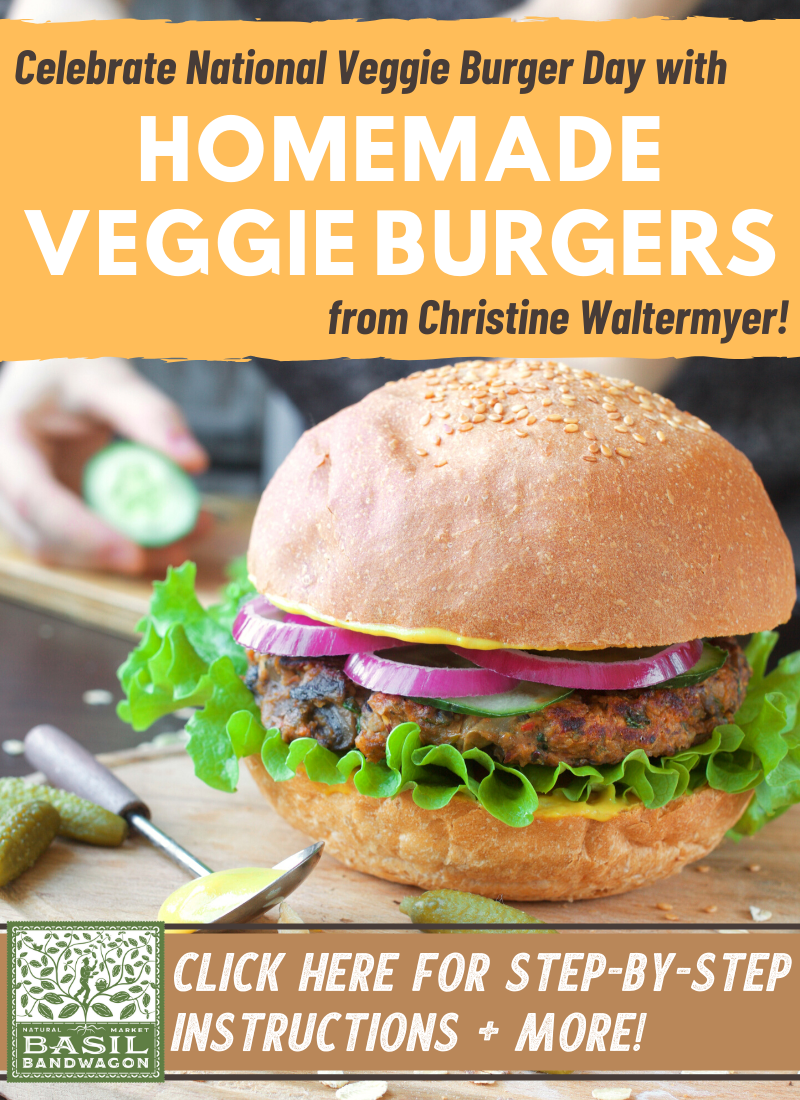
  • Celebrate National Veggie Burger Day with Homemade Veggie Burgers from Christine Waltermyer!

    Celebrate National Veggie Burger Day with Homemade Veggie Burgers from Christine Waltermyer!

    Celebrate National Veggie Burger Day

    with

    Homemade Veggie Burgers

    with Christine Waltermyer

    Christine Waltermyer is a local Wellness Chef, private chef to celebrities, published cookbook author and founder of the Natural Kitchen Cooking School, which offers an online Plant-Based Cooking Program. She also loves shopping at Basil Bandwagon! Visit naturalkitchenschool.com to get your FREE copy of her cookbook, “7 Days of Deliciousness.”


    Veggie Burgers

    Makes 4 burgers

    Ingredients

    2 teaspoons olive oil

    1 red onion, chopped

    1 cup mushrooms, sliced

    1/2 teaspoon sea salt

    1 cup cooked kidney beans

    1/2 cup carrots, diced and boiled

    2 Tablespoons oat bran

    1/3 cup gluten free oat flour

    1/3 cup ground flax seed meal

    2 Tablespoons fresh parsley, chopped

    1 teaspoon water

    1/2 teaspoon garlic powder

    1 teaspoon dried basil

    Black pepper

    Optional: Smoked paprika to taste


    Method

    1. Heat a medium skillet over medium heat. Add the oil, onion and a pinch of the sea salt to soften the onion. Cook for a few minutes, then add the mushroom. Cook 5 to 10 minutes, until nice and tender.

    2. In a large bowl, combine the kidney beans, carrots, oat bran, oat flour, flax seed meal, parsley, water, and seasonings. Partly mash the ingredients together.

    3. Prepare a baking sheet and line it with parchment paper. Form the mixture into four burger patties. Place them on your baking sheet. 

    4. Bake at 350 degrees F for 15 minutes, then turn the burgers and bake for another 15 minutes.

    5. Serve on hamburger buns or lettuce leaves, topped with your favorite condiments. Enjoy!


    Thank you to Christine Waltermyer and the Natural Kitchen Cooking School for working with us to help promote healthy, nutritious meals and products that are affordable, full of nutrients, and simple to make at home!

  • Homemade Salted Caramel Hot Chocolate featuring Lake Champlain Chocolate

    Homemade Salted Caramel Hot Chocolate featuring Lake Champlain Chocolate

    Want to celebrate the new year with a sweet treat? This delicious homemade salted caramel hot chocolate featuring Lake Champlain filled chocolate is how we want to celebrate the end of a year and a decade! Simple and sweet- what else could we ask for?!

    Ingredients

    1 bar Lake Champlain caramel filled chocolate bar, chopped

    1 cup almond milk, or more to taste

    Marshmallows, optional

    Method

    1. In a saucepan, continuously stir almond milk over medium-low heat.

    2. Add chocolate and continue to stir until chocolate is melted and well blended, about 5 minutes. Make sure you don’t boil your milk! Remove from heat and add more milk if desired.

    3. Serve in a mug and add marshmallows if desired. Enjoy!


    Before you enjoy your homemade salted caramel hot chocolate, make sure you take a picture of your masterpiece! Post it on social media and tag your favorite organic market, Basil Bandwagon Natural Market! #basilbandwagon

    For more amazing recipes featuring Lake Champlain chocolates, visit: https://www.lakechamplainchocolates.com/recipes?p=3&product_list_limit=all