Tag: kids

  • Children and the flu

    Children and the flu

    Children and the flu

    Arm yourself and your kids for flu season

    The coming fall season brings back-to-school time as well as back-to-cold-and-flu time for many families. What better time to arm ourselves with the information we need to keep our kids—and ourselves—safe against the viral onslaught.

    What is the flu?

    Caused by influenza viruses A, B, or C, the flu is a respiratory infection lasting about a week to 10 days. Seasonal outbreaks involving influenza A or B occur between November and April. While it can be severe in a small percentage of children under five, only about 1 percent require hospitalization.

    How is the flu different from a cold?

    The flu has a rapid onset of more severe symptoms compared to a cold. Flu symptoms include headache, chills, cough, fever, loss of appetite, muscle aches, and tiredness, sometimes with nausea, vomiting, and diarrhea. Fever lasts 3-4 days, with illness resolving in 7-10 days, and can be infectious for up to a week.

    A cold typically involves a runny nose, watery eyes, and sore throat, with milder symptoms developing gradually.

    How can influenza be prevented?

    Influenza spreads through droplets in the air and via contact with contaminated surfaces like toys or doorknobs. Since the virus can survive up to 48 hours on surfaces, frequent handwashing is essential. Other strategies include staying home when sick, teaching children to cover coughs and sneezes, and disinfecting surfaces.

    Can natural health products help in prevention?

    Natural health products can support immunity and reduce complications from secondary infections.

    • Probiotics have been shown to reduce respiratory infections, including the flu, by strengthening immune response.
    • Echinacea may stimulate immune activity and has been linked to fewer respiratory infections and flu cases when used preventively.
    • Vitamin D deficiency is associated with increased risk of respiratory infections; supplementation may help prevent influenza, especially in deficient children.
    • Medicinal mushrooms like turkey tail, shiitake, reishi, and chaga contain compounds that modulate the immune system and have shown antiviral activity in vitro.

    How do you treat the flu?

    Mild flu symptoms in children are best managed with supportive care: hydration, light clothing, and a comfortable environment. Tepid baths and cool-mist humidifiers can help reduce discomfort. Honey lozenges (for children over 3) and saltwater gargles can soothe symptoms.

    Over-the-counter cold medicines are not recommended for children under 6 without a doctor’s approval. Aspirin should never be given due to Reye syndrome risk.

    Treating with natural health products

    To reduce symptoms and disease duration, consider echinacea, elderberry, or vitamin D, tailored to your child’s age.

    • Elderberry has antiviral and anti-inflammatory effects and has been associated with reduced upper respiratory symptoms.
    • Echinacea at the start of symptoms may shorten illness duration and promote viral clearance.

    A naturopathic doctor can develop a customized protocol for your child at the first signs of cold or flu.

    By Heidi Fritz, MA, ND

    Article Courtesy of Alive Magazine

  • Your back-to-school guide

    Your back-to-school guide

    Your back-to-school guide

    10 tips for a smooth seasonal transition

    Although we’re enjoying summer, September is just around the corner with its stricter bedtimes, busy mornings, and lunch-packing routines. To help ease this transition, here are some mindful, enjoyable, and sustainable tips for the new school year.

    Familiarize yourself with your school

    Visit the school multiple times during summer to make it familiar and fun. Play on the playground, walk the route you’ll take daily, and teach safety boundaries. Attending orientation sessions is also helpful.

    Set up your home

    Designate specific areas for school gear like backpacks and lunchboxes. Creating a dedicated homework space with supplies but minimal distractions can support older students.

    Practice for independence

    Practice handling lunch items, such as lunchboxes and water bottles, using timers to simulate school lunchtime. Also, work on dressing skills, like putting on coats and using the bathroom independently, to build confidence.

    Help with worries

    Validate children’s anxieties rather than dismissing them. Common concerns include missing home or worries about friendships. Acknowledging emotions teaches children how to express their feelings and feel supported.

    Create a routine

    Establish a consistent morning routine. Prepare outfits, pack bags, and make lunches the night before. Practice the routine with children beforehand to reduce stress on the first day.

    Be strategic

    Avoid overbuying by reviewing what you already have. Have children try on clothes and assess needed supplies early. Shopping from what’s already available teaches resourcefulness and saves money.

    Choose secondhand first

    Opt for secondhand stores for supplies, clothes, and gear. Resale apps and online groups are also good options. Involving children in shopping helps them feel invested and prepares them emotionally for school.

    Get a good night’s sleep

    Establish a fixed bedtime routine weeks before school starts. Ensure children get the recommended hours of sleep for their age. Bedtime can also be a calming family time, like reading or meditation.

    Embrace downtime

    Children need time to relax after school. A snack and quiet activity help transition from school to home. Overscheduling extracurriculars can be overwhelming, so find a balance that suits your family.

    Give your kids grace

    Transitions are tough—kids face new teachers, classmates, and environments each year. After a busy day, children may have strong emotions or meltdowns at home. Recognize that behaviour is communication, and be gentle. Transitions are challenging, and patience is key.

    By Leah Payne

    Article Courtesy of Alive Magazine

  • When kids want to quit

    When kids want to quit

    When kids want to quit

    Life lessons for parents and kids

    Our society has many embedded values and rules, one being how we view quitting. It’s often seen as a loss, failure, or misstep. Sometimes it’s viewed as a necessary response to difficult circumstances. Rarely, it’s recognized as a positive choice, a rite of passage, or an inevitable part of emotional and psychological growth.

    Handling moments when children want to disengage or call it quits can be challenging. To navigate this, it helps to understand:

    • the influence of our upbringing
    • our parenting style
    • our children’s evolving nature
    • our own tendencies to persevere or quit

    I spoke with three young moms to broaden my perspective, and their insights reflect several key ideas.

    Be clear in your intention

    Determine what kind of parent you want to be and what your goals are for your children. Knowing your “why” grounds your parenting decisions and actions daily.

    Understand your parenting style

    Reflect on whether your role is about maintaining order, encouraging discovery, ensuring safety, developing skills, or avoiding conflict. Recognizing your style clarifies your priorities and helps you stay aligned with your values, even in tricky situations.

    Be curious and dig deep

    When your child says, “I don’t want to do this anymore,” try to understand their experience. Notice your reaction—do you tend to avoid, fix, minimize, or catastrophize? Pause, breathe, and focus on what’s triggering your child’s resistance.

    One parent shared how understanding her child’s fears helped find a way forward, highlighting the importance of addressing underlying issues rather than just the behavior.

    Be creative

    Use creative problem-solving rather than feeling stumped. Explore alternative options, such as different activities, additional support, or taking breaks. Sometimes, a simple pause can reveal that a bad day isn’t about the activity itself.

    Don’t sweat the small stuff

    Evaluate whether the struggle is worth it. Sometimes a child’s autonomy is more important than the activity. Other times, perseverance offers valuable lessons. Reflect on the situation and the bigger picture before reacting.

    Carry your learning forward

    When things don’t go as planned, accept the difficulty and view it as a learning opportunity. Consider how you might approach similar situations differently next time, using these lessons to grow.

    Celebrate small victories

    Acknowledge when things go well—when you and your child communicate effectively and find a good path. Celebrating these wins reinforces positive behavior and fosters connection.

    You are a role model

    Remember that your handling of challenges influences your children. Demonstrating persistence, taking breaks, or recognizing when to stop teaches them healthy coping strategies. Your conscious efforts to understand and collaborate serve as lasting examples of positive behaviour.

    By Carole Ames

    Article Courtesy of Alive Magazine

  • Kids Lunch Box

    Kids Lunch Box

    Kids Lunch Box

    Total Time 30 minutes
    Servings: 1

    Ingredients
      

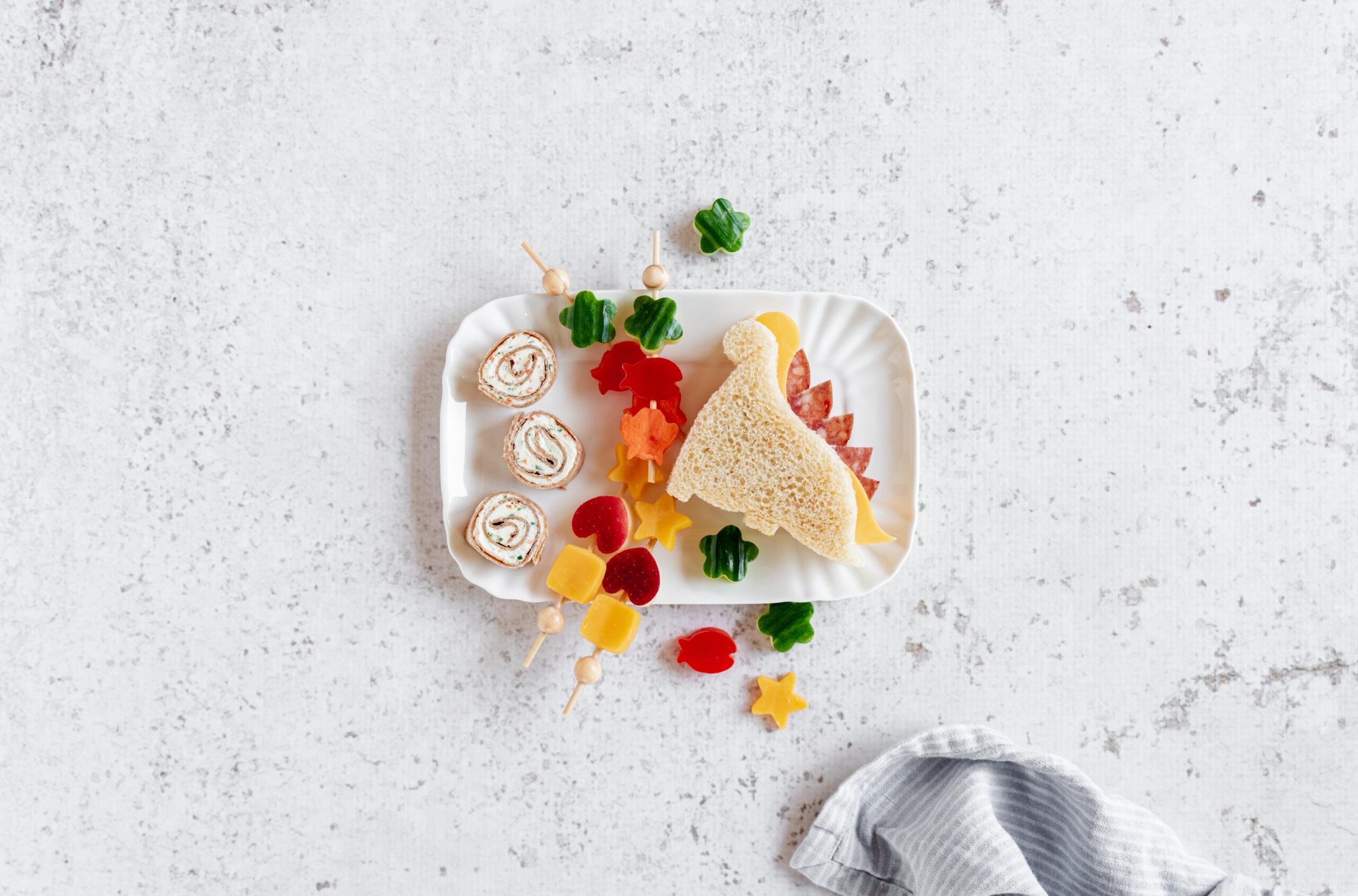
    Sandwiches
    • 1-2 slices sandwich bread
    • 1 slice cheddar cheese
    • 5 pepperoni slices
    Vegetable Sticks
    • 1 small cucumber
    • 1 small red bell pepper
    • 1 medium carrot
    Pinwheels
    • 1 whole wheat flour tortilla 8" round
    • ¼ cup softened cream cheese plain or flavored
    Fruit and Cheese Sticks
    • 1 red apple
    • 2 cheddar cheese slices ¼" thick

    Method
     

    Sandwiches
    1. Using a cookie cutter, cut out two bread shapes for the sandwich using one or two slices of bread depending on the size and shape of the cookie cutter.
    2. Assemble sandwich by layering the pepperoni and cheese between the slices of bread.
    Vegetable Sticks
    1. Slice vegetables into ¼ inch thick slices. Use various shaped cutters to cut out shapes.
    2. Thread veggies onto blunt end toothpicks to create mini veggie skewers. Alternatively, place veggie cut outs into small cups and arrange in bento box.
    Pinwheels
    1. Spread cream cheese onto the tortilla and roll up. Chill in the refrigerator for 30 minutes then slice into ½" thick wheels.
    Fruit and Cheese Sticks
    1. Slice apple into ¼ inch thick slices. Use various shaped cutters to cut out different shapes.
    2. Cut shapes out of the cheese slices.
    3. Thread fruit and cheese onto blunt end toothpicks to create mini fruit and cheese skewers. Alternatively, place cut outs into small cups and arrange in bento box.
  • Get ready for virus season

    Get ready for virus season

    Get ready for virus season

    Helping your kids through infections

    In the wake of a surge of respiratory infections, parents are looking ahead with some trepidation and wondering how we can best support our kids. Dr. Caroline Meyer, a naturopathic doctor with a passion for pediatric medicine, shares her strategies for surviving the upcoming virus season.

    Virus basics

    Unlike bacteria, viruses lack their own cellular structure. Viruses are simply strands of genetic material that hijack other cells to drive ongoing replication and spread. Antibiotics are completely ineffective against viruses.

    Antiviral medications do exist for the flu, RSV, and COVID-19 but benefit only those at high risk of complications. For most people, our immune systems are the ones doing the heavy lifting of clearing infection and restoring health. Supporting immune function is the key to coping with viral infections.

    Avoid going viral

    Meyer highlights the importance of healthy habits, mental health, and nutrient testing for infection prevention.

    Sleep

    Sleep has a significant role in immunity. Bedtime screen use disturbs sleep, and poor sleep can lead to more infections. Reinforcing bedtime routines and limiting nighttime access to devices can build immunity.

    Movement

    Movement is the perfect immune system primer. In a study of preschoolers, kids moving less had more frequent and more severe infections. Exercise also improves sleep quality, providing indirect but important immune effects. Get kids (and yourself) out and moving daily.

    Diet

    Diet matters. Children who eat more fruits and vegetables get fewer infections.

    Mental health

    Emotional distress impairs the immune system and has impacts on food choices, sleep patterns, and exercise. Reach out for support if mental health challenges are present in your family.

    Nutrient deficiencies

    Nutrient deficiencies can undermine immunity. Low stores of iron and zinc can also reduce resistance to infection. Get your kids checked for deficiencies if they’re having recurrent infections.

    When to get help

    While many infections can be managed at home, urgent care is needed in the following cases.

    • difficulty breathing or blue lips
    • dehydration (not urinating, dry lips)
    • pain that doesn’t improve with medication
    • seizure
    • fever in kids 12 weeks or younger

    If your parental spidey-senses tell you that something is not right, take your child to hospital.

    Want more immune support?

    Talk to your health care practitioner about these supplements.

    SupplementBest form for kidsActions
    vitamin Ddropsdeficiencies are associated with higher infection rates and longer/more severe illnesses
    probioticspowder or liquidcan prevent diarrhea associated with antibiotic use; may reduce duration of colds
    zinclozengesreduces number of ear infections and speeds recovery

    Take action against viruses!

    • Wash, wash, wash your hands. Handwash before eating, after bathroom use, and on return from outside your home.
    • Stay home when sick. Keep your cold to yourself!
    • Cover nose and mouth when sneezing. Use a tissue or sleeve.

    Dr. Gillian Flower, ND

    Article Courtesy of Alive Magazine

  • Kids create communities

    Kids create communities

    Kids create communities

    Help them find strength, support, and belonging

    A close community can give our children a sense of belonging, help them develop key social and emotional skills, and provide them with support as they grow. As parents and caregivers, we can help our children find their communities and foster these key connections.

    A sense of belonging

    How important are community connections? “They are fundamental for childhood development,” says mother, former teacher, and registered clinical counselor Laura Henderson. “We need a sense of belonging. We’re not meant to go through life alone.”

    In addition to creating a sense of belonging and helping with development, a strong and supportive community can provide young people with

    • safe people to turn to in times of trouble
    • access to various resources and a network of people for potential future opportunities
    • positive examples of diversity, cultural differences, and new perspectives

    Something you give, something you gain

    Elaine Su is a mother, teacher-librarian, writer, and equity, diversity, and inclusion advisor who also champions the value of community. “You can’t care for that which you don’t care about, so I believe it’s vital that our kids care about the people around them, and vice versa,” Su explains.

    Therefore, community teaches children that they matter, but it also teaches them that they’re not the only ones who matter. “Community is both something you gain from and something you give to,” Su says. “I want children to learn that we all have little and big roles to play in building and sustaining community.”

    How to build a community

    Community for very small children may include close family members and daycare or preschool teachers. Gradually, their communities will grow to include other familiar adults that they interact with often (such as neighbors, librarians, or mail carriers), plus friends. Older children will start to build community connections at school, at extracurricular activities, and perhaps even online.

    According to Henderson, helping our children find and maintain positive relationships can often be as simple as modeling these positive relationships in our everyday lives. “Our children watch and pick up on everything we do, including how we speak to, and connect with, people in our communities—even how we relate to our partners!” she explains.

    Internet communities

    Online connections can be meaningful, joyful, and important for young people: a child interested in a niche hobby might connect with like-minded kids, for example. The key is staying safe online. Parents can help by staying closely involved, setting rules, teaching their kids about privacy and media literacy, and setting up parental controls.

    Don’t let the kids have all the fun!

    This is the perfect opportunity to foster your own community connections too.

    • Sign up for a course or join a program through your local recreation or cultural center.
    • Take part in community events and celebrations.
    • Attend city hall meetings.
    • Make a weekly coffee date with a friend (or group of friends).
    • Chat with your neighbors.
    • Volunteer with a local nonprofit organization.

    By Leah Payne

    Article Courtesy of Alive Magazine

  • Snack Smarter!

    Snack Smarter!

    Snack Smarter!

    Kid-approved snacks

    Smart snacking can mean the difference between feeling energetic or fatigued. Plus, proper snacking can help deliver the nutrients children need to properly develop, both physically and mentally. When your household is craving something sweet or savory to tide everyone over to the next meal, these make-ahead wee-eats will earn you the Snack Master crown!

    Pesto Dip Pepper Poppers

    Sweet baby peppers serve as a nutritious delivery method for this pesto-like dip. You can also spread the dip into celery crevices.
    Servings: 6
    Course: Appetizer, Snack

    Ingredients
      

    • 1 ½ cups cooked or canned navy beans
    • ½ cup soft tofu
    • 1 cup fresh basil
    • 2 tablespoons olive oil
    • Juice of ½ lemon
    • 1 garlic clove chopped
    • ½ teaspoon salt
    • 12 mini bell peppers

    Method
     

    1. In food processor container, place beans, tofu, basil, olive oil, lemon juice, garlic, and salt and blend until smooth.
    2. Slice off tops of bell peppers and remove seeds inside with either a small knife or your finger. Using small spoon, stuff peppers with dip.
    3. Enjoy!

    PB&J Ice Cream Bars

    This riff on everyone’s favorite childhood sandwich is a delicious snack on a sultry summer day.
    Servings: 6
    Course: Dessert

    Ingredients
      

    • 3 large frozen bananas cut into chunks
    • 1 cup raspberries
    • cup peanut butter
    • 1 teaspoon vanilla extract
    • teaspoon salt
    • cup unsalted roasted peanuts

    Method
     

    1. Line 9 x 5 in (23 x 13 cm) loaf pan with parchment paper large enough so there is a 1 in (2.5 cm) overhang.
    2. In food processor container, place banana; turn machine on and let it run until banana is reduced to the size of small pebbles. Scrape down sides of bowl; add raspberries, peanut butter, vanilla, and salt; continue blending until creamy. Be careful not to over blend to the point where bananas begin to melt. Pulse in peanuts.
    3. Place banana mixture in pan and spread out into an even layer. If desired, sprinkle some additional peanuts on top. Place in freezer until frozen solid, at least 4 hours.
    4. Using parchment paper overhang, lift frozen block out of pan and, using serrated knife, carefully slice into 8 bars. Store in airtight container in freezer for up to 1 month.
    5. Enjoy!

    Sweet Potato Mini Egg Cakes

    These mini-sized egg cakes offer up a savory way to work more protein and vegetables into snack time. Serve at room temperature or warm in the microwave.
    Servings: 6
    Course: Breakfast, Snack

    Ingredients
      

    • 1 tablespoon grapeseed oil or avocado oil
    • 1 cup diced yellow onion
    • ½ teaspoon salt divided
    • 2 cups grated sweet potato
    • 2 garlic cloves minced
    • 6 large eggs
    • ¼ cup milk
    • 1 large red bell pepper chopped
    • ½ cup grated parmesean or gruyere cheese
    • 2 teaspoon fresh thyme
    • ¼ teaspoon black pepper

    Method
     

    1. Preheat oven to 375 F (190 C).
    2. In large skillet over medium, heat oil. Add onion and 1/4 tsp (1 mL) salt; cook for 5 minutes, or until softened. Add sweet potato and garlic; heat just until potato is tender, about 2 minutes.
    3. In large bowl, whisk together eggs and milk. Stir in red bell pepper, cheese, thyme, remaining 1/4 tsp (1 mL) salt, and black pepper. Stir in cooked vegetables. Divide among 16 mini-sized greased muffin cups. Bake until egg cakes are set, about 15 minutes. Let cool for a couple of minutes before unmoulding.
    4. Enjoy!

    Recipes Provided by Alive Magazine

  • Don’t Let Flu Season SCARE You!

    Don’t Let Flu Season SCARE You!

    Don’t Let Flu Season SCARE You

    Boiron is here to help!

    ‘Tis the season to keep your medicine cabinet stocked with products that help you and your family feel well and stay healthy. Thankfully, Boiron’s homeopathic medicines do just the trick! Made with natural, non-drowsy ingredients, you will feel the relief day and night with multi-symptom and targeted solutions for the whole family. Want to know more information about some of their cold and flu relief products? Keep reading – and who knows, you might just find additional tips from Boiron themself!

    Wherever You Go, Take Oscillo!

    Oscillococcinum® (also known as Oscillo) works best when taken at the first sign of flu-like symptoms, such as fatigue, headache, body aches, chills and fever.

    For everyone ages 2 & up, non-drowsy Oscillococcinum® has been shown in clinical studies to help reduce both the duration and the severity of flu-like symptoms.


    They Have Kid-Friendly Options Too!

    Multi-symptom formulas help target more than just your runny nose or cough! Their Chestal® line is available in easy on-the-go meltaway pellets and sweet-tasting syrups.


    Medicine Cabinet Must Haves

    Their ThroatCalm®, ColdCalm® and SinusCalm® products are specifically designed to help relieve specific symptoms at the onset, established and resolution stages of the common cold.

    BOO!

    Don’t be scared, you found Boiron’s additional tips to help keep you healthy this cold & flu season.

    Photo Courtesy of Boiron’s Instagram
    Photo Courtesy of Boiron’s Instagram

    For more information about Boiron and their products, please visit: https://www.boironusa.com/

    *Claims based on traditional homeopathic practice, not accepted medical evidence. Not FDA evaluated.

  • 6 Easy Breakfast & Lunch Ideas thanks to Christine Waltermyer!

    6 Easy Breakfast & Lunch Ideas thanks to Christine Waltermyer!

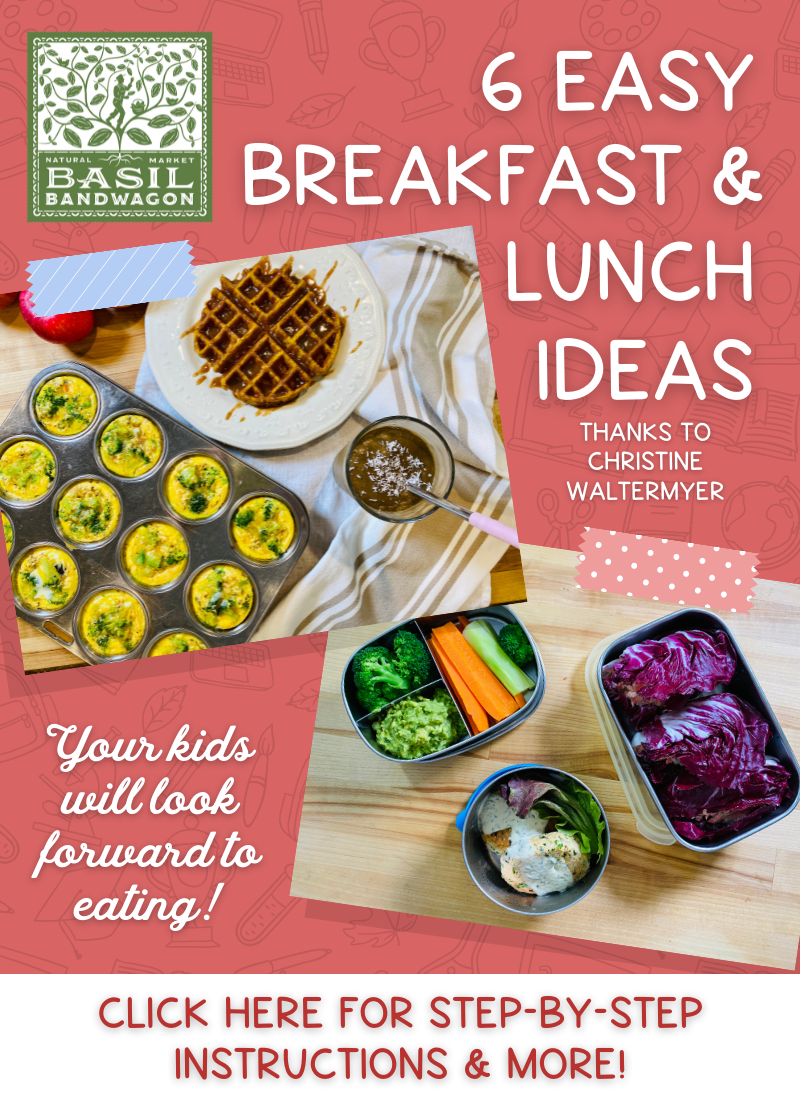
    6 Easy Breakfast & Lunch Ideas

    thanks to Christine Waltermyer

    Christine Waltermyer is a local and renowned Wellness Chef, private chef to celebrities, published cookbook author and founder of the Natural Kitchen Cooking School, which offers an online Plant-Based Cooking Program. She also loves shopping at Basil Bandwagon! Visit naturalkitchenschool.com to subscribe to her email newsletter for new recipes, tips, and FREE access to the Power of Veggies mini-course!


    We’re more than halfway through the first half of this school year! 🤓 What better time to switch up your breakfast and lunch routines. Christine Waltermyer and the Natural Kitchen Cooking School have whipped up 6 easy recipes for us – 3 before-school breakfasts to keep them full until lunch 🧇 & 3 school lunch ideas that your kids will look forward to eating! 🥗

    Easy Before-School Breakfast Ideas

    Carob Smoothie

    Course Breakfast
    Keyword breakfast, easy, smoothie
    Servings 1

    Ingredients

    • ¼ cup shredded coconut
    • 1 cup water
    • 1 ripe avocado pitted and peeled
    • ¼ cup cooked pumpkin puree
    • dash sea salt
    • 1 heaping tablespoon carob or cacao powder
    • teaspoon vanilla powder
    • stevia or honey to taste

    Instructions

    • Place the shredded coconut and water into a blender. Blend on high for a few minutes, scraping down the sides as needed. Strain through a nut milk bag if desired.
    • In the blender, place the milk and all remaining ingredients. Puree until smooth.
    • Optional: Add a scoop of your favorite protein powder or some walnuts to add protein to this smoothie.
    • Enjoy!

    Carrot Spice Waffles with Maple Almond Butter

    Course Breakfast
    Keyword breakfast, easy, waffles
    Servings 2

    Ingredients

    • ¾ cup almond flour
    • 2 tablespoons coconut flour
    • ½ teaspoon sea salt
    • 1 teaspoon baking powder
    • ½ teaspoon vanilla powder
    • ½ teaspoon pumpkin pie spice or ground cinnamon
    • 2 tablespoons Lakanto monk fruit sweetener with erythritol
    • ½ cup unsweetened almond milk
    • ¼ cup avocado oil or melted coconut oil optional
    • 2 eggs
    • ½ cup shredded carrot

    Maple Almond Butter Topping:

    • ¼ cup almond butter
    • ¼ cup maple syrup

    Instructions

    • In a large bowl, combine the almond flour, coconut flour, sea salt, baking powder, vanilla powder, pumpkin pie spice, and monk fruit sweetener. Whisk to blend together.
    • Add the almond milk and optional avocado oil if using. In a small bowl, beat the eggs, then add them to the almond flour mixture. Stir well. Add the shredded carrot and fold in gently.
    • Preheat the waffle iron. Just before adding the batter, lightly brush with a silicone brush or spray the waffle iron with a little avocado oil or coconut oil. Using a spoon or measuring cup, quickly add half of the batter (about 1 cup). Spread it evenly over the waffle iron, then close it.
    • If you have the kind of waffle iron you can flip, cook for about 2 to 3 minutes on one side, then flip it. Cook for an additional 2 ½ minutes on the other side. If you have a regular waffle iron that does not flip, just cook for 4 to 5 minutes.
    • Carefully open the waffle iron. Let the cooked waffle cool slightly before removing. Repeat with remaining batter.
    • To make the maple almond butter topping: In a small bowl, mix together the almond butter and maple syrup. Serve the waffles warm, spread with the maple almond butter.
    • Enjoy!

    Egg Muffin Cups

    Course Breakfast
    Keyword breakfast, eggs, muffins
    Servings 12 cups

    Ingredients

    • cup diced red onion
    • water or cooking oil of your choice
    • sea salt
    • cup carrot finely diced
    • 10 large eggs
    • 1 teaspoon prepared dijon mustard
    • ½ teaspoon salt
    • a few pinches freshly ground black pepper
    • coconut oil or avocado oil for the muffin tin
    • 1 cup cooked broccoli florets

    Instructions

    • Heat a medium size cast iron skillet or other skillet of your choice over medium heat. Add the red onion, a small splash of water and a pinch of the sea salt. Cook for a few minutes, until they start to soften. Add the carrots, and another pinch of sea salt and splash of water. Cook for another few minutes, or until all vegetables are tender.
    • Crack all of the eggs into a large bowl. Beat the eggs. Add the Dijon mustard, sea salt and black pepper. Stir again.
    • Preheat the oven to 350 degrees F.
    • Prepare your muffin tin by generously greasing each muffin cup with some coconut oil or avocado oil. Add a spoonful of the cooked red onion-carrot mixture to each cup, evenly distributing the veggies among the 12 muffin cups.
    • Pour some of the egg mixture into each muffin cup, dividing equally. Bake for 25 minutes or until the tops are set and no longer wet. Cool for 15 minutes. Use a knife around the edges to release the egg muffin cups from the muffin tin.
    • Enjoy!

    Notes

    Store in the refrigerator for up to 5 days.

    School Lunch Ideas

    Salmon Patties with Dill Sauce

    Course Lunch, Main Course
    Keyword Kids, lunch, patties, salmon

    Ingredients

    • 15 ounces canned wild-caught salmon (or cooked fresh salmon)
    • 2 eggs
    • cup almond flour
    • 2 scallions thinly sliced
    • ¼ cup minced parsley
    • ½ teaspoon sea salt (+ more for sprinkling on the finished patties)
    • a few grinds of freshly cracked black pepper
    • 2 tablespoons avocado oil or coconut oil for frying

    For the Dill Sauce:

    • ½ cup avocado mayonnaise
    • 1 teaspoon dijon mustard
    • 1 tablespoon fresh dill finely chopped
    • 2 teaspoons lemon juice

    Instructions

    • Drain the canned salmon and place in a large bowl.
    • Add the eggs, almond flour, scallions, parsley, sea salt and pepper. Mix well, cover and refrigerate for 15 minutes.
    • Form the salmon mixture into 7 or so patties.
    • Heat a large skillet over medium heat. Add the avocado or coconut oil, and quickly add the salmon patties. Depending on the size of your skillet, you can add all of them or just 4 patties at a time.
    • Cook for about 4 or 5 minutes on one side. Using a spatula, carefully turn each patty. Fry for another few minutes on the other side.
    • To make the dill sauce: In a small bowl, combine all of the dill sauce ingredients. Stir well. Serve the salmon patties warm, drizzled with the dill sauce.
    • Enjoy!

    Salmon Salad with Lettuce Cups

    Course Lunch, Main Course
    Keyword Kids, lunch, salad, salmon

    Ingredients

    • 8 ounces frozen wild salmon thawed
    • sea salt & pepper
    • 1 tablespoon avocado oil or coconut oil
    • 2 tablespoons celery minced
    • 1 tablespoon onion minced
    • 2 teaspoons lemon juice
    • 2 teaspoons fresh dill finely chopped
    • cup avocado mayonnaise
    • To Serve: butter lettuce, radicchio

    Instructions

    • Pat the salmon dry using a paper towel. Sprinkle with sea salt and pepper.
    • Heat a skillet over medium heat. Add the avocado oil, then quickly add the salmon, flesh side-down. Cook uncovered for 4 to 5 minutes. Use a spatula to turn the salmon. Cook for three more minutes on the other side.
    • Once the salmon has cooled to the touch, remove any bones. You can also remove the skin and gray-colored fat if desired. Using a fork, flake the salmon apart. Place the prepared salmon in a large bowl.
    • Add the celery, onion, lemon juice, sea salt and pepper to taste, fresh dill and mayonnaise. Stir to combine and adjust seasoning to taste.
    • Fill radicchio or butter lettuce leaves with a generous spoonful of the salmon salad per leaf.
    • Enjoy!

    Broccoli & Carrots with Homemade Guacamole

    Course Lunch, Snack
    Keyword guacamole, Kids, lunch, snack, vegetables
    Servings 2

    Ingredients

    • 1 cup carrot sticks or flat planks
    • 1 cup broccoli – a combination of broccoli florets & peeled stems sliced
    • sea salt
    • 1 avocado pitted
    • 2 teaspoons fresh cilantro chopped
    • ½ teaspoon sea salt or to taste
    • black pepper to taste
    • 1 tablespoon chopped onion
    • 1 teaspoon fresh lime juice or more to taste

    Instructions

    • In a medium saucepan, bring a few inches of lightly salted water to a boil over medium high heat. Keep a strainer or colander nearby, with a plate underneath. Drop the broccoli florets and peeled stems into the water. Cook for a few minutes.
    • Remove the broccoli with a slotted spoon. Place them in the strainer to cool.
    • Bring the water back to a boil, then drop in the carrot planks. Cook for a few minutes. Remove the carrot planks with a slotted spoon. Place them in the strainer to cool.
    • Make the guacamole: In a large bowl, mash the avocados. Add the sea salt and black pepper to taste. Add the lime juice, cilantro, chopped onion and lime juice. Stir well.
    • Serve the cooled vegetables and guacamole, or pack them into a portioned lunch container as a snack on the go.
    • Enjoy!

    Thank you to Christine Waltermyer and the Natural Kitchen Cooking School for working with us to help promote healthy, nutritious meals and products that are affordable, full of nutrients, and simple to make at home!

  • RECAP: New Product Thursday 2/27/2020

    RECAP: New Product Thursday 2/27/2020

    Check out our NEW products this week!

    Bluebonnet: Intimate Essentials Line (Maca, For Him, For Her, LJ100) & Apple Cider Vinegar Capsules
    Gabriella’s Kitchen Hemp Bowls: Fabulous Farro & Tuscan Style Veg, Chunky Chickpea & Squash, and Loaded Lentil & Mushroom
    Basil Bandwagon Natural Market: Elderberry Syrup (larger size), Melatonin 10mg, & Berberine
    Everyone Products: Hand Soap, Foaming Hand Soap, Kids Foaming Wash, and Essential Oil Roll-Ons (Uplift, Revive, Focus, Relax, Calm, & Sleep)
    Mestemacher Protein Bread: Almond, Carrot, & Walnut
    Rhythm Cauliflower Bites: Buffalo Ranch, Sea Salt, & White Cheddar
    Valley Shepherd Creamery: Black Truffle Goat Cheese, Sheep Yogurt (Strawberry, Vanilla, & Plain), & Vat Cultured Butter
    Whole Life Pet: Pure Chicken Breast Cat Treats
    Wholesun Wellness: Lions Mane, Real Energy, Deep Immune Health, Deep Digestive Health, Reishi, Turkey Tail, Cordyceps, Chaga, Shiitake, & Maitake