Tag: lambertville

  • 5 Brain “Washing” Tips

    5 Brain “Washing” Tips


    5 Brain “Washing” Tips

    Keep a clear head


    While we pay close attention to our body’s detox systems and work to support them through lifestyle choices, how many of us are thinking of detoxing our brains too? Here are some detox tips to help you keep a clear head.

    Your brain’s cleanup team

    It’s only been in the past few years that researchers have begun to understand how the brain keeps itself clean. Named to acknowledge the role of glial cells in the process, the “glymphatic system” relies on cerebrospinal fluid (CSF) filling spaces next to smaller blood vessels leading to the brain.

    The CSF interchanges with the fluid between brain cells, also known as interstitial fluid. Waste is then carried away, including tau proteins and amyloid-beta plaques associated with Alzheimer’s disease.

    Because neural cells are highly sensitive to their environment, waste products of neural metabolism must be promptly and efficiently removed from the interstitial space. The custodial team can experience a few obstacles, however.

    For example, animal research shows that daytime release of the hormone norepinephrine (an adrenal hormone that helps you wake up, focus, and store memories) could slow glymphatic clearance. The research also showed an 80 to 90 percent increase in glymphatic clearance during slow-wave sleep compared to awake time. We’re still learning about the glymphatic system, but so far it’s clear that the brain requires sleep.

    As scientists continue to learn more, here are five tips for a clearer brain:

    1. Avoid doomscrolling
      You probably didn’t need research to tell you that spending just a few minutes online can topple your emotional house of cards. If you must go online for news, get the info you need as quickly as possible and move on. Before getting back to your real life, seek out people and stories that leave you feeling optimistic about the state of the world.
    2. Turn down the volume
      Give yourself some daily silence. Evidence is mounting that noise stress impairs cognition, coordination, and eating. Studies also show that excessive noise adds to emotional stress and increases anxiety-like behavior. In your brain, noise stress increases nitric oxide and free-radical production, which can cause damage to brain cells.
    3. Turn out the lights
      Treat yourself to some blue-light blocking glasses to wear in the evening to trick your brain into producing melatonin. The sleep hormone melatonin is suppressed by short-wave (blue) light. This is a good thing during the day, but the blue light from devices and screens that can disrupt the body’s circadian rhythm can also have negative effects on our sleep patterns.
    4. Get grounded
      Research has shown that touching the earth with your feet helps restore your body’s natural electrical status and positively influences your nervous system and brain. Being in nature also improves mental and physical well-being.
    5. Consider supplements
      Ask your health care practitioner before taking any new supplement. The following may help support brain health.
      • Bacopa
      • Lion’s mane mushroom
      • Marine omega-3
      • Milk thistle


    Article courtesy of Alive Magazine, By Lisa Petty, PhD
  • Protect Your Brain

    Protect Your Brain


    Protect Your Brain

    How inflammation is connected to brain health


    The complexities of the human brain can leave both a scientist and layperson a tad awestruck. Research is beginning to elucidate the fascinating repercussions of inflammation in the brain.

    What is inflammation?


    Inflammation is a finely tuned biological defence system designed to maintain the body’s equilibrium. When the body perceives tissue damage or infection, it triggers inflammation as a protective response. A deep wound in the hand, for instance, causes the body to trigger acute inflammation in the area as a first aid measure.

    The redness, swelling, pain, heat, and loss of function in the hand are five hallmark signs and symptoms of acute inflammation. Once the wound is cleaned and stitched, the hand will begin to heal and the body will turn off the inflammation response. But if this defence system becomes dysregulated, inflammation can persist for months to years in the absence of an actual threat.


    Silent mode


    Chronic inflammation can be triggered by recurring episodes of acute inflammation, unresolved infections, exposure to harmful physical or chemical compounds, or genetic susceptibility. Advanced age and deficiencies in antioxidants, vitamins, and minerals can impair the body’s ability to resolve inflammation.

    The sneaky thing about chronic inflammation is that it often goes unnoticed. Low-grade, systemic inflammation can be simmering unnoticed for years, and eventually target the brain and nervous system in a process known as neuroinflammation. Neuroinflammation can cause cognitive changes and increase the risk of diseases such as multiple sclerosis and Alzheimer’s.


    Quell inflammation


    Quelling chronic inflammation can improve your mental well-being today and preserve your cognitive function in the years to come.

    Eat well


    The Western diet has been associated with intestinal hyperpermeability and low-grade systemic inflammation. Enjoy foods rich in flavanols (berries), healthy fats (fish), and whole grains.


    Consider supplements


    Always check with your health care practitioner before taking a new supplement. The following supplements may help reduce inflammation or support brain health:

    • fish oil
    • zinc
    • magnesium
    • resveratrol
    • curcumin
    • vitamin C
    • vitamin D
    • vitamin E
    • selenium


    Choose anti-inflammatory foods, like the following:

    FoodAnti-inflammatory effects
    cacaohas been shown to have an anti-inflammatory effect
    fishare rich in omega-3 fatty acids—a higher intake is associated with lower levels of the inflammatory marker C-reactive protein (CRP)
    green teapolyphenols in green and black tea are associated with a reduction in CRP
    berriesantioxidants and polyphenols may protect against inflammation
    olive oilmitigates pro-inflammatory markers tumor necrosis factor (TNF) and interleukin-6 (IL-6)
    tomatoesregular consumption of tomato juice, rich in the antioxidant lycopene, has been shown to reduce inflammation among overweight women
    broccoli sproutscompound has been shown to attenuate obesity-related inflammation
    whole grainsconsumed regularly, have been shown to reduce systemic low-grade inflammation
    beanshave been shown to reduce low-grade inflammation among those with cardiometabolic diseases
    avocadoconsumed once per day, is associated with a decrease in CRP
    mushroomsrich in anti-inflammatory polysaccharides, which may be helpful in diseases related to inflammation

    Article courtesy of Alive Magazine, By Dr. Cassie Irwin, ND

  • From the Garden to the Dinner Table

    From the Garden to the Dinner Table


    From the Garden to the Dinner Table

    Simple & spectacular summer recipes

    When it comes to cooking with sun-ripened garden crops, it’s best to keep it simple and let the flavor of your main ingredients shine. Garden-harvested foods are at their peak ripeness and will have more nutrients and flavor than store-bought fruits or vegetables that would have had to be picked early for market.


    Pea, Basil, and Feta Dip

    This dip can be whipped up in a flash and goes perfectly with any array of garden-fresh veggies available this time of year.

    Ingredients:

    8 oz (225 g) feta cheese

    1/4 cup (60 mL) plain Greek yogurt

    1/2 cup (125 mL) blanched fresh green peas, plus extra for garnish

    1/4 cup (60 mL) raw walnuts

    3/4 cup (180 mL) packed basil leaves and tender stems, plus extra for garnish

    1 garlic clove, peeled

    1 lemon

    2 Tbsp (30 mL) olive oil

    Salt, to taste

    Instructions:

    In food processor fitted with steel blade attachment, pulse together feta cheese and yogurt, scraping down bowl as needed, until smooth and creamy. Transfer to large plate, spreading over bottom of plate to cover. Set aside and wipe out food processor.

    To food processor, add peas, walnuts, basil, garlic, zest of half a lemon, juice of whole lemon, and olive oil. Blend, scraping down sides of bowl as needed, until textured but creamy and well combined. Taste and adjust seasoning with salt. Dollop basil mixture over whipped feta, running a knife lightly through mixture to marble the two dips together. Garnish with extra peas and basil leaves, if desired. Serve alongside crackers and vegetables for dipping.

    Serves 6

    Each serving contains: 215 calories; 14 g protein; 15 g total fat (7 g sat. fat); 7 g total carbohydrates (6 g sugars, 1 g fiber); 456 mg sodium


    Carrot, Raspberry, and Olive Tartine

    This lovely open-faced sandwich is at once earthy, bright, briny, and fruity.

    Ingredients:

    3/4 cup (180 mL) fresh raspberries, divided

    3 Tbsp (45 mL) olive oil

    1 large lemon

    1/3 lb (150 g) carrots, about 3 medium carrots

    1/2 cup (125 mL) coarsely chopped flat-leaf parsley leaves

    1/4 cup (60 mL) roughly chopped Castelvetrano olives

    1/3 cup (80 mL) ricotta cheese

    3 slices whole grain country loaf, toasted

    Instructions:

    In medium bowl, smash 1/4 cup (60 mL) raspberries with a fork. Add olive oil and zest and juice of lemon. Whisk until well combined and set aside.

    On large holes of box grater, grate carrots and add to dressing mixture. Gently fold in chopped parsley and olives.

    Divide ricotta cheese, spreading evenly over slices of bread. Generously heap on carrot mixture and top with fresh raspberries. Drizzle over any remaining vinaigrette left in bowl and serve.

    Serves 3

    Each serving contains: 332 calories; 7 g protein; 19 g total fat (4 g sat. fat); 33 g total carbohydrates (5 g sugars, 6 g fiber); 373 mg sodium


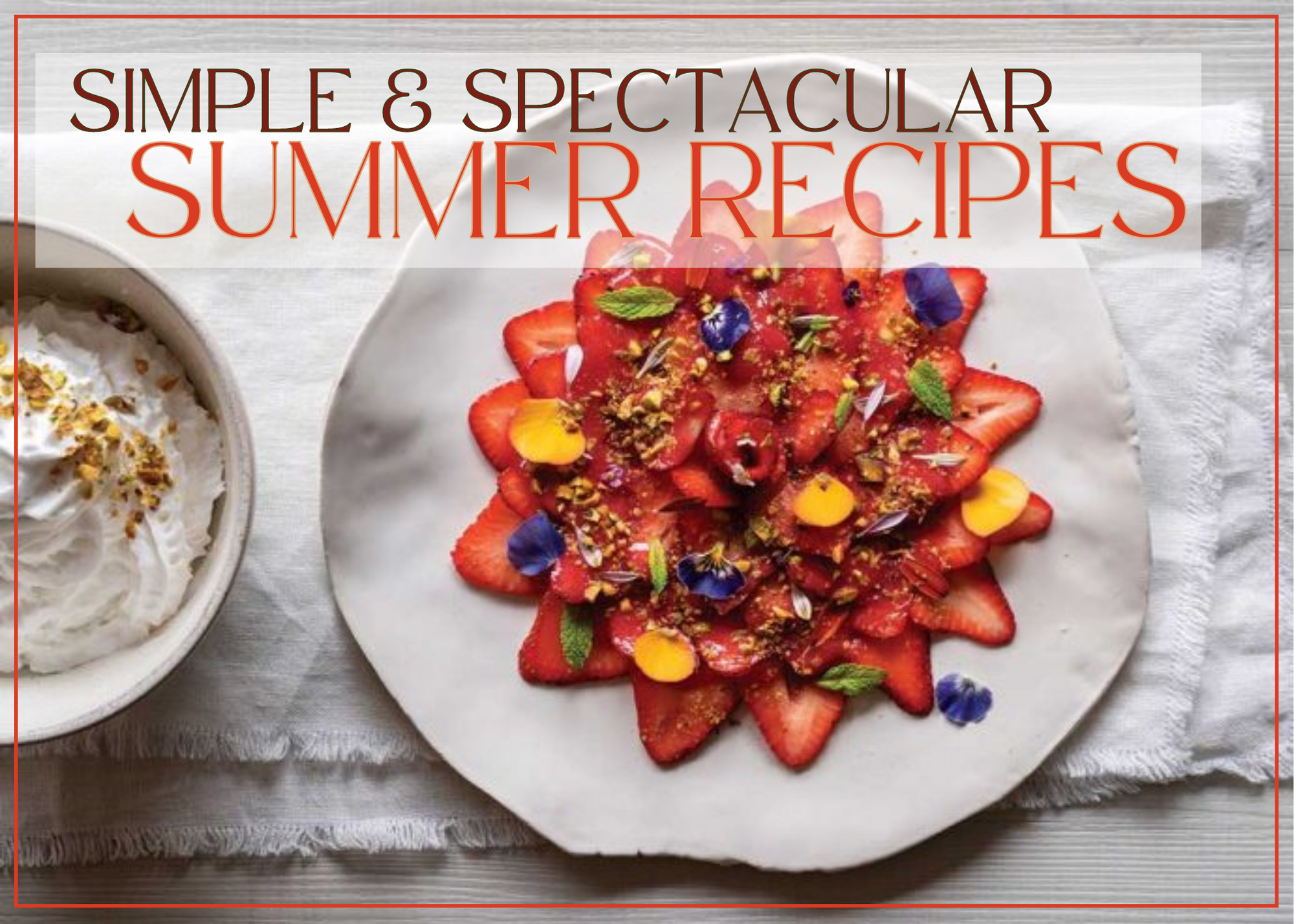
    Strawberry Carpaccio

    This simple dessert celebrates the glory that is the summer strawberry.

    Ingredients:

    3/4 lb (340 g) strawberries, washed and hulled, divided

    1/2 tsp (2 mL) orange blossom water

    1 to 2 tsp (5 to 10 mL) honey (optional)

    1/4 cup (60 mL) toasted pistachios, roughly chopped

    2 Tbsp (30 mL) mint leaves

    Edible flower petals, for garnish

    Instructions:

    In blender, add 1/4 lb (113 g) strawberries and orange blossom water. Blend until smooth. Taste and adjust sweetness with honey, if desired. Into small bowl, strain strawberry puree through fine-mesh sieve. Discard any pulp left in sieve and set aside.

    Cut remaining strawberries into thin slices, lengthwise. Arrange them over chilled serving plates in a single layer, slightly overlapping. Drizzle with a few spoonfuls of strawberry puree before garnishing with a scattering of pistachios, mint leaves, and edible flower petals.

    Serves 2

    Each serving contains: 108 calories; 3 g protein; 4 g total fat (0 g sat. fat); 19 g total carbohydrates (12 g sugars, 5 g fiber); 44 mg sodium


    Article courtesy of Alive Magazine

  • Cacao Superfood Trail Bars

    Cacao Superfood Trail Bars


    Cacao Superfood Trail Bars

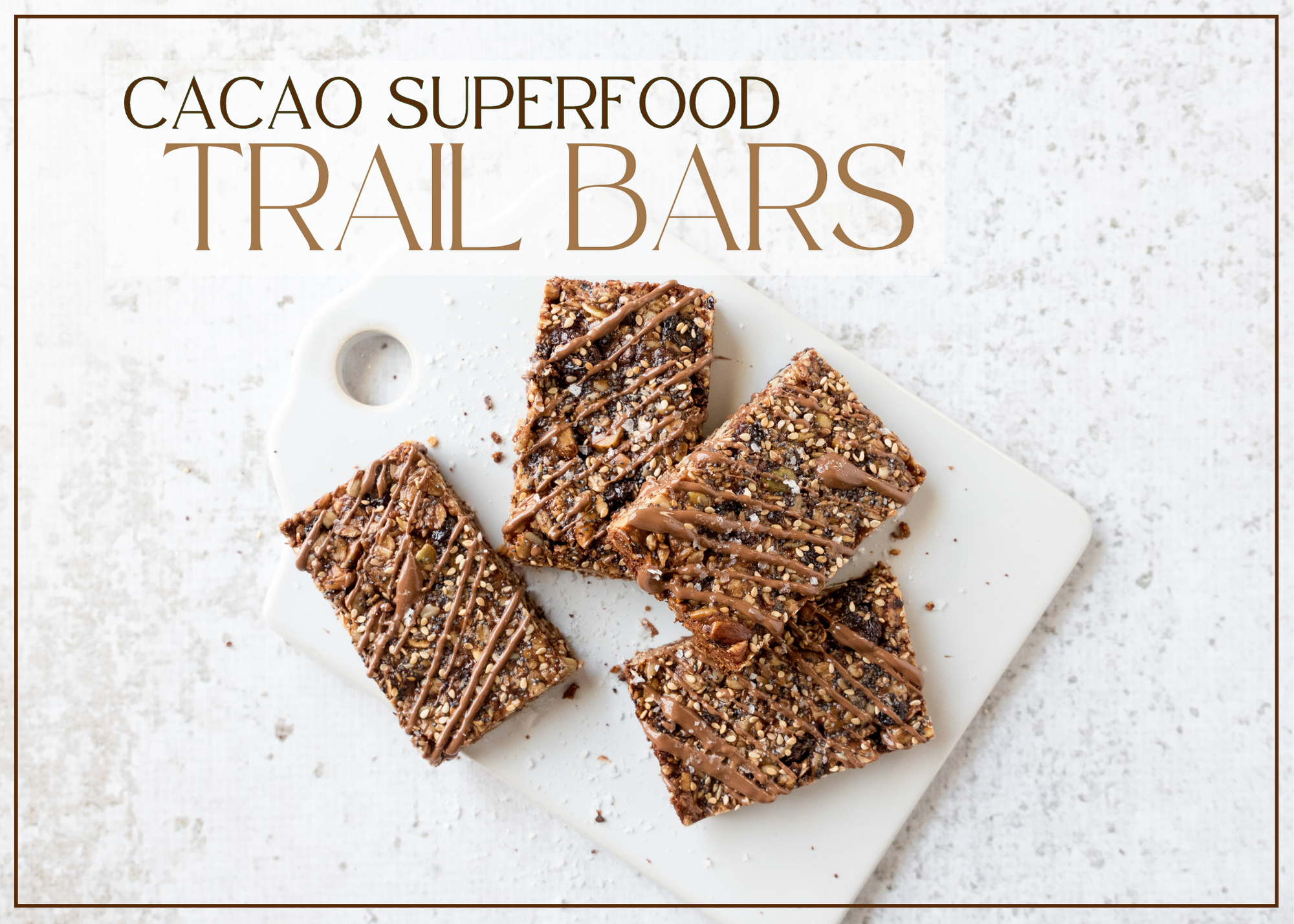
    Whether you’re hitting the trails or embarking on a summer road trip, having a convenient and nutritious snack on hand is a must!

    That’s where these Cacao Superfood Trail Bars come in.

    Packed with all the goodness of trail mix, including nuts, seeds, and dried fruit, these bars are the perfect fuel for any adventure. Plus, they’re super easy to make and can be customized to your liking. One of the best things about these bars is their portability. Simply pack them in a reusable container or wrap them in wax paper for a grab-and-go snack that’s perfect for hiking, camping, or any outdoor activity. And because they’re made with whole ingredients like oats, nuts, and dried fruit, you’ll feel satisfied and energized for hours.

    Not only are these bars convenient and nutritious, but they’re also affordable. Making your own snacks at home is a great way to save money, and these bars can be made in large batches to last you through multiple adventures. You can also get most of the ingredients from the bulk section, so you can avoid the single-use packaging that normally comes with granola bars.

    Next time you’re gearing up for an outdoor adventure, don’t forget to make a batch of Cacao Superfood Trail Bars!


    Cacao Superfood Trail Bars

    If you're looking for a delicious and portable snack that's perfect for your summer adventures, look no further than these Cacao Superfood Trail Bars!
    Servings: 8

    Ingredients
      

    • 1 Cup gluten-free rolled oats
    • 1/2 Cup dry roasted almonds roughly chopped
    • 1/3 Cup cacao nibs
    • 1/4 Cup dry roasted pecans roughly chopped
    • 1/2 Cup roasted sunflower seeds
    • 1/4 Cup hemp seeds
    • 1/4 Cup sesame seeds
    • 1/4 Cup currants
    • 1/2 Cup raw honey or syrup sweetener of choice
    • 1/3 Cup creamy peanut or almond butter
    • 2 Ounces dark chocolate chopped
    • 1/4 Teaspoon olive oil

    Method
     

    1. Preheat oven to 350° F. In a medium-size mixing bowl, combine oats, nuts, cacao nibs, sunflower seeds, hemp seeds, sesame seeds, and currants.
    2. Heat peanut or almond butter and honey or syrup sweetener in a small saucepan and stir until very warm. Pour over oat mixture and stir until well blended and everything is coated.
    3. Line a 9'x9" baking pan with parchment paper. Add mixture to the pan and with wet hands, press mixture flat.
    4. Bake for 15 minutes. Allow bars to cool before removing from the pan. Cut into eight bars and place on a cooling rack.
    5. Fill a medium-sized pot with two inches of water and place a heatproof metal or glass mixing bowl on top. You want it to fit snugly without touching the water. Bring the water to a simmer over medium-low heat. Add the chocolate and olive oil to the bowl and stir until melted and combined.
    6. Drizzle the chocolate over the cooled bars.
    7. Enjoy!

    Recipe Courtesy of INFRA

  • Mango Relish Dogs

    Mango Relish Dogs


    Mango Relish Dogs

    The combination of sweet and savory flavors from the mango chutney paired with the smoky and satisfying taste of plant-based hot dogs creates a truly delicious and satisfying experience.

    Give a new flavor profile to the folks sitting around your table—whether they be picky kids or adventurous eaters, experienced in plant-based or just experimenting with alternatives. There are many reasons to enjoy plant-based mango chutney hot dogs.

    Looking for another way to spice things up? Customize your mayo with a touch of sriracha and black pepper or lime zest and chopped cilantro.

    Whether it’s for the unique flavor, nutritional benefits, or ethical considerations, these hot dogs are a delicious and satisfying choice for any occasion. Plus, you can have a meal ready to go in less than 20 minutes! You can have more time to enjoy time outside after warming up the grill.


    Mango Relish Dogs

    These are perfect for those who love a little bit of sweetness and tanginess in their hot dogs. Plus, it's vegan and plant-based!
    Servings: 6

    Ingredients
      

    Mango Pickle Relish
    • 1 Cup sweet pickle relish
    • 1/2 Cup mango chutney
    • 1 Teaspoon rice vinegar
    • 1 Teaspoon dry mustard powder
    • 1 Teaspoon chili flakes
    • 1/2 Teaspoon curry powder
    Hot Dogs
    • 6 plant-based classic smoked hot dogs
    • 6 hot dog buns
    • 1/2 small red onion julienned
    • 1/2 Cup plant-based mayo

    Method
     

    1. Combine all relish ingredients in a bowl and adjust seasoning to taste.
    2. Butterfly hot dogs and sear each side in a hot skillet with olive oil until golden crisp, approximately three minutes per side. Alternatively, grill hot dogs.
    3. To assemble, place hot dogs in buns then fill with relish. Drizzle on mayo and garnish with red onion.

    Recipe Courtesy of INFRA

  • What makes people healthy?

    What makes people healthy?

    What makes people healthy?

    Exploring the social determinants of health


    Why are some people healthier than others? Yes, your genes play a big role. But there are other determinants of health that have nothing to do with your genetic makeup. Where you live, how you’re educated, and other societal influences are all important factors in our health. Find out more.


    Two hypothetical kids

    There are significant implications for advantage and disadvantage related to social determinants of health. Look at socioeconomic position, for example: a child born into a higher tax bracket is much more likely to be in a higher tax bracket when they’re older.

    Let’s take a look at the life course trajectories of two hypothetical kids. Joe is born into an affluent neighborhood, while John lives in subsidized housing with his six siblings in a single parent home.

    Joe’s parents are able to afford organic produce, put Joe into private school, and drive him to and from his various sporting activities throughout his childhood. As a result, Joe gets an excellent education that allows him to attend university, secure a job in a top tax bracket, and enjoy an active social life.

    John’s father works double shifts to make ends meet, but the only apartment he can afford has a black mold problem that has given John respiratory issues for years. John’s school is oversubscribed, and he’s falling behind because of sick days. To support the family, John takes a construction job and eventually drops out of high school. Years of manual labor and poor self-care have taken their toll on John, and he lives with chronic pain.

    You can imagine that two very different states of health and well-being are being experienced by Joe and John in later life. These differences may not necessarily be due to differences in the individuals, but in the broader social and economic circumstances in which they find themselves.

    What next?

    To address systemic issues such as the negative impact of social determinants of health, we must look to addressing modifiable aspects of lifestyle at the individual level and systemic inequities at the population level.

    Your DNA is not your destiny

    Although there are many social determinants of health that you can’t control, focus on the ones that you can control, such as diet, exercise, and social connections.

    • Pack yourself a healthy lunch.
    • Go for an evening walk with your partner.
    • Plan a family gathering.

    When you need nutritional help, chat with your health care practitioner. They may recommend certain supplements, such as the following:

    Nutritional helperBenefits
    vitamin Cimmune health, wound healing, bone health, antioxidant protection
    vitamin Dbone health maintenance, decreased risk of cancer mortality, mood stabilization
    vitamin B6red blood cell formation, brain processes and development, immune function, and steroid hormone activity
    vitamin B12brain support, red blood cell genesis support, energy booster
    magnesiummuscle repair, neuromuscular facilitation, blood sugar control
    zincsleep support, digestive support, reproductive organ support

    Article courtesy of Alive Magazine

  • Refreshing Watermelon Popsicles

    Refreshing Watermelon Popsicles


    On a hot summer day, nothing beats the sweet, juicy goodness of watermelon.

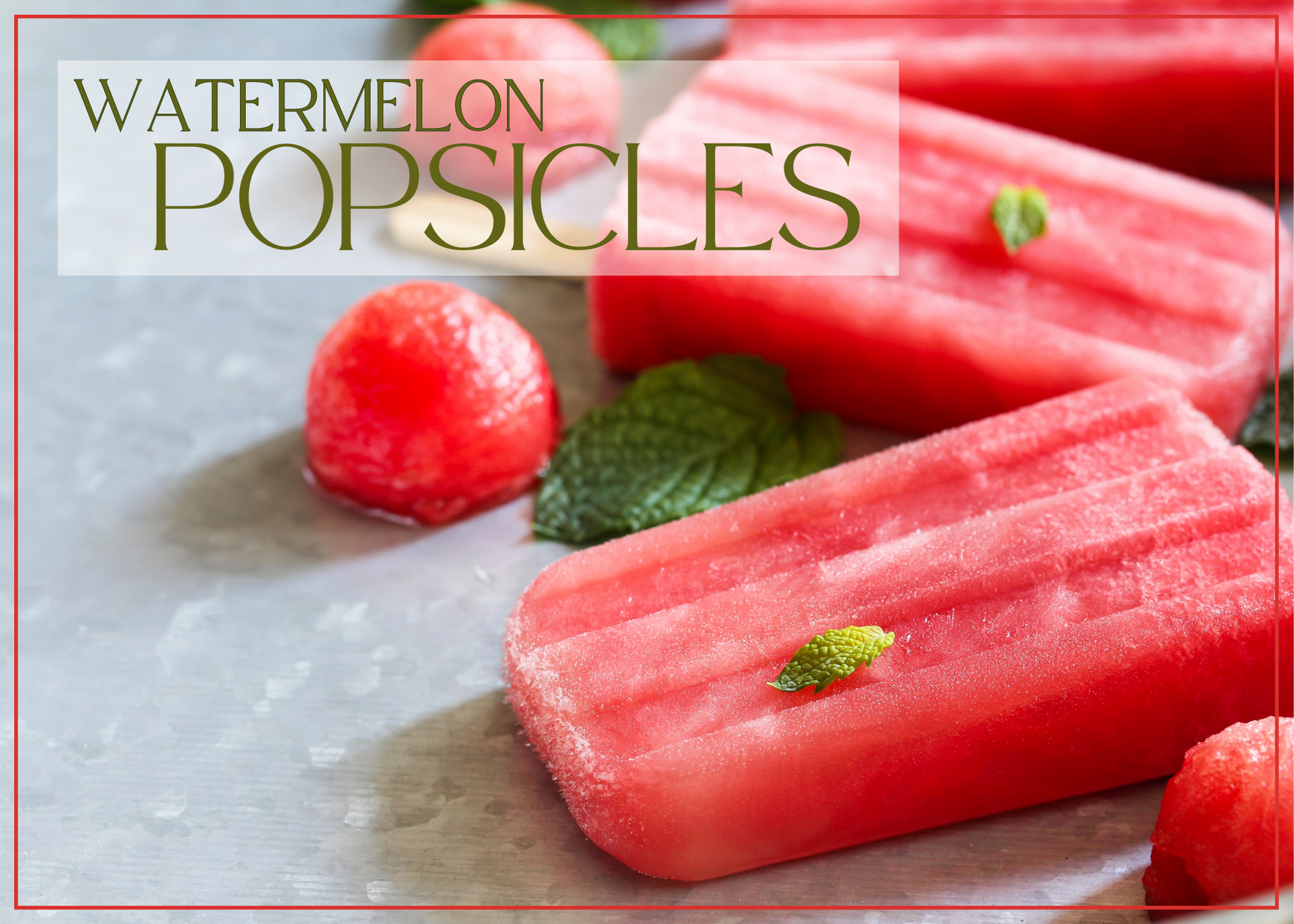
    Imagine that refreshing flavor transformed into a delightful frozen treat: watermelon popsicles! These vibrant and mouthwatering popsicles are incredibly easy to make and will keep you cool all summer long.

    Bursting with natural sweetness and hydration, they are perfect for both kids and adults alike.

    So let’s dive into this simple yet delicious recipe and get ready to savor the essence of summer in every bite.


    Nicole Catenaro

    Refreshing Watermelon Popsicles

    These delightful watermelon popsicles are a cool and healthy way to beat the summer heat. With just a few simple steps, you can enjoy the refreshing taste of watermelon popsicles! So gather your ingredients, get creative with your molds, and let the sweet flavors of this frozen treat transport you to a sunny paradise. Enjoy!

    Ingredients
      

    • 4 cups Fresh watermelon chunks (seedless)
    • 1 tablespoon Freshly squeezed lime juice
    • 1-2 tablespoons Honey or sweetener of choice (optional, adjust to taste)

    Method
     

    1. Start by cutting the watermelon into small chunks, removing any seeds if necessary. Ensure the watermelon is ripe and juicy for the best flavor.
    2. If you're using wooden popsicle sticks, soak them in water for about 10 minutes to prevent them from splintering during freezing.
    3. Place the watermelon chunks into a blender or food processor. Blend until you achieve a smooth and liquid consistency.
    4. Add the freshly squeezed lime juice to the watermelon puree. Lime juice enhances the overall flavor and adds a tangy kick.
    5. Taste the watermelon mixture and assess its sweetness. Depending on the natural sweetness of the watermelon, you may choose to add a little honey or sweetener of choice.
    6. If desired, gradually add the sweetener of your choice, blending again until well combined. Remember, watermelons are already sweet, so add sweeteners sparingly to maintain a balanced taste.
    7. Carefully pour the watermelon mixture into popsicle molds or small paper cups, leaving a little space at the top for expansion during freezing.
    8. Place the popsicles in the freezer and let them set for about 30 minutes to an hour, or until they become partially frozen.
    9. Once partially frozen, insert the popsicle sticks deeper into the molds or cups to secure them in place. This will help the sticks stand straight when the popsicles are fully frozen.
    10. Return the popsicles to the freezer and allow them to freeze completely for about 4-6 hours or overnight.
    11. When ready to enjoy, remove the popsicles from the molds or peel away the paper cups. If the popsicles don't easily release from the molds, run the bottom of the molds under warm water for a few seconds to loosen them.
    12. Serve the watermelon popsicles immediately and relish in the refreshing taste of summer. They are perfect for poolside lounging, backyard barbecues, or simply as a guilt-free dessert.

  • CBD Limeade

    CBD Limeade


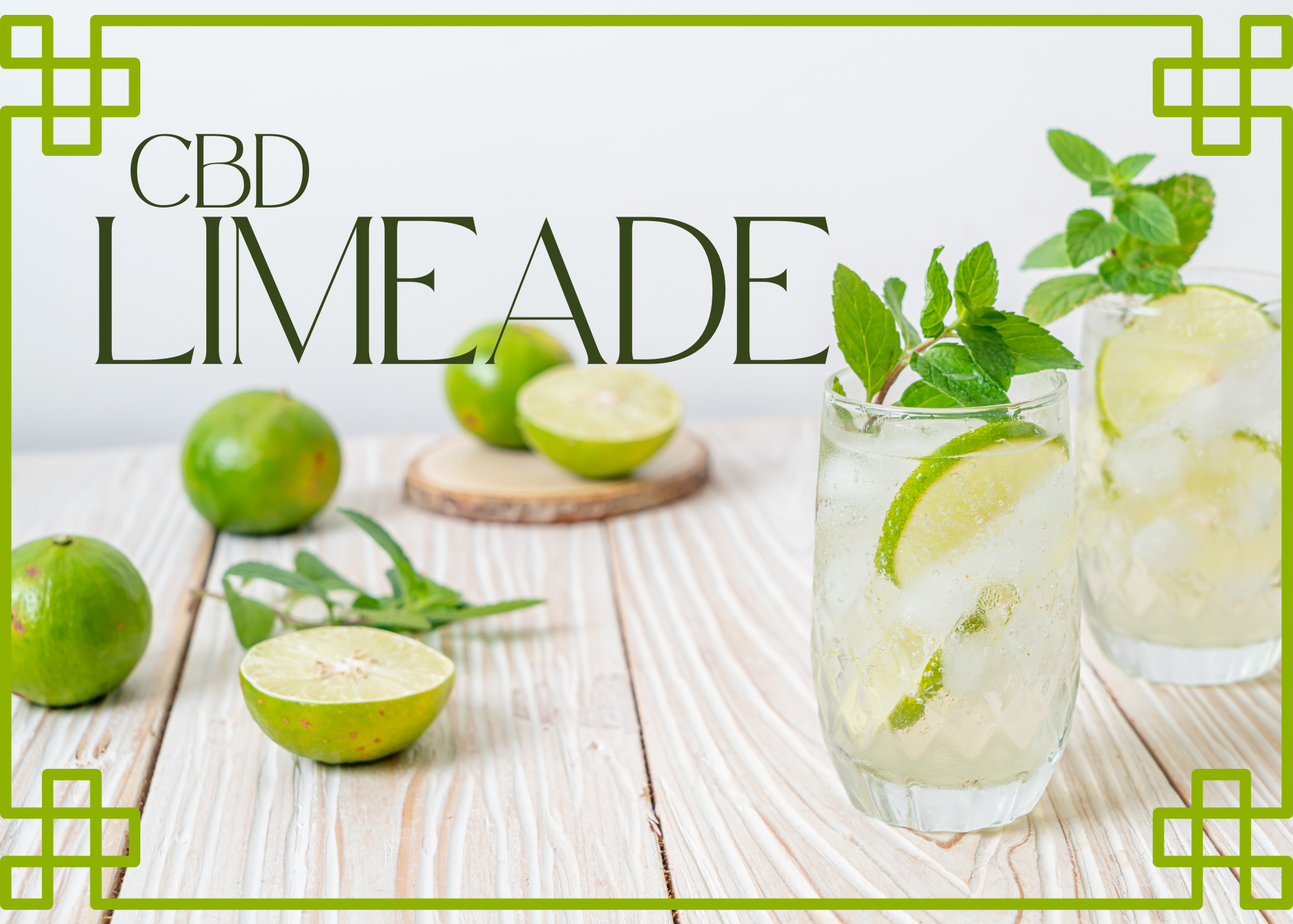
    Looking for a delicious and refreshing way to incorporate CBD into your summer routine? Look no further than CBD-infused limeade! This delightful beverage combines the tangy flavors of fresh limes with the potential relaxation benefits of CBD oil or CBD-infused tincture. Whether you’re hosting a summer gathering or simply want a relaxing drink to enjoy on a sunny day, this CBD limeade recipe is a fantastic choice.


    CBD Limeade

    Remember, it's crucial to follow the dosage guidelines provided with your CBD product and consult with a healthcare professional if you have any concerns or questions about using CBD. So, take a sip of this delightful beverage and savor the unique combination of zesty lime flavors and the potential benefits of CBD. Cheers to a refreshing and relaxing experience!
    Prep Time 20 minutes
    Servings: 4

    Ingredients
      

    • 6 Limes
    • 1/2 cup Fresh Lime Juice
    • 4 cups Water
    • 1/2 cup Honey adjust according to taste
    • CBD oil or CBD-infused tincture as per your desired dosage
    • Ice cubes
    • Lime slices for garnish
    • Fresh mint leaves for garnish

    Method
     

    1. Begin by squeezing the juice from 4 to 6 limes, collecting the juice in a pitcher.
    2. Add 4 cups of water to the pitcher along with the fresh lime juice.
    3. Stir in 1/2 cup of honey until it completely dissolves.
    4. Add your preferred dosage of CBD oil or CBD-infused tincture to the pitcher. Start with a small amount and gradually increase until you reach your desired dosage. Make sure to follow the instructions on the CBD product regarding dosage.
    5. Stir the limeade mixture well to ensure that the CBD is evenly distributed throughout.
    6. Take a moment to taste the limeade and adjust the flavor if needed. You can add more lime juice, water, or honey to achieve the desired taste profile.
    7. Fill glasses with ice cubes and pour the CBD-infused limeade over the ice, allowing it to chill.
    8. For an eye-catching presentation, garnish each glass with a lime slice and, if you like, a few fresh mint leaves.
    9. Enjoy!

  • What’s the deal with BCAAs?

    What’s the deal with BCAAs?

    What’s the deal with BCAAs?

    Breaking down the basics of branched-chain amino acids.


    BCAA supplements may be the talk of your gym, but are they all they’re cracked up to be? Before you make any decisions, go back to the BCAA basics. Here are 10 things you should know about BCAAs.


    1. Needed by your body

    Getting their name from their “branched” molecular structure, there are three types of BCAAs: leucine, isoleucine, and valine. This trio makes up three of your body’s nine essential amino acids—called so because your body needs them to function, but can’t produce them on its own.

    2. Found in your food 

    BCAAs are found in protein-rich plant and animal sources. In addition to beef, chicken, fish, eggs, and milk, you can get BCAAs from corn, soy, beans, chickpeas, lentils, whole wheat, brown rice, almonds, cashews, and pumpkin seeds.

    3. Available in supplements 

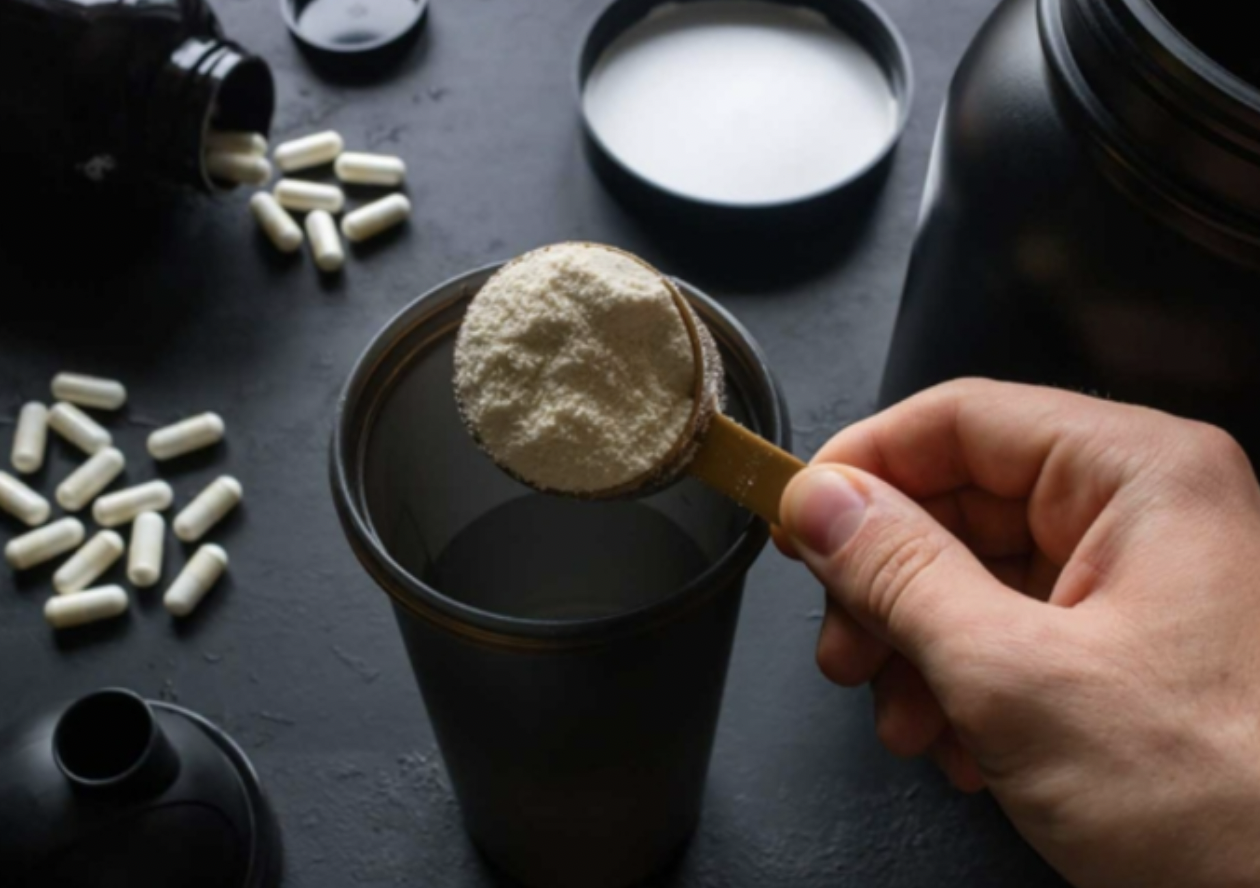
    If you are eating a balanced diet—especially one with adequate protein—you’re likely already getting enough BCAAs. Still, there are reasons that you may want to add a BCAA supplement to your routine. If you and your health care practitioner determine that a BCAA supplement could provide needed support, you’ll find them most commonly in the form of powders, tablets, or capsules.

    4. Ease muscle soreness 

    BCAAs can aid in reducing the muscle soreness you may feel after a workout.  Known as delayed-onset muscle soreness (DOMS), you may know the feeling best two or three days after a particularly hard workout.  Research has shown that BCAAs, especially when ingested prior to working out, can help suppress DOMS.

    5. Help you exercise longer 

    Studies have found that BCAAs can help enhance athletic performance by reducing exercise fatigue. The reason for this benefit has been linked to BCAAs’ ability to lower serotonin levels and interfere with tryptophan absorption—two chemicals that work to make you feel more tired during your workout.

    6. Protect your liver 

    Studies have shown that BCAAs help protect the liver of those who eat high-fat diets by providing support to gut flora that prevent fat accumulation in the liver. Further, BCAA supplementation has been shown to provide beneficial effects in those with advanced cirrhosis, a severe liver disease.

    7. Prevent muscle wasting 

    Muscle wasting is the reduction in skeletal muscle, which is brought on by a number of causes including disuse. BCAAs can help slow this muscle-wasting process. Separate studies have shown that BCAAs can provide beneficial effects to slow or prevent muscle wasting in a range of cases, including those involving cancer, advanced liver disease, and kidney damage.

    8. Support your well-being

    Adequate intake of BCAAs has been linked to a reduced risk of anxiety and depression, and an improved stress response.  In fact, one study showed that subjects with severe depression showed decreased BCAAs in their systems, suggesting that a low level of BCAAs could play a role in depression symptoms and low energy metabolism.


    Article courtesy of Alive Magazine by Laura Newton

  • Exercise Outside

    Exercise Outside

    Exercise Outside

    Sea-to-sky adventures for men’s physical and mental health


    Do you enjoy exercising outdoors? Compared to indoor exercise, numerous studies have shown that guys who turn the great outdoors into their workout studio are more motivated to exercise, push themselves harder, and feel more grounded and restored. Get started with al fresco adventures.


    Embark on a unique exercise adventure

    “Nothing improves my mood and perspective more quickly than a scramble up a peak on the Great Divide Trail,” says personal trainer Chad Alexander. “When I’m stuck in my head or worrying about something, I remember how alive I felt on that mountaintop cliff.”

    Here are some thrilling activity ideas to inspire your next adventure.

    • Travel from sea to sea to sea on foot by hiking or bikepacking (which is mountain biking fused with backpacking and camping).
    • Go rock climbing.

    Consider scuba diving (or shipwreck diving!).

    • Soar to new heights with kitesurfing (where a strong gust of wind launches you sky-high off a cresting ocean wave or propels you quickly across a smooth lake).
    • Try out hang-gliding or paragliding.

    Forge some friendly competition

    For something a little closer to home, unique team sports can get you moving in the fresh air.

    Ultimate frisbee and disc golf have recently exploded in popularity. The number of local disc golf courses, for example, has jumped by 300 percent in the last few years. Other off-the-beaten-path outdoor sports include archery, handball, and even Harry Potter-inspired quidditch.

    Team sports are some of the best ways for men to build long-term, positive mental health outcomes. “Outdoor activities have changed my life in terms of mental health,” says Robert Puharich, a high school teacher. “Having teammates gives me a sense of community.”

    Rise to the challenge: 3 benefits to pushing your limits

    Testosterone

    Friendly competition in team sports has been shown to raise your testosterone levels. This hormone is key for strength, endurance, and your sex life.

    Motivation

    Once you’ve beaten your competition, or even beaten your own self-doubt, you’ll feel more motivated and driven to tackle life’s challenges.

    Self-confidence

    Pushing yourself on a grueling adventure forces you to tap into your own confidence, self-trust, and skills. Over time, psychologists say, this builds self-efficacy and resilience.

    The best time to exercise outdoors

    With longer daylight hours, your window of opportunity is wide open. The best time to head out and get your sweat on depends on your goals.

    Mornings

    If you’re trying to lose weight, morning exercise on an empty stomach may reduce your food cravings later, and it also leads to burning more fat.

    Midday

    Exercise reduces stress and boosts your energy, making it the perfect escape in the middle of your workday.

    Afternoons

    Your muscles contract more effectively when you’re warmed up. For peak physical strength and endurance, your body’s natural temperature peaks in the afternoon.

    Article courtesy of Alive Magazine by Joshua Duvauchelle