Category: Guest Post

  • Seafood Stew

    Seafood Stew

    Seafood Stew


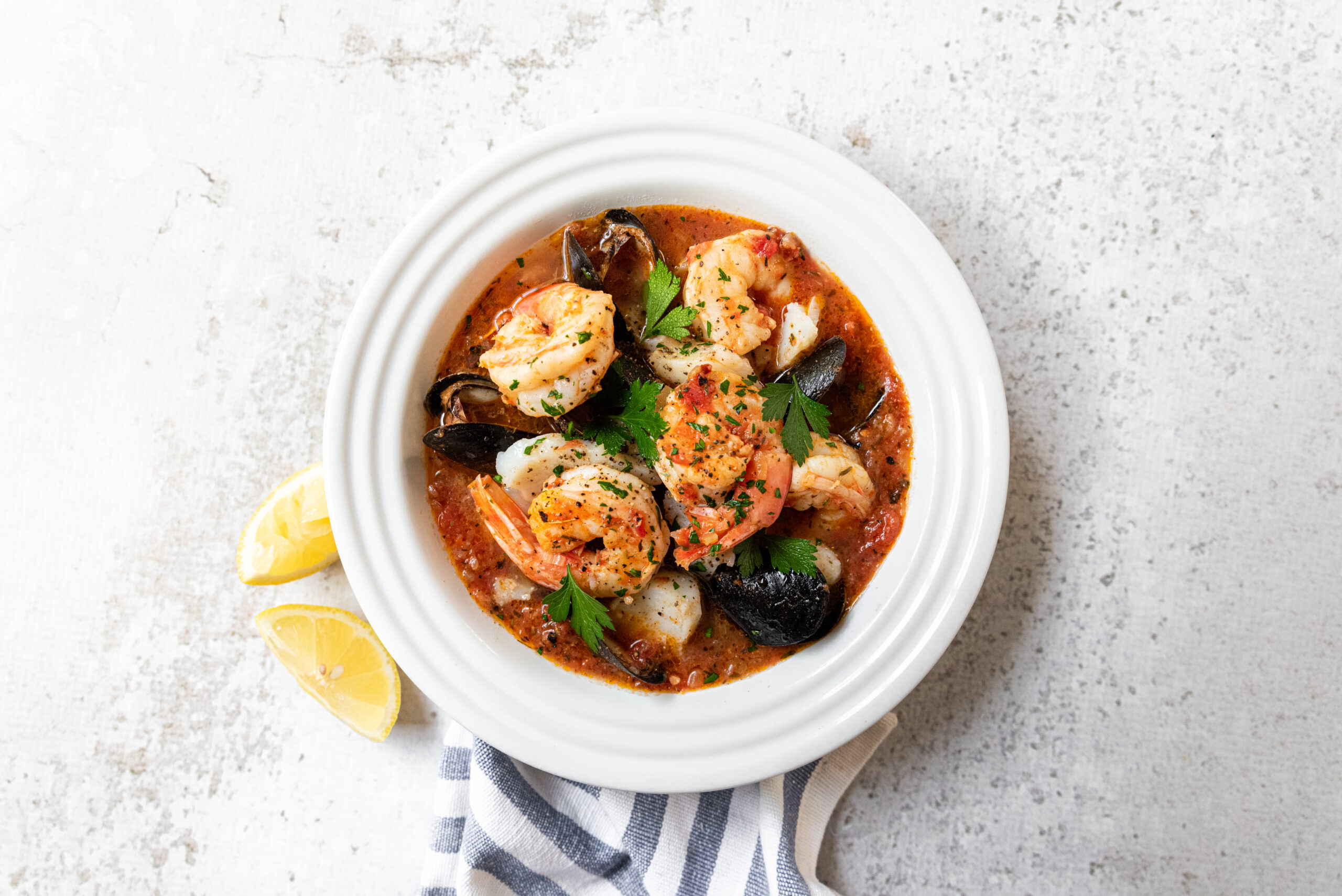
    The feast of seven fishes is a traditional Italian American meal served on Christmas Eve. As the name implies, it’s seven courses featuring fish and seafood options. This seafood stew might not be as grand as the feast of seven fishes, but it certainly satisfies a craving for a rich, warming seafood meal. Plus, it can be on the table in just over half an hour. Now that’s something worth celebrating!

    Seafood Stew

    Servings 4

    Ingredients

    • 3 tbsp olive oil
    • ½ cup minced shallots diced
    • 4 large garlic cloves minced
    • ½ cup dry white wine or vermouth
    • 28 oz fire-roasted crushed tomatoes
    • 4 cups chicken or vegetable broth
    • 2 tsp dried thyme
    • 1 tsp crushed chili flakes
    • 1 tsp sea salt
    • ½ tsp coarse ground black pepper
    • ¾ pound mussels scrubbed
    • 1 pound shrimp peeled and deveined (tails on)
    • 1 pound cod fillet cubed
    • 1 lemon wedged (optional)
    • crusty bread

    Instructions

    • Heat olive oil in a large stock pot over medium heat. Add shallots and sauté for 2–3 minutes or until translucent. Stir in garlic and cook for 30 seconds.
    • Deglaze pan with white wine then add tomatoes, broth, thyme, chili flakes, sea salt, and pepper. Bring mixture to a gentle simmer and cook for 5 minutes. Adjust seasoning to taste at this point.
    • Add mussels and shrimp and bring stew back to a gentle simmer. Cook for 1 minute then add cod. Continue to cook until shrimp is opaque, mussels are open (discard unopened ones), and the cod flakes.
    • Serve promptly with crusty bread and lemon wedges, if using.

    Recipe Provided by INFRA

  • Sushi Waffles

    Sushi Waffles

    Sushi Waffles


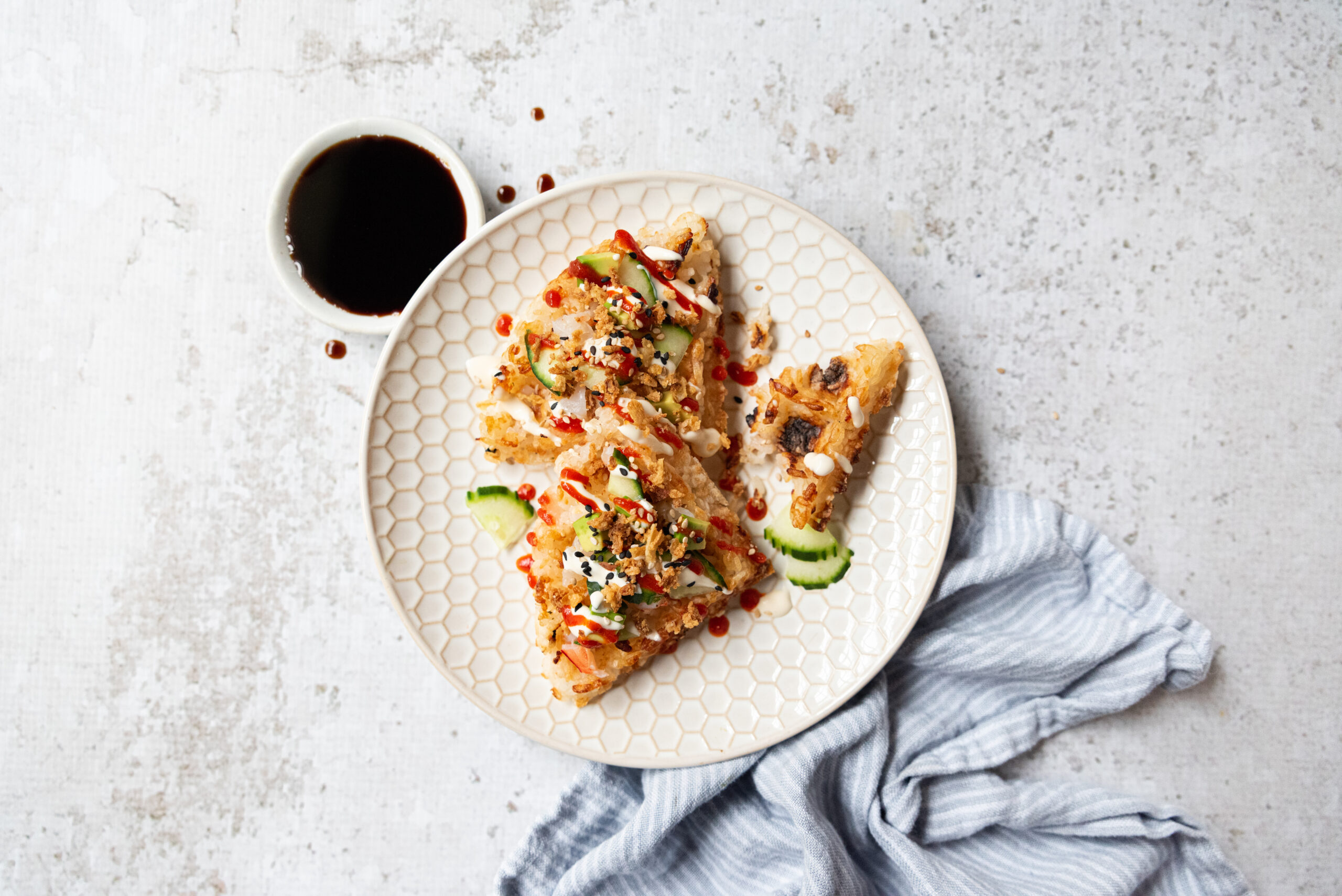
    Rolling sushi is arguably the hardest part of making your own rolls at home. Skip that step and answer the age-old question of “will it waffle”? Using a waffle iron creates an irresistibly crispy base for all your favorite sushi toppings. 

    Sushi Waffles

    Servings 16 portions

    Ingredients

    • 2 cups sushi rice
    • 3 cups water
    • 1 tsp sea salt
    • cup rice wine vinegar
    • 2 tbsp cane sugar
    • 3 tbsp furikake sushi seasoning optional, contains fish

    Toppings

    • 6 oz cooked crab*
    • 1 ½ cups chopped cucumber
    • 1 large ripe avocado chopped
    • ½ cup seasoned mayo
    • ¼ cup sriracha
    • ½ cup crispy fried onions
    • 1 tbsp sesame seeds

    Instructions

    • Place rice, water, and salt in a medium pan and bring to a simmer. Cover and reduce heat to low, cooking for 15–18 minutes. Turn off heat and allow rice to rest for 10 minutes. Place cooked rice on a baking sheet and allow to cool for 3 minutes before seasoning.
    • Stir together rice wine vinegar and cane sugar until dissolved. Pour over rice, sprinkle on furikake (if using), and fold rice to incorporate. Divide rice mixture into 4 even portions. 
    • To make sushi rice waffles, heat a waffle maker to high. Spray with cooking spray and carefully press one rice portion into the bottom iron. Close the waffle maker and allow rice to crisp, approximately 15 minutes or until desired crispness is achieved.
    • Remove sushi waffle from the waffle maker and allow to cool for a few minutes, then top with toppings in the order they’re listed above.

    Notes

    *Substitute cooked, chopped shrimp, or ahi tuna.

    Recipe Provided by INFRA

  • Cranberry Hot Toddy

    Cranberry Hot Toddy

    Cranberry Hot Toddy


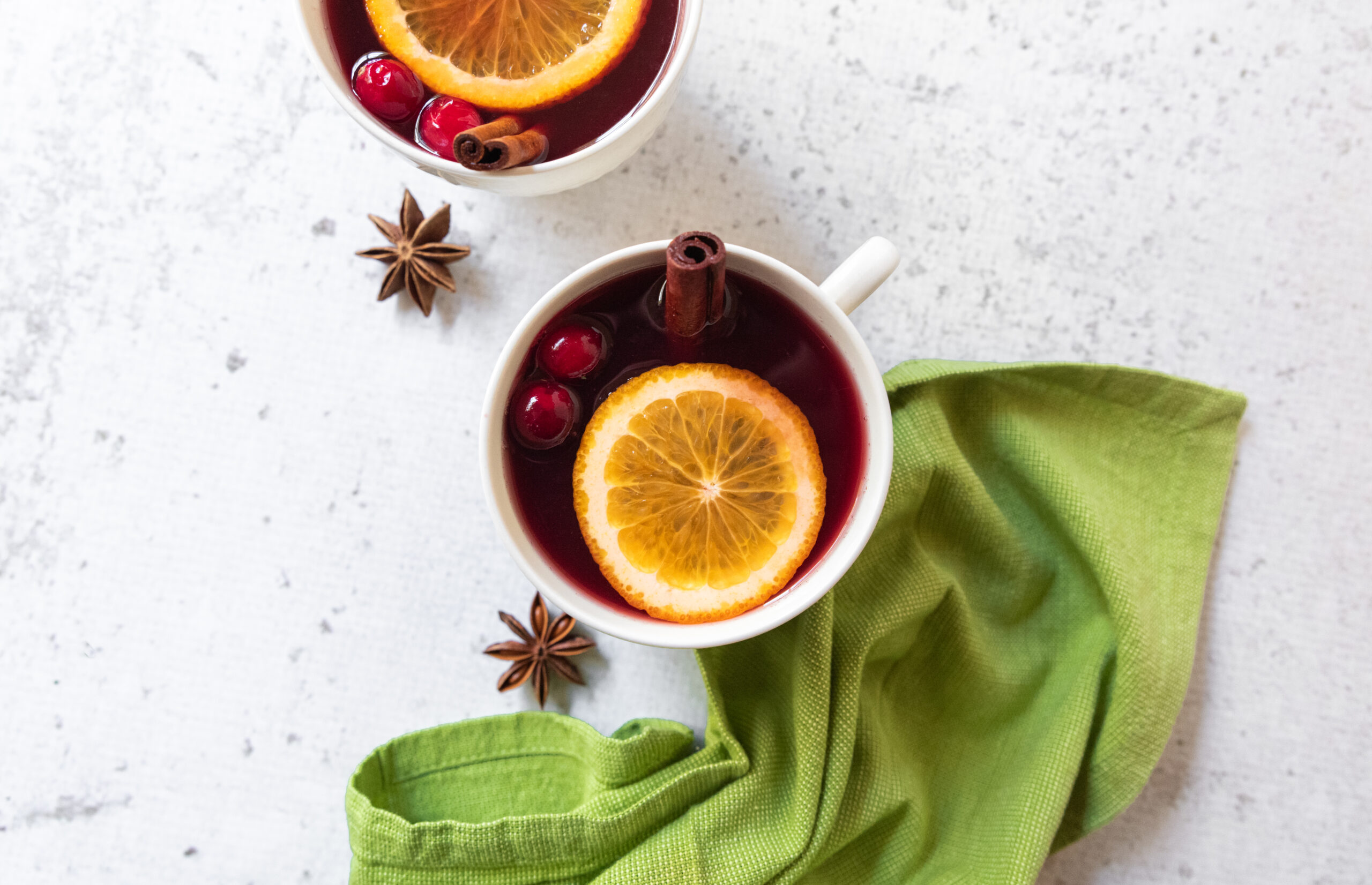
    When you’re looking for a seasonal drink to keep the cold at bay, try this cranberry hot toddy. With a base of warming spices and an optional tipple of whiskey, this toddy will soothe your throat and keep you wassailing all season long!

    Cranberry Hot Toddy

    Servings 1

    Ingredients

    • 3 ¾ cups cranberry juice (unsweetened)
    • 1 ¼ cups water
    • 6 tbsp honey
    • ¼ cup cane sugar
    • 1 orange sliced
    • 3 cinnamon sticks
    • 10 whole cloves
    • 3-4 inches fresh ginger thinly sliced
    • 2 star anise
    • ½ cup Bourbon or Whiskey optional

    Instructions

    • In a quart-size saucepan, add all the ingredients except for the bourbon.
    • Bring mixture to a gentle simmer and cook for 5–10 minutes. Turn off heat and adjust sweetness to taste by adding more cane sugar and/or honey.
    • Carefully strain mixture and add bourbon, if using.
    • Serve in heat proof mugs and garnish with orange slices, cinnamon sticks, and fresh cranberries.

    Notes

    Substitute agave for honey to make vegan.

    Recipe Provided by INFRA

  • How to find meaning this holiday season

    How to find meaning this holiday season


    How to find meaning this holiday season

    Give yourself the gift of depth

    One of the best things about the holidays is having the time to come together and connect. But often, this connection remains surface level. Martin Vera, a leadership and life coach based in London, UK, says that when we reunite with people we don’t see very often, we tend to gravitate toward small talk because it feels safe.

    Small talk has its time and place: research shows that fleeting social interactions with people, even strangers, can boost moods and our faith in humankind. But a night of rotating through a room to recount the same three major events that have happened in your life in the last year can leave you feeling drained, and it doesn’t do much in terms of deepening your social connections.

    What are meaningful conversations?

    Vera compares meaningful conversations to hikes in the forest, where we get to slow down, pay attention to our steps, and take some risks: “Meaningful conversations allow us to see others and feel seen by them, to feel a sense of intimacy, and to show up as ourselves.”

    A meaningful conversation doesn’t need to be intense or serious—rather, it just needs to be a conversation that you find both enjoyable and enriching.

    Engaging in meaningful conversations

    Start engaging in meaningful conversation with the following suggestions.

    • Asking better questions (such as those that start with who, what, when, where, why, and how)
    • Listening mindfully to answers (rather than worrying about what you’re going to say next or what the outcome of the conversation will be)
    • Being willing to share something about yourself

    Drawing healthy boundaries

    Making an effort to go deeper with people around you doesn’t mean that you are obliged to engage with people whose presence you find harmful. These relationships can feel particularly stressful around the holidays, when interactions may be hard to avoid.

    One way to navigate this is by setting healthy boundaries. First, decide what behaviors you are or aren’t willing to put up with. Then, communicate these red lines calmly, clearly, and consistently. You can also consider practicing “loving detachment,” the process of letting go of any need to control a person or a situation.

    Root to rise

    If you can’t, or don’t want to, spend the holidays with family, there are still many other ways to nurture meaningful connections during this time. Think about getting involved with your community: are there any holiday events that you can attend to bring you closer to those around you, or that need volunteers to run smoothly?

    Giving back can be particularly rewarding for people who may be missing or grieving friends or family members, as volunteering can make you feel physically and emotionally healthier.

    By Isabela Vera

    Content Courtesy of Alive Magazine

  • A hearty holiday breakfast

    A hearty holiday breakfast


    A hearty holiday breakfast

    Healthy fuel for the busy season

    Food has always played an important role during celebrations and holidays. While it’s nice to celebrate with food that’s a little more special than your everyday fare, it’s also important that it be healthy to ensure you remain energized and satisfied throughout the morning. The following recipes all fit these criteria and are sure to start your morning off right.

    Dutch Baby Pancake with Cranberry Orange Compote

    This puffed pancake is the perfect start to a holiday morning. Its pillowy sunken middle lends itself to cradle all kinds of toppings, either sweet or savory.
    Servings 5

    Ingredients

    • 1 large navel orange
    • 2 cups fresh or frozen cranberries
    • 3 tbsp maple syrup
    • ¼ cup ginger-flavored kombucha or orange juice
    • 1 tsp vanilla extract divided
    • 2 large eggs
    • cup sprouted spelt flour
    • ¾ cup milk or unsweetened almond milk
    • ¼ tsp salt
    • ½ tsp ground cinnamon
    • 1 tbsp unsalted butter or vegan butter
    • ¾ cup plain Greek yogurt of choice
    • ¼ cup toasted pumpkin seeds or toasted sliced almonds

    Instructions

    • Start by making cranberry orange compote. Finely zest orange rind and set aside. Cut away peel and pith from orange. Working over small bowl, cut between membranes to release orange segments into bowl before setting aside.
    • In small saucepan, place orange zest, cranberries, maple syrup, kombucha or orange juice, and 1/2 tsp vanilla extract. Place over medium heat and cook, stirring often, until cranberries have burst and sauce has thickened to a light jammy consistency, about 5 to 10 minutes. Transfer to heatproof bowl and set aside to cool while making pancake.
    • Place 8 or 9 in cast iron pan on middle rack of cold oven before preheating oven to 450 F.
    • While oven preheats, in blender, combine eggs, spelt flour, milk, salt, cinnamon, and remaining 1/2 tsp vanilla extract until very well combined (it should resemble the consistency of heavy cream). Set aside for at least 10 minutes. If you want to cut down on morning-of prep time, this batter will keep covered in the refrigerator overnight.
    • Carefully remove hot cast iron pan from oven and add butter, swirling around to melt and coat bottom and sides. Pour in batter, transfer pan back to oven, and cook until pancake is puffed and golden, about 15 to 20 minutes. Let pancake rest for a minute in pan before transferring to serving plate.
    • When ready to serve, stir reserved orange segments into cranberry compote. Using kitchen scissors, cut Dutch baby pancake into segments and transfer to serving plates. Top with cranberry orange compote, a dollop of yogurt, and a sprinkle of pumpkin seeds or sliced almonds. Enjoy.

    Gingerbread Overnight Oats with Caramelized Pears

    Gingerbread is a quintessential holiday flavor. Here we showcase it in a make-ahead breakfast that is crowned with warm caramelized pears and toasted nuts.
    Servings 4

    Ingredients

    • 1 cup rolled oats
    • 1 tbsp chia seeds
    • 1 tbsp ground flaxseed
    • 1 tbsp hemp hearts (hemp seeds)
    • ½ tsp ground cinnamon
    • 1 tsp ground ginger
    • ¼ tsp ground cloves
    • ¼ tsp ground allspice
    • 2 tsp blackstrap molasses
    • ½ tsp vanilla extract
    • 3 tbsp maple syrup divided
    • 1 cup unsweetened almond or unsweetened oat milk plus extra to serve
    • 2 pears thickly sliced lengthwise
    • 1 cup yogurt of choice
    • ¼ cup toasted hazelnuts chopped

    Instructions

    • In medium bowl, with wooden spoon, stir together rolled oats, chia seeds, ground flaxseed, hemp hearts, cinnamon, ginger, cloves, and allspice.
    • In medium bowl, whisk together molasses, vanilla extract, 1 Tbsp maple syrup, and milk. Pour over oat mixture and stir until well combined. Transfer to airtight container and refrigerate for at least 6 hours to overnight. Overnight oats may be made up to 2 days ahead.
    • When ready to serve, make caramelized pears. In large frying pan, add pear slices and remaining 2 Tbsp maple syrup and bring to a hard simmer over medium-high heat. Let pears cook and caramelize while flipping pears occasionally, about 4 minutes total. Remove frying pan from heat and set aside.
    • If desired, thin out overnight oats with additional milk to desired consistency. Divide among serving bowls and top with yogurt, caramelized pear slices, and a sprinkle of toasted hazelnuts.

    Raspberry Cardamom Rolls

    Inspired by a classic Swedish treat, these rolls are the perfect breakfast pastry when you’re looking to impress.
    Servings 9

    Ingredients

    • 1 ½ cups finely ground almond butter
    • cup coconut flour
    • 3 tbsp coconut sugar divided
    • 1 ½ tsp baking powder
    • 1 ¼ tsp xanthan gum
    • ½ tsp fine sea salt
    • 5 tbsp unsalted butter or vegan butter at room temperature, divided
    • ¼ cup unsweetened almond milk or unsweetened oat milk
    • 2 tsp vanilla extract divided
    • 2 large eggs
    • 1 tsp ground cinnamon
    • ½ cup frozen raspberries roughly chopped
    • 4 oz cream cheese or vegan cream cheese softened at room temperature
    • 1 tbsp maple syrup
    • 2 tbsp chopped pistachio nuts

    Instructions

    • Preheat oven to 375 F. Line 8 in square baking pan with parchment paper and set aside.
    • In large mixing bowl, whisk together almond flour, coconut flour, 1 Tbsp coconut sugar, baking powder, xanthan gum, and salt until well combined.
    • In small saucepan, melt 3 Tbsp butter over medium heat. Remove saucepan from heat and whisk in almond milk, 1 tsp vanilla extract, and eggs. Make a well in center of dry ingredients and add butter mixture, whisking well until a shaggy and tacky dough forms. Bring dough together with your hands and place on piece of parchment paper measuring at least 12 x 15 in. Let dough rest for 10 minutes.
    • While dough rests, in small bowl, whisk together ground cardamom and remaining 2 Tbsp coconut sugar. Set aside.
    • Place an additional piece of parchment paper overtop dough before rolling out into 9 x 12 in rectangle. Taking care to leave 1/2 in border around edges of dough, dot and spread remaining 2 Tbsp butter over dough and sprinkle with reserved cardamom mixture in even layer. Sprinkle frozen raspberries over cardamom mixture. With the help of the bottom piece of parchment paper, roll up smaller side of dough to create a log. Divide dough into 9 equal pieces and place cut side down in prepared baking pan. Bake in preheated oven until golden brown, about 25 minutes. Let cool in pan for about 10 minutes.
    • While rolls cool, make glaze. In medium bowl, whisk together cream cheese, maple syrup, and remaining 1 tsp vanilla extract until smooth. You can thin glaze to your desired consistency by adding hot water, a teaspoon at a time.
    • When ready to serve, drizzle glaze over cooled raspberry cardamom rolls and sprinkle with chopped pistachios, if desired. Rolls are best eaten the same day they are made.

    By Lawren Moneta

    Content Courtesy of Alive Magazine
  • 3 tips for winter wellness

    3 tips for winter wellness


    3 tips for winter wellness

    Stay healthful when the weather outside is frightful

    The winter blues and holiday stress. Pesky colds and seasonal flus. Eggnog and gingerbread overindulgence. As the weather changes, our health risks change, too. Here’s how to keep your health high when the outdoor temperatures drop.

    1. Lighten up your mental health on cold, dark days

    Approximately 18 percent of us experience mild or severe seasonal affective disorder (SAD). This form of depression is triggered by the lack of sunlight in the winter.

    But feeling a bit blue can also be compounded by other factors, according to psychologist Dr. Bruce L. Thiessen, such as loneliness during the holidays or financial stress when gift shopping. Thiessen recommends three proactive ways to lighten your mood.

    • Get into the sun

    “There’ll be occasional warmer, sunnier days in the forecast,” Thiessen says. “Make the most of each one, planning outdoor activities in advance.”

    • Brighten your home

    Light therapy boxes may help combat SAD. Thiessen also recommends finding ways to brighten your home, such as cheerful paint colors or holiday lights.

    • Jingle around the clock

    “Create a ‘sunshine playlist’ of cheerful songs,” suggests Thiessen. Music helps us cope with stress, depression, and anxiety.

    2. Unwrap better nutrition

    In the winter, studies show that people may eat fewer fresh fruits and veggies, overindulge in unhealthy foods, and crave carbohydrate-rich snacks and meals.

    It’s also known that our circadian rhythms affect hormones such as leptin that stimulate our appetite and hunger cravings, with sunlight (or lack thereof) having a big influence on these rhythms. These dietary changes and lack of sun can create nutritional deficiencies.

    Dr. Yelena Deshko, a naturopathic doctor, recommends focusing on the following supplements in the winter. Remember, always chat with your health care practitioner before taking a new supplement.

    • Vitamin C

    “Your body doesn’t store it and needs constant dietary top-ups,” says Deshko, noting that winter factors such as stress or a cold may increase the amount of vitamin C you need.

    • Vitamin D

    “The vitamin D you stockpiled during summer is often depleted by winter,” she warns. Talk to your health practitioner about your vitamin D levels, and visit your local natural health retailer to choose a supplement that’s right for your needs.

    • B-complex

    “The importance of B vitamins cannot be overstated—they’re involved in virtually all bodily processes and are essential for metabolism, energy, memory, and healthy skin, to name a few,” explains Deshko. “Adding a daily full-spectrum B-complex, specifically around the holidays, may help ensure optimal health.”

    3. String lights without high-strung stress

    The winter season can feel stressful for many reasons, whether it’s uncertainty about the new year, or the chaos of juggling holiday festivities and your family’s schedule. It can also trigger many emotions.

    “Try exercise,” suggests licensed clinical social worker Iris Waichler, MSW, LCSW. It’s one of the most effective—and most recommended—ways to manage stress because it releases feel-good hormones.

    By Joshua Duvauchelle

    Content Courtesy of Alive Magazine

  • 5 great stretches for lower back pain

    5 great stretches for lower back pain


    5 great stretches for lower back pain

    We have you covered

    Stretching those muscles is an important step in recovery. Although your lower back may feel a little tight, these stretches shouldn’t hurt, so stop if they do. It’s also a good idea to check with your doctor before performing this routine. And remember, strengthening your back will help you avoid lower back pain in the future.

    1. Child’s pose

    When you’re in child’s pose, remember to relax all of the muscles in your back.

    Kneel on the floor with your toes together and knees hip-width apart. Lower your chest in between your knees and rest your forehead on the floor. Stretch your arms out in front of you. Stay in this position for five deep breaths.

    2. Cat-camel

    Cat-camel, or cat-cow, is a yoga pose that’s perfect for stretching your lower back. Remember to go at your own pace, and don’t over-arch your back.

    Start on the floor on your hands and knees. As you inhale, pull your stomach in, round your back, and tuck your head into your chest. Exhale as you arch your back and lift your head. Repeat five to ten times.

    3. Knees-to-chest

    This is a simple stretch that can provide considerable relief for lower back muscles.

    Lie on your back with your knees bent and feet on the ground. Bring your knees to your chest. Wrap your arms around your shins and keep your back flat on the floor. Stay in this position for one to two minutes.

    4. Ragdoll fold

    Ragdoll fold, or forward fold, is great for lower back pain.

    Stand with your legs hip-width apart. Bend your knees. Take a deep breath in and bend at your waist so that your chest drapes over your thighs. You can let your hands hang just like a ragdoll or grab your elbows with opposite hands. Hold for 20 seconds. Slowly roll your chest back up using your abdominal muscles.

    5. Seated spinal twist

    Not only does the seated spinal twist help with back pain, but it also improves posture. In this position, make sure you keep your hips level on the ground.

    Sit on the floor with your legs straight in front of you. Take your right foot and place it on the outside of your left leg. Lift your left arm up and wrap it around your right leg. Your left hand should be somewhere alongside your outer right thigh. Hold this twist for 30 to 60 seconds. Repeat on the other side.

    By Gina Kelly

    Content Courtesy of Alive Magazine
  • 6 exercises for carpal tunnel syndrome

    6 exercises for carpal tunnel syndrome


    6 exercises for carpal tunnel syndrome

    These simple movements may provide relief

    Carpal tunnel syndrome can cause pain, numbness, tingling, and weakness in the wrists and hands. The condition is caused by compression of the median nerve in the wrists. Specific exercises may help relieve mild to moderate cases of carpal tunnel syndrome.


    Carpal tunnel exercises:

    • are often used in conjunction with other treatments, like wearing a brace and behavioral changes
    • can help with mild to moderate cases of carpal tunnel syndrome
    • may be recommended after carpal tunnel surgery to help with the rehabilitation process
    • help prevent carpal tunnel syndrome from coming back after you’ve recovered


    1. Gentle shake
      Shaking your hands gently back and forth can provide some relief from the symptoms of carpal tunnel. You may find this particularly useful at night when symptoms may be at their worst.


    1. Prayer stretch
      – Starting with your palms together in front of your chest and just below your chin, slowly lower your hands down to your waistline.
      – Be sure to keep your hands close to your stomach and your palms together.
      – You should be able to feel a gentle stretch in your forearms.
      – Hold the stretch for 15 to 30 seconds.
      – Repeat this exercise 2 to 4 times.


    1. Wrist flexion stretch
      – With a straight elbow and wrist, extend your arm in front of you with your palm facing toward the floor.
      – Bend your wrist until the tips of your fingers point toward the floor.
      – With your other hand, gently bend your wrist further until you feel a mild to moderate stretch in your wrist and the topside of your forearm.
      – Hold the stretch for 15 to 30 seconds.
      – Repeat this exercise 2 to 4 times with each wrist.


    1. Wrist extension stretch
      – With a straight elbow and wrist, extend your arm in front of you with your palm facing toward the floor.
      – Bend your wrist up until the tips of your fingers point toward the ceiling.
      – With your other hand, gently bend your wrist further until you feel a mild to moderate stretch in your wrist and the underside of your forearm.
      – Hold the stretch for 15 to 30 seconds.
      – Repeat this exercise 2 to 4 times with each wrist.


    1. Fist to stop sign
      – Ball your hand into a fist in front of your body.
      – Extend your fingers out until they are pointing to the ceiling as though you are giving the sign to stop.
      – Repeat this motion about 5 to 10 times.


    1. Fist to fan
      – Ball your hand into a fist in front of your body.
      – Fan out your fingers as far as you can.
      – Repeat this motion about 5 to 10 times.


    Content Courtesy of Alive Magazine


  • Are you getting enough sleep?

    Are you getting enough sleep?


    Are you getting enough sleep?

    Why it matters, and what you should do.

    Approximately 25 to 33 percent of us aren’t getting enough sleep. While one night of lost sleep can impair mindfulness and reduce performance during the day that follows, the effects are usually corrected once sleep is restored. But the repercussions of chronic sleep loss are of greater concern for quality of life and disease risk in the years to come.

    Are you clocking enough hours?


    Experts suggest that six hours is the minimum length of sleep required for optimal health in average adults. A recent study investigated the impact of having fewer than six hours of sleep for eight consecutive nights. The findings suggested that just one night of insufficient sleep can cause both mental and physical symptoms, which worsen with consecutive nights of lost sleep.

    Consequences of chronic sleep loss


    Chronic sleep loss can contribute to systemic low-grade inflammation, which is involved in the development of conditions such as diabetes, atherosclerosis, and neurodegeneration. Research shows that sleep disturbance increases the risk of infectious disease and contributes to the development of cardiovascular disease, cancer, and depression.

    Sleep Rx


    Sleep allows the body to rest and repair, the effects of which are crucial for daytime functioning and overall health.

    • Mood: Sleep is vital for emotional processing and memory consolidation.
      Performance: Sleep loss impairs the speed and accuracy of task performance, decision-making, and exercise recovery.
    • Hormones: Sleep drives the synthesis of reproductive hormones, and sleep deprivation is associated with infertility in both men and women.
    • Immunity: Sleep promotes balance in the immune system by regulating inflammatory mediators known as cytokines.
    • Metabolism: Chronic sleep loss increases the risk of metabolic dysfunction and loss of muscle mass.

    Sleep tips to try


    Looking for a better night’s sleep? Start here.

    • Have a power nap. Napping has been shown to improve performance and alertness among those with regular sleep deprivation, including night shift workers and pilots.
    • Get your iron levels checked. Iron deficiency can contribute to restless leg syndrome, sleeping disorders, and chronic fatigue. To assess your iron storage, ask your doctor to test ferritin in the blood. If ferritin is low but you’re eating plenty of iron-rich foods, look into potential hindrances to iron absorption, such as antacid use, celiac disease, and pylori infection.
    • Ask your health care practitioner about supplements, such as melatonin, valerian, or passion flower.
    • Cut the caffeine cycle. It’s no surprise that caffeine can reduce total sleep time, impair sleep quality, and cause dependence. Baby steps are better than cold turkey. Slowly weaning off caffeine reduces the risk of caffeine withdrawal headaches and migraines.
    • Be mindful. Improve sleep quality and quantity with lifestyle practices such as deep breathing, yoga, mindfulness meditation, tai chi, and barefoot grounding.

    By Dr. Cassie Irwin, ND

    Content Courtesy of Alive Magazine


  • How to eat for diabetes

    How to eat for diabetes


    How to eat for diabetes

    The power of a plant-based diet

    Diabetes is a “silent killer.” Here’s how a plant-based dietary pattern (not a strict diet) can be a healthier way to manage diabetes.

    A diabetes recap


    Type 1 (insulin-dependent) diabetes is an autoimmune disease that generally develops in childhood or adolescence. The body can’t produce insulin and thus can’t regulate blood sugar. Insulin injections or an insulin pump is necessary to ensure the body has the right amount of insulin.

    Type 2 diabetes, most commonly developed in adulthood, occurs when the body can’t properly use its own insulin—or not enough insulin is produced. Type 2 diabetes can sometimes be managed with healthy eating and regular exercise alone, but may also require medications or insulin therapy.

    Know the signs


    Discovery is a crucial first step. Millions of people live with type 2 diabetes and don’t even know it.

    People who are asymptomatic, haven’t followed up on symptoms (which can include frequent urination, blurry vision, and extreme thirst), or don’t often use the health care system may not get a diagnosis until they’ve had it for years. This may mean they need more intensive treatments than if the disease had been caught earlier.

    Get the right care


    Diabetes is a progressive condition, which means that treatment plans should evolve along with the disease. Behavioral modifications such as a plant-based diet may help with blood sugar control at first, but eventually more extensive treatments such as blood glucose monitoring or medication may become necessary.

    What difference do plants make?


    The increased soluble fiber in many plant-based foods such as Brussels sprouts, black beans, and root vegetables can slow carbohydrate absorption and bind glucose. This slower rate of absorption helps stabilize blood sugars.

    In contrast, high amounts of refined sugar and carbohydrates spike glucose and cause the pancreas to produce extra insulin. Some of the extra glucose may be converted into triglycerides in the liver, and the fat may be shipped to the tissues.

    Vegan or vegetarian diets are also typically higher in pulses (like such as barley or quinoa). The high magnesium content of these whole grains helps regulate glucose, improves insulin sensitivity, and controls energy metabolism.

    Finally, vegetarians and vegans tend to consume fewer saturated fats. Since many meats contain more fat and calories, they may increase the risk of diabetes. In fact, some research suggests that red meat should be included in the list of diabetes risk factors.

    Remember—“vegetarian” doesn’t always mean “healthy”


    While a plant-based diet pattern is often higher in fiber, vitamins, and nutrients, it doesn’t guarantee weight loss or stable blood sugar levels. Check with your health care practitioner before adopting a new diet.

    Consider supplements


    Supplements to support healthy blood sugar include:

    • protein
    • magnesium
    • peppermint
    • pharmaGABA
    • quercetin


    The type and amount of supplemental support depend on your health, eating patterns, and lifestyle. Since supplements can interact with medications, it’s important to create an individualized plan with your health care practitioner.

    By Laurie Pawlik-Kienlen

    Content Courtesy of Alive Magazine