Category: Guest Post

  • Kin from another kingdom

    Kin from another kingdom

    Kin from another kingdom

    A fresh relationship with houseplants

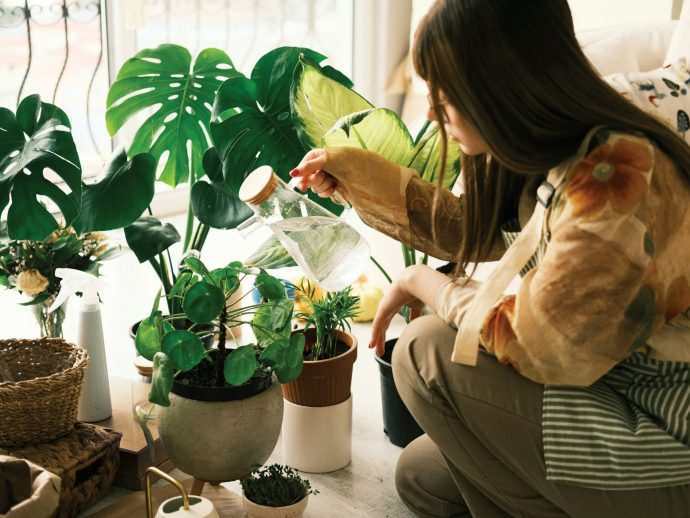
    Choosing houseplants tends to be more akin to shopping for a couch than adopting a pet―we see ferns and philodendrons as ornaments more than as companions. Yet a potted plant has much more in common with a dog than a lamp. Not only is it alive and in need of tending, but, as is becoming increasingly clear, the entire plant kingdom is more profoundly interactive than we’ve previously realized.

    They’ve got smarts

    A growing body of science is ascribing intelligence to plants. Some go so far as to call it consciousness. What appears to us to be motionless air and soil is actually boisterously alive with impulses, chemical signals, and vibrations being sent and received as plants communicate with fungi, insects, and one another.

    They might be busy discerning which insect is nibbling their leaves so they can chemically summon the precise predator needed, giving their kin photosynthesizing space by adjusting their own leaf arrangement, or counting daylight hours so they know when to germinate. Suffice it to say, plants are not just sitting mutely, looking pretty, and passively serving as animal food.

    Breathing partners

    The members of the plant kingdom we’ve brought home to live with us have a lot more to offer than mere décor. Certainly, houseplants improve our indoor air by exchanging carbon dioxide for oxygen. But they’re also capable of filtering pollutants like volatile organic compounds (VOCs) emitted by common building materials and furnishings. It takes more than a plant or two to reap these benefits, though, so be generous with that greenery!

    Keep ’em within view

    Studies show the simple sight of plants in our vicinity is sufficient to boost our mood, productivity, and even hospital recovery. Given that we spend roughly 90 percent of our time indoors, our foliar friends in pots become critical health allies.

    And within reach

    When we pluck plants out of their natural context―their native ecological web―they can no longer sustain themselves without our help (trimming dead leaves, watering regularly, adding soil nutrients, finding them the right spot in the window, etc.).

    Not only do these little interactions uphold our end of the domestic bargain, but small routine chores actually boost our own well-being. And plant care, specifically, has its benefits. For example, taking 15 minutes to repot an indoor plant is enough to measurably reduce stress and blood pressure.

    Housemates

    The field of plant science has only scratched the surface of how complex and animated the lives of plants are behind their slow and quiet facade. Even the idea that individuals within a species might have distinct personalities is being seriously explored. It’s not such a stretch, then, to see our ivy and aloe vera as true housemates.

    By Jackie Skrypnek

    Article Courtesy of Alive Magazine

  • The upside of food upcycling

    The upside of food upcycling

    The upside of food upcycling

    Saving food waste while saving the planet and boosting your health

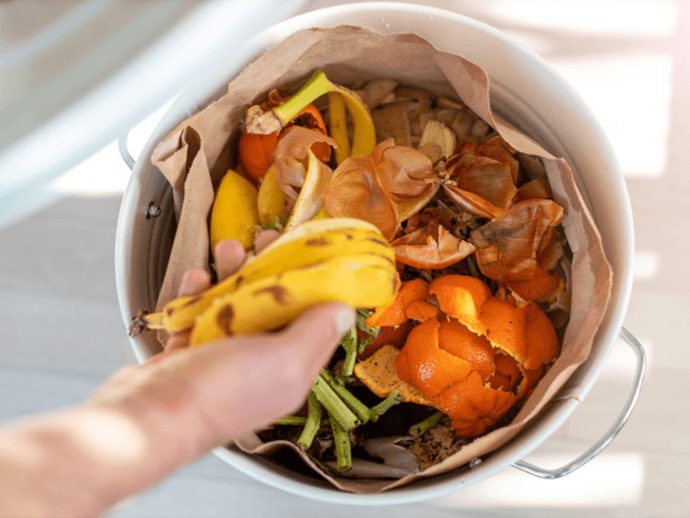
    WA whopping 58 percent of all food produced in Canada is lost or wasted every year. A third of those 35.5 million metric tonnes of wasted food could be rescued. Innovative Canadians are making a difference, working to eliminate food waste, protect the environment, and feed our communities—all through the power of upcycling.

    What’s up with upcycling?

    Unnecessary food wastage happens every step of the way between the farm and your fridge.

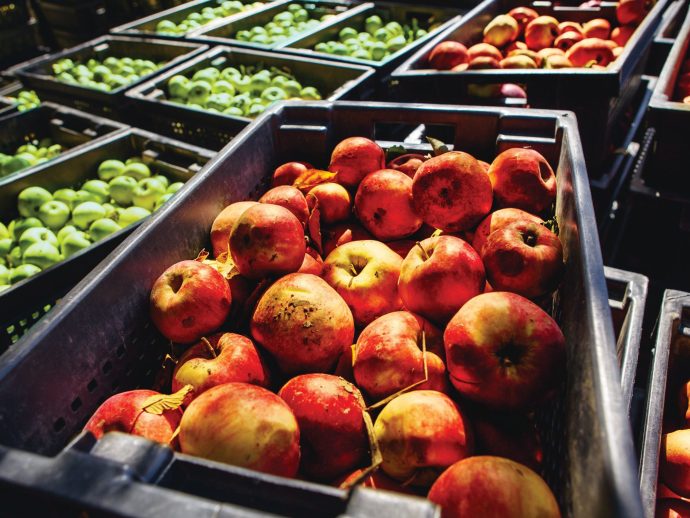
    At the farm, surplus fruits and vegetables, as well as those that may be misshapen or “ugly,” are discarded or left to rot. Then, during manufacturing and processing, 20 percent of food is lost or wasted. A lot of that is due to discarded byproducts or parts of the raw ingredient that are not needed in the final manufactured product.

    Upcycling aims to change that, transforming unwanted food or food manufacturing byproducts into something useful.

    “The concept of upcycling is really about extracting every last bit of value that you can from a natural resource,” explains Shelley King, CEO of Natural Products Canada, an organization that works to identify and invest in innovative solutions in the natural products industry.

    “When we upcycle any material, we’re reducing the number of resources needed to create a new item,” King adds. “In the case of upcycling food, we’re addressing the huge challenge of feeding the world without putting more strain on the planet.”

    How upcycling works

    From coast to coast to coast, Canadian farmers and food manufacturers are finding creative ways to transform previously unwanted food ingredients into nourishing, high-quality foods and supplements.

    It’s all about looking at where food wastage is happening and then applying out-of-the-box creativity.

    Take potatoes, for instance. Spuds are the most widely grown vegetable crop in Canada, making up nearly a third of all farm sales last year.

    “When you’re processing potatoes to make French fries or other potato products, you use water, and the water becomes super concentrated in starch,” says Cara Kennedy at Solnul, a supplement company based out of Carberry, Manitoba. If you’ve ever cut a potato and noticed the white powder on your cutting board after the potato water evaporates, that’s what she’s referring to.

    Solnul’s shareholders were originally potato farmers who now own a starch plant. “They had the foresight to do microbiome research on the starch,” says King, and multiple clinical studies showed how this potato starch was an effective prebiotic (helping to feed the healthy bacteria in your gut).

    They’ve turned that starch—which would otherwise have been discarded—into a research-backed prebiotic ingredient that you can now find in protein powders, protein bars, and other health foods.

    “Canada is the bread basket of the world, and there are a lot of opportunities for upcycled ingredients,” adds Kennedy, who is quick to point out that we shouldn’t be worried that upcycled foods are somehow inferior. “It’s all about how to use every part of an ingredient to its highest and best value.”

    By Joshua Duvauchelle

    Article Courtesy of Alive Magazine
  • Holistic happiness

    Holistic happiness

    Holistic happiness

    What makes us feel happy?

    Is there anything more highly desired, yet elusive, than happiness? Some describe it as a fleeting emotion along life’s journey, others as the ultimate destination. Some think about it in terms of genetic inheritance, others as the culmination of practices.

    How do you hold happy?

    Dr. Caroline Meyer, ND, experiences happiness by catching the small moments, pointing out that when we “rely on big moments, we miss the sustenance of daily pleasures.”

    For Josh Gitalis, clinical nutritionist and functional medicine practitioner, happiness is about attuned decision-making and feeling aligned with his purpose.

    For Chantée Dardaine, registered psychotherapist, happiness is an embodied feeling when engaged in doing something “soul-warming.”

    The “how” of happiness

    What is it that we’re experiencing when we say, “I’m happy”? Turns out, it’s physical, emotional, and intentional.

    Physically, Gitalis explains, the emotion we describe as happiness is the intersection of multiple factors: “Neurotransmitters that regulate mood, like dopamine, serotonin, and endorphins, are released in brain regions associated with happiness. Hormones such as oxytocin are influenced by hugging, bonding, and social interactions.”

    “The capacity for happiness relies on the health of our nervous system,” says Meyer.

    To counteract the less-than-happy autopilot many of us find ourselves in, leading to missing out on simple, happy moments, Dardaine brings “an intention of happiness.”

    It’s all about appreciation

    “Gratitude encourages us to look for pleasurable moments in daily life,” Meyer says. “Recalling with gratitude a few happy moments in each day has been a transformative practice,” she adds, “and mindfulness makes this possible.”

    It’s closer than you think

    “Growing up, happiness was related to goals,” says Dardaine. “I would frequently say ‘I’ll be happy when …’ which, looking back, made me feel that happiness was only waiting for me at the outcome. As it turns out, happiness is right in front of us.”

    Measuring happy

    Dardaine actively practises happiness by “scheduling moments of goodness,” such as afternoon tea or evening popcorn, while Graham intentionally cultivates things that evoke contentment or joy, such as time with friends or moving in nature.

    “Beyond purely pleasurable activities,” says Meyer, “I make sure to do a few mildly challenging habits every day.” At the end of each day, she experiences the “positive feeling of small accomplishments.”

    Highlighting happiness

    “Times of unhappiness can lead us to a deeper understanding of our needs, like what smells, sights, items, music, or people can support us coming into a state of happiness,” says Dardaine.

    Finally, Meyer suggests: “Place a hand on your heart during a happy experience and silently repeat, ‘Remember this moment.’ Happiness can become a sacred practice.”

    By Deena Kara Shaffer, PhD

    Article Courtesy of Alive Magazine
  • Sustainable you

    Sustainable you

    Sustainable you

    A gift to yourself

    The holiday season can elicit lots of notions about what you should be doing, and giving. There are even cautionary tales of how not to be—think Ebenezer Scrooge or the Grinch! In the face of these external pressures, it can be helpful to focus on your own preferences and expectations. Reflect on what you bring to the party yourself. Perhaps your presence, clarity, and joy can be a gift to others, and yourself!

    A unique gift

    Physical gifts are a familiar part of the holiday season. Another approach is the gift of an experience or service. You can take this a step further by considering what you need or want. Is there a way to fill up your own cup, to show yourself the same care you show others? This can support your sustainability. Friends, family, and colleagues will probably notice and benefit from your deeper presence.

    Reflections

    Begin by taking some focused breaths and observing your current experience, such as:

    • degree of present-focus (versus past or future focused)
    • mood
    • thought patterns
    • degree of embodiment (the sense of being in your physical body)
    • physical health
    • attitude toward the holiday season

    Now ’s the time to ask: “How am I right now? Is this how I want to be? And is it sustainable?”

    Inventory

    Now that you’ve checked in with yourself, it’s time to focus on what you might adjust to optimize your sense of well-being. Here are some areas to explore:

    • Brainstorm your idea of a perfect holiday season and see how much of this might be possible.
    • Evaluate your priorities―are some things getting too much attention? Are other things getting missed?
    • Explore back-up plans for situations that may be difficult, like handling awkward family members or struggling to carve out time to recharge.

    Boundaries

    Identifying your preferences is a great start. Frequently, it’s related to boundary quandaries. Effective boundaries include the following:

    • Identify, to yourself and to others, what you want and don’t want.
    • Explore implications, alternatives, and possible alignment if another person is involved.
    • Aim to support your own boundary while respecting others.

    Impact

    Think about the people and organizations you come into contact with during the holiday season and consider how you want to show up. The more present and balanced you are, the more positive the experience likely is for others.

    But, have some space for yourself and others to show up in less than your best―we all succumb to stress, physical illness, and distractions at times. Then our inner Grinch pops out! Just notice and then recalibrate. It’s possible to start over, beginning by taking a few conscious breaths.

    Now that you’re aiming for a sustainable you, focus on some simple doable steps, and repeat. Celebrate your unique presence in the world, just as you celebrate those around you. Remember that both Scrooge and the Grinch turned out to be very lovable. They just needed to dig deeper and focus on what matters!

    By Carole Ames

    Article Courtesy of Alive Magazine

  • The silent health saboteur

    The silent health saboteur

    The silent health saboteur

    Stress, deconstructed

    The mere mention of stress is enough to cause our muscles to tighten, breath to quicken, and heart rate to soar. We’ve all experienced stress—whether in our work, relationships, health, legal matters, or some other aspect of life. While it’s inseparable from living, it takes a toll on our health when it intensifies or becomes chronic.

    What is stress?

    Stress is the body’s natural reaction to changes or challenges, which includes many different physical, emotional, and behavioural responses. While it is a normal bodily function and an inevitable part of daily life, chronic stress and its effects can be destructive if they’re not managed.

    Impacts of stress on the body

    Chronic or severe stress can have a serious impact on a number of different parts of the body, including the brain, gut, heart, skin, and joints.

    Stress on the brain

    Stress triggers the release of the body’s primary stress hormone, cortisol. Research has established that, over time, elevated cortisol levels can lead to shrinkage of the hippocampus, a part of the brain involved in memory and learning.

    Not only does stress have long-term impacts, including increasing the risk of dementia, but it also affects us in the short-term. Because stress has been linked to impaired functioning of both the hippocampus and prefrontal cortex of the brain, it can exacerbate depression.

    Digesting stress

    Research has shown that the quantity and nature of beneficial bacteria found in the gut can affect the brain. In medical circles, the gut is sometimes referred to as the “second brain” because the health of the two organs are linked, a connection often called the gut-brain axis.

    That link between the digestive system and the nervous system can be directly impacted by stress. We know stress can be a causal factor of gut issues like heartburn, abdominal cramps, or loose stools; but stress, anxiety, or depression can also be the result of gut issues.

    A heavy heart

    Perhaps the least surprising effect of stress is its detrimental impact on the cardiovascular system. Studies demonstrate that high levels of cortisol can increase blood cholesterol, triglycerides, blood sugar, and blood pressure—some of the risk factors for heart disease.

    Stress-skin connection

    Stress can exacerbate skin conditions, including acne, eczema, and psoriasis, and it can also disrupt the epidermal barrier that moistens and protects the skin from harmful microbes.

    Stress effects on joint health

    Chronic stress can also aggravate inflammation in the body, exacerbating joint conditions such as rheumatoid arthritis. Stress-activated inflammation can even lead to increased pain sensitivity, creating a vicious cycle of stress, inflammation, and pain.

    Decompress and de- stress

    Before you become stressed at the mere discussion of stress, remember to break the cortisol cycle by slowing down, stretching, and reflecting. There are many great natural remedies as well as prevention and management strategies that can help; but, first, you just have to breathe.

    By Michelle Schoffro Cook, PhD, DNM

    Article Courtesy of Alive Magazine

  • Do You Really Need to Walk 10,000 Steps Per Day?

    Do You Really Need to Walk 10,000 Steps Per Day?

    Do You Really Need to Walk 10,000 Steps Per Day?

    New research shows that every step counts

    The health benefits of walking are well known—as is the adage that you must walk 10,000 steps every day to achieve them. We wanted to find out how many steps you actually have to take in order to reap the rewards of walking. The answer? Far fewer than you might think.

    Where did the 10,000-steps goal come from?

    In 1965, a Japanese company called Yamasa Clock released the Manpo-kei, a pedometer with a name that translates to “10,000 steps meter” in English. Although the name was merely intended to be used as a marketing tool, the concept of 10,000 steps is still synonymous with good health more than 50 years later.

    What are the primary benefits of walking?

    Walking is a form of cardiovascular exercise, which means it strengthens your heart, improves blood circulation, and increases your heart rate. Regular walking has been linked to a reduced risk of many health issues, including diabetes, hypertension, heart disease, and obesity.

    Research has also shown that a regular walking routine can improve mental health. Walking can even reduce joint pain, help maintain healthy immune function, and improve bone density (in conjunction with resistance and flexibility exercises).

    Does a smaller step count still offer benefits?

    You might be surprised to learn that the number of steps needed to glean the rewards of walking is significantly smaller than 10,000 steps. In fact, researchers behind a 2023 study conclude that the number of steps needed to reduce the mortality risk of any disease is only 3,867 steps. Only 2,337 steps per day are needed to reduce the risk of dying from cardiovascular disease.

    How to make your walks count

    Feeling inspired to step up your daily step count? Whether you want to hit 4,000 or 10,000 steps (or somewhere in between), there are endless ways to elevate your walking routine.

    Use a pedometer to make your steps count

    Step counters or pedometers are simple yet effective tools that can be used to help reach your fitness goals. If you’re in the beginning stages of your walking journey, take the first week to establish your baseline step count. From there, you can gradually begin to increase the amount.

    Add more steps as you adjust

    The key to building a stronger walking practice by adding more steps? Consistency. Try adding 300 to 500 steps per day, eventually moving up to 2,000 extra steps per day. With each passing week, aim to add more steps until you eventually reach 10,000 (or whatever number you want to achieve).

    Keep up the pace (any pace!)

    Whether you prefer a leisurely stroll or a power walk around the neighborhood, the health benefits of walking can be felt at any pace. For optimal protection against hypertension, high cholesterol, and diabetes, work on increasing your walking pace to a moderate-intensity level.

    By Ashley Linkletter

    Article Courtesy of Alive Magazine

  • Strawberry Banana Smoothie

    Strawberry Banana Smoothie

    Strawberry Banana Smoothie

    Total Time 5 minutes
    Servings: 1

    Ingredients
      

    • 1 ripe banana peeled
    • ¼ cup unsweetened cashew butter
    • ½ cup oat milk
    • ½-¾ cup fresh or frozen strawberries
    • Plant-based protein powder optional

    Method
     

    1. In a blender, add banana, cashew butter, oat milk, strawberries, and protein powder, if using.
    2. Blend at high speed until the mixture is smooth and creamy. Pour smoothie into a glass and enjoy!
  • Detox Salad

    Detox Salad

    Detox Salad

    Total Time 35 minutes
    Servings: 4

    Ingredients
      

    • ¾ pound green cabbage
    • ½ pound broccoli florets
    • ½ bunch dino or lacinato kale
    • ¼ pound carrots
    • ½ cup roasted almonds
    • cup sunflower seeds roasted
    Maple-Tahini Dressing
    • cup tahini
    • 5 tablespoons water
    • 4 tablespoons apple cider vinegar
    • 3 tablespoons maple syrup (or to taste)
    • 2 tablespoons olive oil
    • ¾ teaspoon sea salt

    Method
     

    1. Thinly slice cabbage and broccoli. Remove kale from stems and roughly chop. Peel and grate carrots. Add vegetables to a mixing bowl.
    2. In a separate bowl, whisk together dressing ingredients until smooth and creamy. Adjust seasoning to taste.
    3. Pour ⅓ of the dressing over the salad and toss to combine, adding more dressing as needed.
    4. Roughly chop the roasted almonds. Top salad with almonds and sunflower seeds. Enjoy!
  • Chimichurri Sauce

    Chimichurri Sauce

    Chimichurri Sauce

    Total Time 1 hour 15 minutes

    Ingredients
      

    • ½ cup Italian parsley leaves from one bunch
    • 3 large garlic cloves
    • 1 medium jalapeño ribs and seeds removed
    • ½ cup olive oil
    • 3 tablespoons red wine vinegar
    • 1 teaspoon dried oregano
    • ¾ teaspoon sea salt
    • ½ teaspoon coarse ground black pepper

    Method
     

    1. Finely mince parsley, garlic, and jalapeño pepper and place in a small mixing bowl.
    2. Stir in olive oil, red wine vinegar, oregano, salt and pepper.
    3. Allow sauce to rest for 1 hour to allow flavors to develop before using. Enjoy!
  • Gingerbread Coffee Syrup

    Gingerbread Coffee Syrup

    Gingerbread Coffee Syrup

    Total Time 20 minutes
    Servings: 3 cups

    Ingredients
      

    • 2 cups water
    • 2 cups brown sugar
    • 2 cinnamon sticks
    • 8 allspice berries
    • 6 whole cloves
    • 1 1-inch piece fresh ginger sliced
    • 1 teaspoon molasses

    Method
     

    1. Place all ingredients in a medium saucepan over medium-low heat.
    2. Bring to a gentle simmer and cook for 15 minutes. Remove from heat and cool the syrup.
    3. Strain and store in an airtight container in the refrigerator for up to 2 weeks.

    Notes

    To Use: Add to brewed coffee or lattes as desired, start with a tablespoon of syrup per 10 ounces of coffee.

    Recipe Provided by INFRA