Ingredients
Method
- In a blender, add banana, cashew butter, oat milk, strawberries, and protein powder, if using.
- Blend at high speed until the mixture is smooth and creamy. Pour smoothie into a glass and enjoy!


Recipe Provided by INFRA


Recipe Provided by INFRA


Recipe Provided by INFRA

What is gratitude, and does it really matter?
Meaningful gratitude, the kind that can actually enhance our quality of life, is more than saying please and thank you. It’s more than a rote recitation of things we should appreciate. And it’s more than routinely entering something in a gratitude diary.
Of course, all of these things are aspects of gratitude. However, if we genuinely want to understand and get the most from practising gratitude, we need to appreciate its nuances, depth, and impact.
Gratitude, in this light, is part of a positive attitude where we’re intentionally and consciously present to our lives. In this state we may notice, for example, how our bodies function, what nature is capable of, how the sun warms our skin, the miracle of birth, and the inevitability of death.
Gratitude is not blind optimism. It’s the choice to be pragmatic, noticing the ups and downs, and striking a balance that favours possibilities rather than limitations.
Diana Brecher, EdD, a clinical psychologist at Toronto Metropolitan University, works in the area of positive psychology. She trains students, faculty, and staff in resilience―and gratitude is a key component.
Brecher says that gratitude can support resilience and an increased sense of well-being. She notes that well-accepted research as far back as 2005 has shown the effect and lasting impact of interventions aimed at increasing individual happiness.
In the 2005 study, five exercises to promote happiness (two specifically focused on gratitude) were administered over the course of a week. Impact was assessed immediately post test, at one week, one month, and six months. The exercise with the greatest impact of all five at the six-month post-test mark was focused on gratitude.
Some easy and effective gratitude practices include the following:
Now, take a leap of faith and try something. It’s up to you to decide where you will focus. And it begins with an action.
By Carole Ames
Article Courtesy of Alive Magazine

The work Elijah Goerzen does as a farmer conjures times past. His Deep Roots Farm, set in Maple Ridge, BC, is small by modern Canadian farming standards. The eight-acre parcel near Vancouver is worked by hand rather than machine, resulting in healthy, nutrient-rich soil that’s fertile ground for vegetables to grow and for beneficial organisms, such as earthworms, to thrive.
Goerzen doesn’t spray his heritage lettuce, microgreens, and vegetable crops with toxic pesticides or infuse them with chemical fertilizers either. Instead, he chooses to nurture biodiversity by planting flowers between his kale to attract hungry ladybugs that keep any aphid infestations in check or to serve as beacons to pepper-propagating pollinators.
Really, though, the regenerative agriculture methods he uses to tease crops from his soil every growing season are considered by some to be the future of farming.
It works out well for the planet, too. Unlike conventional agriculture, regenerative farming is rooted in harnessing the power of natural processes to produce food rather than dominating them with human-made inputs and interventions.
Vision Greens, a vertical farm in Welland, Ontario, is proving him right. Set in a southern Ontario rust belt city abutting Niagara’s shrinking tender fruit belt, Vision Greens is putting stock in growing up rather than out to help meet a demand for food that the UN projects will increase by 60 percent by 2050.
It’s disrupting the imported lettuce market with its controlled environment agriculture that marries continuous food production with sustainability.
Vision Greens’ headquarters in an industrial park is filled with towers of hydroponic trays loaded with organic seeds grown by a computer-controlled system that regulates LED lighting, organic nutrients, reverse osmosis water filtration, air flow, and carbon dioxide levels to meet crop needs. The result: perfect, nutrient-dense lettuce harvested every 26 days, winter, spring, summer, or fall.
Those crops are perfect because they aren’t exposed to insects, disease, or weather fluctuations, eliminating the need to spray.
Harvests are delivered to a warehouse, often on the day they’re picked, 76 km away. Meanwhile, most conventional and organic romaine sold here must travel more than 4,300 km from California’s Salinas Valley, where growing and shipping conditions vary and make produce vulnerable to dangerous bacterial contamination.
The very nature of their production and transport methods means Vision Greens lettuce will never have to be pulled off store shelves in the name of safety. And with plans to build one-acre vertical farms elsewhere in Canada that have 60 times the growing density and 135 times greater crop yield than field lettuce, the company is poised to play as significant a role in building secure local food systems as Deep Roots Farm.
By Tiffany Mayer
Article Courtesy of Alive Magazine
The prevalence of food allergy and intolerance is on the rise in urbanized countries, now affecting one in five people.
Health care practitioners often misuse the terms food allergy, intolerance, and sensitivity in conversation. Knowing what type of food reaction you’re experiencing is key for making appropriate dietary choices that address the underlying problem.
Food allergy is a pathological immune reaction against normally harmless proteins in foods, which can be life-threatening. This immune reaction can trigger acute symptoms in the gut, skin, respiratory tract, cardiovascular system, and neurological system.
Common food allergens include dairy, egg, fish, shellfish, tree nuts, peanuts, soy, and wheat.
Food intolerance is a non-immune mediated reaction arising from an insufficiency of enzymes required to break down a specific component of food. This reaction commonly causes gastrointestinal symptoms such as diarrhea.
Common causes of food intolerance include lactose, gluten, FODMAPs (a group of short-chain carbohydrates), additives, and biogenic amines such as histamine.
A food sensitivity is an adverse reaction to food that is not related to food allergy, food intolerance, or celiac disease.
Food sensitivities can cause digestive issues in addition to widespread symptoms such as chronic joint pain, fatigue, rash, and brain fog.
In contrast to fast-acting food allergy, food sensitivity reactions may be delayed hours to days after eating the problematic food. To complicate matters further, reactions may not occur every time you eat the food.
Begin by asking your family doctor for a referral to an allergist. Food allergy is best managed with complete avoidance and emergency medication.
If your allergy testing comes back normal, then you might want to consider intolerance or sensitivity as the cause of your symptoms. Harvard Health considers the elimination diet to be the gold standard for identifying problematic foods.
This diagnostic tool involves a brief elimination of common food culprits, followed by a food reintroduction phase.
Foods that are commonly removed during the elimination phase include dairy, eggs, wheat, sugar, soy, potato, tomato, corn, strawberries, and nuts.
The general guideline is to maintain a symptom-free state for two to four weeks before the reintroduction phase.
Reintroduce a single food at a time and have a couple of servings per day for a few consecutive days. To test dairy, for instance, you could have cheese, yogurt, and milk on back-to-back days.
Observe whether this food reintroduction triggers your symptoms. If it does, then it’s a problematic food that is best kept out of your regular diet. Wait until your symptoms clear before reintroducing the next food on your list.
If the food doesn’t cause any symptoms, then you can keep eating that food and proceed to testing the next. Continue until you’ve reintroduced all the foods you’d eliminated.
By Dr. Cassie Irwin
Article Courtesy of Alive Magazine
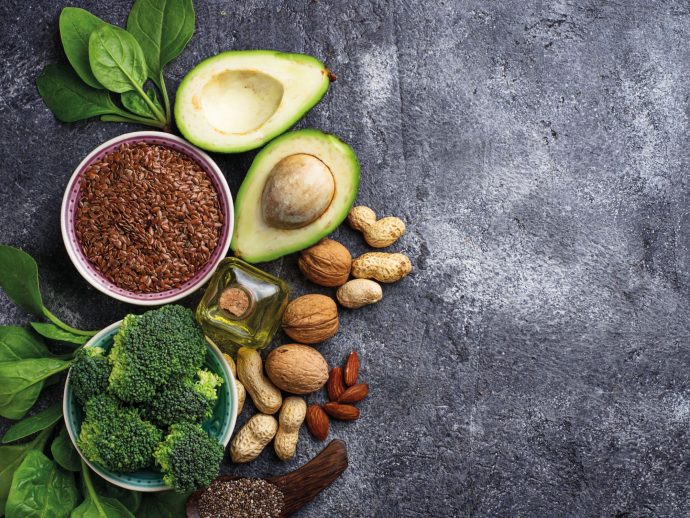
Fat, protein, and carbs—the big three macronutrients have all had their turn being vilified throughout diet culture (from problematic phrases such as “all fats are unhealthy” and “watch your carbs” to misguided rhetoric about protein being the only way to build muscle). Yet this powerful triad of nutrients, in tandem with essential vitamins and minerals, is what our body relies on to thrive.
So, what exactly are these all-important nutrients?
In simple terms, macronutrients refer to the nutrients our body relies on for energy, which we require in large amounts (hence the term macro) to make up our total caloric intake. The big three macros: protein, carbohydrates, and fat.
On the other hand, micronutrients are the nutrients our body requires in trace amounts. These come in the form of vitamins and minerals. And while they don’t affect our diet from a caloric standpoint, they’re still essential for our health and well-being—from B-complex vitamins’ role in energy production and digestion to iron’s impact on cognitive function and immune support.
While protein, carbohydrates, and fat are widely known nutrients, there’s plenty of mixed messaging around them, such as the “correct” daily protein requirement and the “healthiest” form of carbs. Here, we dig into the fundamentals of each and explain why it’s the balance of all three macros that deserves our true attention.
This powerhouse nutrient is something of a workhorse. Made up of amino acids (the “building blocks” of protein), it helps build and repair our muscles, bones, skin, and other tissues. It also plays a role in hormone and enzyme production.
Despite a once-shaky reputation, fat (especially the heart-healthy unsaturated variety) is integral to a healthy, balanced diet. One of its main superpowers: helping the body absorb fat-soluble vitamins A, D, E, and K. Fat also protects our organs, aids in cell growth, promotes better cognitive function, and provides us with sustained energy.
Carbs are broken down into simple sugars (called monosaccharides) that enter the bloodstream and are used by all cells in the body for energy. When we’re consuming carbs in their whole food form (think fruits, vegetables, whole grains, and legumes), they also provide us with fibre and prebiotics, which are necessary for efficient digestion.
While no nutrient alone holds the key to overall well-being, the secret is to consume a balance of macros and micros in their minimally processed form.
Ultimately, our diets should be filled with foods that bring us joy—whether it’s a veggie-packed stir-fry or our favourite homemade dessert. That, as it turns out, is the closest thing to a winning recipe.
By Brittany Devenyi
Article Courtesy of Alive Magazine