Category: Guest Post

  • Italian Sheet-Pan Bison Meatballs with Spaghett

    Italian Sheet-Pan Bison Meatballs with Spaghett

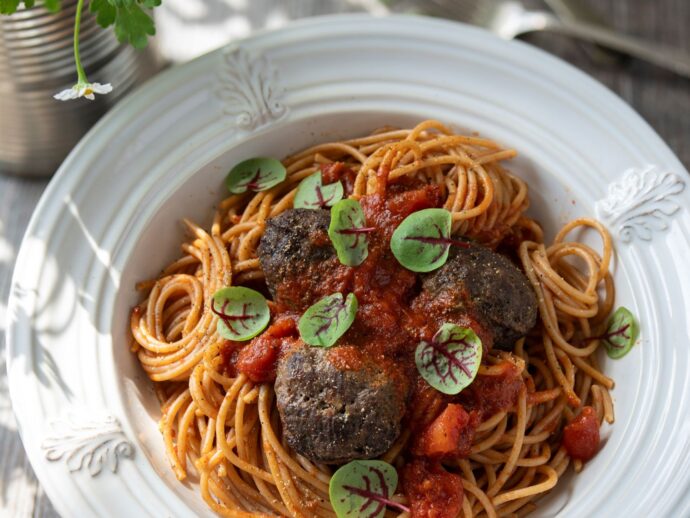
    Italian Sheet-Pan Bison Meatballs with Spaghetti

    Gluten-free almond flour is the trick to keeping these bison meatballs tender and juicy. This riff on spaghetti and meatballs gets a healthy makeover with simple ingredient swaps. With familiar flavours, it’s great for cooks looking to try bison or buffalo for the first time.
    Servings: 6

    Ingredients
      

    Meatballs
    • ½ cup almond flour
    • ½ cup buffalo milk
    • 1 large organic egg
    • 2 teaspoons sea salt
    • 2 pounds lean ground bison or buffalo
    • 1 clove garlic peeled and minced
    • 1 teaspoon finely chopped fresh rosemary
    • 1 teaspoon dried oregano
    • ½ teaspoon dried basil
    • ½ teaspoon ground black pepper
    • teaspoon ground nutmeg
    • Olive oil for baking sheet
    Sauce
    • 2 tablespoons extra-virgin olive oil
    • 2 cloves garlic peeled and minced
    • 1 24-ounce jar tomato passata
    • 1 28-ounce can diced tomatoes
    • ¼ teaspoon sea salt
    Pasta
    • 1 pound whole grain or gluten-free spaghetti

    Method
     

    1. Preheat oven to 450°F.
    2. Bring large pot of water to boil for pasta.
    3. In large bowl, mix almond flour, milk, egg, and salt until combined. Mix in bison followed by remaining meatball ingredients. Make sure mixture is uniformly combined.
    4. Drizzle olive oil on large baking sheet and spread to coat. Hand-roll meatball mixture into 2 to 3 tablespoon sized balls and line up evenly on baking sheet, making sure meatballs aren’t touching. Bake in preheated oven for 10 minutes, flip, and bake for 7 to 10 minutes longer, until browned and cooked through.
    5. Meanwhile, make sauce and cook pasta. In large Dutch oven, heat olive oil over medium heat and add garlic, sautéing for a few seconds, until sizzling, being careful not to burn it. Quickly add tomato passata, diced tomatoes, and salt, and bring to a boil. Reduce to a simmer, partially cover, and cook for 20 to 30 minutes. Cook pasta according to package directions and drain.
    6. Add meatballs into sauce and warm through. Toss some of the tomato sauce with cooked pasta and add to bowls. Top with a few meatballs and more sauce. Serve immediately.

    By Allison Day

    Recipe Courtesy of Alive Magazine

  • Thai Bison and Vegetable Noodle Bowls

    Thai Bison and Vegetable Noodle Bowls

    Thai Bison and Vegetable Noodle Bowls

    Like a spring roll in a bowl! Thai-inspired flavours boost this meat and veggie-packed dinner that’s ready in about 30 minutes. Served with gluten-free ramen or on your favourite rice, it’s a colourful, weeknight-friendly meal that highlights the versatility of bison.
    Servings: 4

    Ingredients
      

    • 1 tablespoon avocado or coconut oil
    • 1 pound lean ground bison or buffalo
    • 4 cups thinly sliced or finely chopped green cabbage
    • 9 ounces roughly chopped cremini mushrooms
    • 1 large carrot peeled and thinly sliced or grated
    • 2 scallions thinly sliced
    • 3 cloves garlic peeled and minced
    • ¼ cup packed fresh basil torn, more to serve
    • ¼ cup packed fresh mint finely chopped
    • ¼ cup tamari or low-sodium tamari
    • 2 tablespoons unseasoned rice vinegar or lime juice
    • 1 tablespoon fish sauce
    • 1 tablespoon maple syrup
    • 1 tablespoon fresh grated gingerroot
    • 1 teaspoon toasted sesame oil
    • 4 servings gluten-free ramen or jasmine rice cooked
    • Sriracha to serve

    Method
     

    1. Heat large Dutch oven or pot over medium-high and add oil, followed by bison. Break up bison and continue to cook, stirring often, until browned and cooked through, about 8 minutes. Add cabbage, mushrooms, carrot, scallions, garlic, and 2 tablespoons water. Stir and cover, keeping heat at medium-high, for 5 minutes to soften vegetables. Uncover and stir again. Reduce heat to medium and cook uncovered, stirring often, until vegetables are tender, 5 to 8 minutes longer. Stir in basil and mint.
    2. In measuring cup or medium bowl, combine 3/4 cup water, tamari, vinegar, fish sauce, maple syrup, ginger, and sesame oil. Add to bison and vegetable mixture and bring to a boil. Reduce heat to low and cover until ready to serve with noodles or rice, additional basil, and sriracha.

    By Allison Day

    Recipe Courtesy of Alive Magazine

  • Exercise and mental health

    Exercise and mental health

    Marrying your movement to your mood

    Life does get in the way

    Exercise and poor mental health are at war with each other: exercise can be an effective treatment for a condition that, by its very nature, dampens your will to move.

    Most exercise programs don’t consider psychological hurdles. Motivation is the nucleus of self-improvement. It is the ocean between should and can. Mass market programs are made to be sold; asking “Is this even possible for you?” is a poor retail tactic.

    The most important point when motivation is at play is just emphasizing that any exercise is better than none.

    A systematic review and meta-analysis of 15 prospective studies of nearly 200,000 people noticed “significant mental health benefits from being physically active, even at levels below the public health recommendations.”

    Quality, not quantity. Never mind 150 minutes—let’s start with five.

    There’s such a thing as too much

    In fact, too much physical activity too quickly can manifest as a form of self-harm, masking important emotions.

    Listen to your body

    A structured exercise program can be a catalyst. However, trusting yourself and being in touch with your emotions is paramount. Whatever gets you out the door: do you like to walk, play tennis, hike?

    Antidepressants have the common side effect of weight gain, which can lead to body dysmorphia. While both sexes can feel pressure to conform to a societal norm, men suffer differently.

    Some men are trying to achieve an unrealistic goal, which leaves them in a state of dissatisfaction. While chasing it, they’re still doing things that seem outwardly healthy, like going to the gym. They’re eating food in what seems to be a healthy manner, but perhaps that has led them to use performance-enhancing drugs. It circles back to just being someone who is trying to deal with those demons themselves and not seeking support.

    It’s a beautiful thing to move in your body, be in your body, and just listen.

    Sources of hydration for exercise

    watercarbonated water is just as effective
    sports drinksmake your own by adding 1/2 tsp (2 mL) of salt per litre of water, along with some sweetener or fruit.
    coconut watercontains high levels of potassium
    chocolate milkcontains the necessary fat and protein
    green teaimproves the function of the body during exercise

    How to get started

    • Start simple.

    • Do what you enjoy.

    • Set reasonable goals.

    • Try not to think of exercise as a chore.

    • Plan for, and accept, setbacks.

    Article Courtesy of Alive Magazine
  • Smarty plants

    Smarty plants

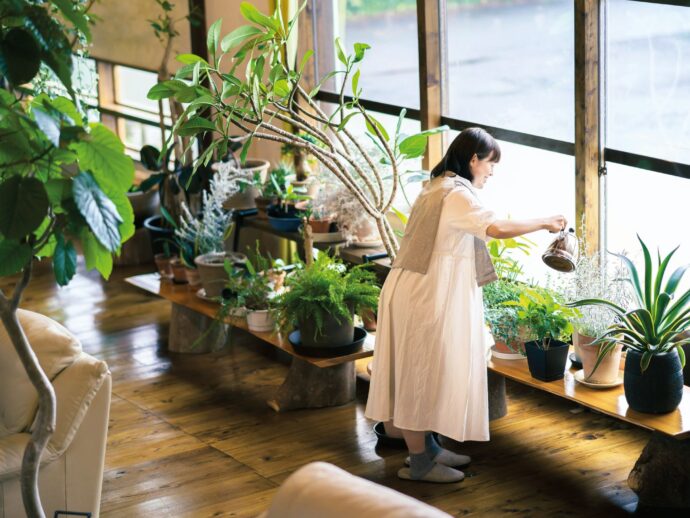
    Why their memory and communication matter for our health

    Plants can “remember”

    Plants have a kind of memory. For example, sunflowers track the sun throughout the day, return to their starting position at night, and anticipate sunrise even in total darkness. Similarly, albizia tree leaves open and close in rhythm with daylight cycles, continuing their movement even when placed in a dark environment.

    Certain species of seeds have been shown to “remember” the daylight conditions their parent plants experienced, which determines when they germinate. In some cases, these memory-driven adaptations last for decades, helping to ensure survival in specific environmental conditions.

    Plants as timekeepers

    Beyond memory, plants also display a remarkable ability to measure time. Some seeds require specific night lengths to trigger germination, demonstrating an internal biological clock. For instance, begonia seeds will not sprout unless nighttime darkness falls below a particular threshold.

    Other plants, like bamboo, seem to take timekeeping one step further. Certain varieties bloom and die in synchronization across the globe despite growing in different conditions. This finding suggests an innate, built-in calendar that spans years or even decades.

    Plants communicate through chemical signals

    Perhaps the most fascinating discovery has been that plants “talk” to one another (and to other organisms) through chemical signals. When attacked by herbivores, plants release airborne compounds that act as distress signals, warning neighbouring plants to activate their defenses. Some even enlist the help of insects. When under threat, certain plants emit chemicals that attract predatory insects to eliminate their attackers.

    Many plants use specific chemical compounds to attract pollinators. Some even mimic pheromones or give off scents resembling rotting meat to trick insects into visiting. Others, like the skunk cabbage, generate heat to amplify their scent and attract pollinators.

    What this means for us

    Understanding plant “intelligence” can reshape the way we interact with nature. Here’s how these findings can be applied in practical ways.

    Better nurturing and relating to plants

    If plants are capable of memory and communication, how we care for them matters. Recognizing their ability to respond to environmental cues can help us cultivate healthier, more resilient plant life.

    Designing healthier spaces

    Urban planners are increasingly implementing research that suggests green spaces improve air quality, reduce stress, and enhance well-being. They’re betting that urban environments that integrate plants with known adaptive behaviours into their designs can benefit residents in multiple ways.

    Creating therapeutic environments

    The presence of plants has been shown to lower anxiety and boost mood. Understanding plant behaviour could inform how we design healing spaces, such as hospitals and therapy rooms.

    As plant research continues, we may uncover even deeper insights into their cognitive-like abilities. Recognizing plants as active participants in ecosystems, not just as resources, can help us create more sustainable, healthy, and harmonious environments for both humans and plants alike.

    By Adam Meyer

    Article Courtesy of Alive Magazine
  • Country Hash Browns

    Country Hash Browns

    Country Hash Browns

    Total Time 45 minutes
    Servings: 5

    Ingredients
      

    • 10 frozen hash brown patties
    • 8 ounces bacon
    • 10 large eggs
    • 8 asparagus spears trimmed and cut into 1-inch pieces
    • 6 ounces Mexican-style thick-cut shredded cheese
    • 1 cup tomatillo sauce
    Country Gravy
    • 1 ¼ cups chicken broth
    • ¼ cup heavy cream
    • 2 tablespoons unsalted butter
    • 2 tablespoons flour
    • ½ teaspoon sea salt
    • teaspoon ground black pepper

    Method
     

    1. Preheat oven to 375°F. Arrange hash brown patties on a baking sheet and bake for 25 minutes, flipping halfway through, until golden and crispy.Meanwhile, place bacon on a second baking sheet and cook in the oven until crisp (about 15-20 minutes). Transfer to paper towels to drain, then crumble or chop.
    2. In a bowl, whisk together eggs and salt. Scramble in a medium skillet over medium heat until just set. Remove from heat and set aside.
    3. In the same pan, quickly sauté asparagus for a minute with a little olive oil, seasoned with salt.
    4. Melt butter in a small saucepan over medium heat.Whisk in flour and cook for about 1 minute to form a roux.
    5. Gradually whisk in chicken broth and cream. Bring to a gentle simmer, whisking frequently, and cook for 3-4 minutes until thickened. Season with salt and pepper.
    6. On the baking sheet, top each hash brown patty with scrambled eggs, asparagus, bacon, and shredded cheese. Return to the oven for about 5 minutes, until the cheese is melted.
    7. Remove from oven, spoon country gravy over the top, and serve immediately with tomatillo salsa.

    Recipe Courtesy of INFRA

  • Berry Ice Box Cake

    Berry Ice Box Cake

    Berry Ice Box Cake

    Total Time 4 hours 10 minutes
    Servings: 4

    Ingredients
      

    • 1 cup plain Greek yogurt
    • 1 cup mascarpone cheese
    • 3 tablespoons cane sugar or honey
    • 1 tablespoon vanilla paste
    • ¾ cup raspberries thawed if frozen, or fresh
    • ¾ cup blueberries thawed if frozen, or fresh
    • 6 – 7 ounces vanilla biscuits or graham crackers
    • Powdered sugar for dusting (optional)

    Method
     

    1. In a bowl, whisk together the yogurt, mascarpone, sugar (or honey), and vanilla paste until smooth and creamy.
    2. Gently fold in the raspberries and blueberries, being careful not to overmix so you keep some texture.
    3. In a 4-cup dish, layer biscuits, then the creamy berry mixture. Repeat once more, finishing with a layer of biscuits on top.
    4. Cover and refrigerate for at least 4 hours, or overnight, until set and sliceable.
    5. To serve, dust with powdered sugar and spoon or slice into portions.

    Notes

    • Substitute vanilla flavored Greek yogurt if vanilla paste is unavailable.
    • Can use all yogurt and omit mascarpone.

    Recipe Courtesy of INFRA

  • Peach and Fresh Mozzarella Flatbread

    Peach and Fresh Mozzarella Flatbread

    Peach and Fresh Mozzarella Flatbread

    Total Time 40 minutes
    Servings: 2

    Ingredients
      

    • 1 premade pizza dough or precooked flatbread
    • 8 ounces fresh mozzarella sliced
    • 2 ripe peaches pitted and cut into wedges
    • ½ cup green goddess sauce
    • teaspoon dried oregano
    • 1 handful arugula microgreens or baby arugula
    • Salt and pepper to taste

    Method
     

    1. Preheat oven to 450°F.
    2. If using pizza dough: divide into 2 pieces and roll each into a rough 6 × 8-inch rectangle.Dock the dough with a fork, brush with green goddess sauce, and lightly season with salt and pepper. Prebake crusts for 10-15 minutes, until lightly golden. Remove pizza crusts from the oven.
    3. Top cooked dough or flatbread top with mozzarella slices and peach wedges. Sprinkle on oregano.
    4. Bake until the cheese is melted and bubbly. Remove from oven, sprinkle with arugula, and serve immediately.

    Recipe Courtesy of INFRA

  • Rest up

    Rest up

    It’s Rest and nonrest

    According to research, the state of rest doesn’t occur from the activity itself, but rather from when there is harmony between our feelings, motivations, and actions. This harmony cultivates calm, confidence, and belonging. By contrast, the state of nonrest is defined by <dis>harmony of our feelings, motivations, and actions, which leads to tension and energy depletion.

    We are continuously moving between rest and nonrest. When we feel tense and fatigued, we should take it as a cue to restore harmony.

    Keys to foster rest

    We can cultivate harmony between our feelings, motivations, and actions by embracing the following concepts.

    Natural rhythms

    Align with the natural rhythms of the day, month, and season. For example, take a rest as you transition from one task to another in the day and honour how you feel in the winter versus the summer.

    Letting go

    You don’t have to do everything yourself. Trust and have confidence in others, allowing them to help you.

    Safe relationships

    Being accepted without judgment and not having to behave in a certain way is conducive to rest. Invest your time and effort into beneficial relationships and walk away from toxic ones.

    Pleasure and creativity

    Appreciate the beauty in nature, music, and art. Take the time to not only to take in and enjoy the beauty, but to also answer the call to create what you’re compelled to create.

    Feeling rested

    Mental-emotional health

    We feel mental fatigue after prolonged periods of cognitive activity. Mental fatigue is a psychobiological state involving cognitive decline, reduced accuracy, and slower reaction time. Symptoms may include temperamental depression, moodiness, and changeability, which may create relationship difficulties and challenges at work; it can sometimes lead to substance abuse.

    Rest Rx: Research shows that listening to music and binaural beats helps ease mental fatigue. Having a regular meditation practice may also reduce the negative effects of mental fatigue.

    Physical health

    When we’re physically fatigued, we can experience symptoms ranging from insomnia, chronic pain, digestive issues, heart conditions, and gynecological problems. While there isn’t a biological explanation for every physical symptom of fatigue, researchers have developed an umbrella term for exhaustion-related symptoms, called persistent physical symptoms (PPS).

    Rest Rx: Research shows that nonsleep deep rest (NSDR) improves physical readiness, exercise recovery, tension, emotional balance, negative affect, and overall stress. In this study, the NSDR was elicited by lying down on a mat in a dark, quiet room and doing 10 minutes of guided meditation exercises.

    By Cassie Irwin, ND

    Article Courtesy of Alive Magazine
  • Meditation, mindfulness, and mental health

    Meditation, mindfulness, and mental health

    Combatting the loneliness epidemic

    What if you could be even 1 or 2 percent happier?

    Meditation, even for a few minutes at a time, can be hugely beneficial.

    You are not alone in being lonely

    The extent of mental illness has disproportionately increased post-COVID. The pandemic forced people who were already experiencing stress into isolation, and loneliness is a breeding ground for anxiety.

    Loneliness has become the biggest epidemic that the world is facing. We spend more time on the internet scouring the news, which is negative. It makes us feel even more lonely because we fear that nobody cares for us—which is unfounded— and that loneliness just pervades.

    Mindfulness, one type of meditation, can be an elixir. It’s interesting to understand why it is necessary and why it works.

    Pay attention to what you pay attention to

    The brain wants to put as much as possible into the unconscious, which helps you to get through life quickly. But that knowledge base is marked by emotions.

    This accumulation of unacknowledged emotions can be manifested as forms of stress. This is where mindfulness can be helpful as a method of recognizing and slowing that process.

    Mindfulness is the deliberate, intentional focus in a nonjudgmental way. By being aware of how crucial your attention is, you can understand that <where> you put your attention has an impact on who you are and—more importantly—who you’re going to be.

    This is the first step toward a meditation practice. Without self-awareness you’re a cork in the ocean. By paying attention deliberately, and being aware of more positive things, you’re creating a future for yourself that’s going to be more positive, and one you’re more connected with.

    Breathe through it

    calm and control your breathing is a powerful tool. We can use the breath to control our anxiety and our mood.

    Try the pranayama breathing technique or joining a yoga practice at a local community centre—readily available and inexpensive—since this also combats loneliness.

    The admonishments to “keep in shape” and “stay healthy” are associated almost solely with our bodies from the neck down. But the benefits of being mindful, and learning to calm and relax our thoughts, are incontrovertible.

    Therapists use the “thought train” analogy: you are a passenger on a train; the passing landscape represents your thoughts. Allowing the thoughts to simply pass by, without judgment, is the essence of mindfulness, and the seed of meditation.

    What self-care really means

    Research has consistently shown that mindfulness improves brain volume, increases the grey matter, lessens the chances of dementia, and reduces depressive symptoms and anxiety. There are cardiovascular benefits: reducing chances of stroke and heart attacks, and immune function increases.

    By Kenny Bodanis

    Article Courtesy of Alive Magazine
  • Seared Scallops with Soy and Ginger Marinated Grilled Asparagus

    Seared Scallops with Soy and Ginger Marinated Grilled Asparagus

    If Mom is more lunch than brunch, this simple and delicious plate is sure to please. Spring asparagus gets a delicious savoury treatment full of flavour from soy, ginger, garlic, miso, and chili flakes. Served alongside sweet scallops, it’s a beautiful and sophisticated combination that’s easy to make and enjoy.

    Seared Scallops with Soy and Ginger Marinated Grilled Asparagus

    Servings: 2

    Ingredients
      

    • 1 tablespoon rice vinegar
    • 2 teaspoons low-sodium soy sauce or tamari
    • 3 teaspoons sesame oil divided
    • 1 teaspoon maple syrup
    • 1 teaspoon miso paste
    • 1 teaspoon tahini
    • 1 teaspoon minced garlic
    • 1 teaspoon grated gingerroot
    • ¼ teaspoon dried red pepper flakes
    • 1 pound bunch asparagus washed, dried, woody ends removed
    • 1 tablespoon canola oil
    • 8 large sea scallops like Hokkaido
    • teaspoon sea salt
    • teaspoon black pepper
    • 1 tablespoon black sesame seeds

    Method
     

    1. In glass jar with fitted lid, combine vinegar, soy sauce, 1 teaspoon sesame oil, maple syrup, miso, tahini, garlic, gingerroot, and red pepper flakes. Seal jar and shake well to combine. Set aside.
    2. Preheat oven to 425°F. Line baking sheet with parchment paper. Lay asparagus on baking sheet, drizzle with remaining 2 teaspoons sesame oil. Toss to coat on all sides. Bake for 10 minutes. Remove from oven and keep warm.
    3. In skillet, heat canola oil on medium-high. Season scallops with salt and freshly ground black pepper. Cook on one side for 2 minutes, or until golden brown and scallop releases easily from pan. Turn and cook for a further 2 minutes on other side. Add spoonful of dressing to pan to release any juices. Remove scallops to plate and drizzle with sauce. Pour remaining dressing over asparagus and use tongs to toss and coat it thoroughly. Sprinkle with sesame seeds and serve alongside scallops.

    By Helena McMurdo

    RECIPE Courtesy of Alive Magazine