Tag: healthy

  • Go glam for Mother’s Day

    Go glam for Mother’s Day

    Go glam for Mother’s Day

    A fresh, fab day of feel-good food for Mom

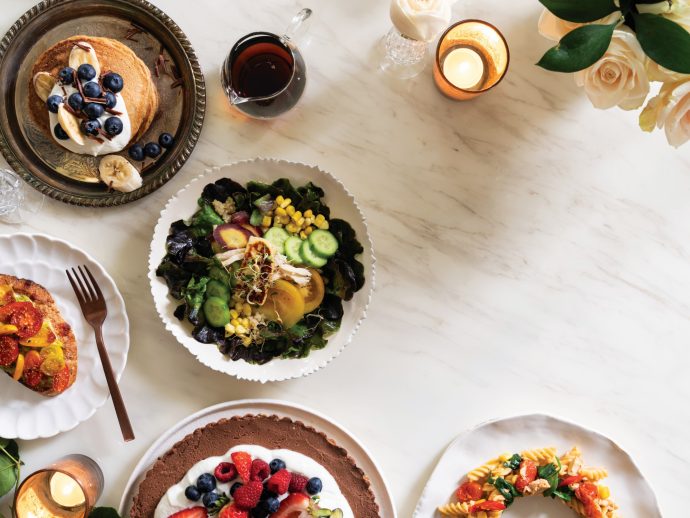
    These recipes are beautiful, delicious, and flexible, which means plant-based or vegetable-forward moms can be treated to a special occasion meal that will leave them feeling their best. Glam, doable, and oh-so-good recipes that will bring a smile to Mom’s face—this truly special lineup will be one to remember, share, and gush over, year after year.

    One-Bowl Cashew Milk Pancakes with the Fixins

    “Special” doesn’t mean challenging or a sink full of dishes—even kids can mix up this simple pancake batter and prep a toppings bar for mom to glow up her plate as she pleases.
    Servings: 6

    Ingredients
      

    Pancakes
    • 2 cups light spelt flour or 1:1 gluten-free all-purpose flour blend
    • ¼ cup coconut sugar
    • 1 tsp baking soda
    • ½ tsp salt
    • 1 ½ cups unsweetened cashew milk plus more to thin
    • ¼ cup coconut oil or butter melted, plus more for pan
    • 2 large eggs or 2 flax eggs (see method)
    • 1 tsp vanilla extract
    Glam toppings (optional, but recommended)
    • Maple syrup
    • Plain yogurt (nondairy or dairy)
    • Fresh fruit such as berries or sliced bananas
    • Natural nut butter
    • Coconut oil or butter
    • Grated dark chocolate bar

    Method
     

    1. Preheat oven to 200°F. Line large baking sheet with parchment paper and set aside. Acquire and assemble toppings so they’re ready to go when pancakes are cooked.
    2. For pancakes, in large bowl, stir to combine flour, sugar, baking soda, and salt. Mix in milk, melted coconut oil or butter, eggs (or for plant-based, 2 Tbsp flaxseed mixed with 1/2 cup water), and vanilla, stirring until fully combined. If batter is too thick to stir, thin with additional milk, as needed. The batter should be similar in texture to a bowl of oatmeal (on the thick side but still spoonable).
    3. To cook, preheat nonstick griddle or large pan over medium heat. Brush with additional melted coconut oil. Add dollops of pancake batter into pan, nudging corners with your ladle to spread out a bit. Cook for 2 to 3 minutes and flip once bubbles appear all over the surface. Lower heat, as necessary, to avoid burning. Flip and cook on the other side for another 2 minutes, until puffed and cooked through. Transfer to prepared baking sheet and keep warm in oven. Repeat with remaining batter.
    4. Serve pancakes warm with toppings of choice.

    Heirloom Veggie Grain Bowls with Chicken and Seared Halloumi

    A fresh lunch inspired by the warmer weather, all components of this dish can be made ahead, even packed for Mom and her family to take on a Mother’s Day picnic. The bowl gets glam with the addition of microgreens (or sprouts), heirloom veggies, and meaty halloumi cheese.
    Servings: 6

    Ingredients
      

    Dressing
    • ½ cup olive oil plus more for brushing
    • 2 tbsp apple cider vinegar
    • 1 ½ tbsp maple syrup
    • 1 tbsp dijon mustard
    • 1 garlic clove peeled and grated
    • ¼ tsp ground black pepper
    Bowls
    • 9 oz packaged herb and garlic or plain halloumi (halloom)
    • 1 head red leaf lettuce washed, dried well and torn
    • 3 cups cooked sprouted quinoa, brown rice, or millet
    • 2 colorful heirloom tomatoes sliced
    • ½ English cucumber peeled and diced
    • 1 large purple or orange carrot peeled and sliced
    • ½ cup raw or cooked corn kernels or green peas
    • 2 cups cooked chicken cold and shredded
    • 1 cup microgreens or colorful sprouts

    Method
     

    1. For dressing, to sealable jar or bowl, add all ingredients and shake or whisk to combine. Mix again before using.
    2. For bowls, slice halloumi into 1/4 in slabs and brush with a bit of olive oil. Heat large nonstick or cast iron skillet over medium heat and sear halloumi in batches until golden brown on both sides, 1 to 2 minutes a side. Set aside.
    3. In large bowl, toss lettuce with enough dressing to coat, and then add to 6 shallow bowls (such as pasta bowls) or plates followed by a scoop of cooked quinoa. Arrange tomatoes, cucumbers, carrot, and corn or peas on top in any pattern, then top with chicken, seared halloumi, and dressing, to taste. Garnish with microgreens or sprouts and serve.

    Rainbow Fruit and Veggie Platters with Two Plant-Based Dips

    More fun than a side salad, it’s a spread of the good stuff in a burst of glam color, with two dipping sauces: one sweet for the fruit and one savory for the veggies. Don’t forget to use Mom’s favorite fruits and veggies! Below are some suggestions to get you started.
    Servings: 10

    Ingredients
      

    Sweet Vanilla, Cardamom, and Coffee Dip
    • 1 cup raw cashews soaked for 2 hours, drained
    • ¾ cup recently boiled water plus more to thin
    • 1 tbsp coconut oil
    • 6 soft Medjool dates pitted, soaked for 2 hours, drained
    • 2 tsp lemon juice
    • 1 tsp vanilla bean paste or extract
    • ½ tsp instant coffee (optional)
    • ¼ tsp ground cardamom
    • tsp salt
    Savory Vegan Artichoke Dip
    • 2 tbsp olive oil
    • 2 garlic cloves peeled and minced
    • 14 oz can artichoke hearts drained well
    • ¾ cup raw cashews soaked for 2 hours, drained
    • ½ cup unsweetened nondairy milk (cashew, oat, or coconut milk)
    • 2 tbsp lemon juice
    • 1 tbsp miso paste
    • ½ cup chopped fresh parsley
    • Pinch of Aleppo-style pepper or red pepper flakes to serve
    Fruit Platter
    • 1 bunch of red or green seedless grapes halved if desired
    • 2 cups fresh blueberries
    • 2 cups fresh raspberries
    • 1 cup fresh blackberries
    • 1 melon such as cantaloupe peeled, seeded and cubed
    • 1 pineapple peeled, cored, and cubed
    Vegetable Platter
    • 5 stalks sliced
    • 2 large watermelon radishes sliced
    • 2 lbs rainbow carrots peeled and sliced
    • 1 English cucumber sliced
    • 1 head of broccoli or cauliflower cut into florets

    Method
     

    1. For sweet dip, to high-speed blender, add all Sweet Vanilla, Cardamom, and Coffee Dip ingredients and blend until smooth and creamy. Add additional water to thin until desired fruit dip consistency. Transfer to serving bowl, cover, and chill completely, about 4 hours or up to 4 days.
    2. For the savory dip, in saucepan, heat olive oil over medium, add garlic, and saute until fragrant, about 30 seconds. Immediately add drained artichoke hearts and saute for 3 minutes, until warmed through.
    3. To high-speed blender, add soaked and drained cashews, milk, lemon juice, and miso paste and blend until smooth. Add cooked artichoke mixture and parsley, and briefly pulse to chop but not blend completely. Transfer to serving bowl and chill for at least 2 hours or up to 4 days.
    4. For platters, arrange fruit and vegetables on separate platters or one extra-large platter in a pattern of your choice. Keep each fruit or vegetable in its own section (as opposed to mixing them all together) to create the rainbow appearance. Serve fruit with sweet dip and veggies with savory dip.

    By Allison Day

    Article Courtesy of Alive Magazine
  • Roasted Butternut Squash and Quinoa Salad

    Roasted Butternut Squash and Quinoa Salad


    Roasted Butternut Squash and Quinoa Salad

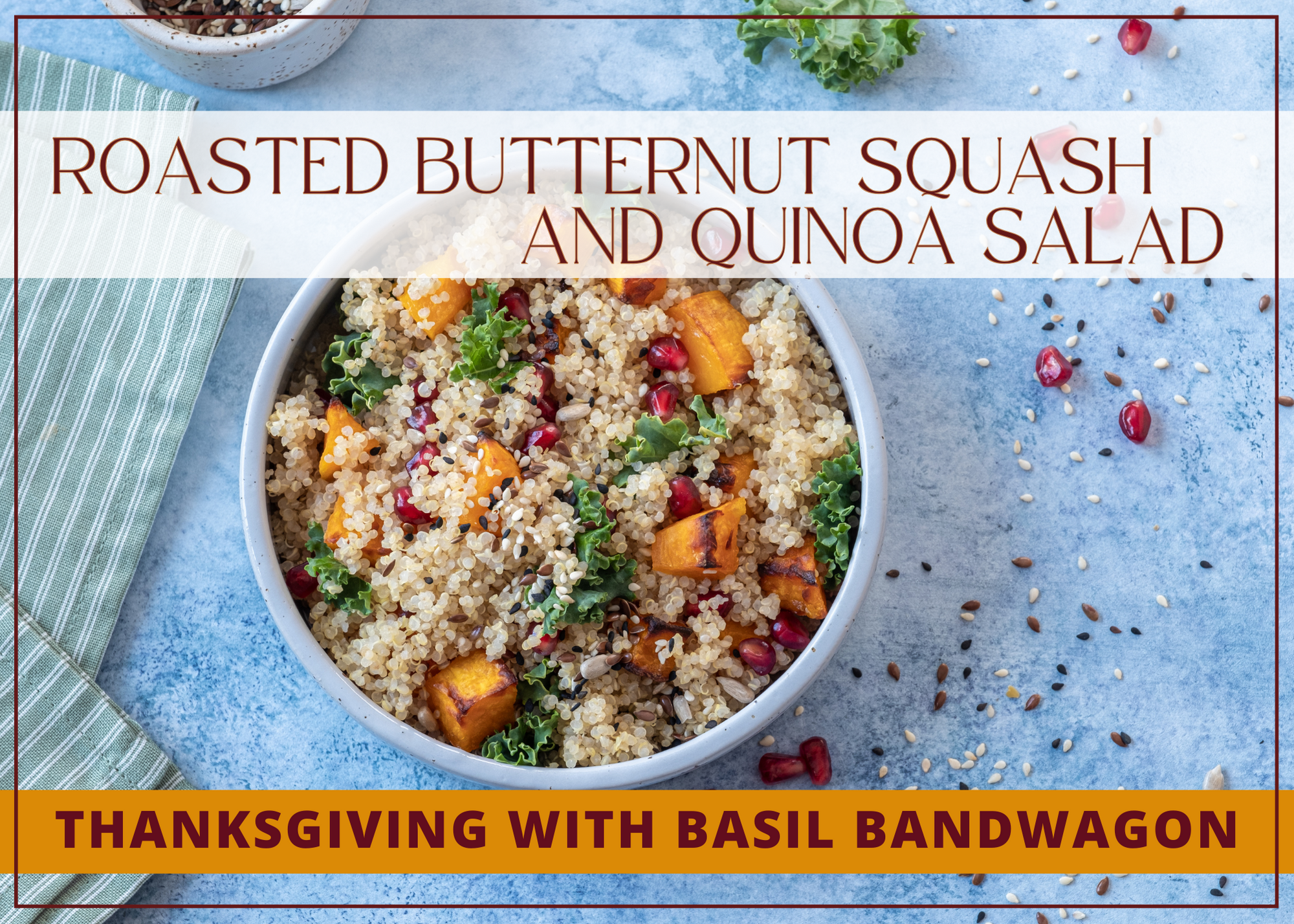
    As Thanksgiving approaches, it’s essential to have some healthier options on the menu. This Roasted Butternut Squash and Quinoa Salad is not only delicious but also packed with nutrients. It’s a perfect side dish to balance out the indulgent treats on your Thanksgiving table.


    Elisa Franco

    Roasted Butternut Squash and Quinoa Salad

    This Roasted Butternut Squash and Quinoa Salad is a delightful addition to your Thanksgiving spread. It's not only a treat for your taste buds but also a nourishing choice for your body. Enjoy this healthy, colorful dish as you celebrate gratitude and good food this Thanksgiving!
    Servings: 4

    Ingredients
      

    • 1 small butternut squash peeled and diced
    • 1 cup quinoa rinsed
    • 1 cup kale chopped
    • 2 cups vegetable broth
    • 1/2 cup pomegranate seeds
    • 1/4 cup fresh parsley chopped
    • 1/4 cup pecans chopped
    • 2 tbsp olive oil
    • salt and pepper to taste

    Method
     

    1. Preheat your oven to 400°F.
    2. Toss the diced butternut squash with olive oil, salt, and pepper. Roast in the oven for 25-30 minutes or until tender and slightly caramelized.
    3. While the squash is roasting, rinse the quinoa thoroughly and cook it in vegetable broth according to package instructions.
    4. Once the quinoa and butternut squash are ready, combine them in a large bowl.
    5. Add pomegranate seeds, chopped parsley, chopped kale and chopped pecans. Mix well.
    6. Season with salt and pepper to taste.
    7. Serve warm or at room temperature.

  • Smoked Salmon and White Bean Spread

    Smoked Salmon and White Bean Spread


    Smoked Salmon and White Bean Spread

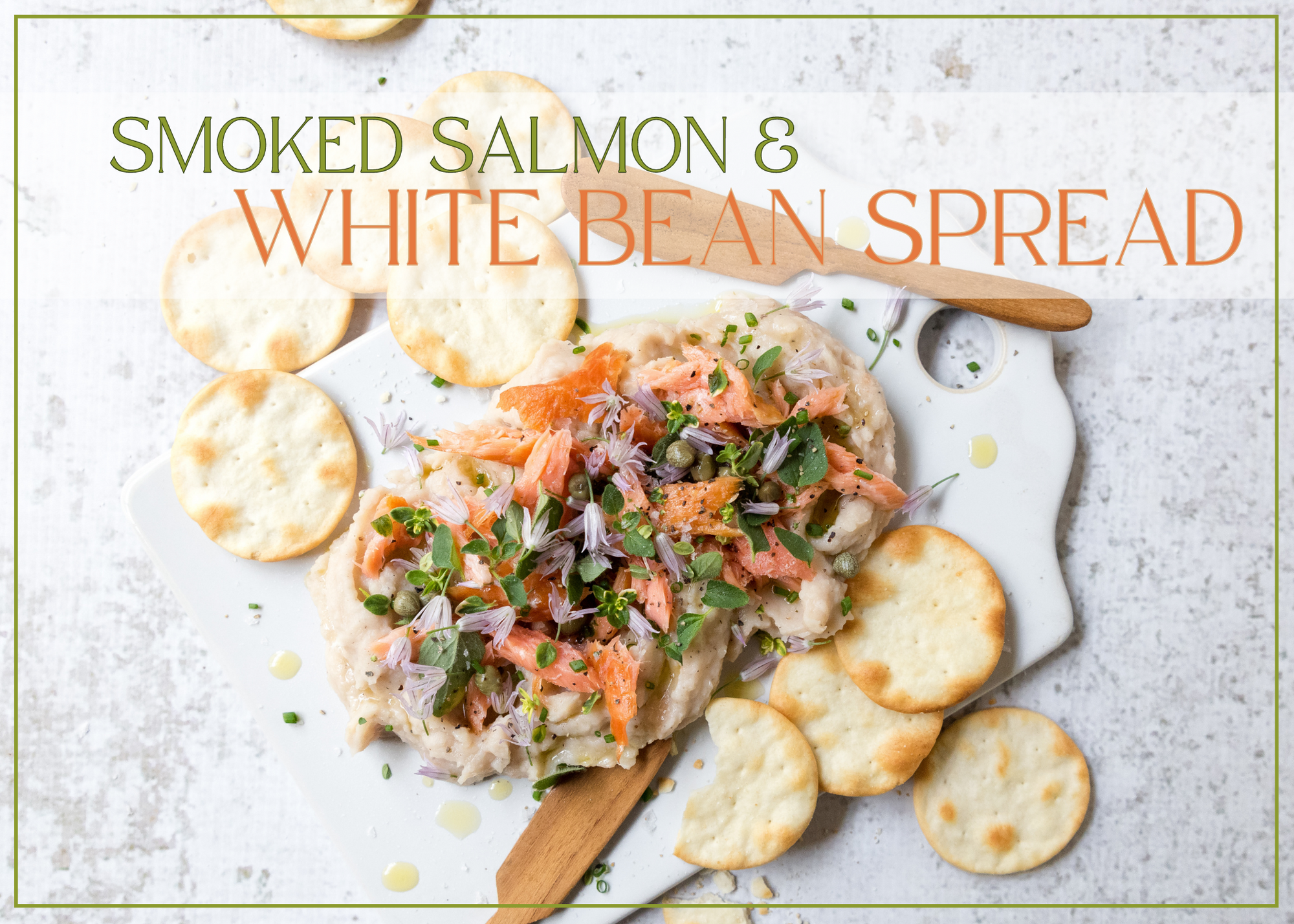
    A creamy base of white beans plus a hit of freshness from herbs gives you a balanced and exciting spread for your next get together or when you’re craving snacks for dinner.

    Bright herbs and capers, creamy white beans, and smoked fish are perfectly balanced and an unexpected combination. The recipe is gluten-free, so if you’re looking to keep the meal that way, you can use seed crackers, veggies, corn chips, or gluten-free bread and crackers. It’s still high time for grilling, so toss some bread on the grill.

    We call for smoked salmon here, as it’s a highly approachable and familiar ingredient. Feel free to experiment: trout would be another classic to substitute or go wild with smoked mackerel or smoked mussels. Flaking smoked fish on top of this spread is a great way to enjoy the savory richness of seafood without needing to purchase a large quantity to satisfy the crowd. If you’re looking to cut down, either on your costs or your animal protein consumption, consider this a great blueprint!

    The final thing we’ll say about this recipe is that it just might be your next pantry staple dish. Canned seafood and canned or dried beans are items you can keep stocked in your pantry. The addition of a few fresh herbs, picked up at the store or snipped from a windowsill herb garden, means you can whip it up on the fly year-round and for any occasion.


    Smoked Salmon and White Bean Spread

    A creamy base of white beans plus a hit of freshness from herbs gives you a balanced and exciting spread for your next get together or when you're craving snacks for dinner.

    Ingredients
      

    • 1 15 ounce can white beans drained and rinsed
    • 4 tbsp olive oil divided
    • 2 tbsp lemon juice
    • 2 large garlic cloves minced
    • 1/2 tsp sea salt
    • 1/2 tsp coarse ground black pepper
    • 6 ounces smoked trout or smoked salmon flaked
    • 2 tbsp chopped chives
    • 2 tbsp fresh oregano leaves or ¼ teaspoon dried oregano
    • 1 tbsp capers drained
    • Crackers or bread to serve

    Method
     

    1. In a food processor combine beans, olive oil, lemon juice, garlic, salt, and pepper.
    2. Run processor until mixture is smooth.
    3. Spread bean mixture onto a service plate creating swirls.
    4. Drizzle on remaining olive oil and top with flaked smoked fish, fresh herbs, and capers.
    5. Serve with crackers or sliced artisan bread.
    6. Enjoy!

    Recipe Courtesy of INFRA

  • What makes people healthy?

    What makes people healthy?

    What makes people healthy?

    Exploring the social determinants of health


    Why are some people healthier than others? Yes, your genes play a big role. But there are other determinants of health that have nothing to do with your genetic makeup. Where you live, how you’re educated, and other societal influences are all important factors in our health. Find out more.


    Two hypothetical kids

    There are significant implications for advantage and disadvantage related to social determinants of health. Look at socioeconomic position, for example: a child born into a higher tax bracket is much more likely to be in a higher tax bracket when they’re older.

    Let’s take a look at the life course trajectories of two hypothetical kids. Joe is born into an affluent neighborhood, while John lives in subsidized housing with his six siblings in a single parent home.

    Joe’s parents are able to afford organic produce, put Joe into private school, and drive him to and from his various sporting activities throughout his childhood. As a result, Joe gets an excellent education that allows him to attend university, secure a job in a top tax bracket, and enjoy an active social life.

    John’s father works double shifts to make ends meet, but the only apartment he can afford has a black mold problem that has given John respiratory issues for years. John’s school is oversubscribed, and he’s falling behind because of sick days. To support the family, John takes a construction job and eventually drops out of high school. Years of manual labor and poor self-care have taken their toll on John, and he lives with chronic pain.

    You can imagine that two very different states of health and well-being are being experienced by Joe and John in later life. These differences may not necessarily be due to differences in the individuals, but in the broader social and economic circumstances in which they find themselves.

    What next?

    To address systemic issues such as the negative impact of social determinants of health, we must look to addressing modifiable aspects of lifestyle at the individual level and systemic inequities at the population level.

    Your DNA is not your destiny

    Although there are many social determinants of health that you can’t control, focus on the ones that you can control, such as diet, exercise, and social connections.

    • Pack yourself a healthy lunch.
    • Go for an evening walk with your partner.
    • Plan a family gathering.

    When you need nutritional help, chat with your health care practitioner. They may recommend certain supplements, such as the following:

    Nutritional helperBenefits
    vitamin Cimmune health, wound healing, bone health, antioxidant protection
    vitamin Dbone health maintenance, decreased risk of cancer mortality, mood stabilization
    vitamin B6red blood cell formation, brain processes and development, immune function, and steroid hormone activity
    vitamin B12brain support, red blood cell genesis support, energy booster
    magnesiummuscle repair, neuromuscular facilitation, blood sugar control
    zincsleep support, digestive support, reproductive organ support

    Article courtesy of Alive Magazine
  • Roasted Salmon and White Bean Salad

    Roasted Salmon and White Bean Salad

    Roasted Salmon and White Bean Salad


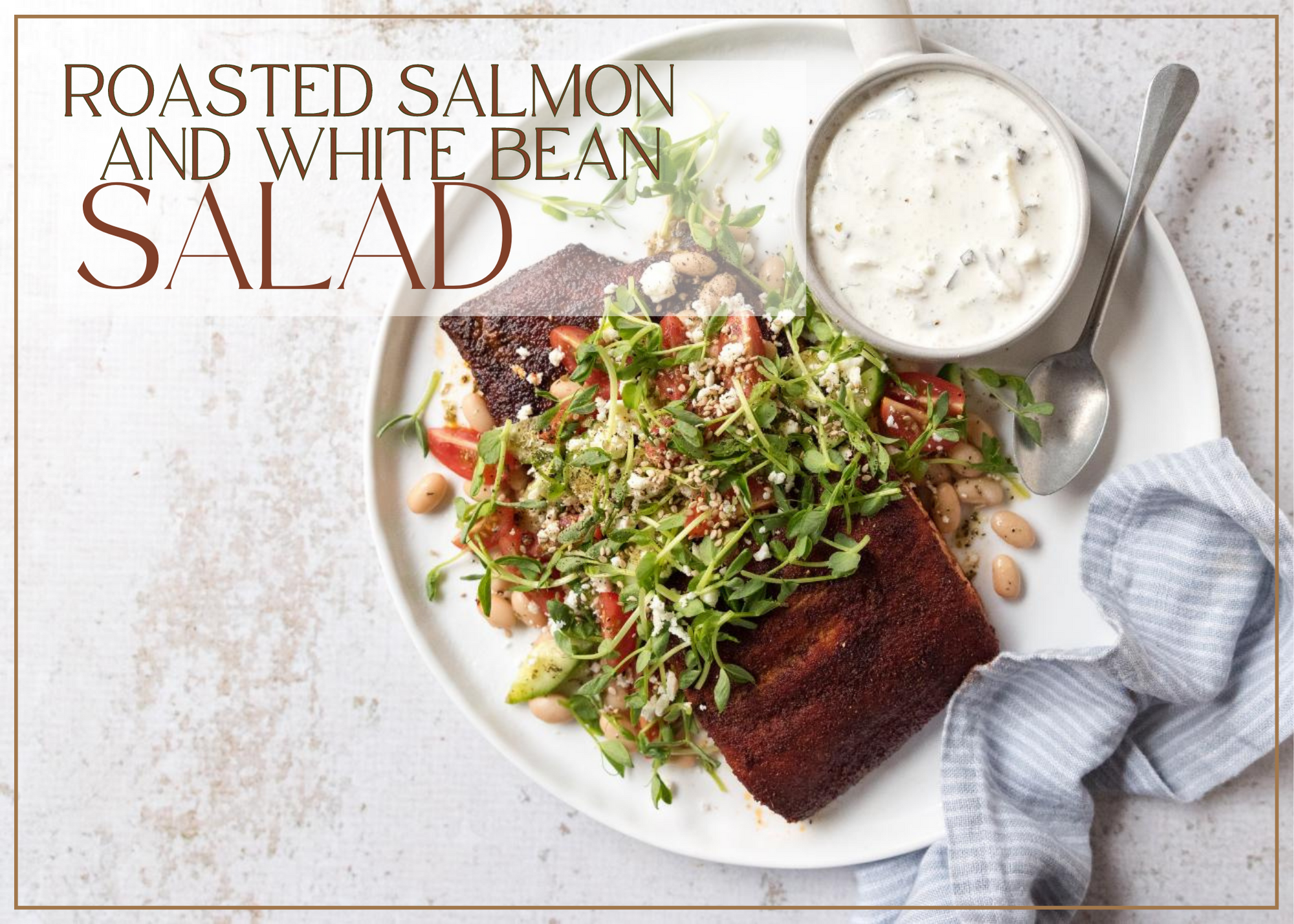
    If you’re looking for a healthy, gluten-free meal that’s easy to make and packed with flavor, this Roasted Salmon & White Bean Salad recipe is just what you need.

    Salmon is an excellent source of protein and omega-3 fatty acids, which are essential for maintaining good health. When paired with white beans, cherry tomatoes, and cucumber, this dish becomes a satisfying and nutritious meal that’s perfect for lunch or dinner.

    Not only is this Roasted Salmon & White Bean Salad recipe delicious, but it’s also a great option for anyone with celiac disease or gluten sensitivity. By using gluten-free ingredients and skipping the bread, this meal is completely gluten-free.

    So next time you’re looking for a healthy and satisfying gluten-free meal, give this Roasted Salmon & White Bean Salad recipe a try. It’s sure to become a favorite in your household!


    Roasted Salmon and White Bean Salad

    Looking for a delicious and healthy gluten-free meal? Try this Roasted Salmon & White Bean Salad recipe! Not only is it packed with protein and fiber, but it's also bursting with flavor. It's the perfect meal for lunch or dinner, and it's sure to leave you feeling satisfied and energized.
    Total Time 30 minutes
    Servings: 4

    Ingredients
      

    • 2 pounds 2 pounds salmon fillet
    • 1/4 cup smoked paprika
    • 1 teaspoon sea salt
    • 1 teaspoon ground cumin
    • 1/4 cup olive oil
    • 2 cups pea shoots
    • 1 cup prepared tzatziki
    Salad:
    • 1/2 pint cherry tomatoes quartered
    • 2 Persian cucumbers diced
    • 1/2 cup crumbled feta
    • 1 15 ounce can cannellini beans drained and rinsed
    • 1/2 small red onion  julienned
    Dressing:
    • 1 tablespoon olive oil
    • 1 tablespoon tahini
    • 1 tablespoon lemon juice
    • 1 large garlic clove minced
    • 1/2 teaspoon dried oregano
    • 1/4 teaspoon sea salt

    Method
     

    1. Preheat oven to 350° F.
    2. Place salmon skin side down on a parchment-lined baking sheet.
    3. Combine paprika, salt, and cumin.
    4. Rub salmon with spice mix, drizzle on oil.
    5. Bake for 20 minutes or until the internal temperature reaches 145° F.
    6. Meanwhile, prepare the salad by tossing together tomatoes, cucumbers, feta, beans, and red onion in a serving bowl.
    7. Whisk together dressing ingredients until well blended then toss with salad.
    8. Adjust seasoning to taste.
    9. Place salmon on a platter and spoon dressed salad oversalmon.
    10. Garnish with pea shoots and serve with tzatziki sauce.

    Recipe Courtesy of INFRA

  • Seafood Gumbo with Christine Waltermyer

    Seafood Gumbo with Christine Waltermyer

    Seafood Gumbo

    Thanks to Christine Waltermyer & The Natural Kitchen Cooking School!

    Christine Waltermyer is a local and renowned Wellness Chef, private chef to celebrities, published cookbook author and founder of the Natural Kitchen Cooking School, which offers an online Plant-Based Cooking Program. She also loves shopping at Basil Bandwagon! Visit naturalkitchenschool.com to subscribe to her email newsletter for new recipes, tips, and FREE access to the Power of Veggies mini-course!


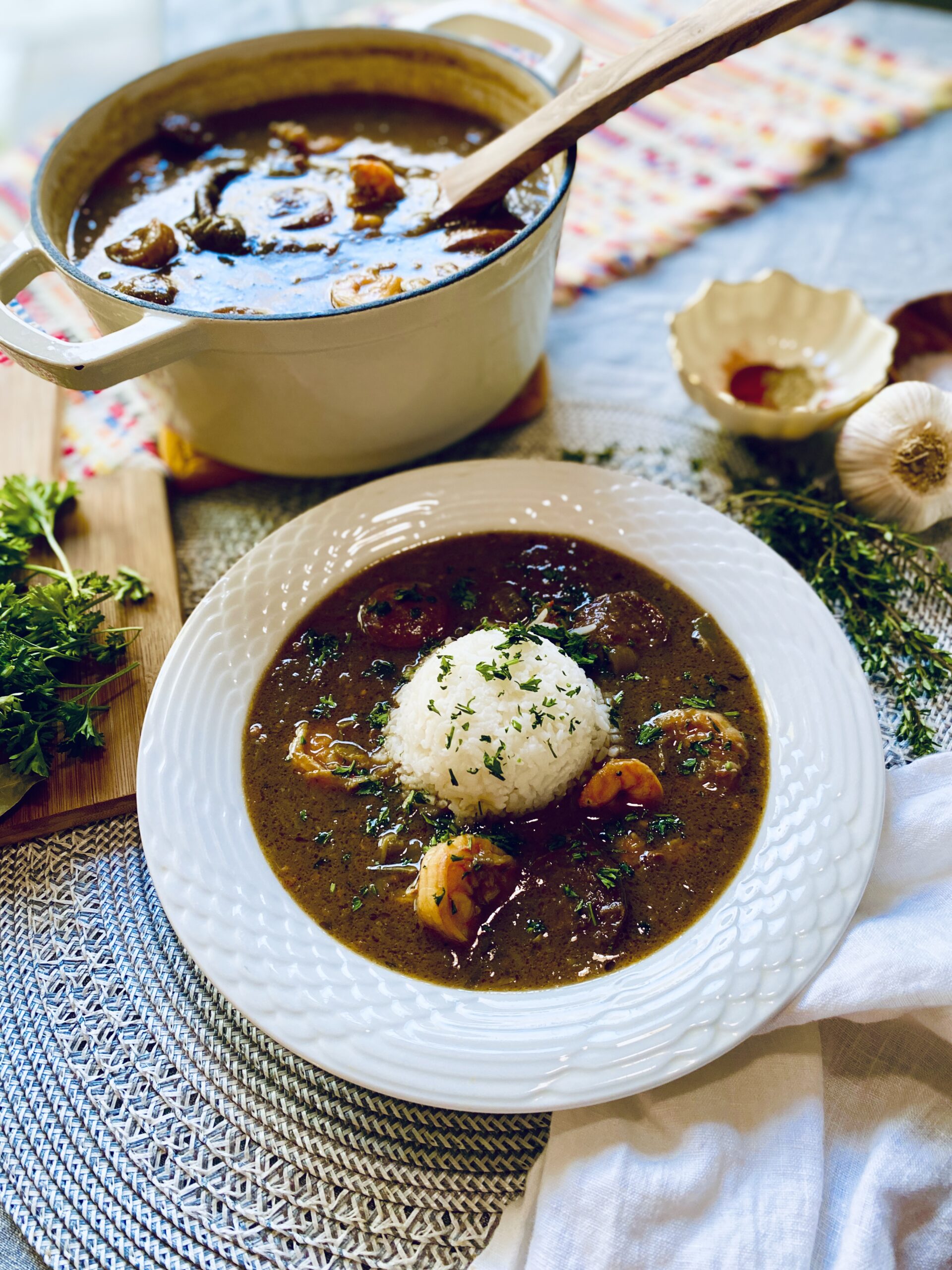
    New Orleans Gumbo is an amazing fusion of cultures and flavors. While the roots of gumbo
    are African, the modern dish is a culmination of contributions from Native American,
    French, Spanish, and Caribbean cuisines. Enjoy!

    Seafood Gumbo

    Servings: 6

    Ingredients
      

    Seafood Gumbo Stock
    • 1-2 cups shrimp shells
    • 3 cups chopped vegetables (onion, celery, leeks, scallions, carrots, parsley, squash, etc.)
    • 3 sprigs fresh thyme
    • 2 cloves garlic
    • 2 dried bay leaves
    • 10 cups water
    Mild Creole Seasoning
    • 1 teaspoon salt
    • ¼ teaspoon white pepper
    • 1 teaspoon paprika
    • ½ teaspoon garlic powder
    • 1 teaspoon onion powder
    • ½ teaspoon dried thyme
    • ½ teaspoon dried oregano
    Gumbo
    • ½ cup ghee (clarified butter) divided (or tallow or bacon fat)
    • 2 cups frozen okra sliced and thawed
    • ½ cup all-purpose flour
    • 1 medium yellow onion chopped
    • 1 medium bell pepper seeded and chopped
    • 2 stalks celery chopped
    • 2 cloves garlic minced
    • 2 bay leaves
    • 1 pound sausage sliced
    • 5 sprigs fresh thyme
    • 1 tablespoon coconut aminos
    • Sea salt to taste
    • White or black pepper to taste
    • 2 pounds shrimp peeled, deveined, and rinsed
    • 4 cups cooked rice
    • 1-2 teaspoons filé powder
    • Fresh parsley to garnish

    Method
     

    Make the seafood gumbo stock
    1. In a large soup pot, place all of the seafood gumbo stock ingredients. Bring to a boil over medium high heat. Reduce the heat to medium-low and simmer for 30 minutes. Strain the stock through a large fine-mesh strainer. Set aside. If not using right away, the stock can be cooled and stored in a glass jar in the refrigerator for up to 3 days.
    Make the mild Creole seasoning
    1. In a small bowl, stir together all of the Mild Creole Seasoning ingredients until well combined.
    Fry the okra
    1. Heat 2 tablespoons of the ghee in a large skillet over medium heat. Add the okra and fry for a few minutes. Use a slotted spoon to transfer the okra to a paper towel-lined plate.
    Make the roux
    1. Whisk together the remaining ghee and the flour in a large soup pot over medium-low heat until for 25 minutes. Whisk constantly, until it turns a rich brown color. Watch closely, being careful not to burn the roux. Remove from the heat and continue whisking until it cools down.
    Cook the gumbo
    1. Place the soup pot containing the roux back on the stove. Add the onion, bell pepper, celery, and the mild creole seasoning. If you like more seasoning, feel free to increase the amount of spices used. Cook and stir for 5 minutes over medium heat, or until the onions have softened. Add the garlic and bay leaves.
    2. Increase the heat to medium-high heat. While whisking or stirring constantly, add the seafood gumbo stock, a few cups at a time. Add the okra, sausage, thyme, and coconut aminos. Bring to a boil, then reduce the heat to low and simmer uncovered for 1 hour. Add more salt and pepper to taste. Stir in the shrimp. Cook for 10 more minutes. Stir in the filé powder.
    3. Ladle 2 cups of the hot gumbo into each bowl. Add one cup of rice in the center of each bowl. Enjoy!

    Notes

    Note: Cool any remaining gumbo by placing the soup pot in an ice bath, then transfer to a covered container and refrigerate immediately to prevent spoilage.

    Thank you to Christine Waltermyer and the Natural Kitchen Cooking School for working with us to help promote healthy, nutritious meals and products that are affordable, full of nutrients, and simple to make at home!

  • 4 healthy food pairs

    4 healthy food pairs

    4 healthy food pairs

    These food duos are happy couples

    Heart health is important to us all. So, too, is good food. Food and heart health make a natural couple. Here are some more happy couples: food duos that, together, provide heart-healthy dividends.

    There are certain foods that, instead of taking a solo adventure to improve our heart health, instead, seem to perform better when set free to mingle. This is called food synergy: where the benefits of two or more foods eaten together can be greater than the sum of their parts. When working in unison, these foods amplify their nutritional benefits.

    Spinach and avocado

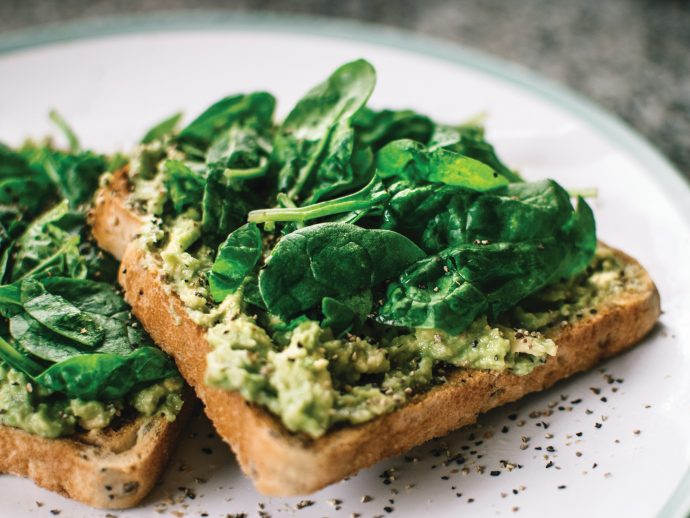
    Dark leafy greens such as spinach and kale are already nutritional heavy hitters, but if you really want to reap their rewards, make sure to fatten them up. Research shows that consuming foods such as kale, tomatoes, and carrots—good sources of carotenoid antioxidants including lycopene and beta carotene—with a dietary source of fat, such as avocado, can increase how much of these heart-friendly plant compounds we absorb.

    Turmeric and black pepper

    While turmeric is increasingly being studied for its heart-benefitting, lipid-lowering, and anti-inflammatory powers and a big reason why golden milk is trending, we don’t absorb its main bioactive compound, curcumin, into the bloodstream very well. The good news is that a chemical found in black pepper called piperine can greatly bolster our ability to take up curcumin. So, whenever you add the golden spice to curries, soups, sauces, and scrambled eggs, don’t forget to also include a few twists of the pepper grinder.

    Oats and berries

    Sure, a hunk of steak is a good source of iron, but you can also get the mineral from plant-based foods such as oats, beans, lentils, tofu, fortified cereals, and spinach. There’s a catch, though: only 2 to 20 percent of the iron found in plant foods, called non-heme iron, makes its way from your digestive tract into your blood. Mother Nature has provided an assist in the form of vitamin C (ascorbic acid)—present in edibles such as berries, bell pepper, tomatoes, broccoli, and citrus—which converts plant-based iron into a form that is more readily absorbed.

    Tea and lemon

    A recent study discovered that adults who consumed more green or black tea were, on average, more likely to have lower total and LDL (bad) cholesterol and higher HDL (good) cholesterol than those who didn’t consume tea. It might be that the potent antioxidants, including catechins, in green tea can improve your cholesterol profile. And it turns out you can make green tea even more of an antioxidant powerhouse by adding a squirt of lemon. Citrus juice can increase the amount of antioxidants in green tea that are available for the body to absorb by up to five-fold.

  • The power of plants

    The power of plants

    The power of plants

    Ring in the New Year with a plant-forward diet

    If you’re looking to take your health and the well-being of your family to the next level this year, there are few better places to start than to wiggle more plant foods into your daily menu. Your health future will look brighter.

    Tabbouleh with Kale and Navy Beans

    This tabbouleh salad ages well, so it serves as a make-ahead meal that can keep for up to 3 days. A perfect plant-based option for weekday lunches!
    Servings: 4

    Ingredients
      

    • 1 cup sorghum grain
    • 19 ounce can navy beans drained and rinsed
    • 3 plum tomatoes seeded and diced
    • 3 cups finely chopped kale
    • 1 cup finely chopped fresh parsley
    • cup golden raisins
    • cup unsalted shelled pistachios
    • Juice of 1 lemon
    • 3 tablespoon olive oil
    • ½ teaspoon salt

    Method
     

    1. In saucepan, place sorghum and enough water to cover it by 2 inches. Bring to a boil, reduce heat to maintain a simmer, and cook, covered, until grains are tender, about 40 minutes. Drain well and spread out on a baking sheet to cool to room temperature.
    2. In large bowl, toss together cooked and cooled sorghum, navy beans, tomatoes, kale, parsley, raisins, and pistachios.
    3. In small bowl, whisk together lemon juice, olive oil, and salt. Toss lemon dressing with sorghum mixture.
    4. Enjoy!

    Sheet Pan Golden Tofu Medley

    This easy, yet impressive, vegan dinner is packed with oven-roasted flavor and proves that creating satisfying weeknight plant-based meals is entirely possible.
    Servings: 4

    Ingredients
      

    • cup raw cashews
    • 2 350 gram packages extra-firm tofu
    • 2 ½ teaspoons grapeseed oil or avocado oil
    • ¾ teaspoon salt
    • 1 head broccoli cut into 1 inch florets
    • 2 red bell peppers sliced into 4 pieces and seeds removed
    • 2 shallots chopped
    • 2 garlic cloves
    • 1 tablespoon chopped ginger
    • 1 teaspoon turmeric
    • ¼ teaspoon cayenne
    • ¼ teaspoon black pepper
    • Juice of ½ lime

    Method
     

    1. In bowl, place cashews, cover with water, and let soak at least 2 hours.
    2. Preheat oven to 425 F. Line two rimmed baking sheets with parchment paper or silicone baking mats.
    3. Line a cutting board with a couple sheets of paper towel. Top with tofu and a couple more sheets of towel. Press gently for about 30 seconds to extract excess liquid. Slice each tofu block lengthwise into 2 slabs and then slice each slab into 2 triangles. Place tofu on 1 baking sheet and brush tops with 1/2 tsp oil and sprinkle on 1/4 tsp salt.
    4. In large bowl, place broccoli florets and red pepper and toss with 1 tsp oil and 1/4 tsp salt. Spread vegetables out on second baking sheet. Place sheets in oven and bake for 25 minutes, until tofu is golden brown and vegetables are darkened in a few spots, stirring vegetables once halfway through the cooking time.
    5. Meanwhile, in small skillet, heat 1 tsp oil over medium heat. Add shallots and garlic; heat 1 minute. Add ginger and heat 30 seconds. Stir in turmeric, cayenne, 1/4 tsp salt, and black pepper; heat 30 seconds.
    6. Drain cashews and place in a blender with 1/2 cup) water, lime juice, and contents of skillet. Blend until very smooth.
    7. Divide tofu and vegetables among serving plates and drizzle with cashew sauce.
    8. Enjoy!

    Chickpea Salad with Nigella Roasted Sweet Potato

    Nigella seeds, also known as kalonji, lend a sweet, nutty flavor with an ever-so-slightly bitter edge that pairs perfectly with sweet potato’s sweetness.
    Servings: 4

    Ingredients
      

    • 2 medium peeled sweet potatoes quartered and chopped into 1 inch pieces
    • 2 tablespoons olive oil divided
    • 1 teaspoon nigella (kalonji) seeds
    • ¼ teaspoon salt
    • 2 tablespoons lemon juice
    • 1 teaspoon lemon zest
    • 1 teaspoon garlic minced
    • ¼ teaspoon tahini
    • ½ teaspoon black pepper
    • 1 ½ cups cooked chickpeas rinsed and drained
    • 1 cup grated peeled carrot
    • 2 tablespoons finely chopped fresh cilantro
    • 2 tablespoons finely chopped fresh parsley
    • 2 cups loosely packed baby spinach rinsed and spun dry

    Method
     

    1. Place baking tray in oven and set temperature to 425 F.
    2. Into large bowl, place sweet potato pieces. When oven reaches desired temperature, dress with 1 Tbsp olive oil, nigella seeds, and salt. Toss to coat evenly and pour immediately onto hot baking tray. Roast at 425 F for 20 minutes, stirring once at the 10 minute mark, until tender and slightly browned, but firm.
    3. Meanwhile, in large bowl, whisk together remaining 1 Tbsp olive oil, lemon juice, lemon zest, garlic, tahini, and black pepper. Add chickpeas and carrot and stir to coat evenly. Add cilantro and parsley, stir once more to incorporate, and allow mixture to marinate while sweet potato roasts.
    4. When finished roasting, remove sweet potatoes from oven and allow to cool slightly. Add spinach to chickpea carrot mixture along with 1/2 the sweet potato cubes, and toss gently to avoid breaking them. To serve, arrange salad on large platter and place remaining sweet potato cubes on top. Be sure to scrape all toasted nigella seeds from baking pan.
    5. Enjoy!

    Article Provided by Alive Magazine

  • Healthy Mango Smoothie + How-To Cut A Mango!

    Healthy Mango Smoothie + How-To Cut A Mango!

    Healthy Mango Smoothie + How-To Cut A Mango!

    Thanks to Christine Waltermyer & The Natural Kitchen Cooking School!

    Christine Waltermyer is a local and renowned Wellness Chef, private chef to celebrities, published cookbook author and founder of the Natural Kitchen Cooking School, which offers an online Plant-Based Cooking Program. She also loves shopping at Basil Bandwagon! Visit naturalkitchenschool.com to subscribe to her email newsletter for new recipes, tips, and FREE access to the Power of Veggies mini-course!


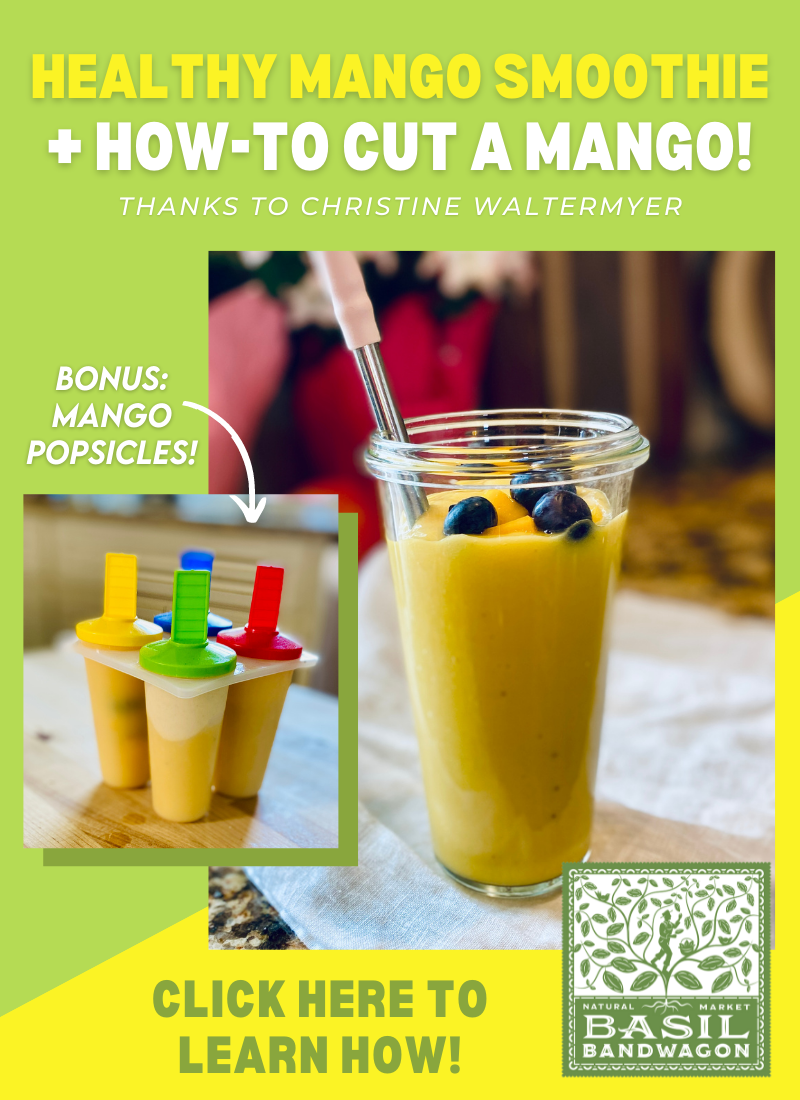
    If you LOVE mangoes then this recipe is just what you’re looking for. Thanks to Christine Waltermyer and The Natural Kitchen Cooking School, we’re learning how to cut a mango and use them to make a refreshing smoothie that you and your kids will love! Bonus – if you have leftover smoothie, you can turn them into frozen popsicles. Whether you like mangoes fresh or frozen, you’ll always know your snack is nutritious, delicious and will bring you an instant energy boost!

    Healthy Mango Smoothie

    Course Breakfast, Dessert, Snack
    Keyword breakfast, dessert, Kids, smoothie, snack
    Servings 2

    Ingredients

    • ½ cup frozen banana slices
    • 1 cup fresh diced mango
    • 1 cup frozen mango chunks
    • ½ cup your favorite plain yogurt
    • Pinch of salt
    • 1 teaspoon vanilla extract

    Instructions

    • Place all ingredients in a high-powered blender and puree until smooth. Enjoy served in a tall glass with a straw!

    Notes

    Leftover smoothie makes great popsicles! Just pour into popsicle molds and freeze.

    Thank you to Christine Waltermyer and the Natural Kitchen Cooking School for working with us to help promote healthy, nutritious meals and products that are affordable, full of nutrients, and simple to make at home!

  • How-To: Sauté Collard Greens

    How-To: Sauté Collard Greens

    How-To: Sauté Collard Greens

    Thanks to Christine Waltermyer & The Natural Kitchen Cooking School!

    Christine Waltermyer is a local and renowned Wellness Chef, private chef to celebrities, published cookbook author and founder of the Natural Kitchen Cooking School, which offers an online Plant-Based Cooking Program. She also loves shopping at Basil Bandwagon! Visit naturalkitchenschool.com to subscribe to her email newsletter for new recipes, tips, and FREE access to the Power of Veggies mini-course!


    Did you know Collard greens are the oldest leafy green within the cabbage family dating back 2000 years, originally grown by the ancient Greeks and Romans! This low calorie vegetable is packed with many nutrients like Vitamins K, C, A, calcium and folate. Thanks to Christine Waltermyer and the Natural Kitchen Cooking School, you can learn how to properly sauté these greens so that your whole family will love them, too!

    How-To: Sauté Collard Greens

    Course Side Dish
    Keyword collard greens, collards, how-to, sauté, side
    Servings 8

    Ingredients

    • ½ to 1 cup water
    • 1 bunch collard greens stems trimmed and leaves cut into small pieces
    • 1 cup sliced scallions
    • Sea salt and pepper to taste
    • Splash lemon juice

    Instructions

    • Place the water in a large skillet and heat on medium high heat. Add the collard greens, scallions, sea salt, pepper and lemon juice.
    • Cover and cook on high for 3 to 5 minutes. Stir occasionally. Serve as is or with your favorite dressing.
    • Enjoy!

    Thank you to Christine Waltermyer and the Natural Kitchen Cooking School for working with us to help promote healthy, nutritious meals and products that are affordable, full of nutrients, and simple to make at home!